the Annapurna Cirquit Nepal is the land of the Himalayas – the mountains are the primary reason for our visit to the country.
Our focus is on making a trekking; a backpack with only the most essential items, as light as possible, but with everything we need.
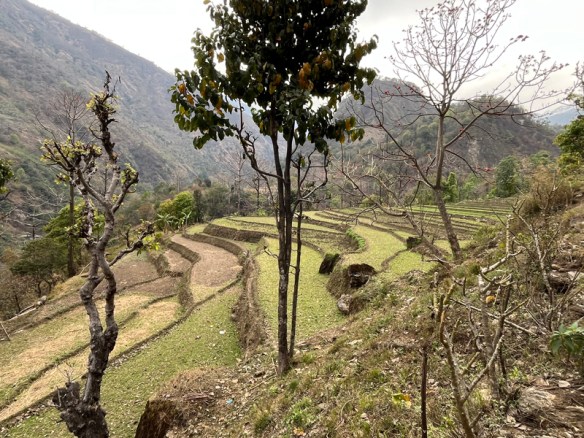
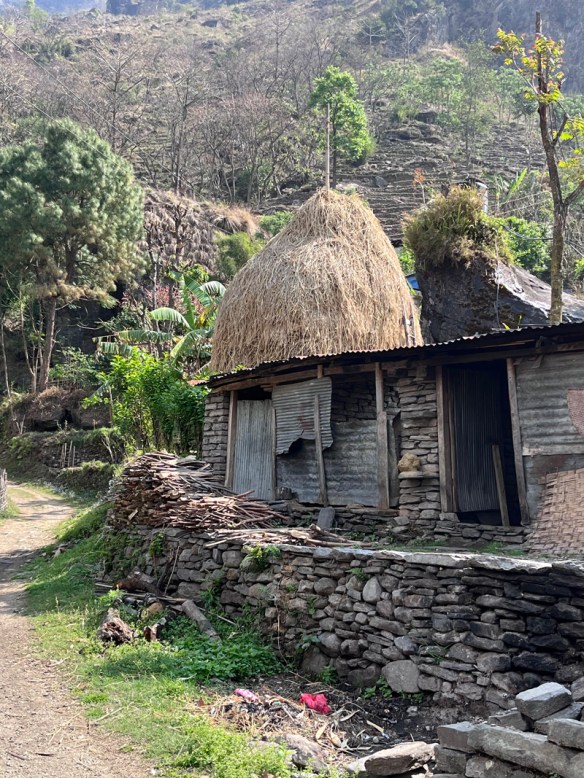
We start our trek, the ‘Annapurna Circuit’, in a relatively low-lying area. We walk through green rice fields, vegetable gardens, and small villages. On the other side of the river, we see the road, where work is being done on hydroelectric power plants in several places. That road also offers the opportunity to drive into the mountains by jeep, which many people with limited time do. We ascend slowly.
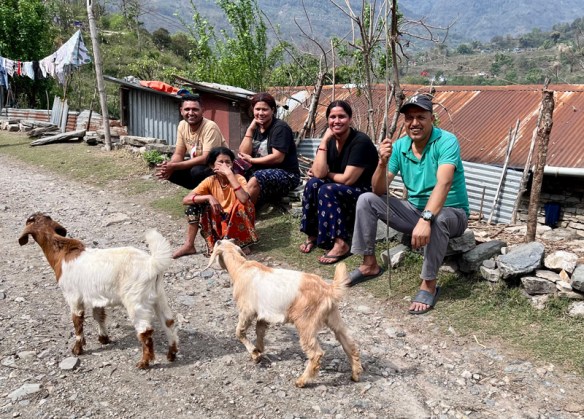
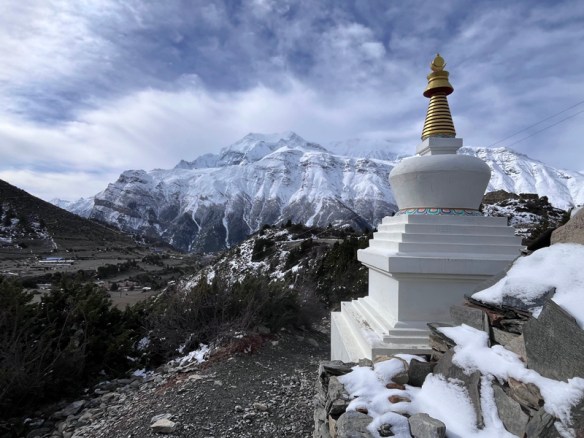
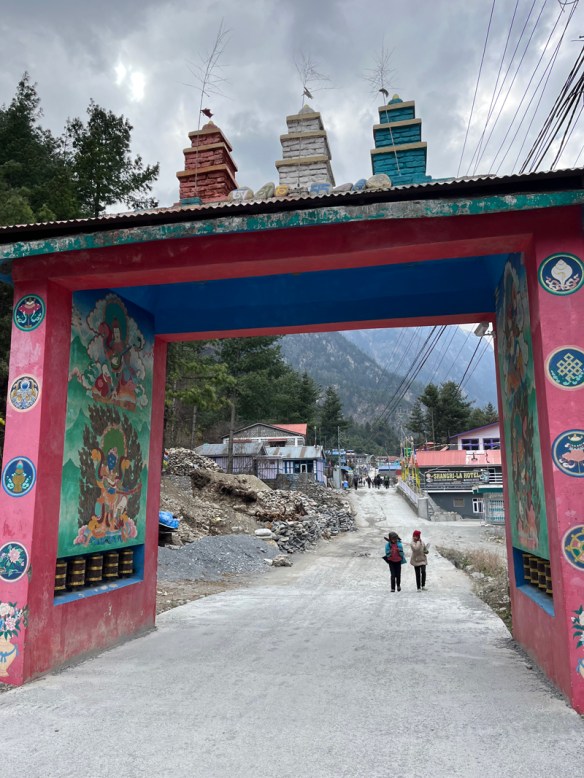
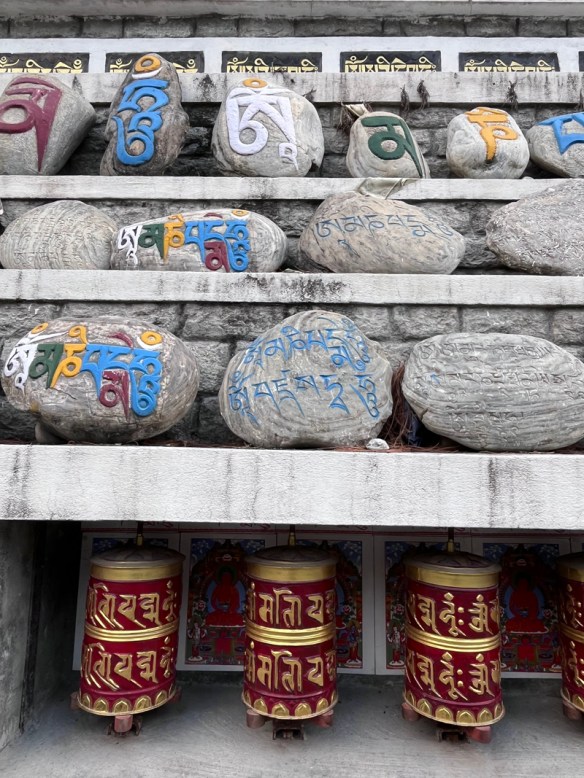
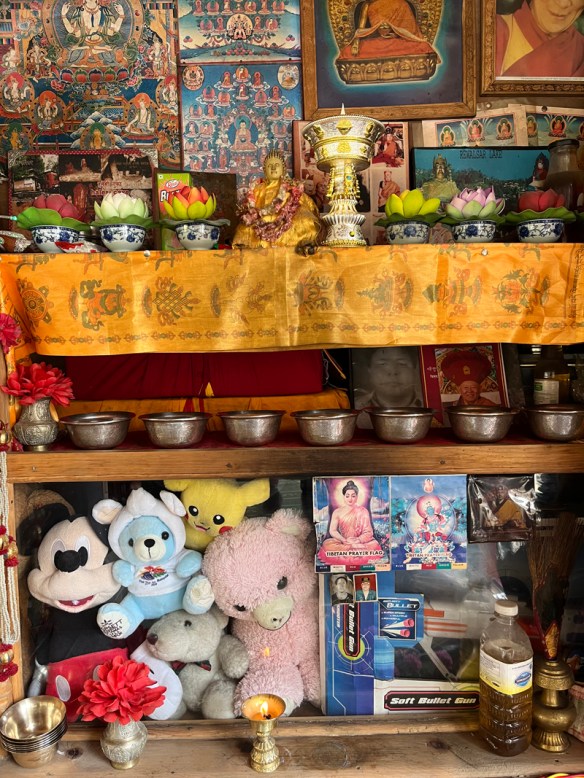
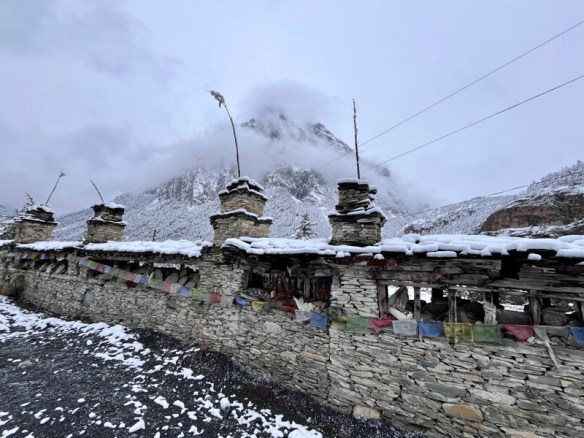
Above 2,000 meters, we meet more travelers. The landscape changes; no more rice fields, no more banana trees. Tibetan Buddhism becomes more visible. Prayer flags flutter in the wind; we walk past prayer wheels, mani stones, and small stupas. The villages have gateways.
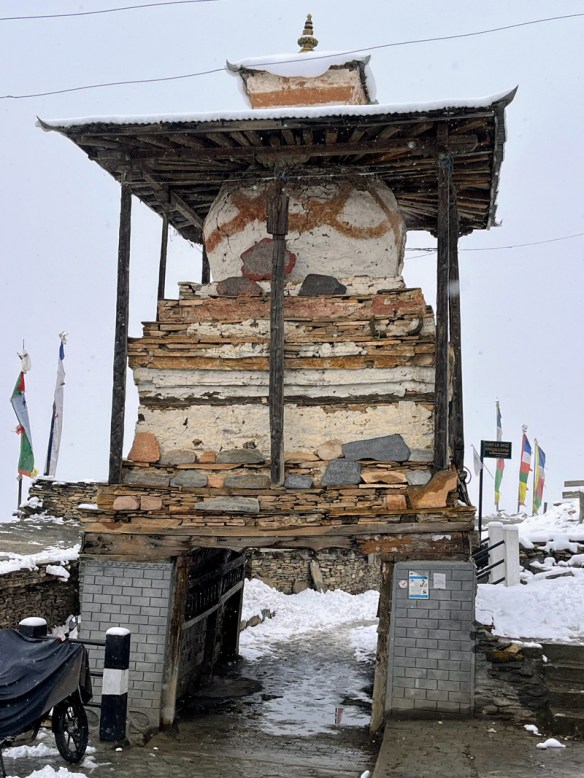
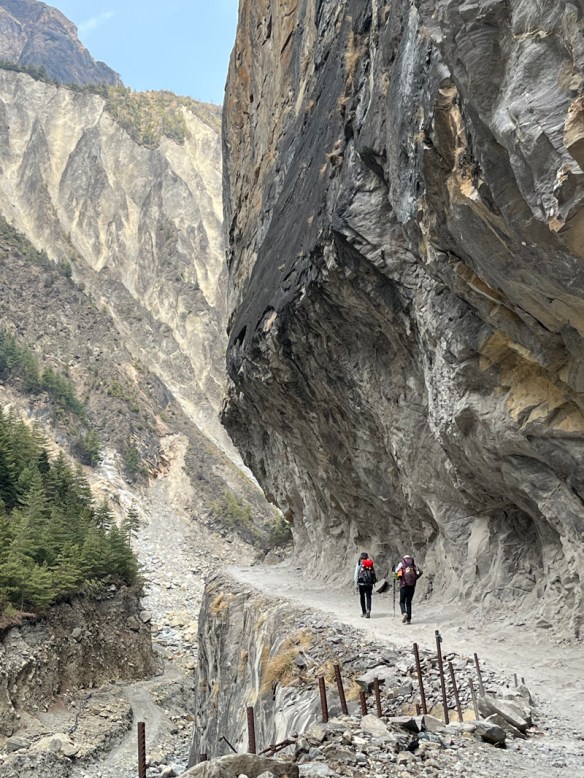
The path becomes steep, and when we reach Upper Pisang, it starts to snow. It gets cold, but the wood stove is lit in the dining area. The next morning, we walk through a white, misty world. Later on, when the mist disappears, we have a beautiful view of the high mountains.
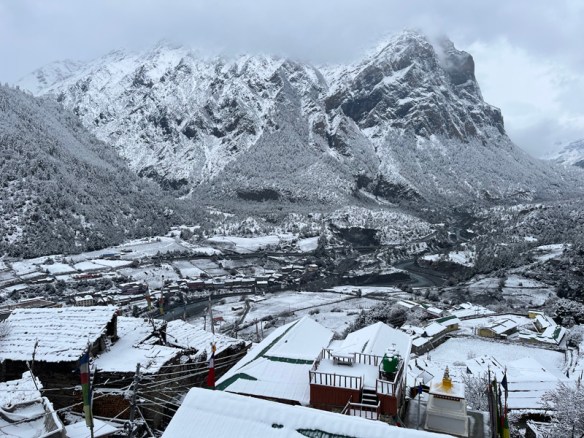
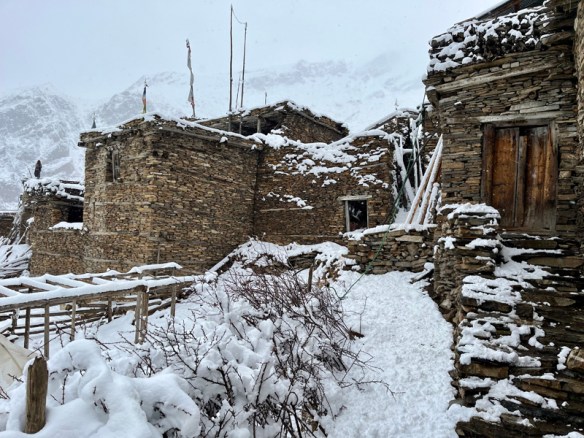
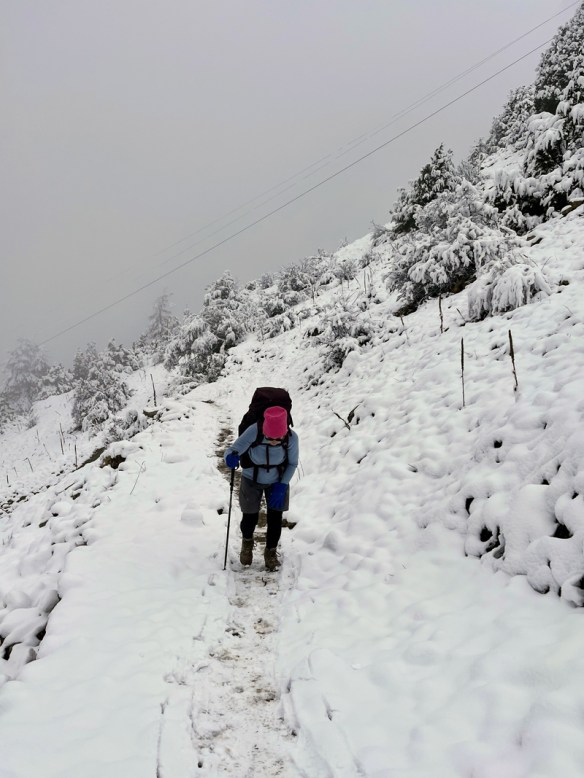
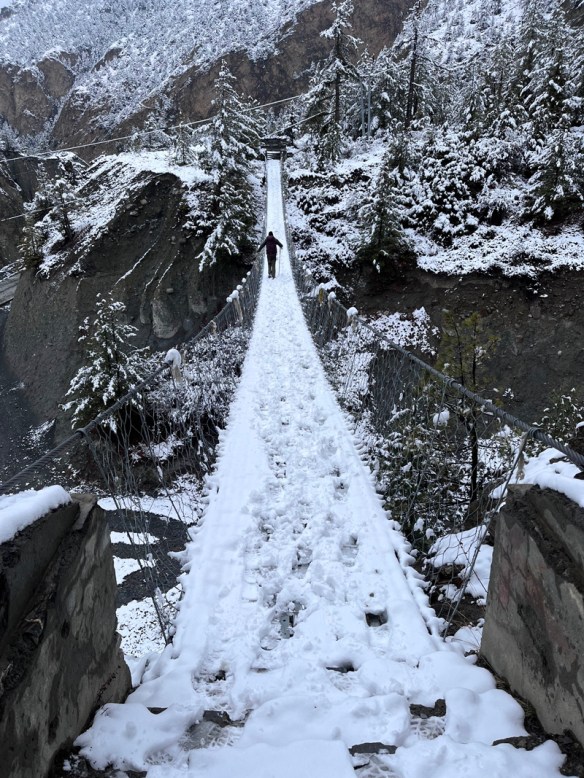
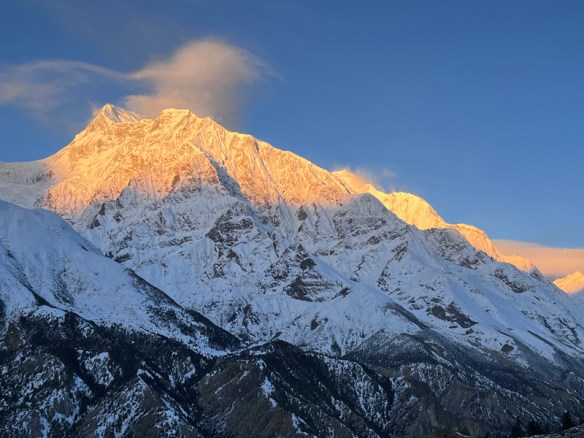
We walk to Mungji Bhraka at an altitude of 3,700 meters. The views from the dining room are breathtaking. But it’s cold (-10°C), and the small wood stove is only lit in the evening. The rooms are unheated. There is the option to climb another 1,500 meters in the next days and cross the Torung-La pass. We decided to leave that altitude and the snow to others and turn around.
The hike back makes us realize what altitude means; from snow and freezing cold, we descend about 2,000 meters in a few days to a ‘tropical’ landscape once again. We look with a different gaze; the perspective is different. Descending is really faster than climbing. And we get some help. “Taxi sir?” For part of the trek that can only be done by road, we hitch a ride in a jeep. Later, during a tropical rain shower, a tuk-tuk gives us a lift. And then the hotel room from the start awaits us again.
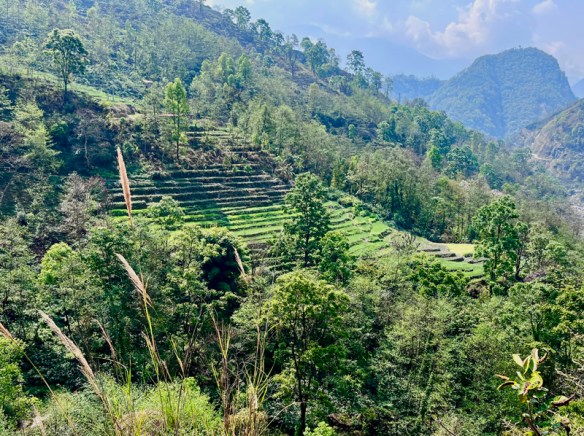
Besisahar, Bahundanda, Jagat, Dharepani, Chame, UpperPisang, Ngawal, Mungjji Bhraka, Dujhur Pokhari, Dharepani, Jagat, Tal, Besisahar
.
.

 about walking and cycling, ...