(1) Nepal – The Himalayas

the Annapurna Cirquit Nepal is the land of the Himalayas – the mountains are the primary reason for our visit to the country.
Our focus is on making a trekking; a backpack with only the most essential items, as light as possible, but with everything we need.
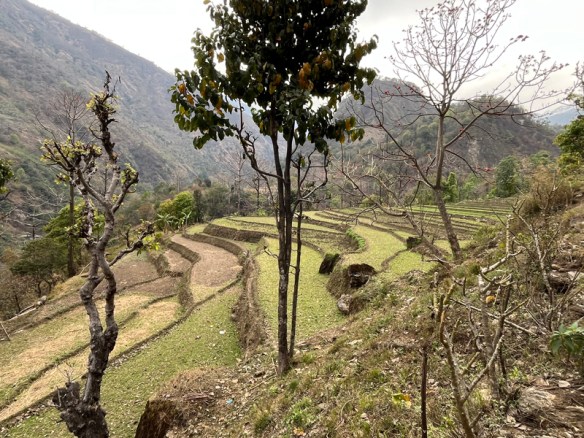
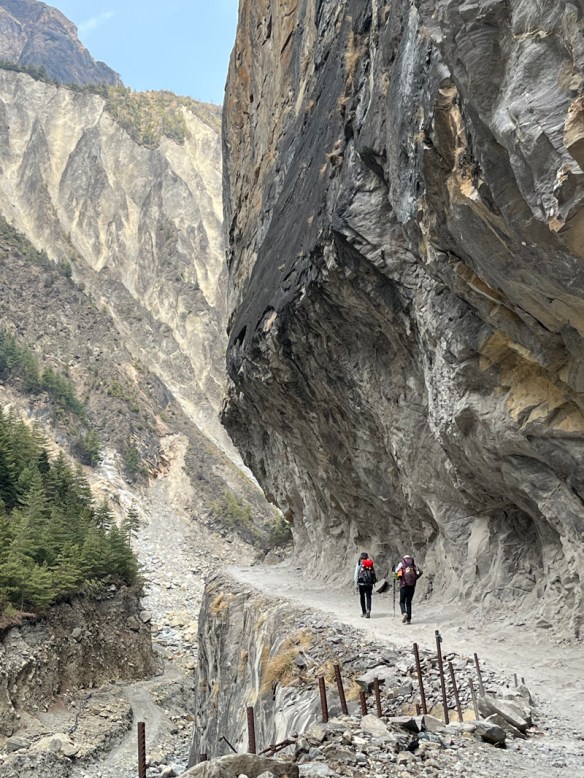
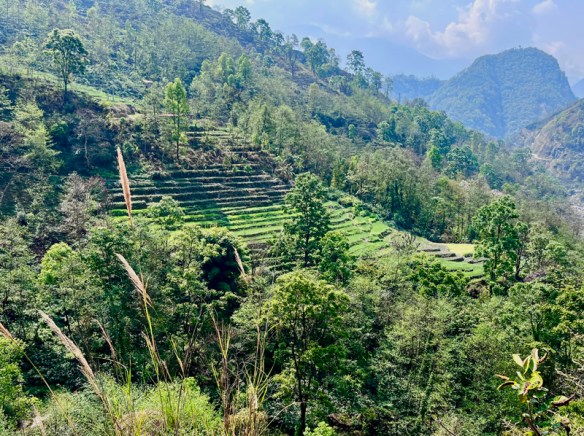
We start our trek, the ‘Annapurna Circuit’, in a relatively low-lying area. We walk through green rice fields, vegetable gardens, and small villages. On the other side of the river, we see the road, where work is being done on hydroelectric power plants in several places. That road also offers the opportunity to drive into the mountains by jeep, which many people with limited time do. We ascend slowly.
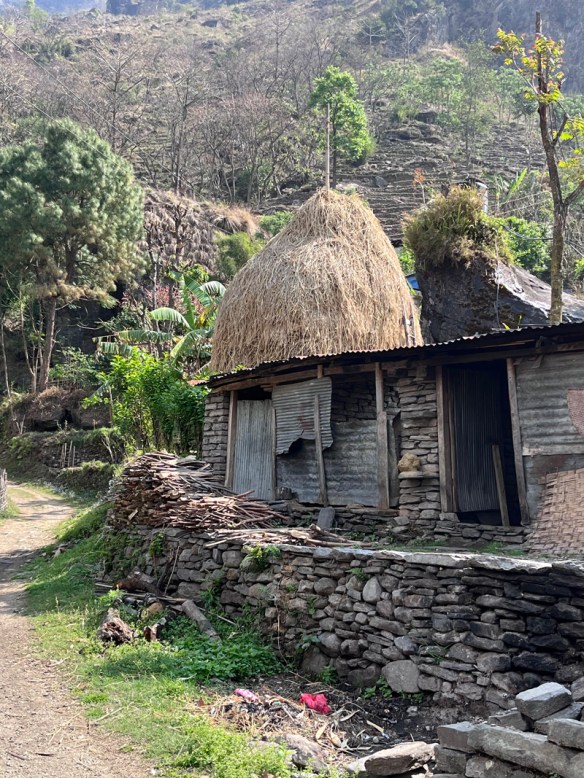
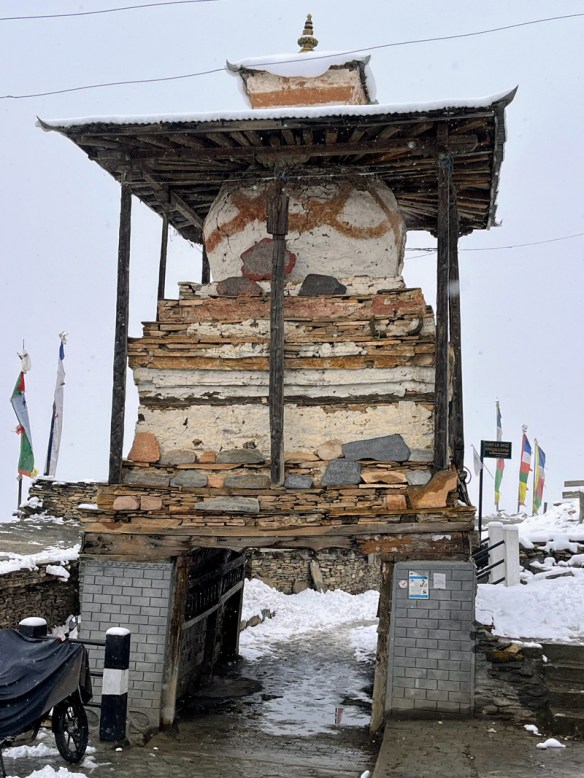
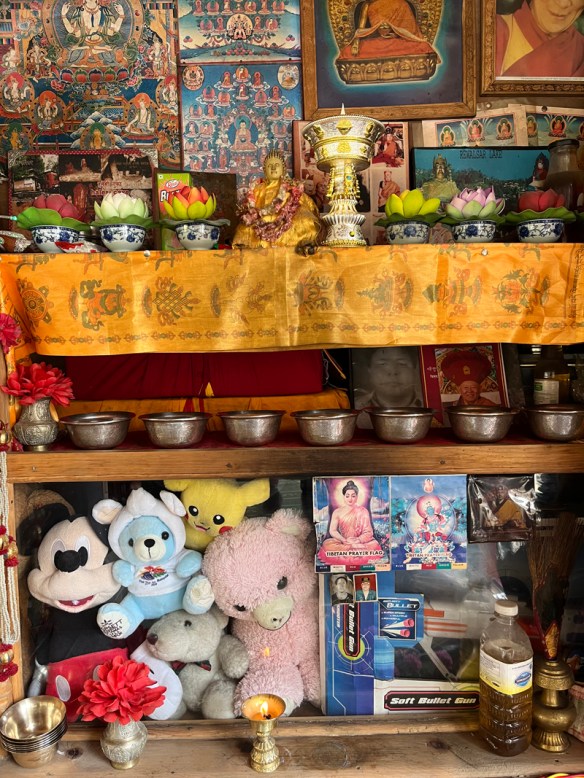
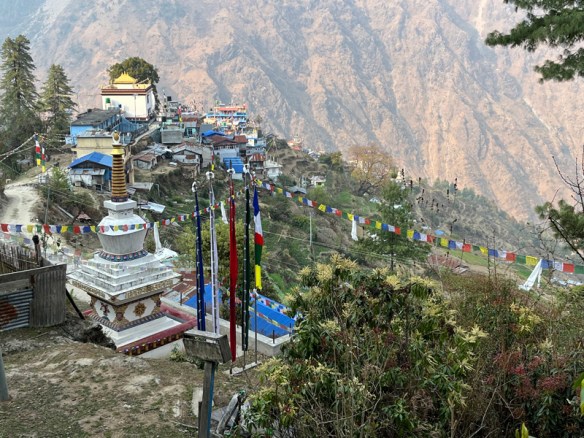
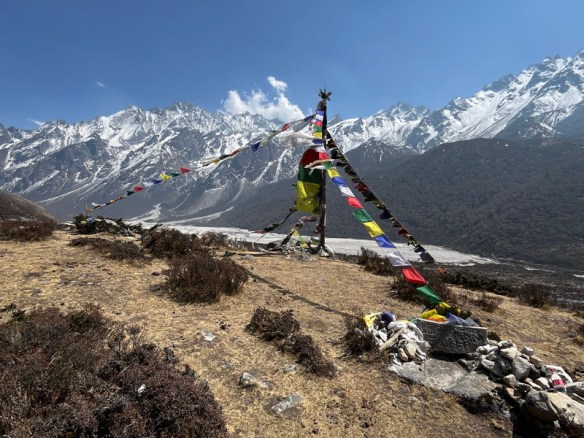
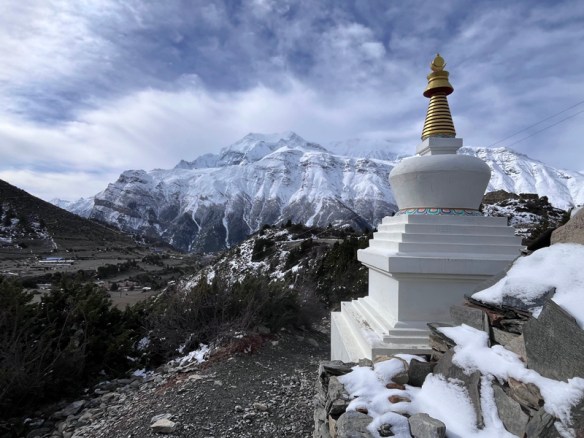
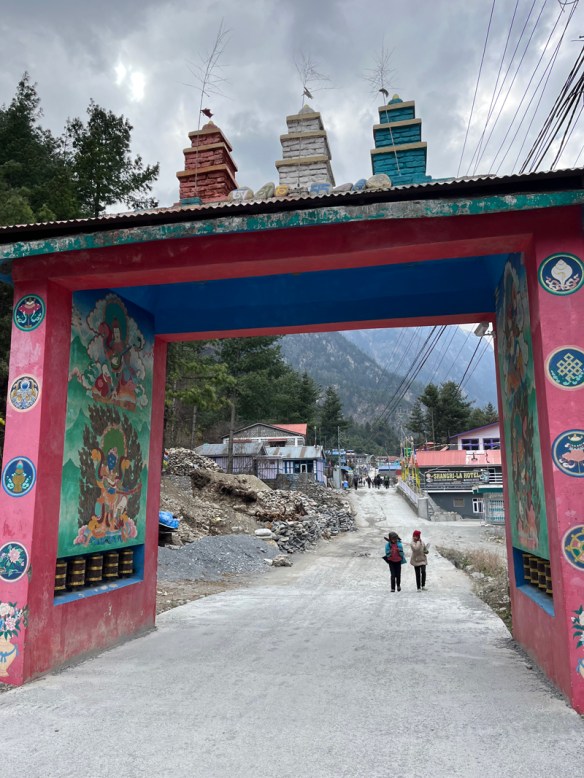
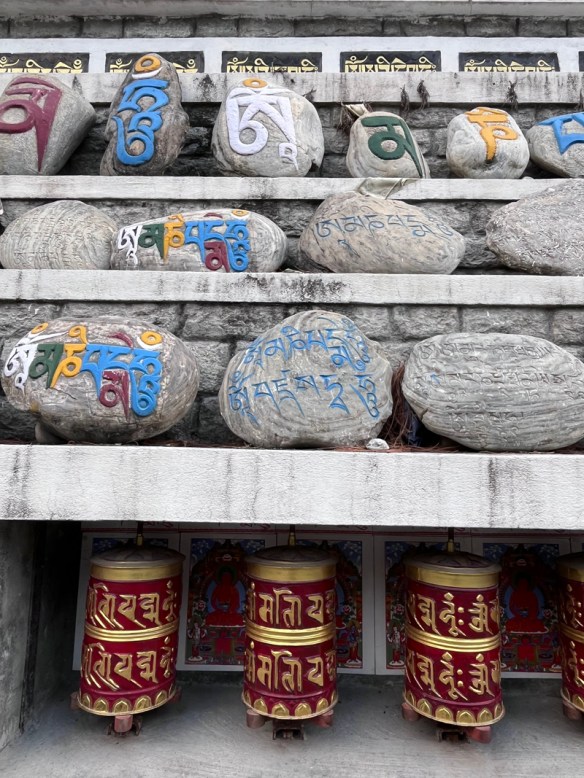
Above 2,000 meters, we meet more travelers. The landscape changes; no more rice fields, no more banana trees. Tibetan Buddhism becomes more visible. Prayer flags flutter in the wind; we walk past prayer wheels, mani stones, and small stupas. The villages have gateways.
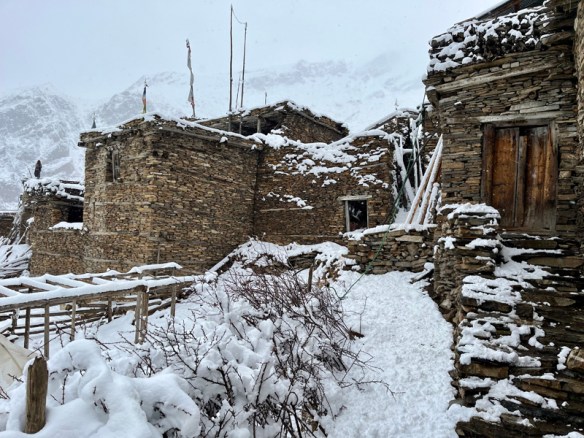
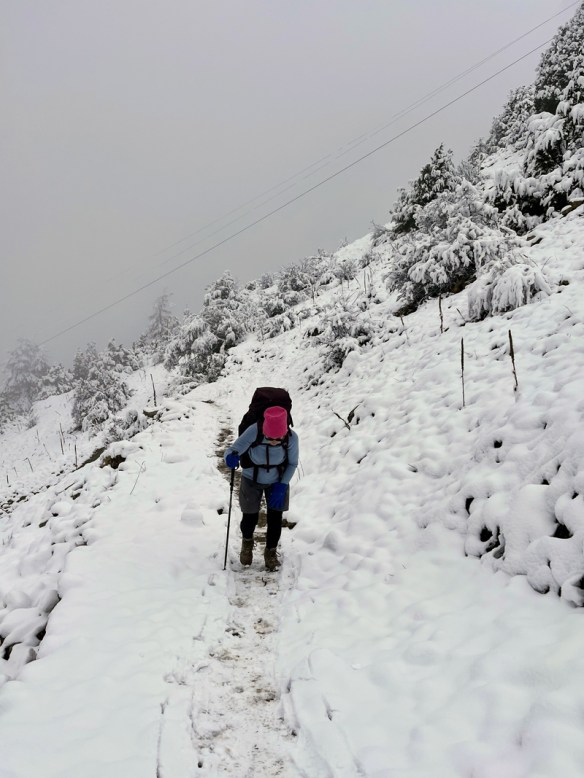
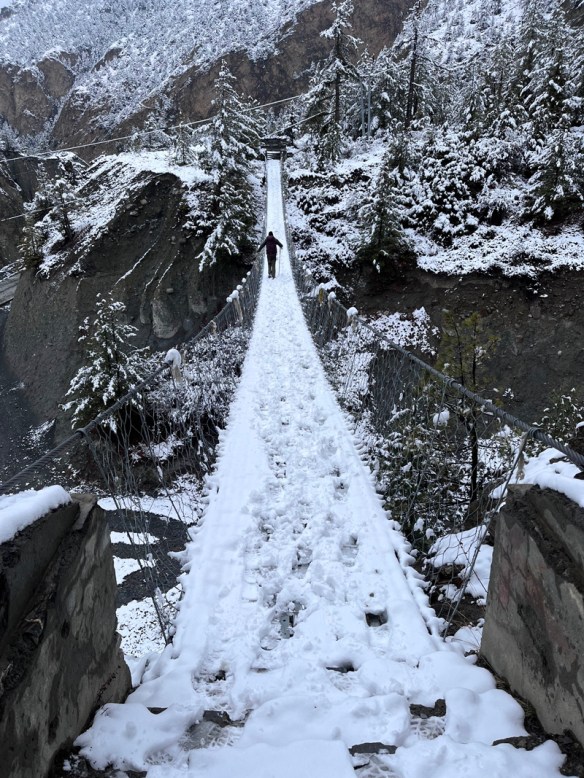
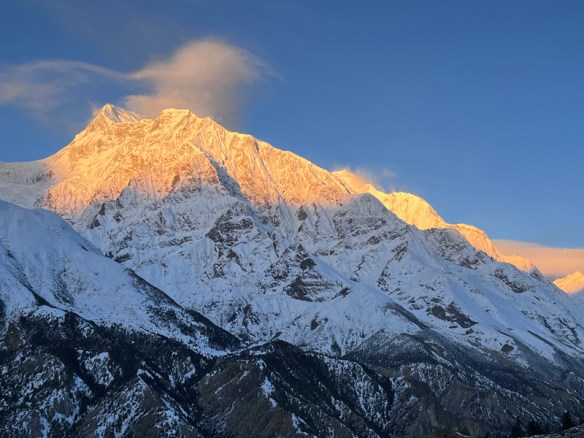
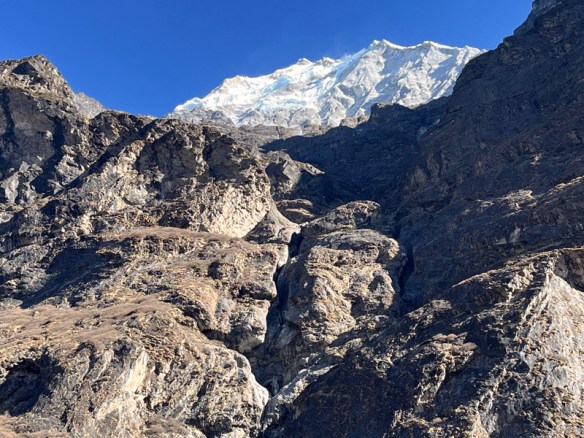
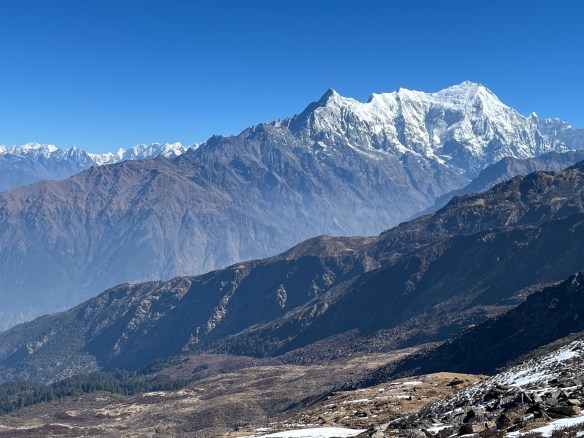
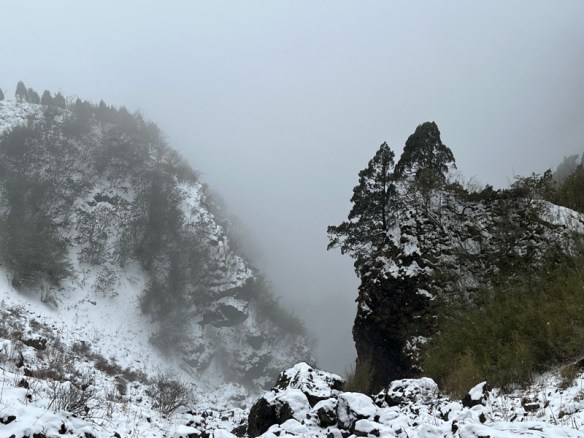
The path becomes steep, and when we reach Upper Pisang, it starts to snow. It gets cold, but the wood stove is lit in the dining area. The next morning, we walk through a white, misty world. Later on, when the mist disappears, we have a beautiful view of the high mountains.
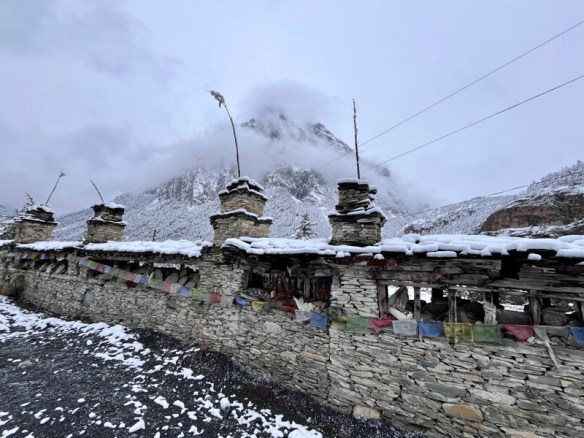
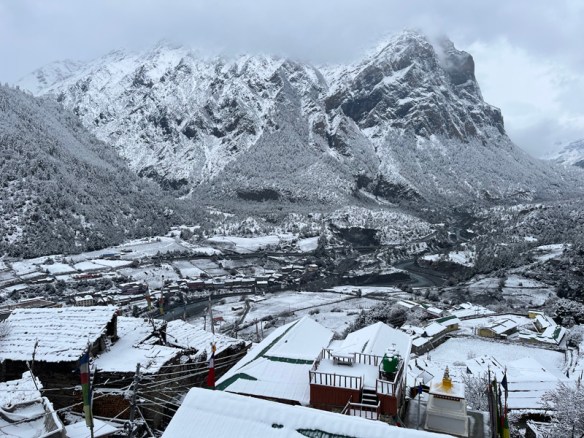
We walk to Mungji Bhraka at an altitude of 3,700 meters. The views from the dining room are breathtaking. But it’s cold (-10°C), and the small wood stove is only lit in the evening. The rooms are unheated. There is the option to climb another 1,500 meters in the next days and cross the Torung-La pass. We decided to leave that altitude and the snow to others and turn around.

The hike back makes us realize what altitude means; from snow and freezing cold, we descend about 2,000 meters in a few days to a ‘tropical’ landscape once again. We look with a different gaze; the perspective is different. Descending is really faster than climbing. And we get some help. “Taxi sir?” For part of the trek that can only be done by road, we hitch a ride in a jeep. Later, during a tropical rain shower, a tuk-tuk gives us a lift. And then the hotel room from the start awaits us again.

Besisahar, Bahundanda, Jagat, Dharepani, Chame, UpperPisang, Ngawal, Mungjji Bhraka, Dujhur Pokhari, Dharepani, Jagat, Tal, Besisahar

.

.
(4) The Tea Houses in Nepal

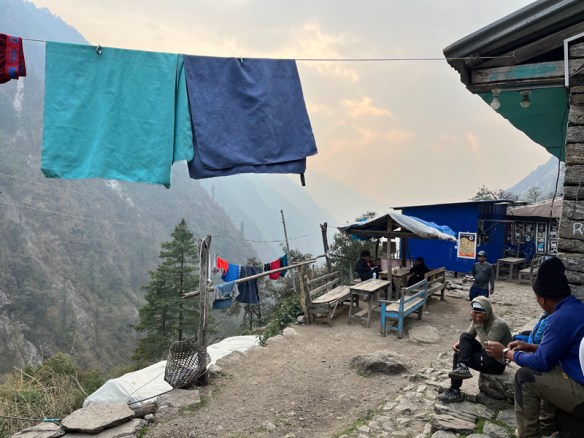
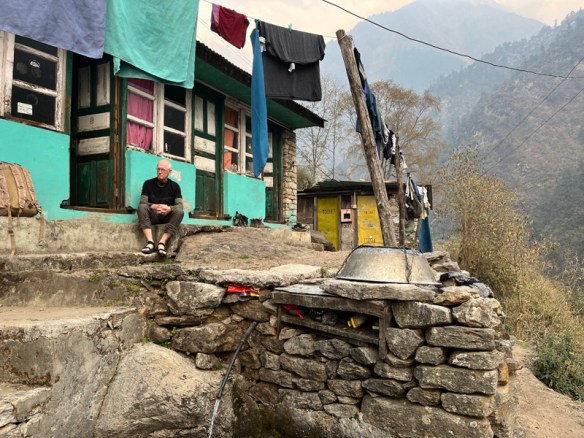
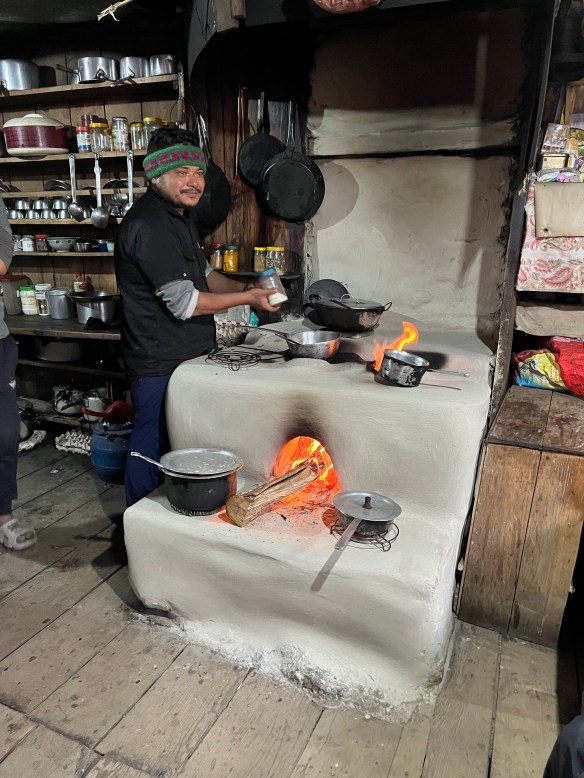
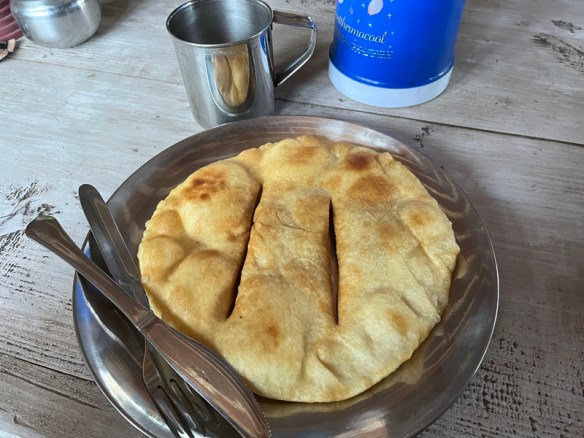
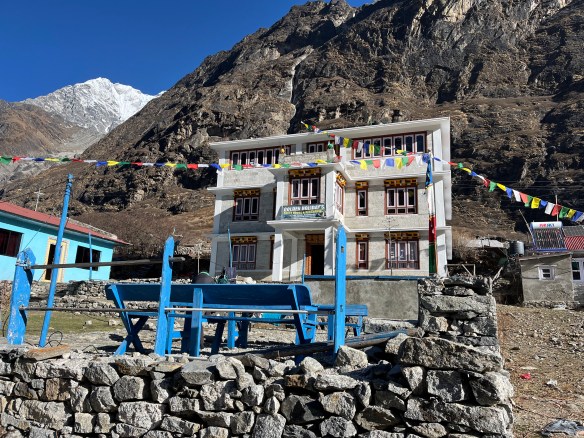
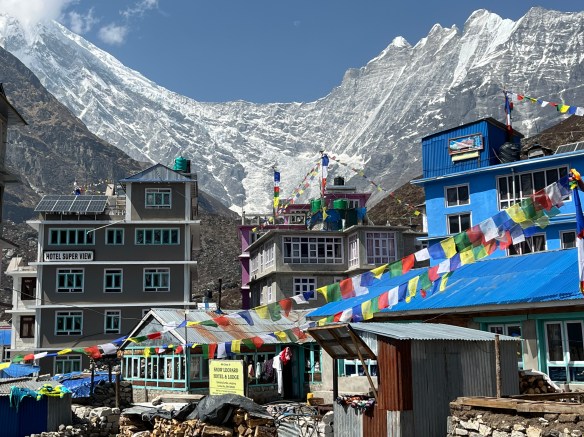
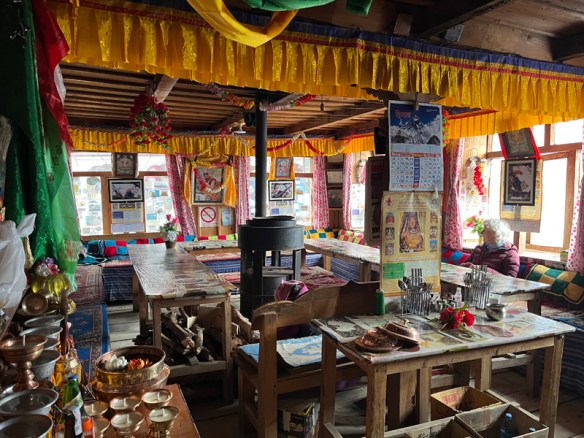
A tea house is what a sleeping- and eating-place is called in the Himalayas. The tea houses themselves speak of Hotel, Guesthouse or Lodge, sometimes with names as Golden Holiday Hotel,…We slept in teahouses in Helambu, Gosainkunda and in the Langtang Valley. They are different and that is probably because some are only open in the season, for a few months. Others are inhabited all year round. They are houses with small two-person rooms. Houses where you are also cooked for. Dahl-Bath Tarkari is a well-known Nepalese dish. It consists of rice, a bowl of lentil soup, some mixed vegetables and a chipati. But noodle soup or Chow-Mein are also on the menu. For breakfast they often make porridge or they bake a pancake, omelette or Tibetan bread. Cooking is done on wood, sometimes in beautiful stone ovens.

When the sun has set, the temperature drops quickly. A central wood stove in the ‘dining room’ then provides some warmth. But even at the stove a coat is usually not superfluous. The bedrooms are unheated. And sometimes it is really cold there. Then sleeping with your clothes on and a hat is the way to stay warm. Sanitary facilities are sometimes inside, but sometimes you have to make do with a shared outside toilet.

It is primitive, but always clean and it is surprising how quickly you get used to it.

.

.
.
(3) Nepal – Langtang Valley

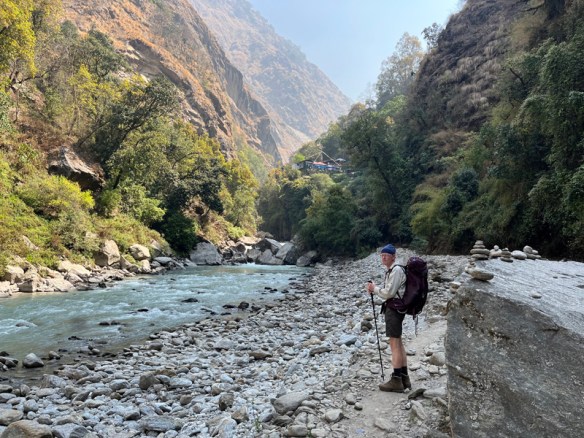
Langtang Valley, was the answer when people asked us where we wanted to go in Nepal. A trek in Langtang VaIley is a popular, fairly short hike if you take the bus to the startingpoint Syabru Bezi. We started not far from Kathmandu in the Helambu, a much less known area. From Tulo Syabru we walked to the valley. it is a route along the river that you walk back and forth.
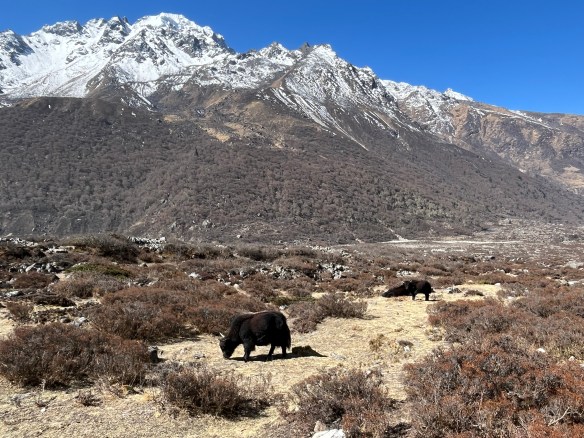
The last village is Kyanjin Gompa at an altitude of over 4000 meter.

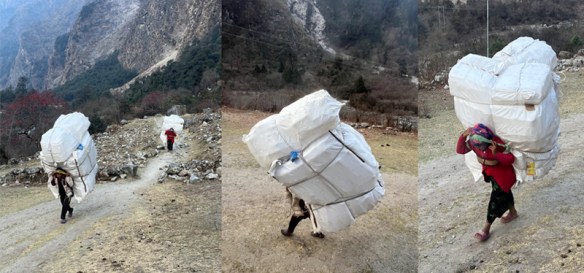
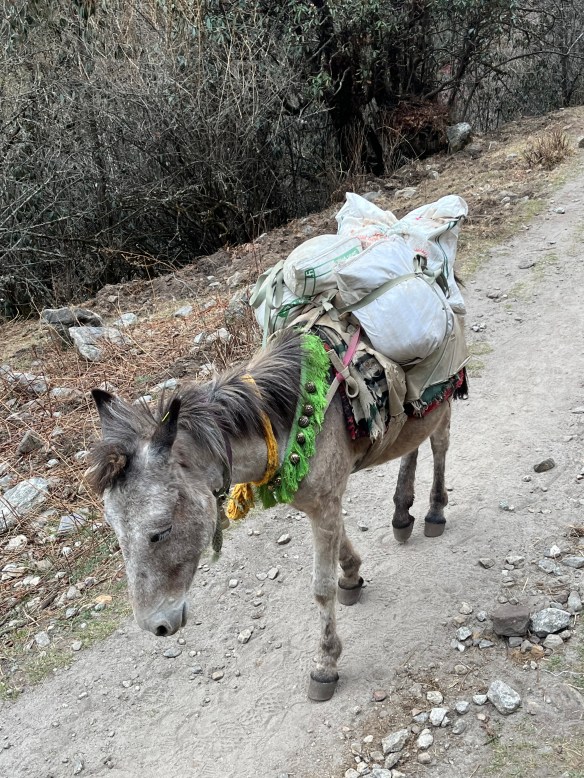
There is no road in the valley, only a path along the river. It means that everything that is needed is transported by porters or by horses.

.
.

.

.Namasté

(2) Nepal – Over the Suryakundapass to Gosaikunda

After a week of walking and gradually increasing ascent, the big challenge is the Suryakunda pass (altitude 4620 meters) to Gosaikunda. We have already passed the Thadepati pass (altitude 3650 meters). And that went smoothly.
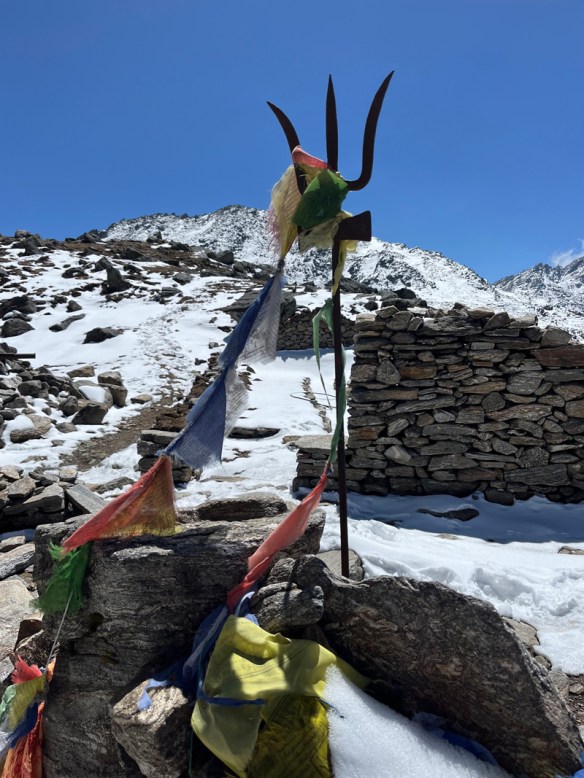
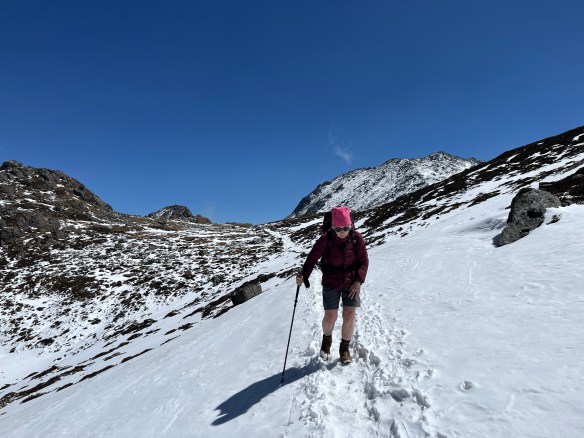
But the next day the altitude really became noticeable. We did not have altitude sickness, but our legs felt heavy. We therefore decided to stay in Phedi, in the lodge and make the crossing the next morning. We were the only guests there. The son, Chean, walked around and when we asked him, he was willing to help us with a backpack the next day, up to the highest point. The next day we left early. The landscape was bare, but beautiful. The pass could be seen from the start. It was tough, but beautiful. On the pass is the Trident of Shiva. Legend has it that the three holy lakes after the pass were made by Shiva by that Trident.

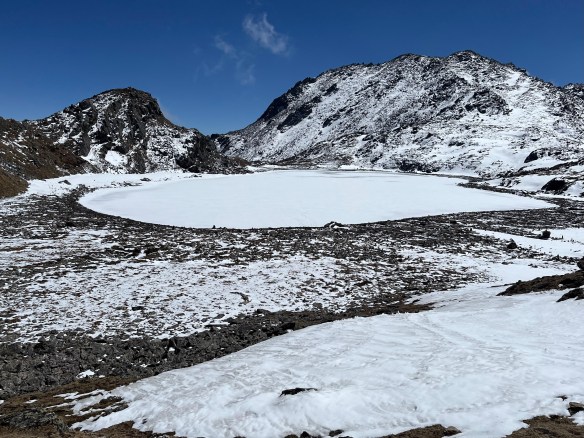
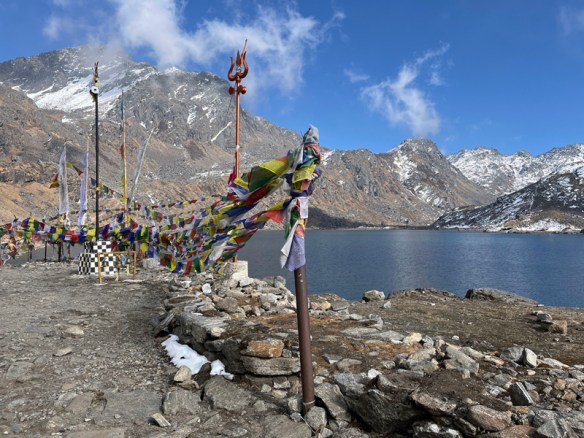
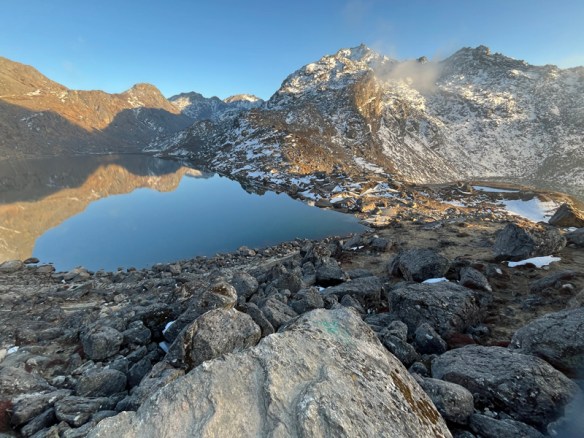
We rested on the pass. Chean descended again and we continued walking. The upper lake was frozen and still covered with snow. It was beautiful and so quiet. Only we were there. Footsteps were visible, and we followed them. Slowly down. We passed another lake and then there was the large holy Hindu lake. It is the place where many Hindu pilgrims go. We passed ceremonial places with many fluttering prayer flags.
Gosaikunda is a collection of lodges on the lake. We chose a room. It was cold, but at 5 o’clock the wood stove was heated.

.

.

.

(1) Nepal – The Dog and the Snow

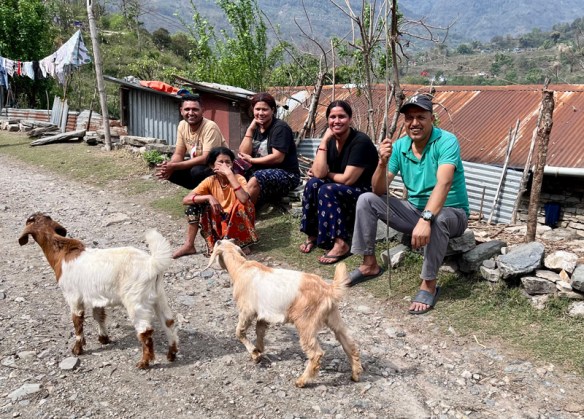
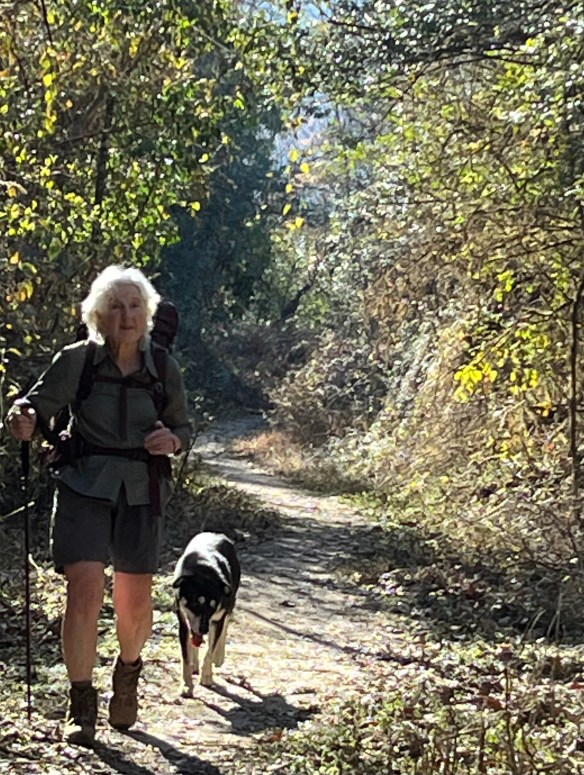
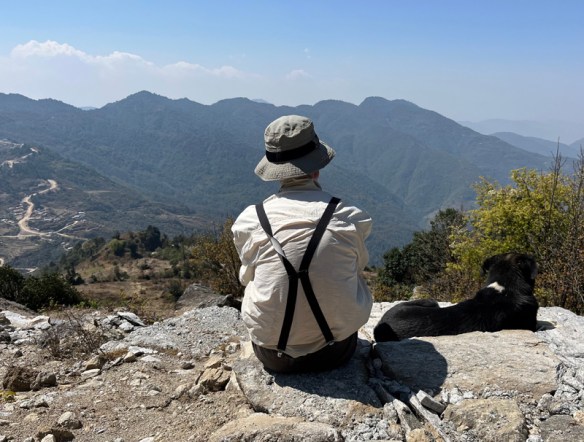
Throughout the Helambu, from the very first day, we had the company of a nice dog; it really became a friend

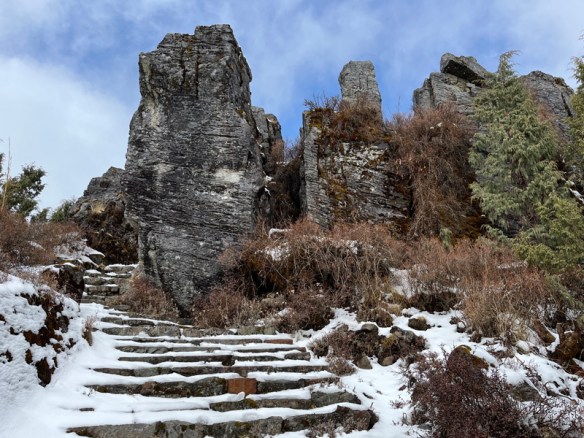
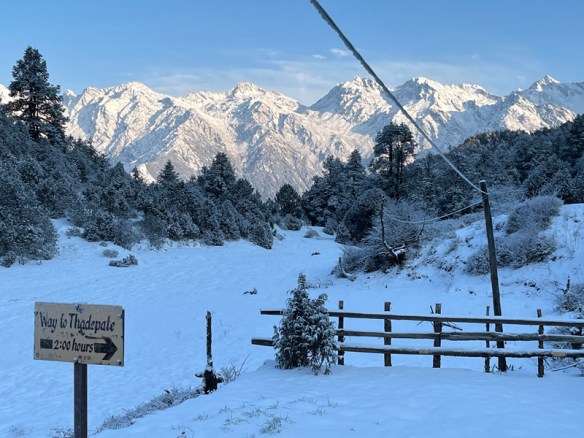
In Magingoth, still in the Helambu, we arrived quite early and we were in doubt whether to stay or continue to the pass and beyond. We walked a bit further, but when we saw the sky getting dark we turned back. And what luck. Not much later a heavy thunderstorm started and it started to snow.

The next morning the sun was shining, the snow was still there. it was magically beautiful.

.

.

.