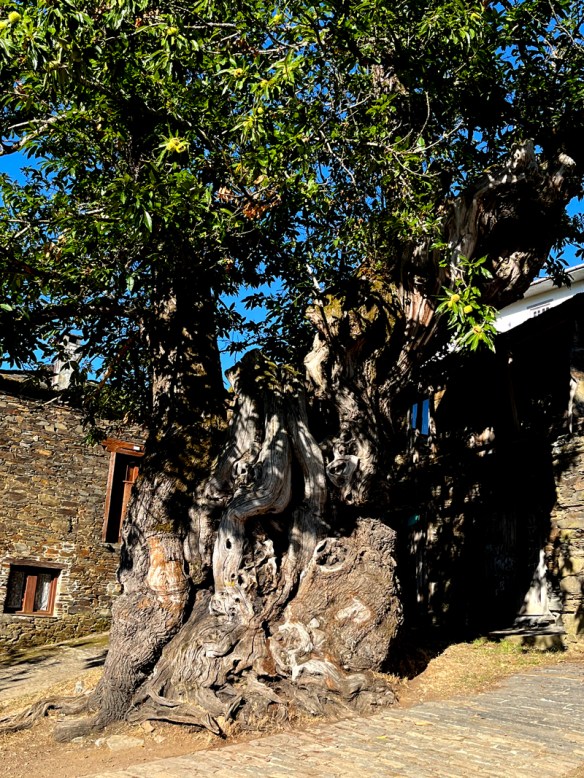
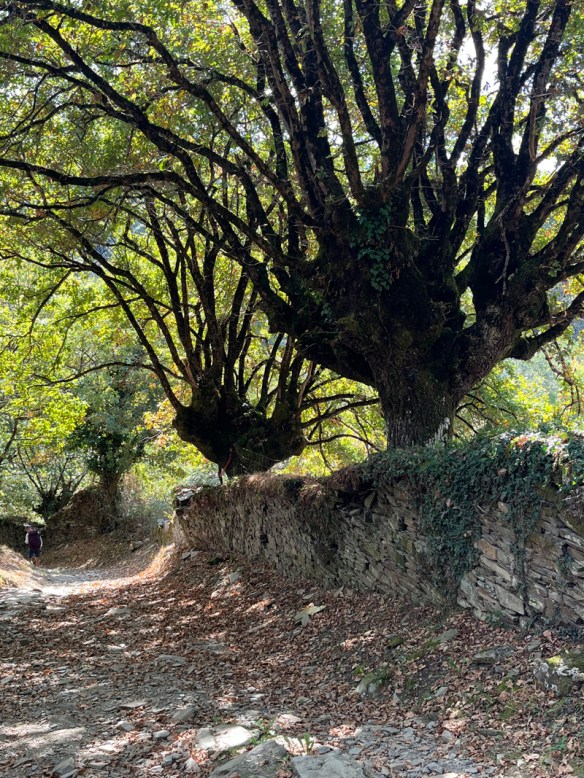
We walked through lanes lined with ancient sweet chestnut trees. In a small village square stands an old one. A sign tells us its age is more than 800 years. What a history that tree has been through.
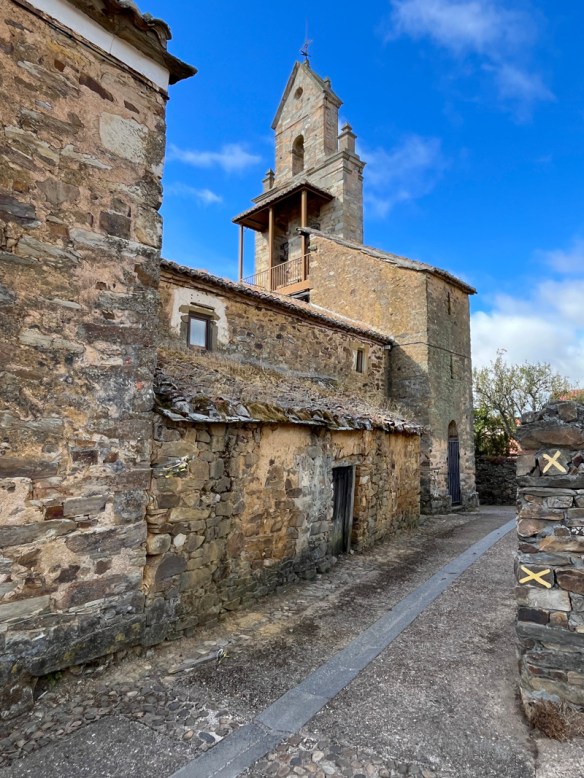
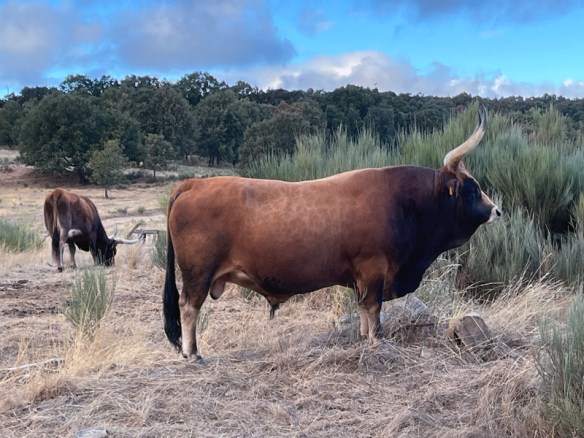
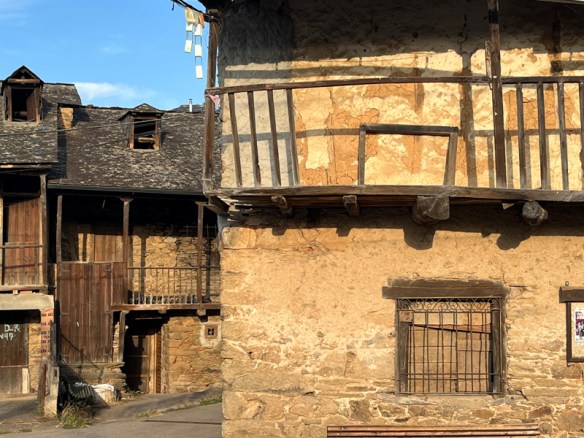
We passed through small villages with old houses and tiny churches. Farmland with cows with magnificent horns.
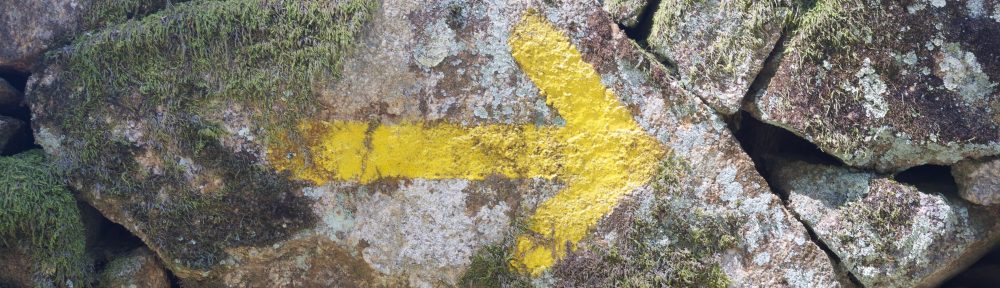
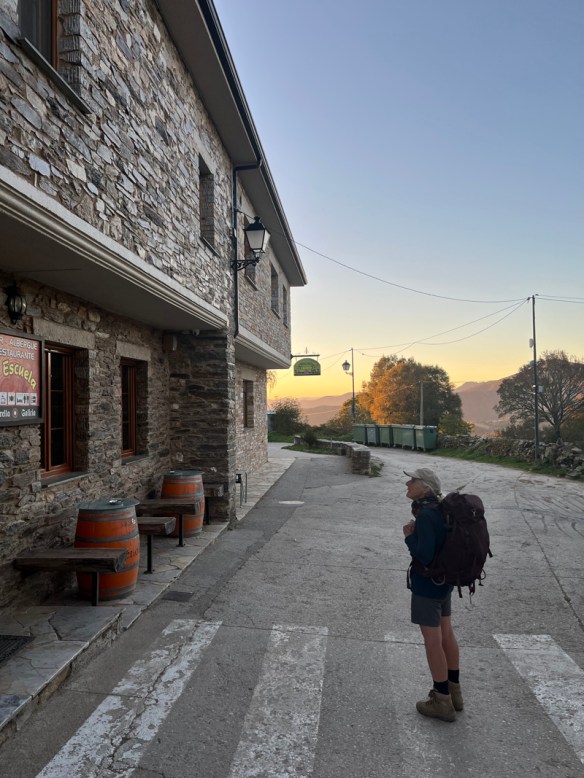
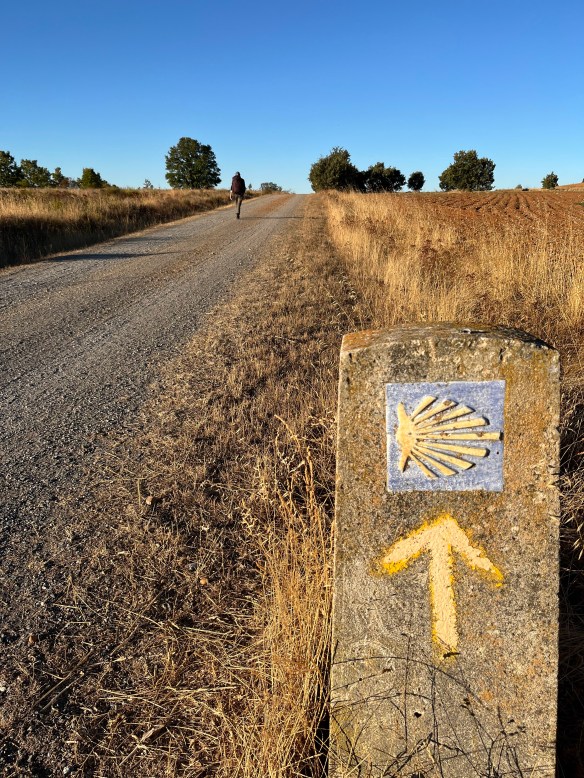
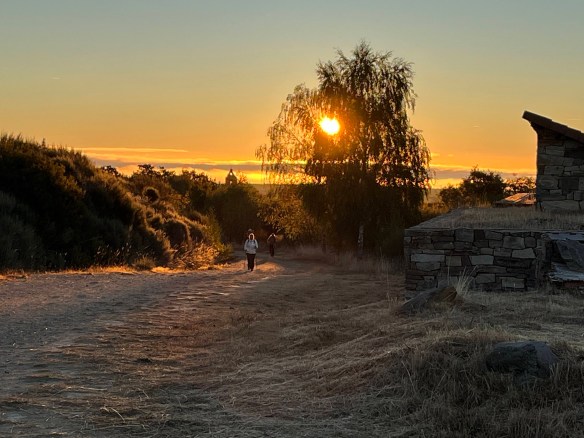
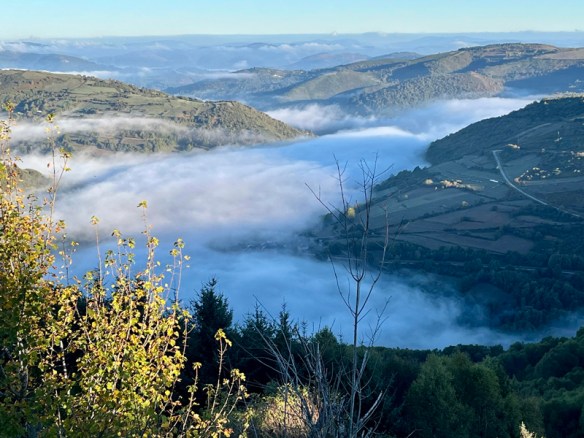
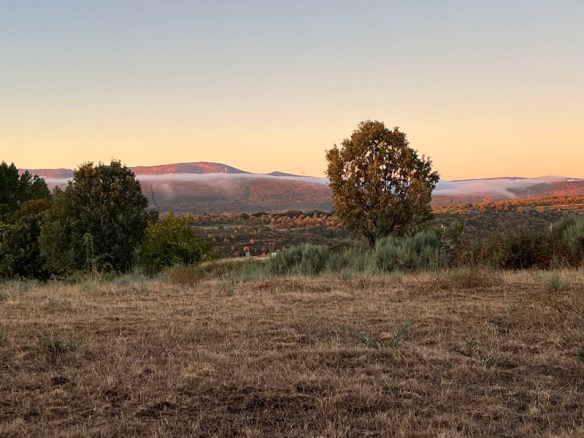
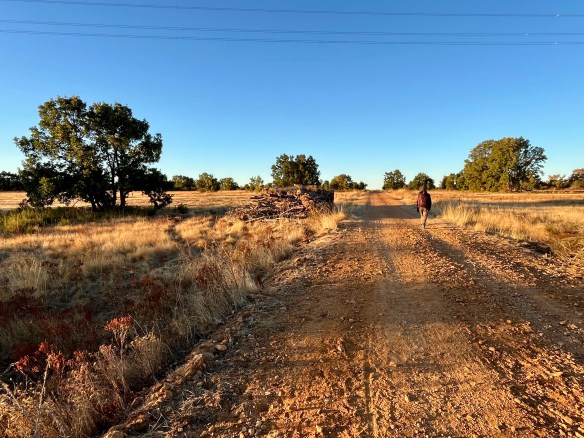
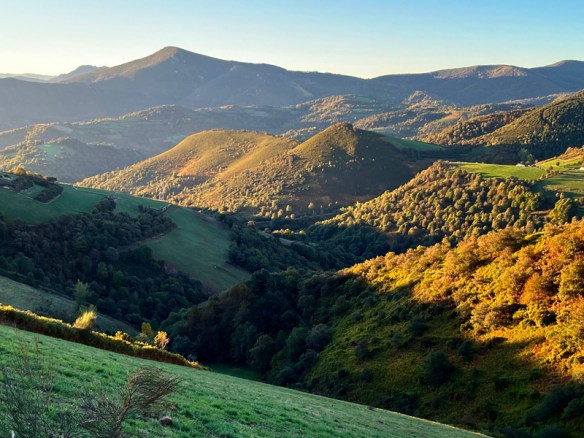
A quick breakfast early in the morning, desayuno. Sometimes a buffet, sometimes coffee and a large slice of cake. And then we’re off, following the yellow arrows. Still cold. The sun just above the horizon. A raking light. An orange glow. Fairytale-like. Low-hanging mist in the valley.
We met a lot of people from South Korea, Taiwan and Japan. Most of them are young. I am always amazed how well-known this Camino is worldwide.
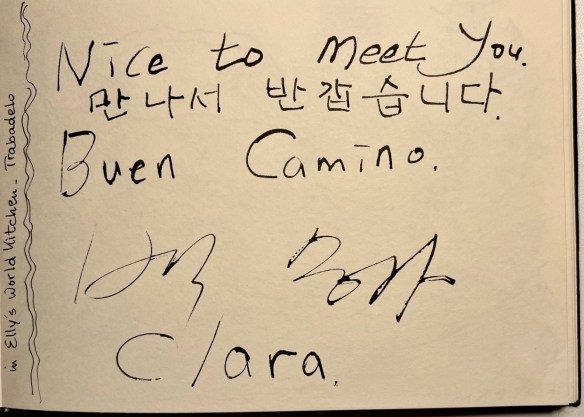
We met a South Korean woman and shared a meal at Elly’s World Kitchen. South Korean noodle soup. She wrote “Nice to meet you” in her language in my diary, Likewise for us. Buen Camino.
People suffer from blisters or worse. The Camino isn’t always easy. Along the way, there’s a huge statue of a pilgrim whose feet are covered with plasters. I hope he will be better soon.
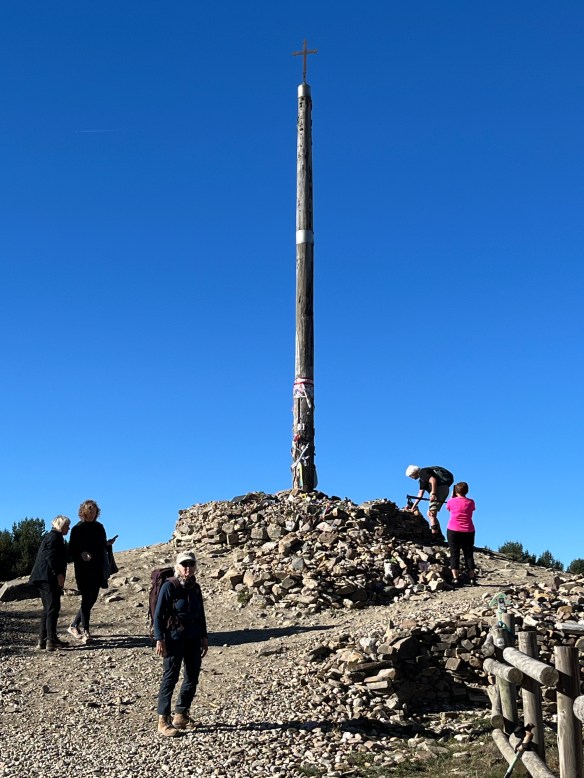
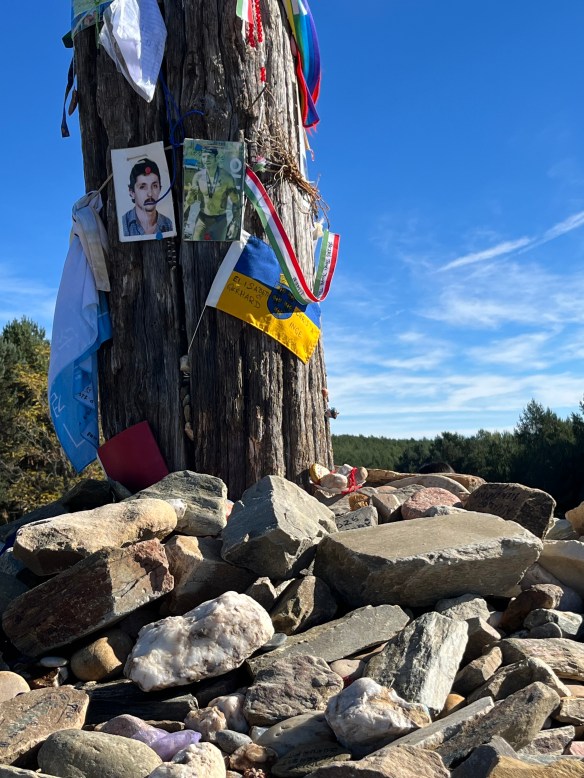
At the highest point of the route stands the iron cross – Cruz de Ferro. (1504m) It’s an icon. One of the reasons to walk the Camino is to honor a deceased loved one. It’s customary to bring a small stone from home and leave it at the cross as a farewell. Doing so, you leave a burden behind.
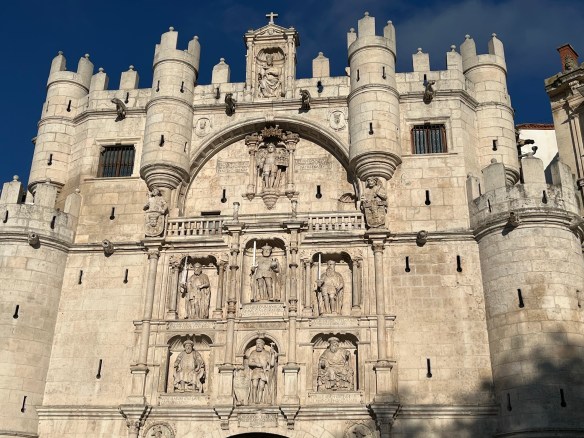
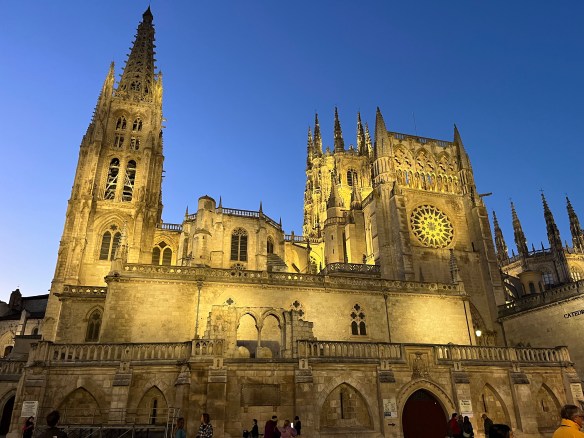
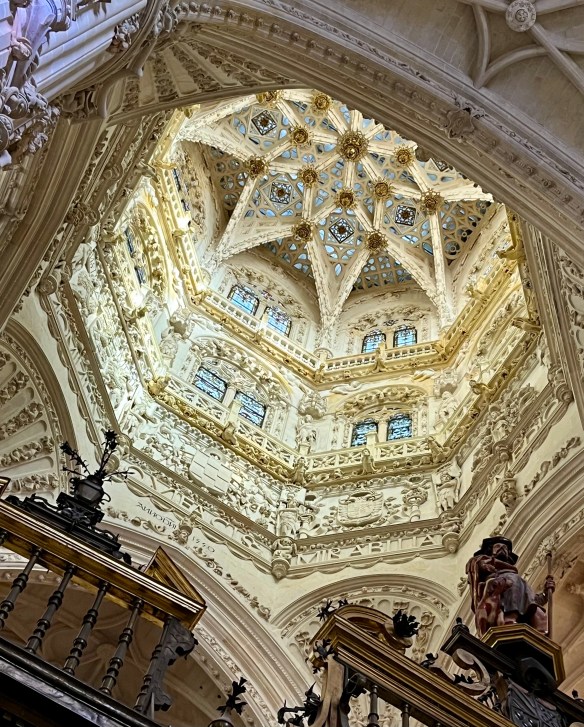
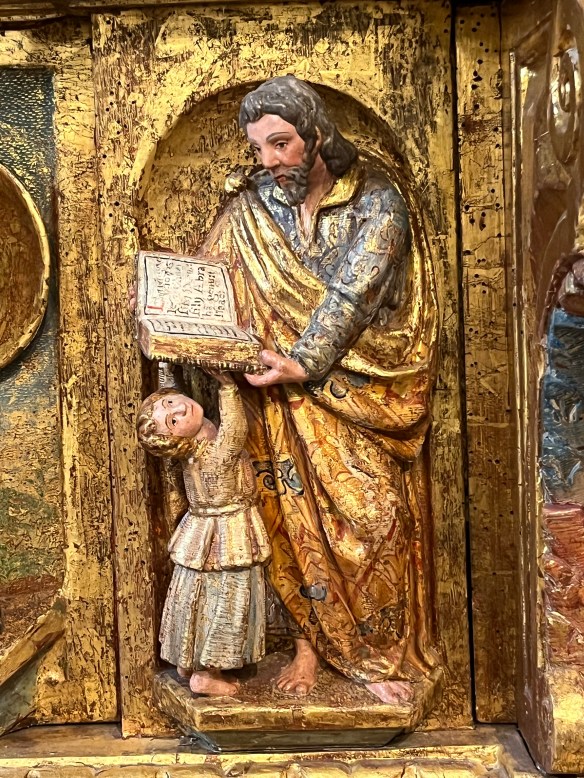
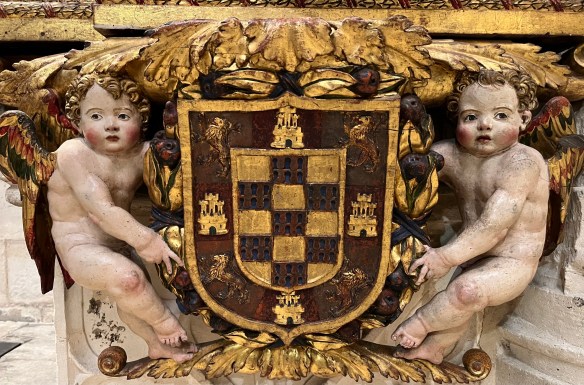
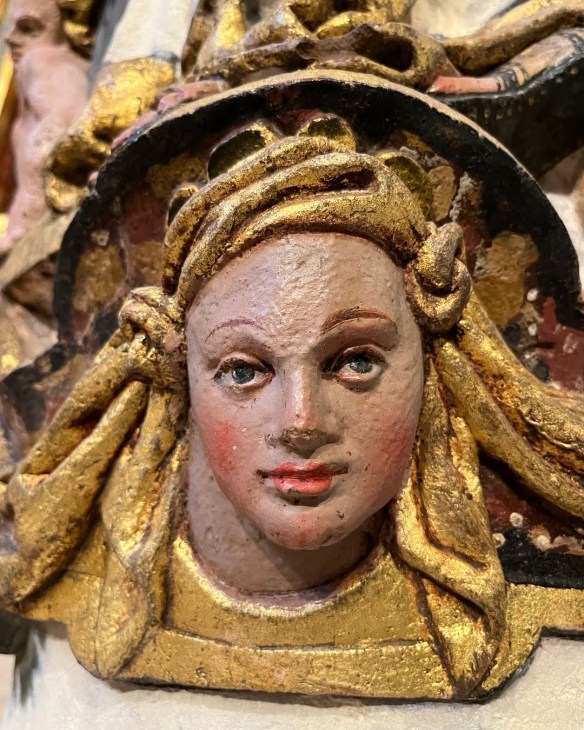
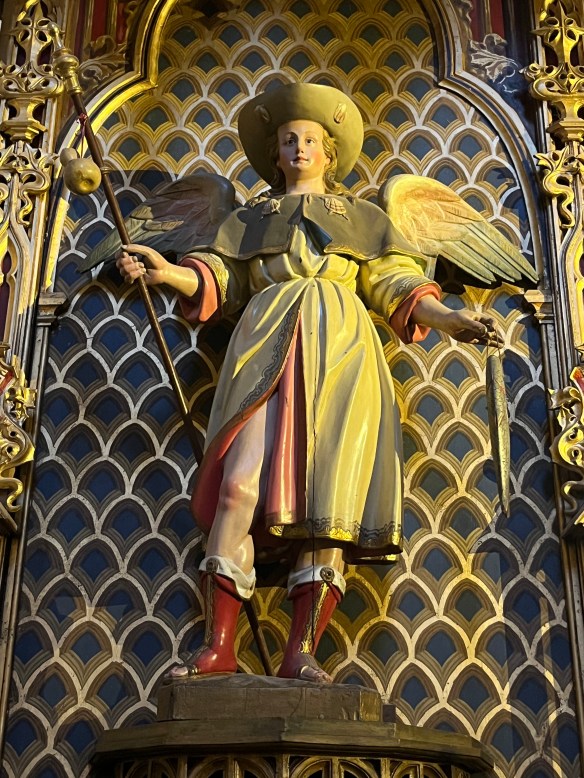
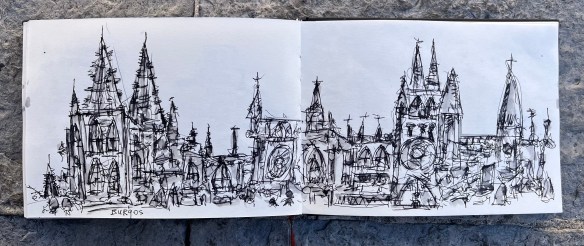
Back in Burgos, we walked through the imposing gate into the old town. And there was the cathedral. This time we also wanted to see the interior. It’s impressive. The cathedral’s foundation stone was laid in 1221 by the King of Castile. The cathedral is full of chapels, with beautiful details. Here are some impressions of it.
Burgos is a milestone for many pilgrims on the Camino. The statue of Santiago in the church demonstrates the centuries-old history of the Camino.
Feeling nostalgic, we ate again at the pizzeria where we’d said goodbye in 2022, with some people we’d met on our trip.
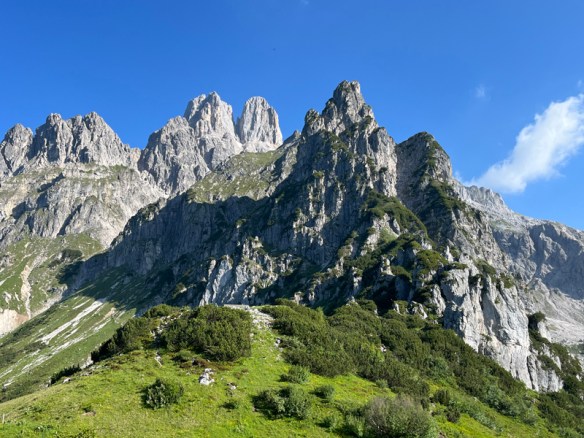
We had not been to the Alps for a long time. We were curious how we would experience it after our trekking in Nepal. We chose the Austrian Dachstein massif. A trek along 7 huts.
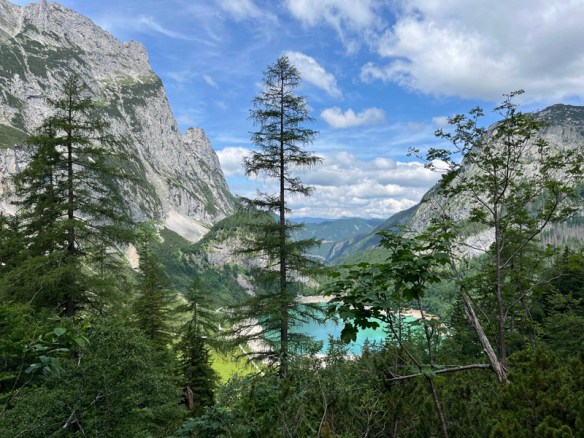
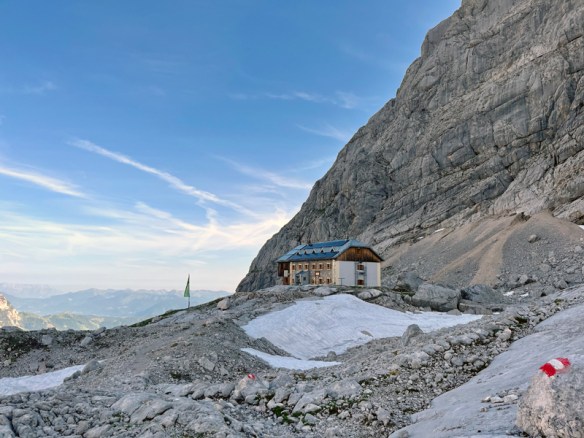
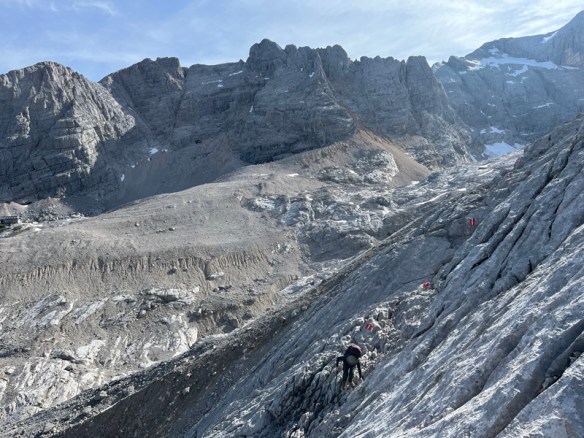
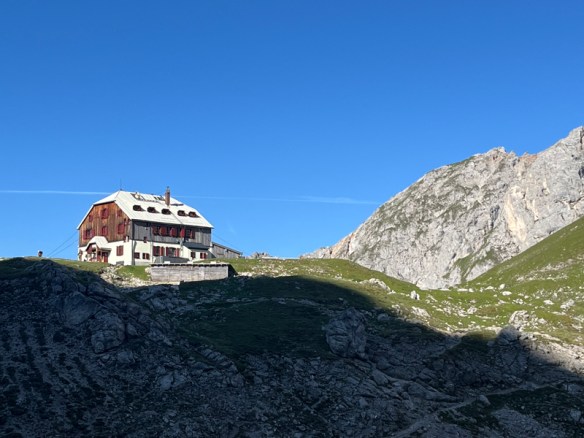
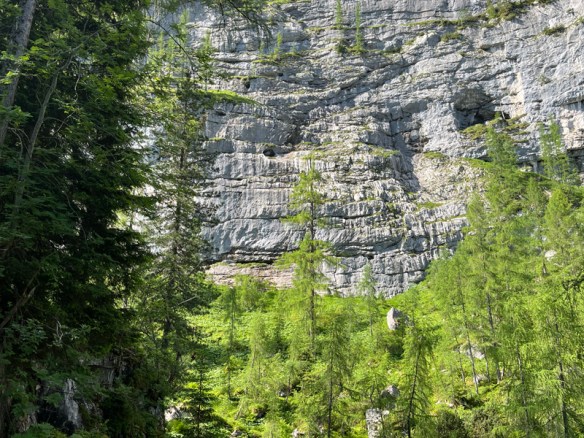
We travelled by train to Salzburg, and from there by local transport to Gosau, the starting point of our hike. We started with a climb through a damp forest. The second day we walked to the Adamekhütte, situated in a spectacular location, under the large Gosaugletscher
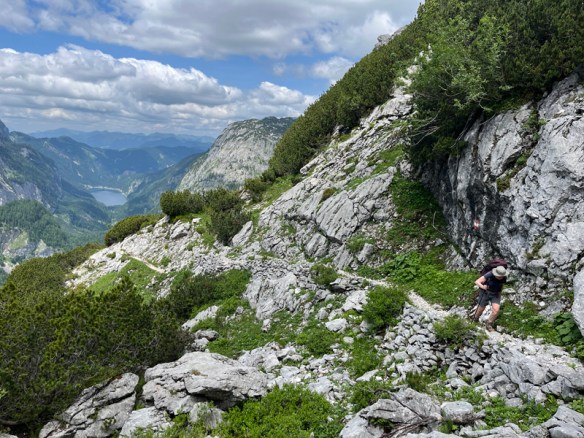
The walk, from there, along the Linzersteig to the Hofpurgelhütte is tough, but very special. It requires constant concentration. But it is great.
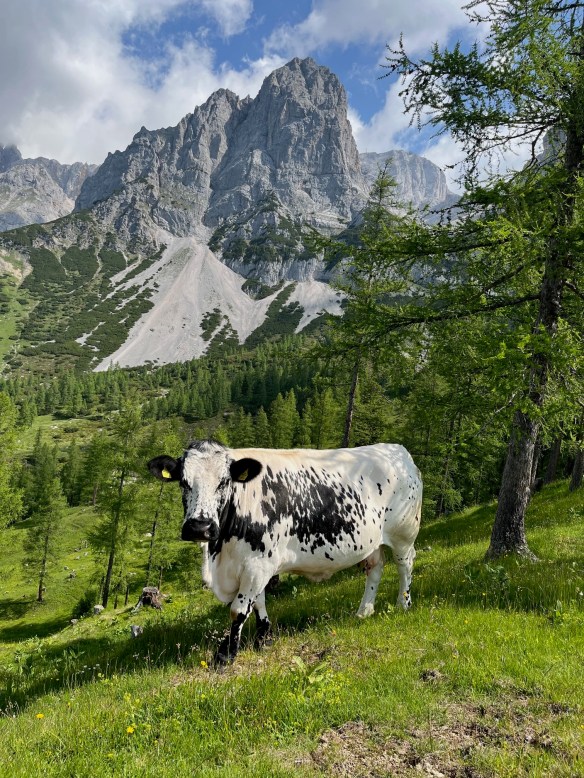
After the Hofpurgelhütte it is easier. We walk over alpine pastures where cows graze. In a farm café we drink thick Buttermilk, and the area around the Austriahutte is also green.
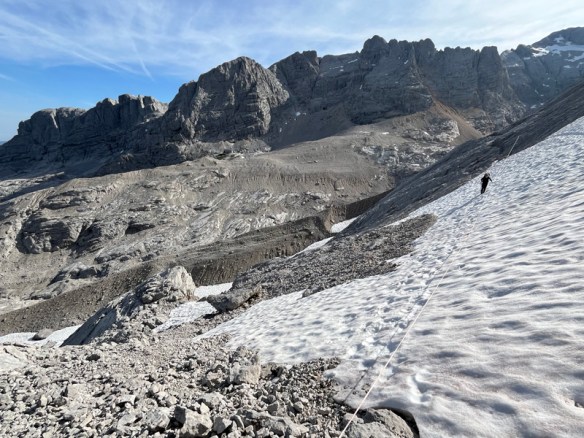
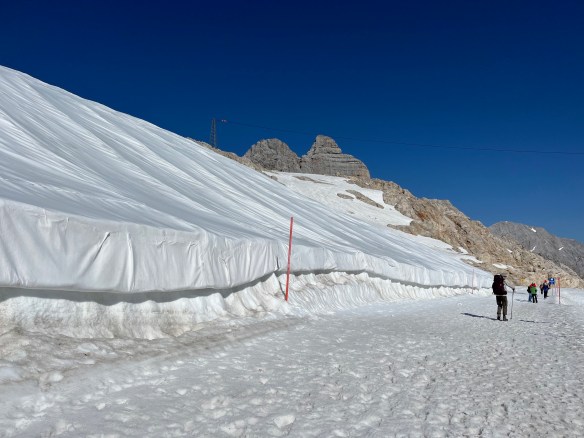
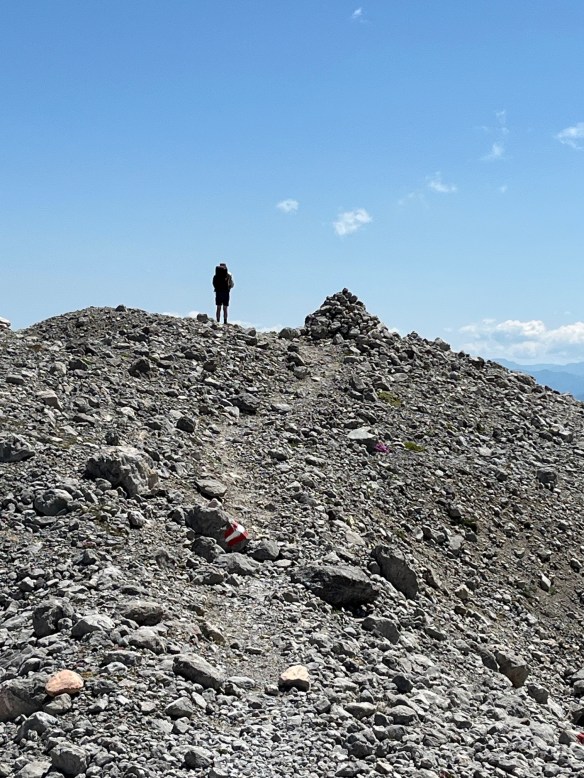
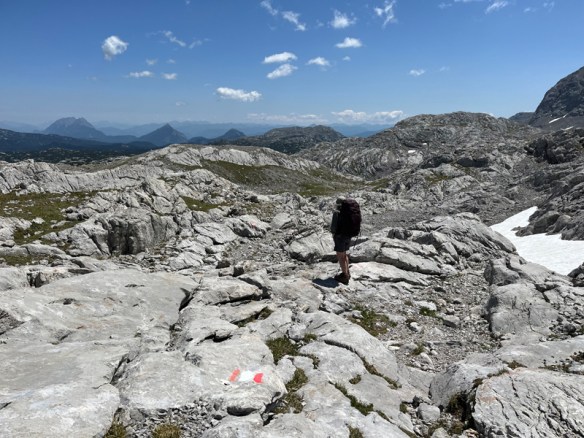
The next day our goal was the Guttenberghaus. In order to avoid the first difficult climb over moraine fields we decided to take the cable car. It turns out to be very popular with day trippers to experience something of the high mountains and the glacier without any effort. The weather is clear. When we have found the start of our path, the markings of red and white paint strokes are easy to find. It is the weekend and the hut is very crowded. Most guests come from the other side, from the valley. They are there to climb on the rocks around the hut. Helmet on, ropes, hooks …
The next day, after a great breakfast, we walk to the Gjaid Alm Hutte. The ‘Alm’ in the name already indicates that this hut is located a bit lower. When we get close, we see a new Nepalese flag waving. The hut appears to be rented by a Nepalese family. In each hut you can find a kitchen-help out of Nepal; they come from Nepal to Austria after the trekking-season and in September, when they can work in Nepal as a guide again, they travel back. But an entire Nepalese family, who are running a hut …
The last day of walking was a long descent to Hallstatt; a very touristy place. After eight days in the mountains, we entered a completely different world and that took some time getting used to it.
We took the train back to Salzburg. And then back home, thinking about the difference with our trip in Nepal. And there is a difference; a trip in the Dachstein massif is much more difficult. But we could do it.
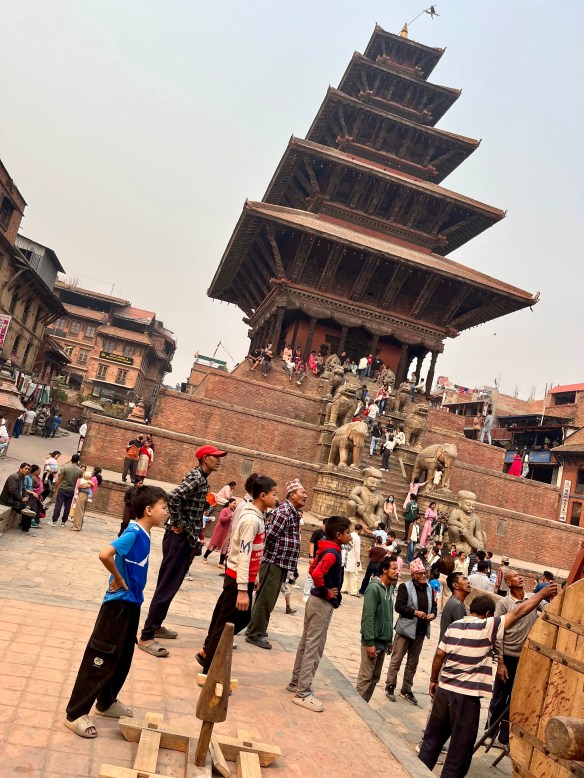
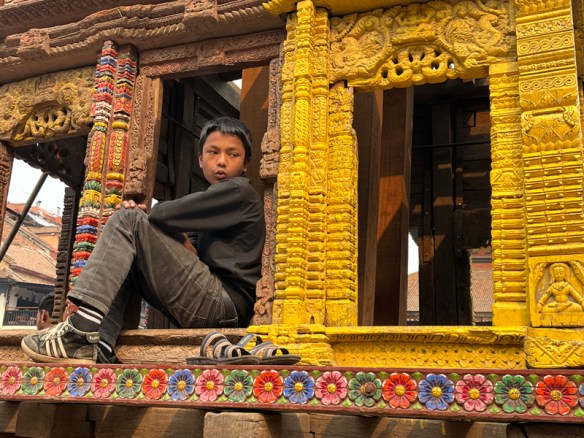
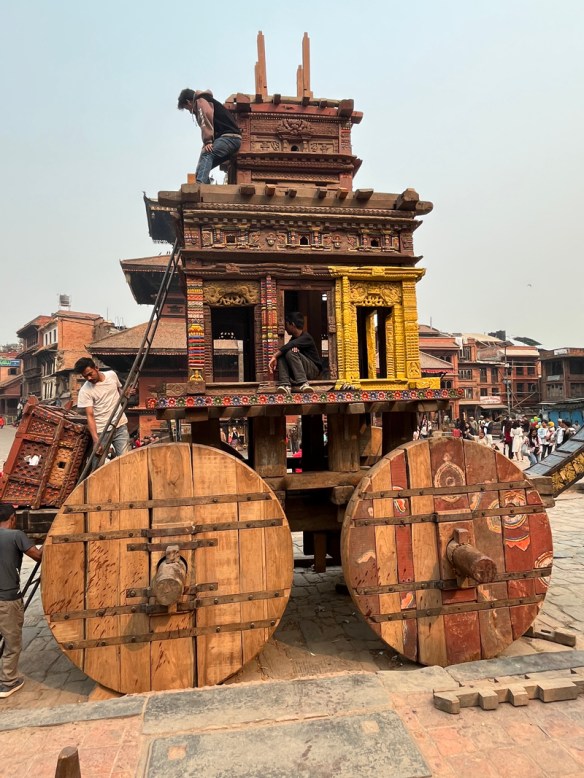
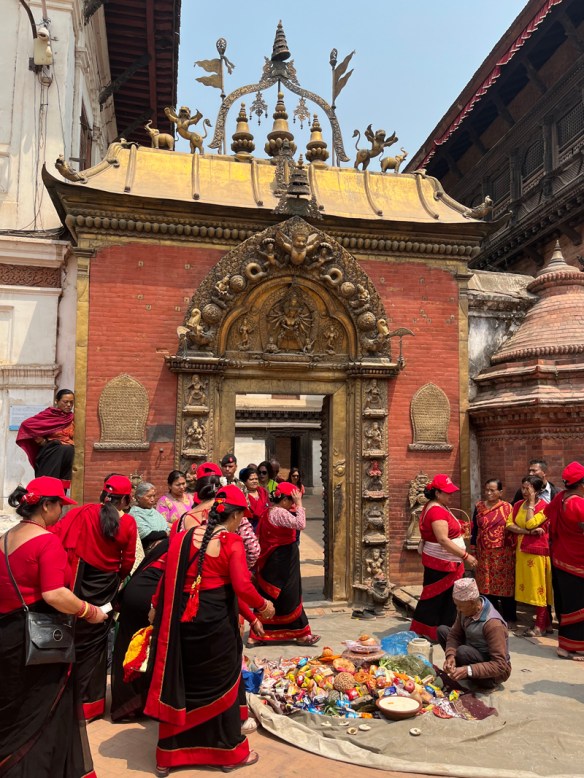
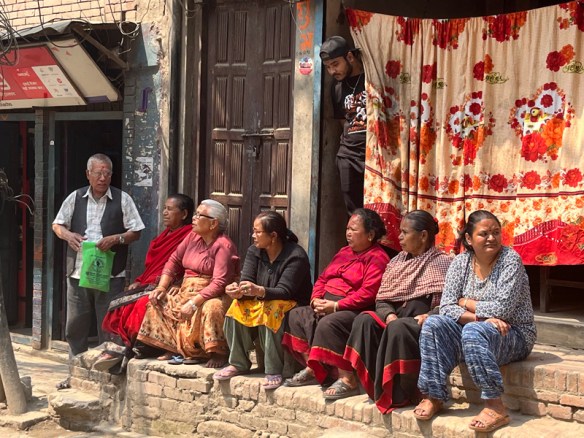
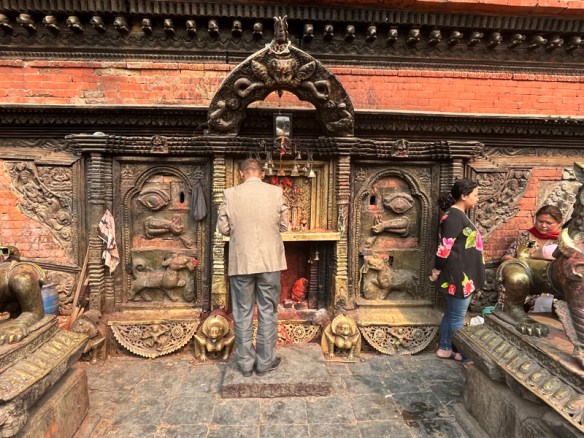
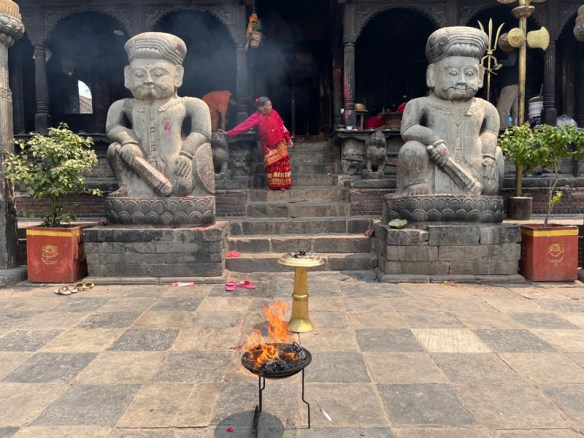
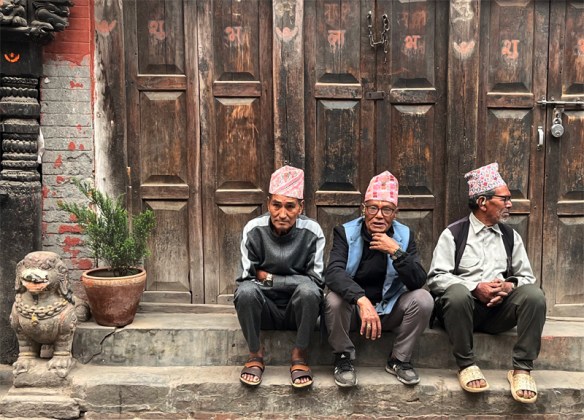
Bhaktapur is one of the three royal cities in Nepal. The old city center is a Unesco world heritage site. Before we flew back to the Netherlands we had time to visit the city.
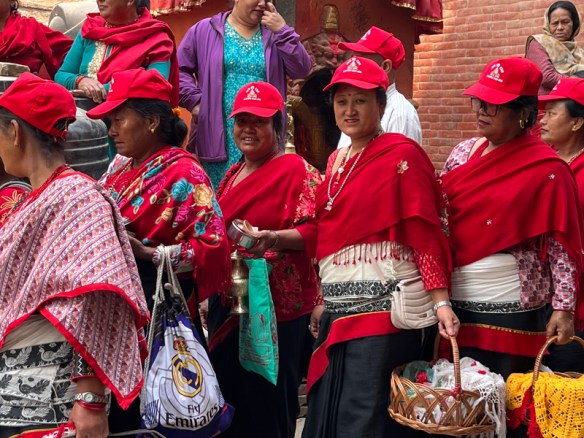
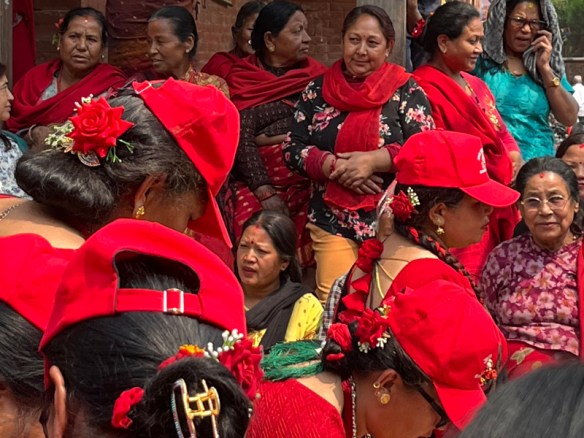
And we were lucky; it was ‘thankgivings’ for the Hindu-communities, who brought offerings along all the holy Hindu places in the city. The colour RED is very important. Red symbolizes passion, power, strength and purity and is important in Hinduism. It is the color of life.
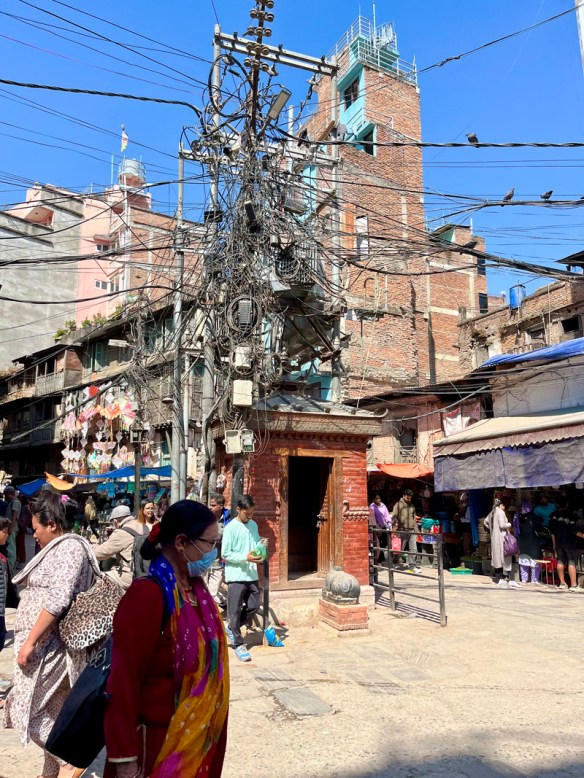
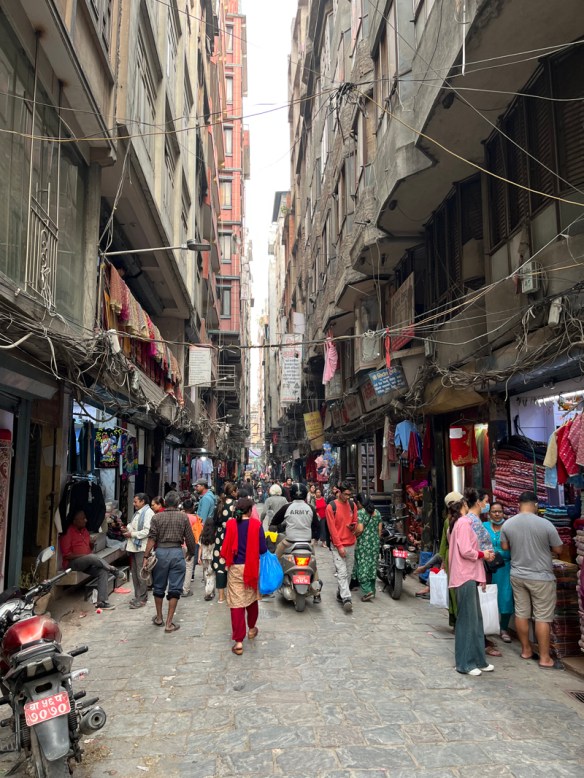
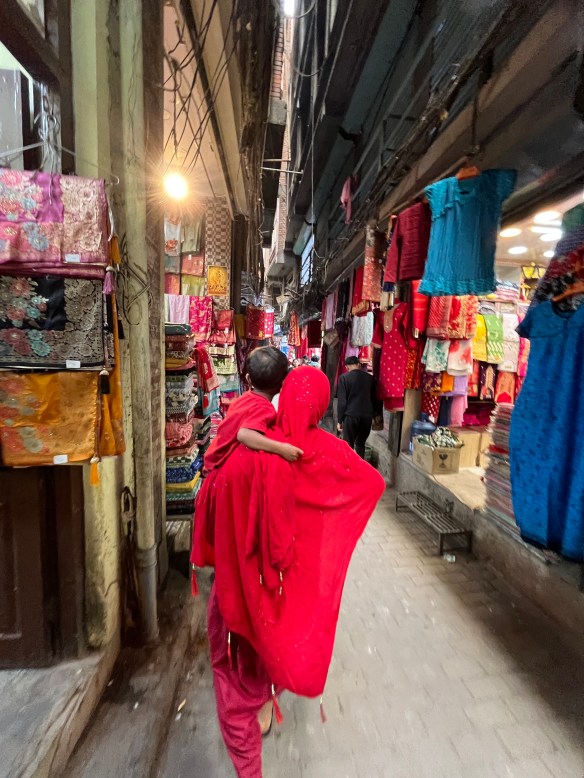
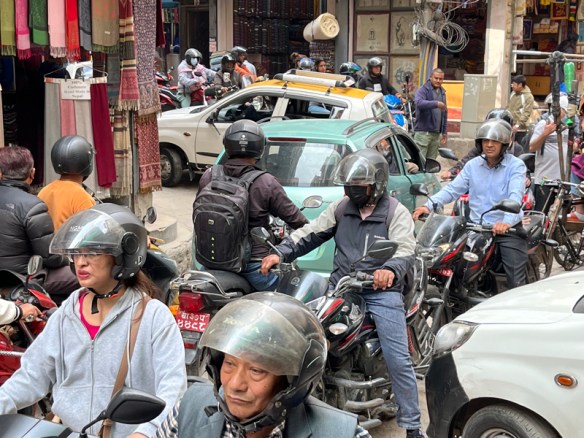
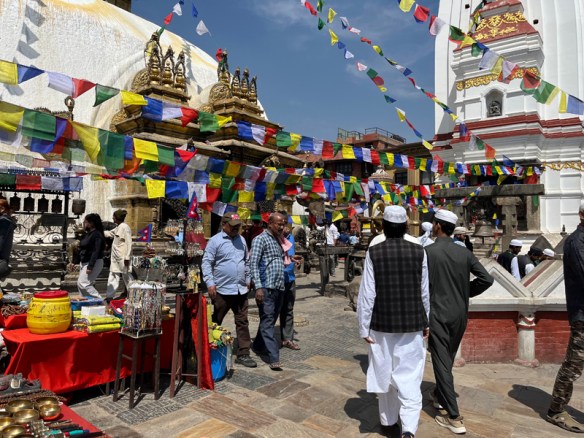
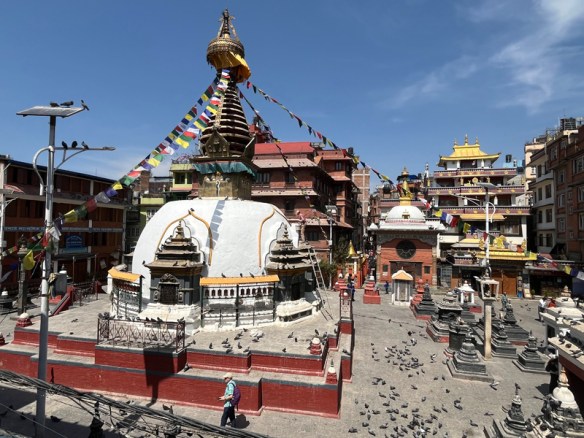
Kathmandu is a big city, chaotic, crowded, The Thamel district is the most popular with tourists; there are countless small shops in the high narrow streets. It is colorful. There are many crafts for sale. The air is bad because of the exhaust fumes of the enormous amount of motorbikes. Between the busy streets there are squares with temples, where traffic is not allowed.
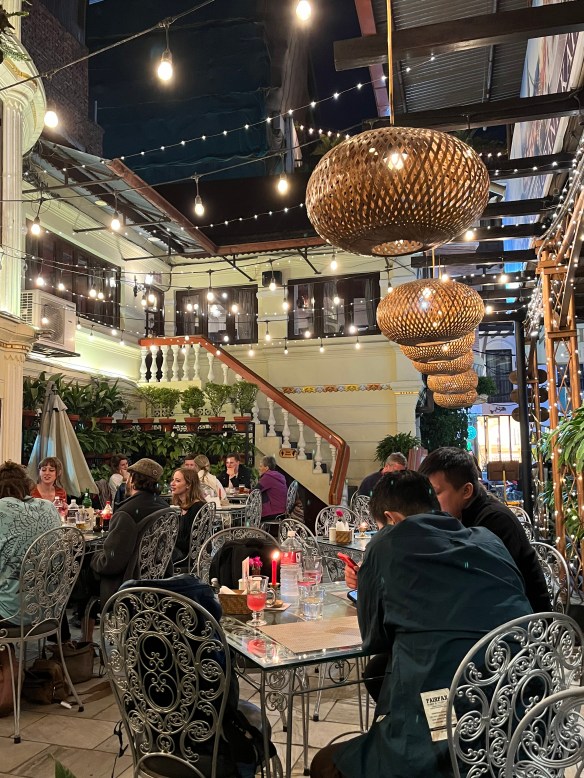
And there are hidden gems where you can eat fantastic food.
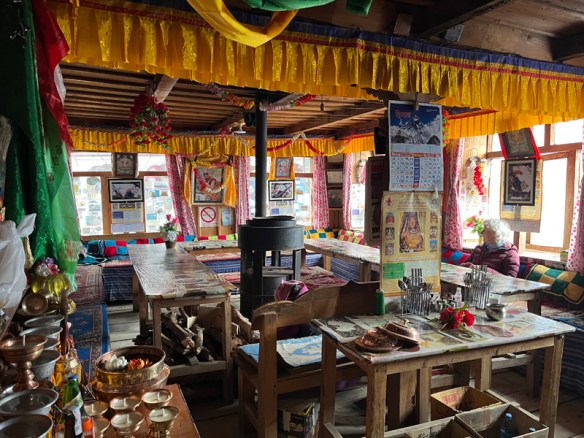
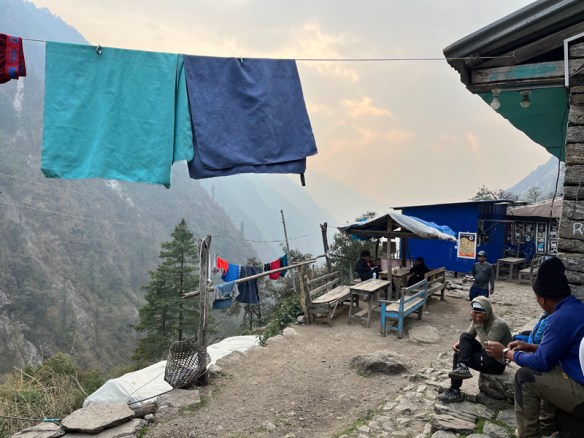
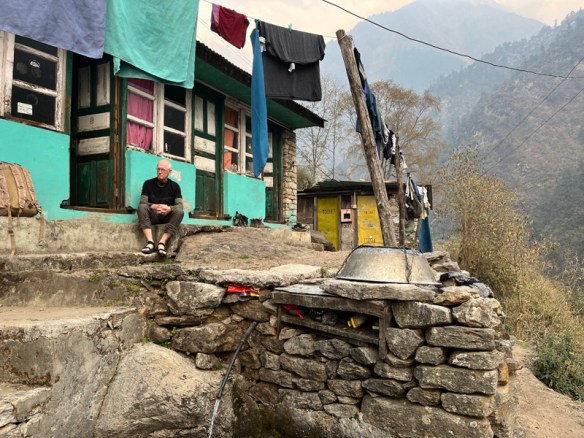
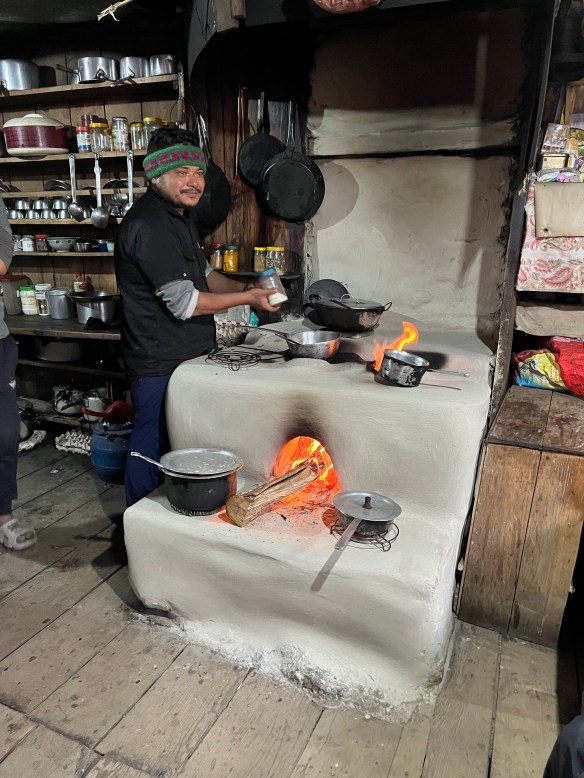
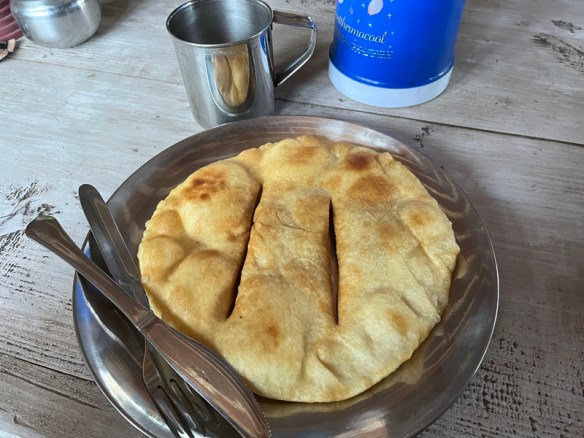
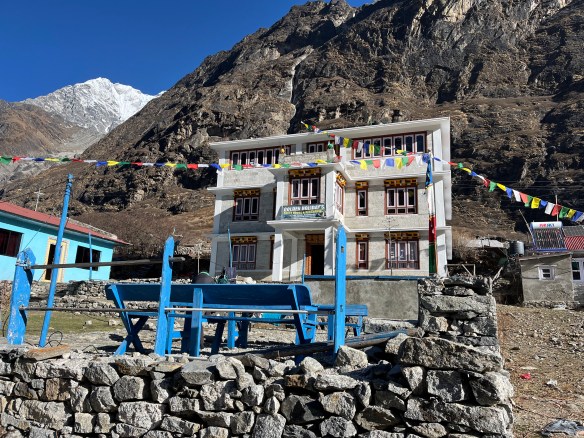
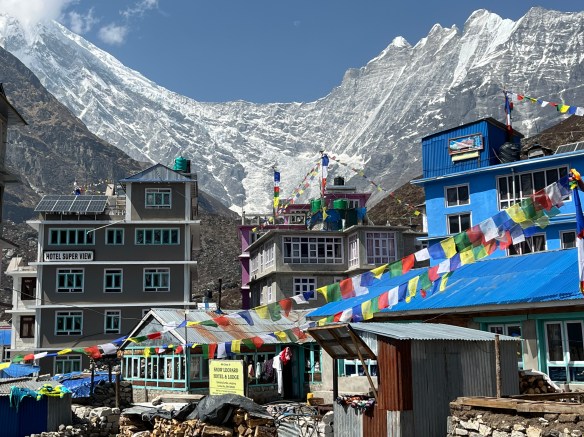
A tea house is what a sleeping- and eating-place is called in the Himalayas. The tea houses themselves speak of Hotel, Guesthouse or Lodge, sometimes with names as Golden Holiday Hotel,…We slept in teahouses in Helambu, Gosainkunda and in the Langtang Valley. They are different and that is probably because some are only open in the season, for a few months. Others are inhabited all year round. They are houses with small two-person rooms. Houses where you are also cooked for. Dahl-Bath Tarkari is a well-known Nepalese dish. It consists of rice, a bowl of lentil soup, some mixed vegetables and a chipati. But noodle soup or Chow-Mein are also on the menu. For breakfast they often make porridge or they bake a pancake, omelette or Tibetan bread. Cooking is done on wood, sometimes in beautiful stone ovens.
When the sun has set, the temperature drops quickly. A central wood stove in the ‘dining room’ then provides some warmth. But even at the stove a coat is usually not superfluous. The bedrooms are unheated. And sometimes it is really cold there. Then sleeping with your clothes on and a hat is the way to stay warm. Sanitary facilities are sometimes inside, but sometimes you have to make do with a shared outside toilet.
It is primitive, but always clean and it is surprising how quickly you get used to it.
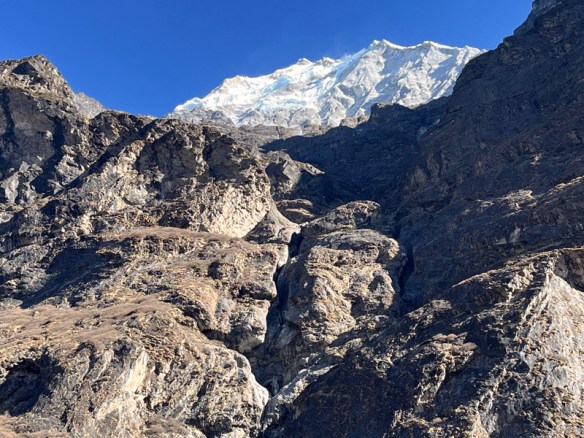
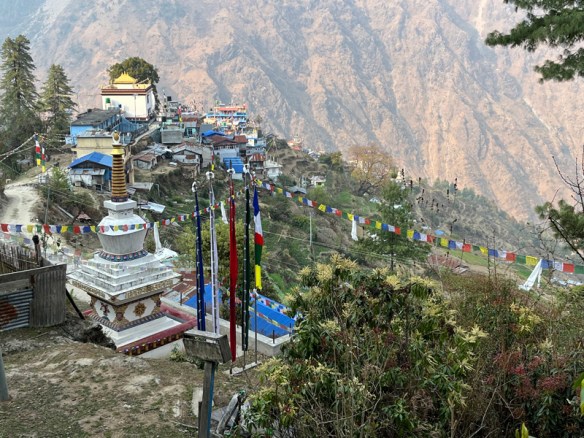
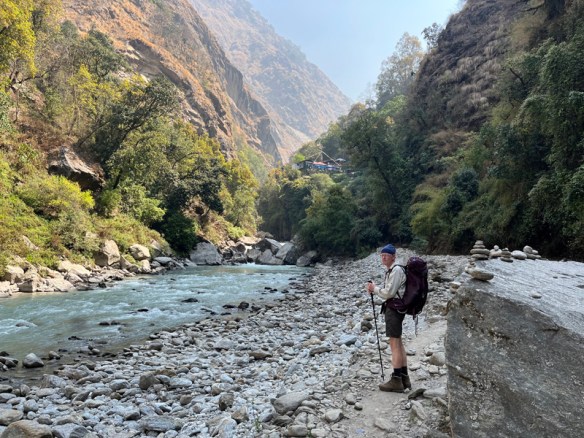
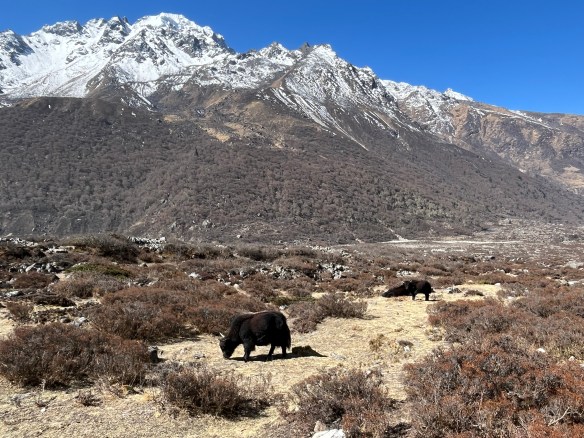
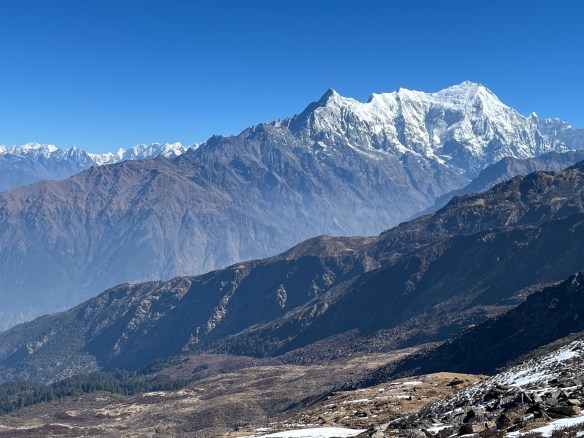
Langtang Valley, was the answer when people asked us where we wanted to go in Nepal. A trek in Langtang VaIley is a popular, fairly short hike if you take the bus to the startingpoint Syabru Bezi. We started not far from Kathmandu in the Helambu, a much less known area. From Tulo Syabru we walked to the valley. it is a route along the river that you walk back and forth. The last village is Kyanjin Gompa at an altitude of over 4000 meter.
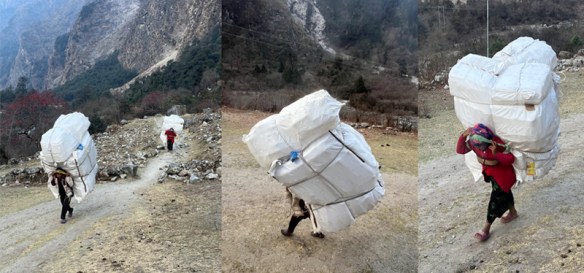
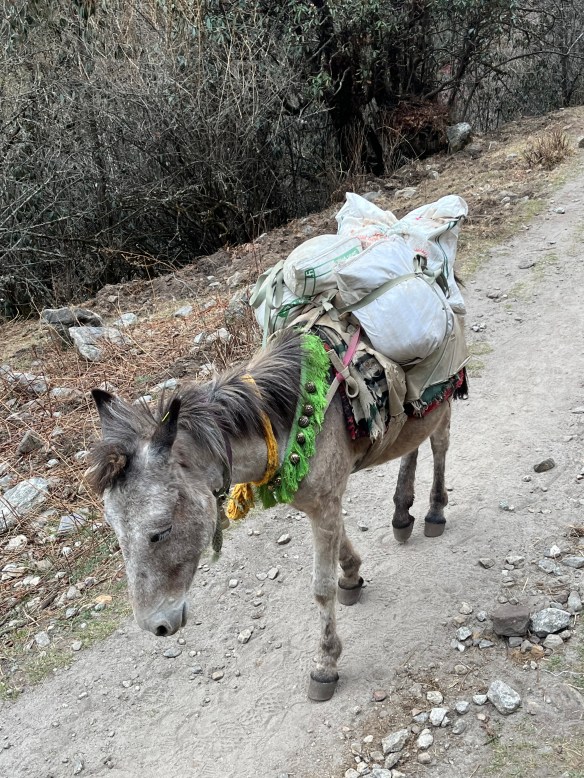
There is no road in the valley, only a path along the river. It means that everything that is needed is transported by porters or by horses.
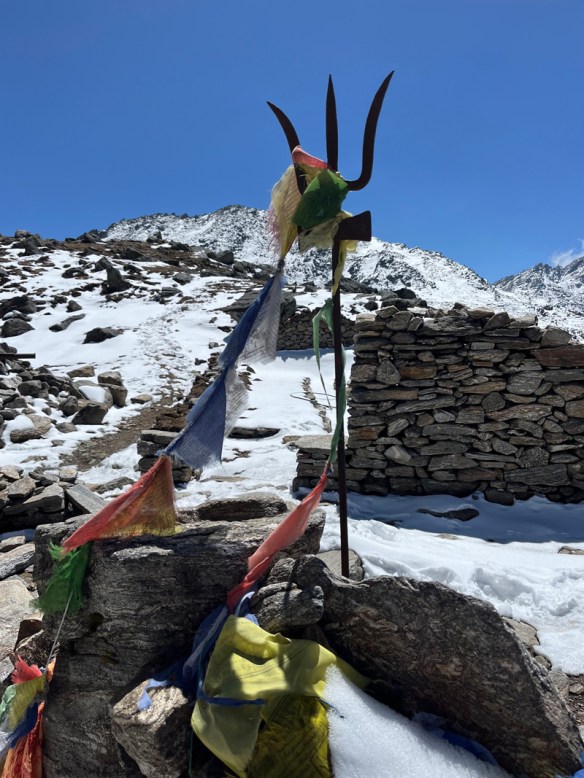
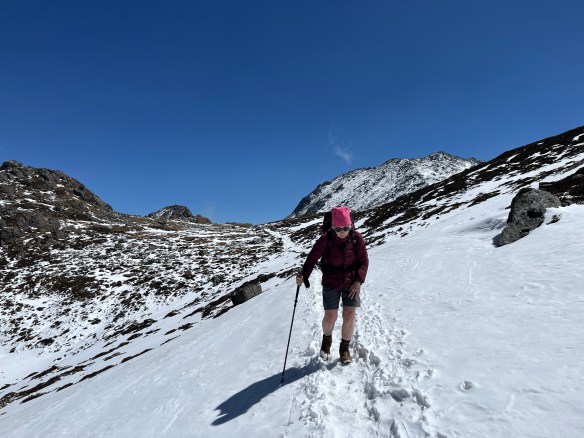
After a week of walking and gradually increasing ascent, the big challenge is the Suryakunda pass (altitude 4620 meters) to Gosaikunda. We have already passed the Thadepati pass (altitude 3650 meters). And that went smoothly. But the next day the altitude really became noticeable. We did not have altitude sickness, but our legs felt heavy. We therefore decided to stay in Phedi, in the lodge and make the crossing the next morning. We were the only guests there. The son, Chean, walked around and when we asked him, he was willing to help us with a backpack the next day, up to the highest point. The next day we left early. The landscape was bare, but beautiful. The pass could be seen from the start. It was tough, but beautiful. On the pass is the Trident of Shiva. Legend has it that the three holy lakes after the pass were made by Shiva by that Trident.
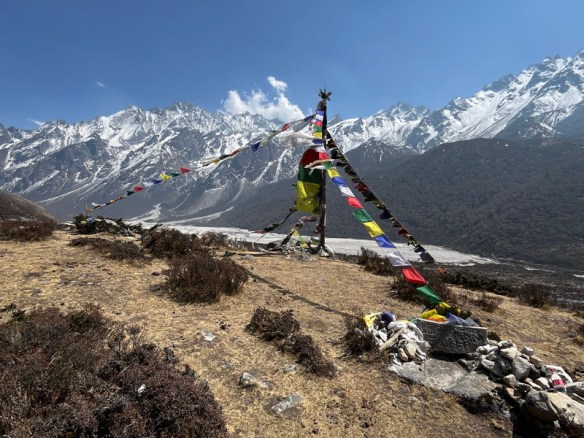
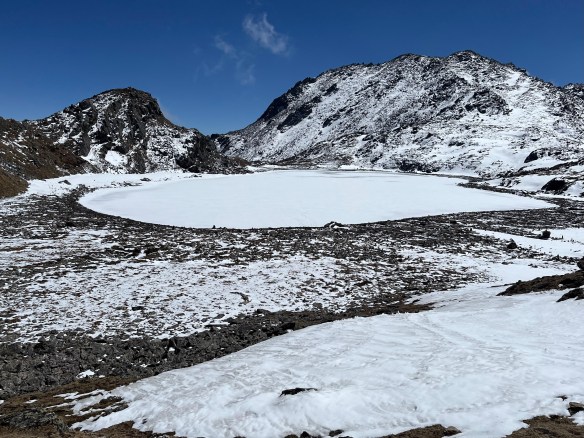
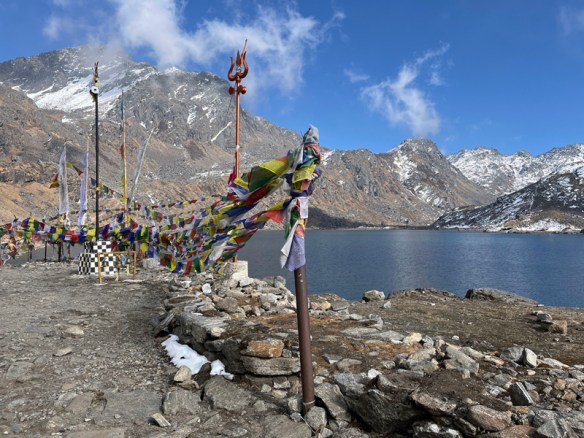
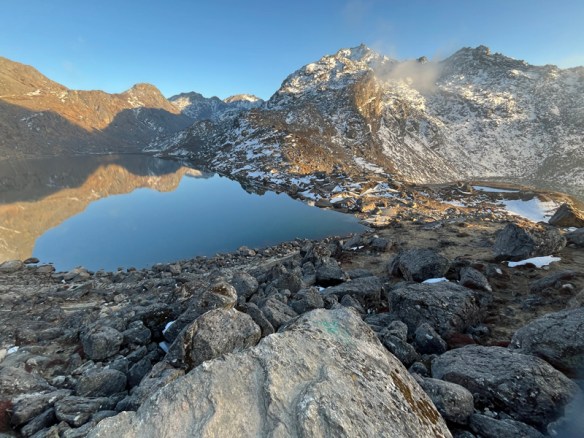
We rested on the pass. Chean descended again and we continued walking. The upper lake was frozen and still covered with snow. It was beautiful and so quiet. Only we were there. Footsteps were visible, and we followed them. Slowly down. We passed another lake and then there was the large holy Hindu lake. It is the place where many Hindu pilgrims go. We passed ceremonial places with many fluttering prayer flags. Gosaikunda is a collection of lodges on the lake. We chose a room. It was cold, but at 5 o’clock the wood stove was heated.
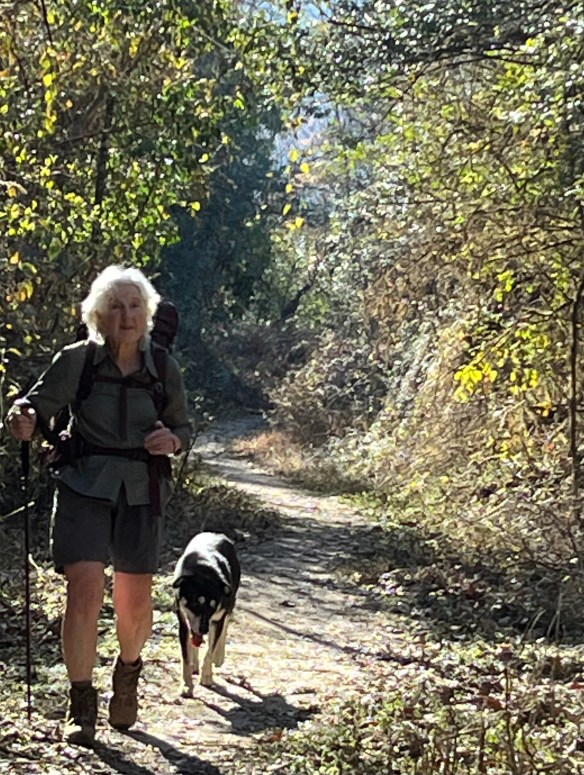
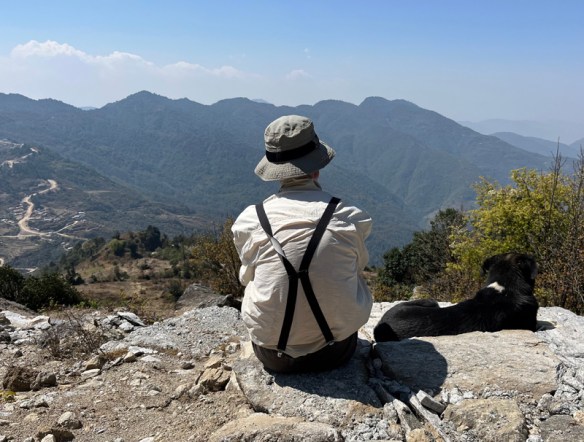
Throughout the Helambu, from the very first day, we had the company of a nice dog; it really became a friend
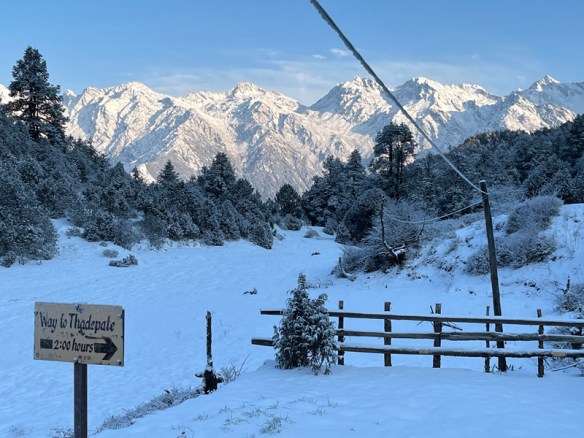
In Magingoth, still in the Helambu, we arrived quite early and we were in doubt whether to stay or continue to the pass and beyond. We walked a bit further, but when we saw the sky getting dark we turned back. And what luck. Not much later a heavy thunderstorm started and it started to snow.
The next morning the sun was shining, the snow was still there. it was magically beautiful.
Bilbao was the end point of our tour. And we enjoyed it there. The visit to the museum and the surroundings of the building was a great experience. Nice was also the Mercado de la Ribera, the large covered fresh market, where we ate pintxos with a glass of cold white wine. In the Casco Viejo, the old city district, we enjoyed a Menu del Dia.
You could see the Guggenheim Museum as the icon of Bilbao. The building has been standing on the Nervion river since 1997. The building is spectacular and has given Bilbao a vibrant image. The design is by Frank Gehri and cannot be compared to any building. The use of titanium was new. It is beautiful in the ever-changing light and that together with the shapes give the building an idea of waves. Louise Bourgeois’ giant spider stands on the square along the river. By Anish Kapoor there is the ‘Tall Tree & The Eye’: reflective spheres stacked on top of each other.
.
The Guggenheim Museum Bilbao is one of three Guggenheim Museums around the world alongside Peggy Guggenheim Collection in Venice and the Solomon R. Guggenheim Museum in New York. The museums belong to the Solomon R. Guggenheim Foundation in New York.

























 about walking and cycling, ...