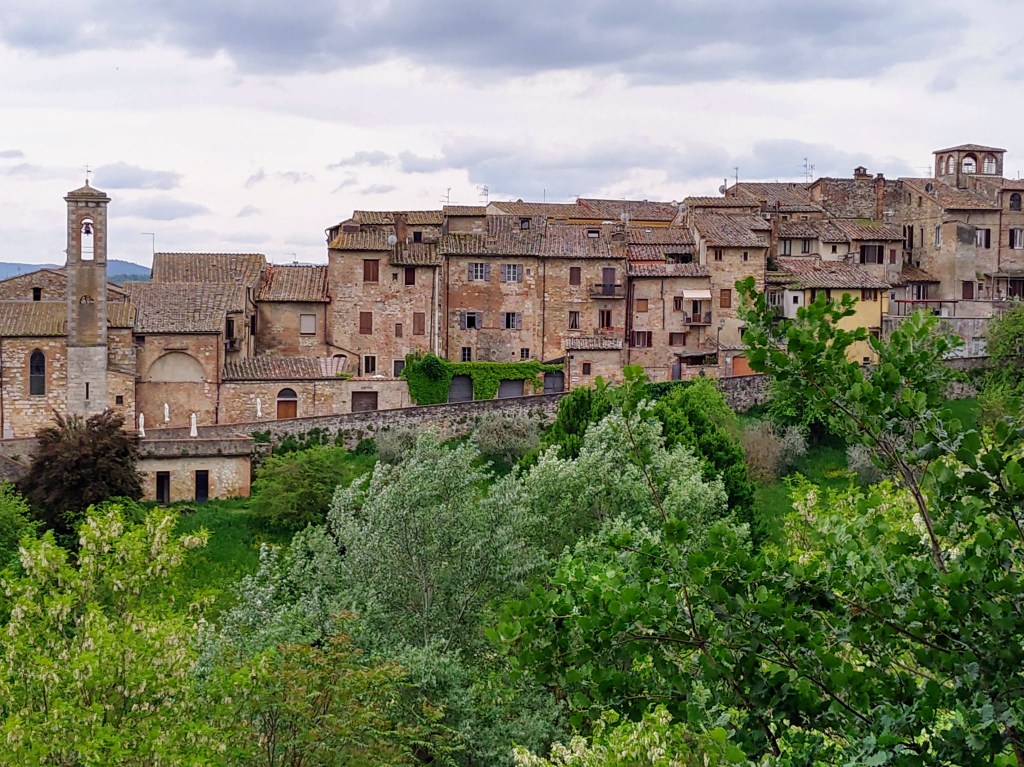
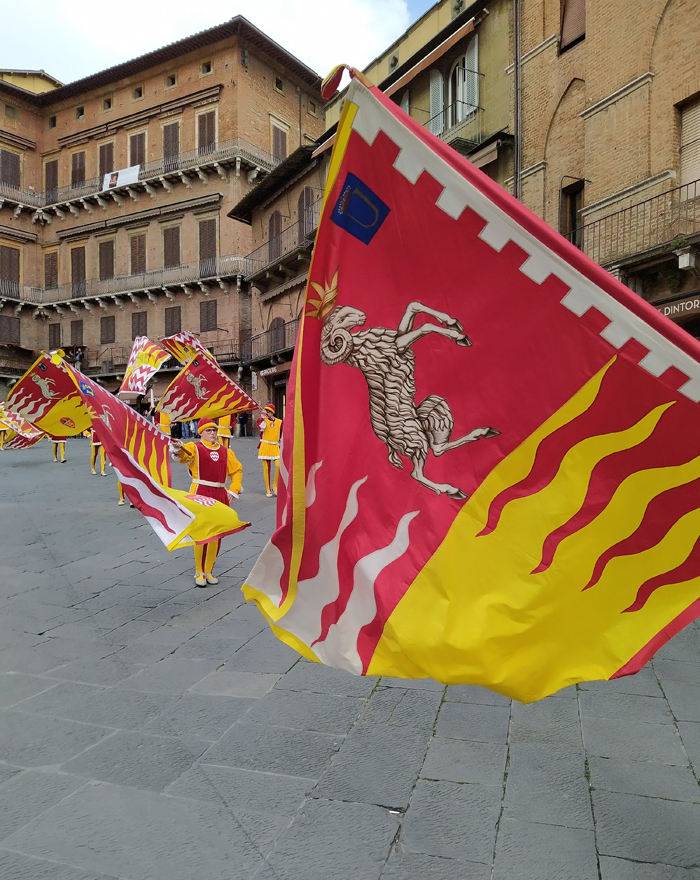
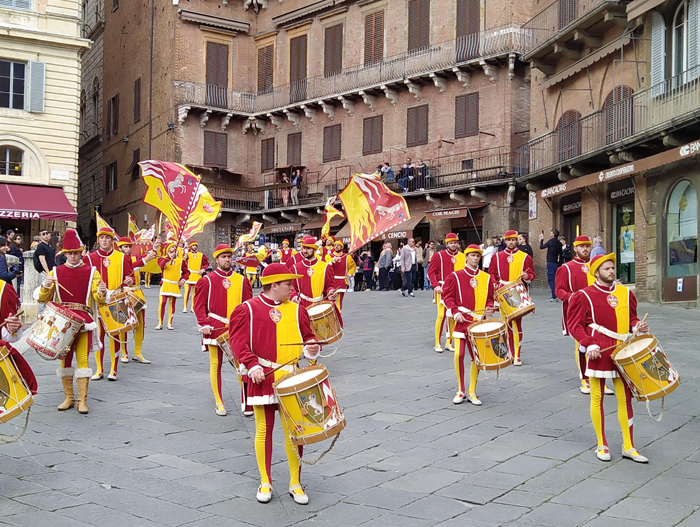
Siena, parade of the contrade

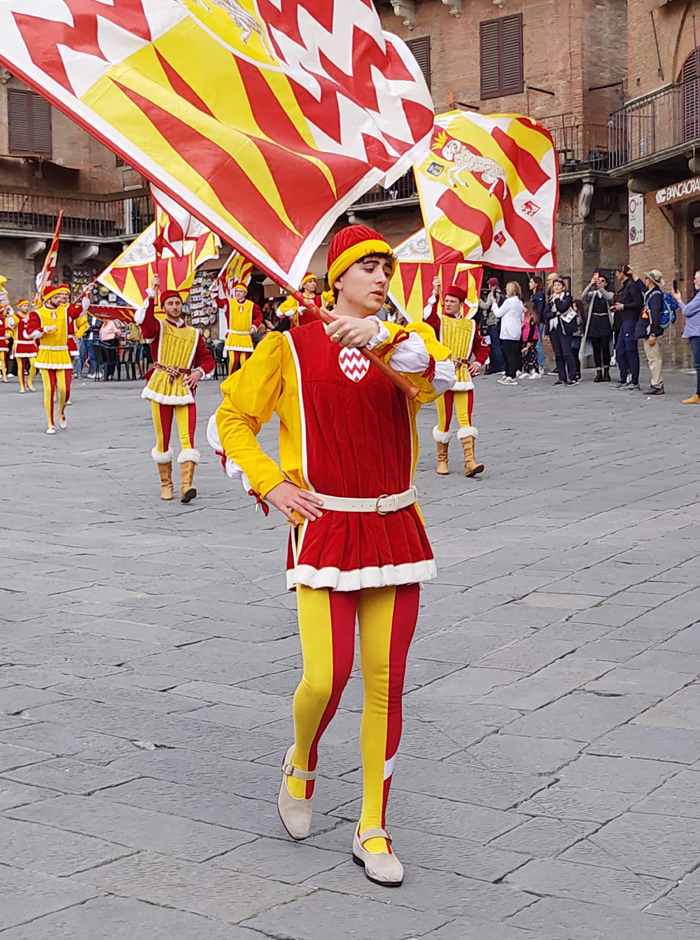
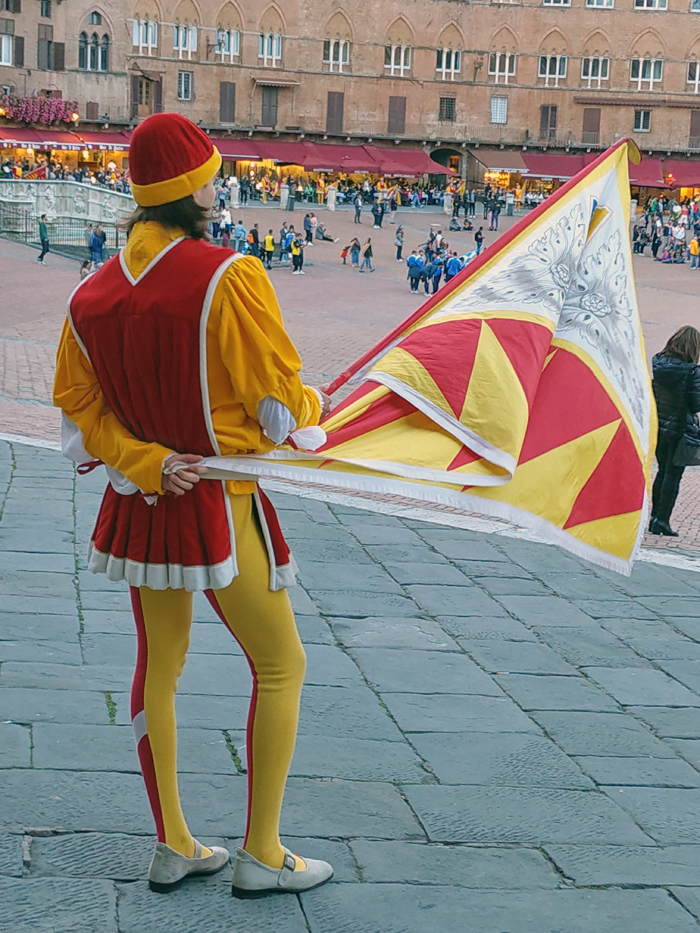
We hear drums. It is coming closer. We are in Piazza del Campo, the main town square of Siena. Siena is the end point of our walking tour on the Via Francigena. The drummers come into the square. Dressed in medieval-looking clothes. They are beautiful costumes. The standard bearers appear behind the drummers. A beautiful parade of the city’s contrade (urban quarters) in preparation for the annual Palio, the horse race.
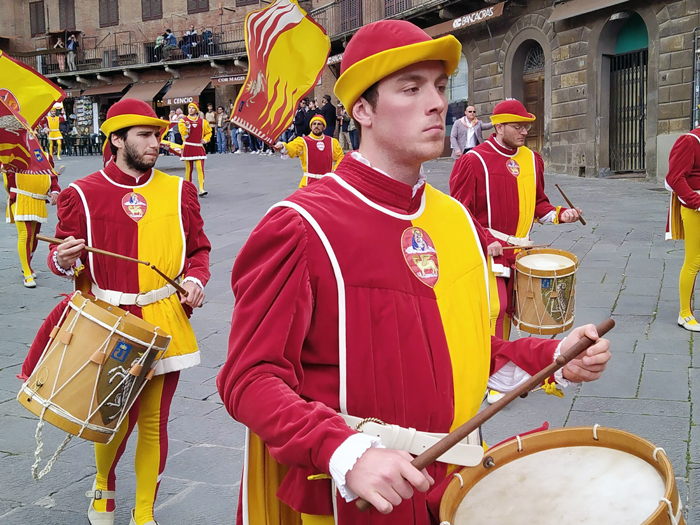
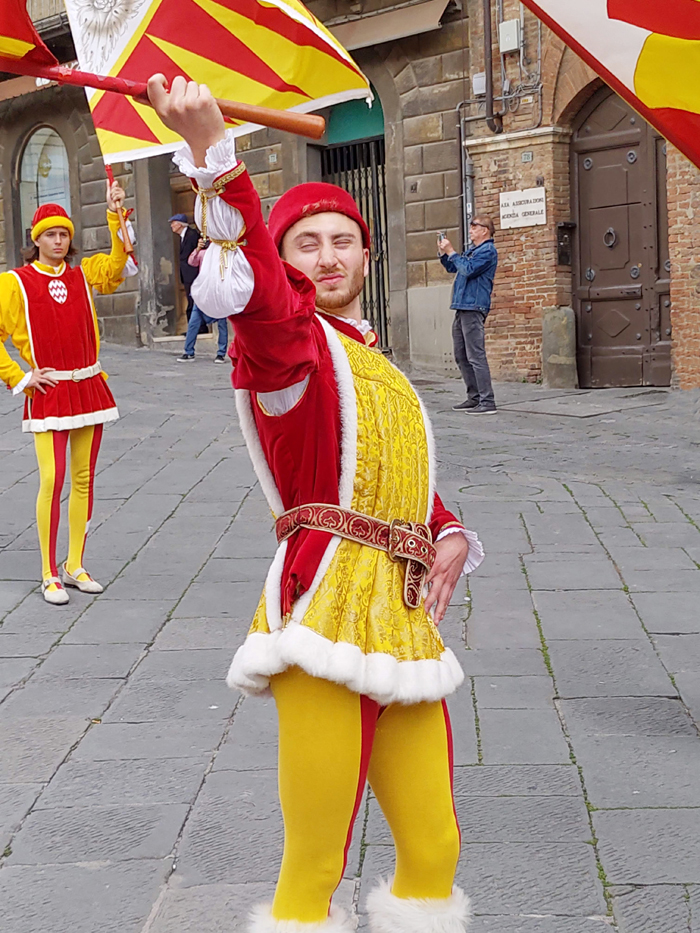
Siena consists of 17 contrade (city districts). Each contrada has its own name, banner and church.
There is the contrade of the goose, of the snail, the tortoise, the wolf …
Every year, after drawing lots, 10 of the 17 contrade participate in the Palio, the horse race in Piazza del Campo. The races date back to the early Middle Ages, but since 1650 they are still as they are today. The preparation for the Palio is long. The city districts present themselves with their drums and banners in a parade. The inhabitants of the neighborhoods sing and wear the scarves of their neighborhood (Fazoletto). And we are lucky to be able to experience such a parade.
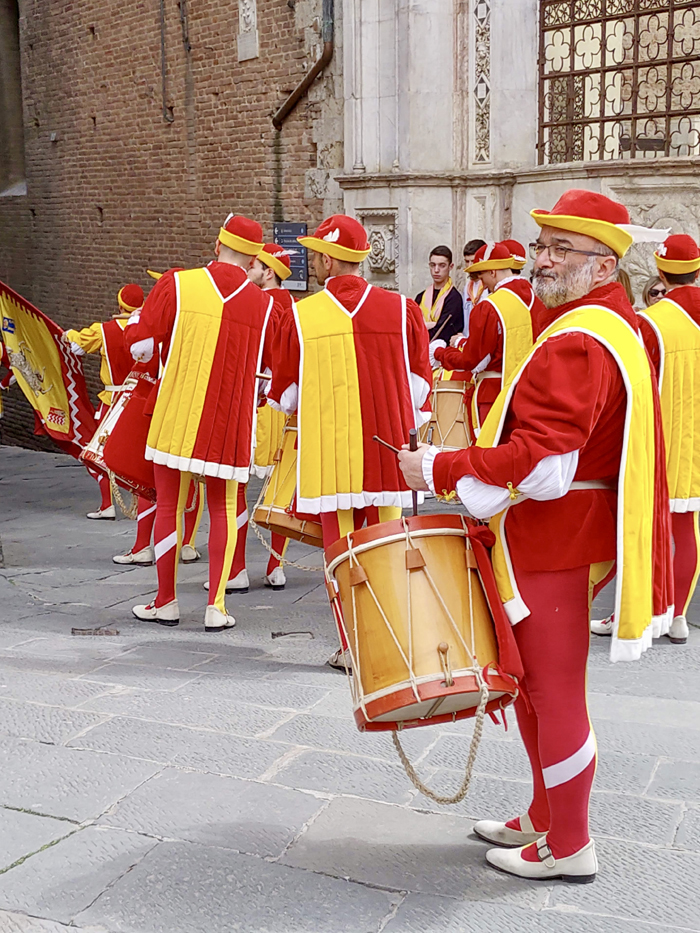
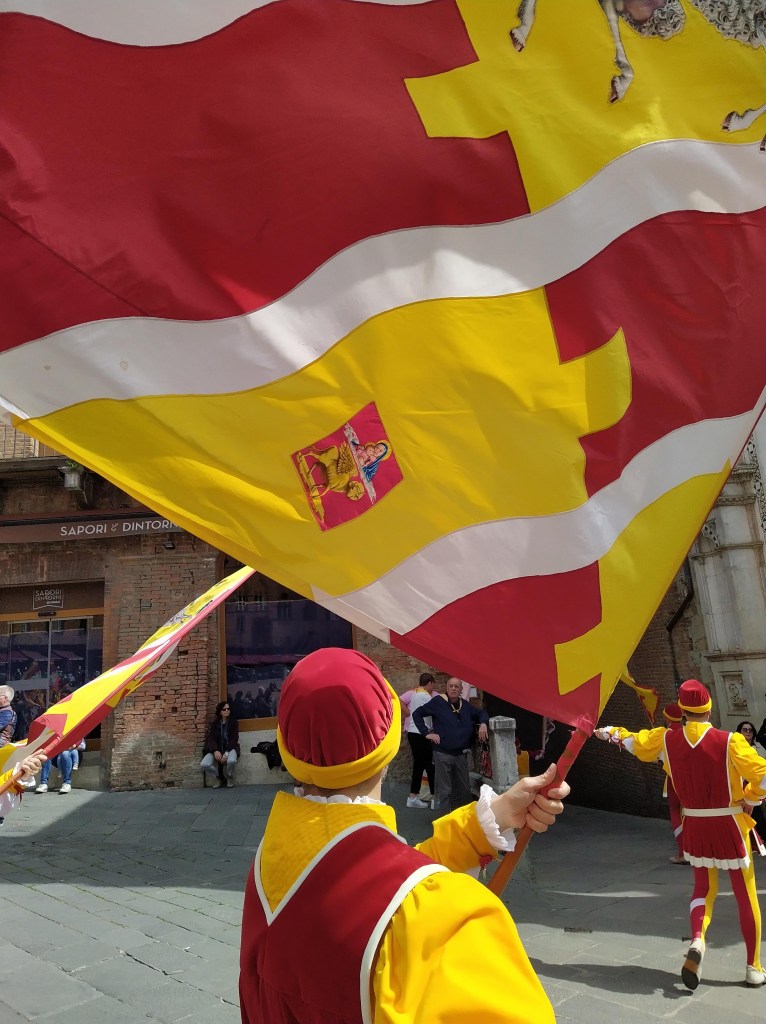
The race is held with horses that are assigned to a city district by lottery. It is therefore not the case that a district has its own horses. The jockey is also an outsider. Before the race, horse and jockey (fantino) are blessed in the church of the city district. Riding without a saddle. And it can get rough. The winning contrada receives the Palio, a precious silk banner. There is a party after the race.
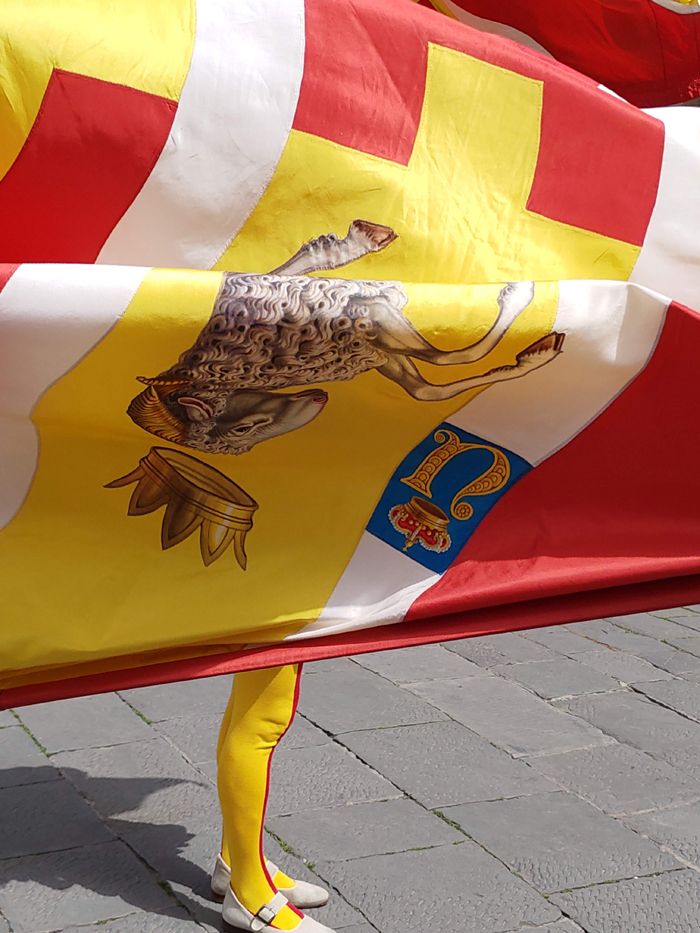
This colorful celebration reinforced our feeling that we had arrived at the final destination of our walking tour.

.

.

.
Via Francigena from Parma to Siena – E

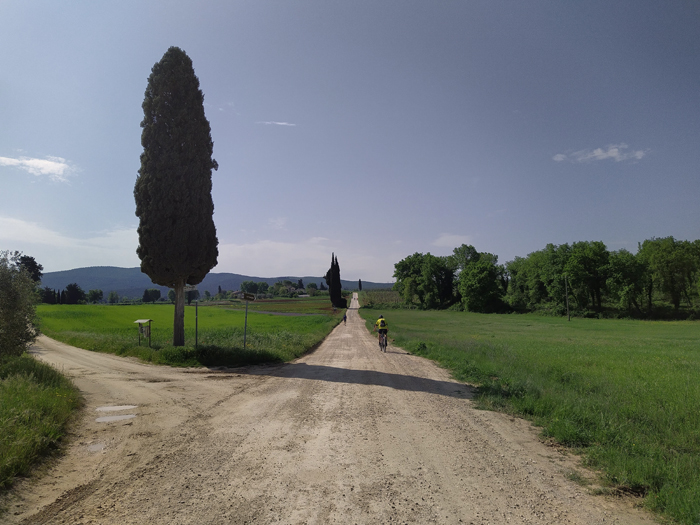
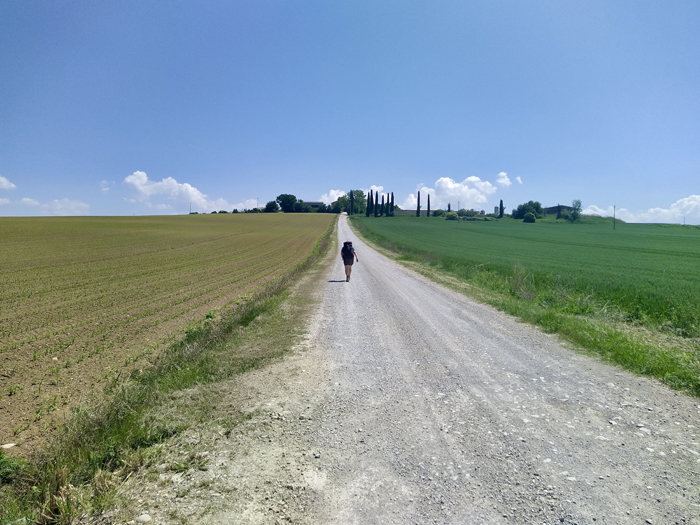
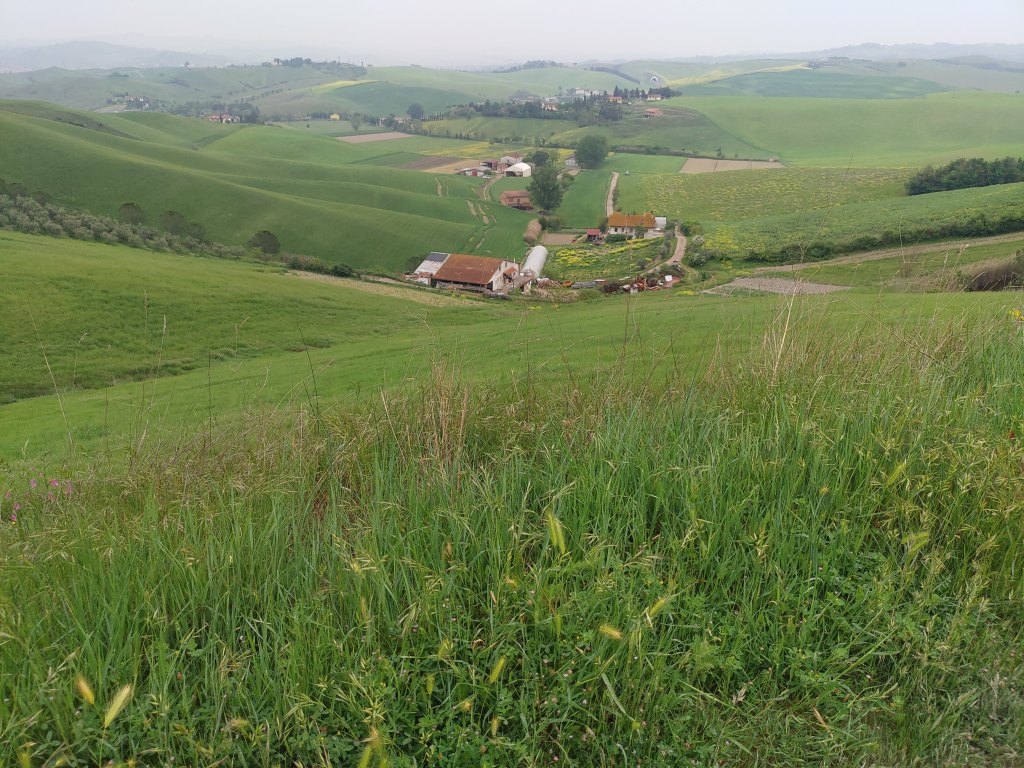
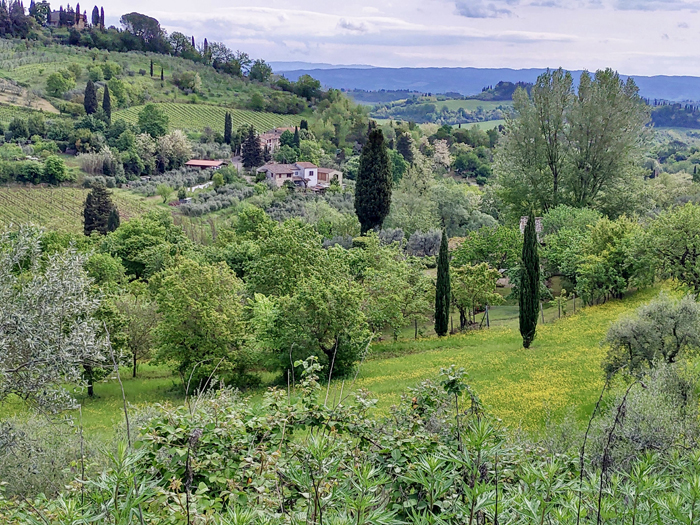
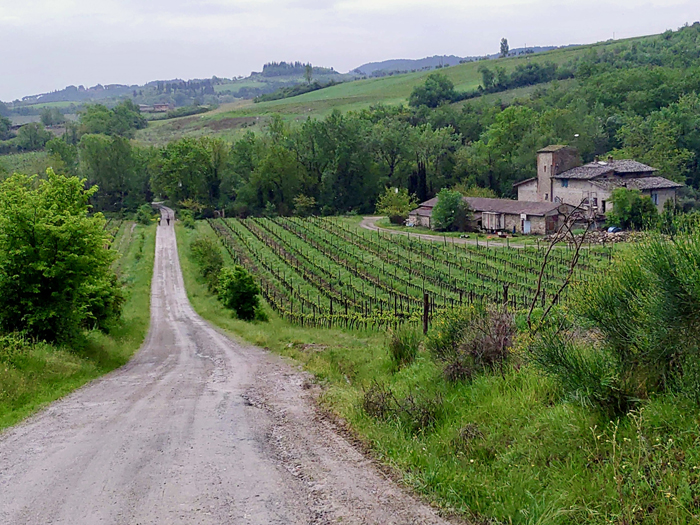
The route through Tuscany is known for the strade bianche, the white paths. They are unpaved farm roads through often remote areas. Many farms have been empty for a long time. You may know the name Strade Bianche from the cycling race for professional teams.

On this part of the route we see and talk to more walkers. In the empty landscape, after a hill, there is unexpectedly a garden with a blackboard at the gate stating that you can tap water and you can eat or drink something. We drink cola at a large table (it tastes different during a long walk than at home on the couch). The owner gives us dates and biscuits, ‘for new energy’. Then the two Canadian women, mother and daughter, come around the corner. We have passed each other several times. They could also use a cold cola. They come and sit at our table. Another small meeting and then we each continue at our own pace.

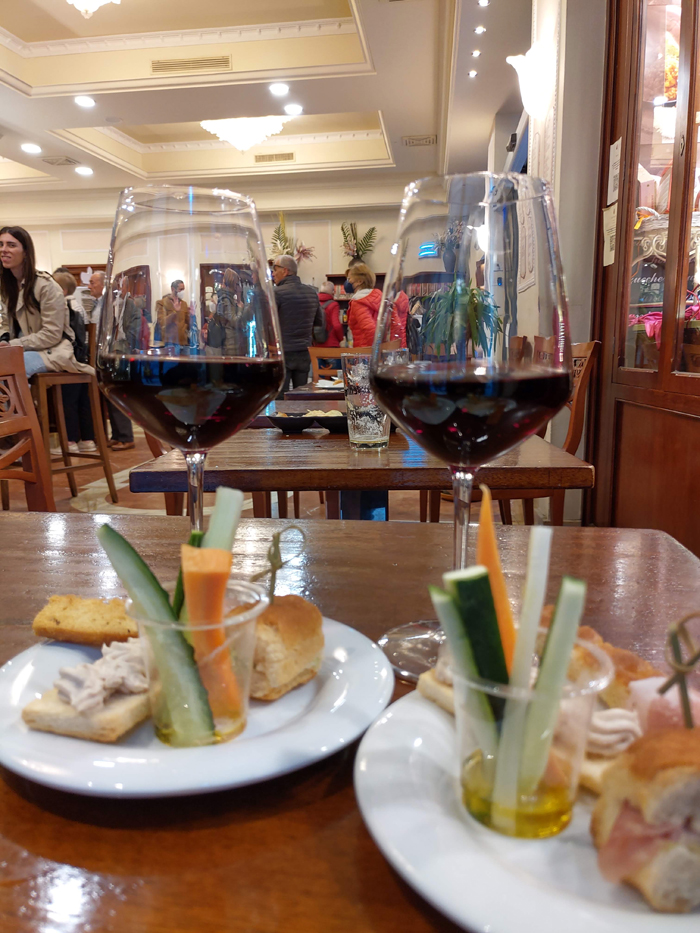
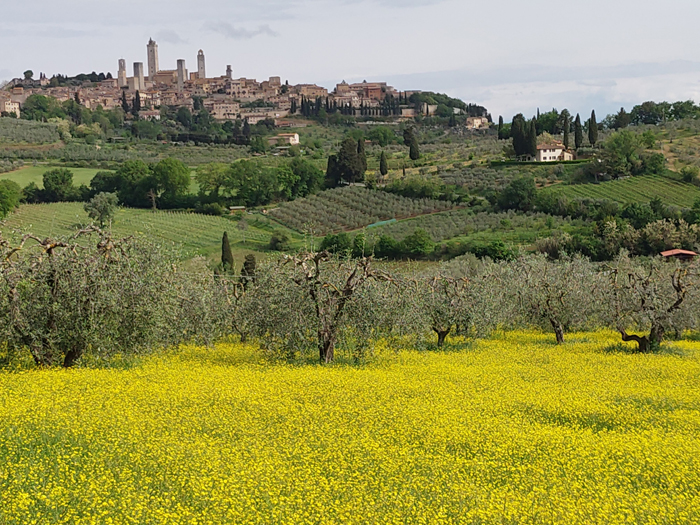
And then we are in Siena, the end point of our walking tour. We drink a delicious glass of wine in one of the old cafes. And as the Italians are used to, with some tasty snacks.
We don’t know yet if we’ll ever walk to Rome.

.

.

.

.

.

Via Francigena from Parma to Siena – D

In Lucca we enter ‘familiar’ territory. We recognize the green city wall and the Duomo from our walk from 2019. I was already surprised by the decorated columns of the front facade; each column has a different pattern. We then started the walk in this city. Because the first two legs are long and a bit boring, now take the train to San Miniato.

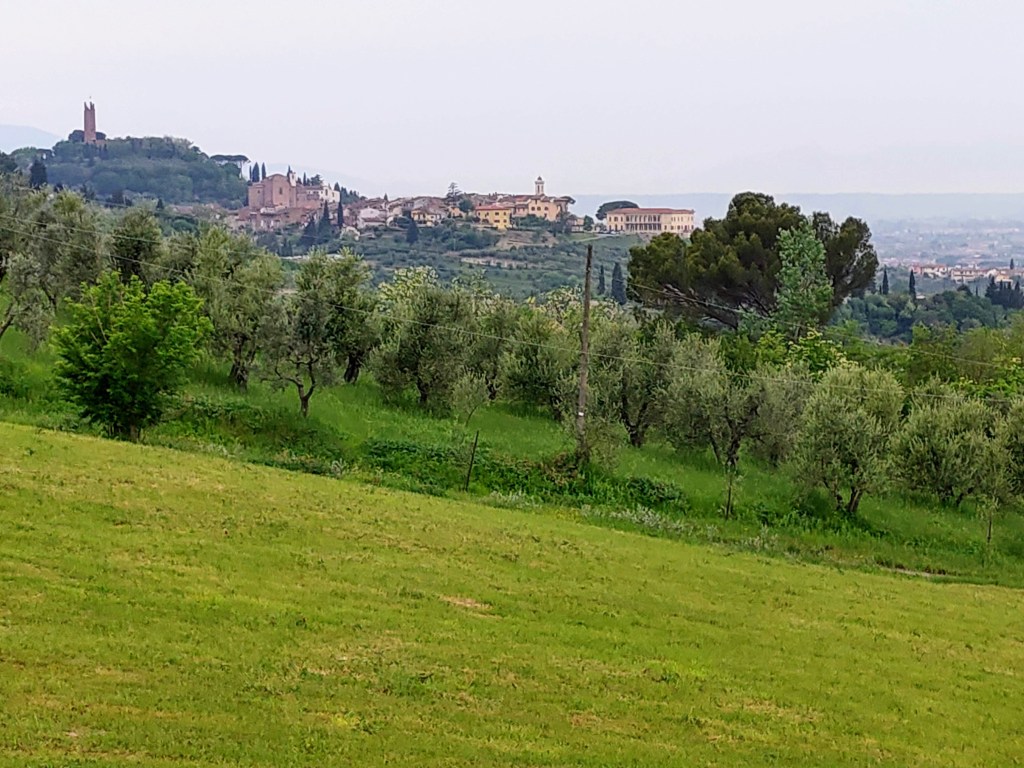
From San Miniato we walk to Gambassi Terrme, a beautiful old town, where we spend the night in a romantic room. It rains for the last few kilometers. But after a shower and a nap we have enough energy again to drink a glass of wine in the cafe on the village square. It’s busy there; the people of the village come there for an espresso or a glass of wine. Christian and Philip, the men from the Ecrins, with whom we had regular contact along the way, join us a little later. It is nice to exchange stories with them. The rain outside doesn’t matter anymore. And a good pizza makes the day complete.

The next morning we go back to the cafe for a cappuccino and a brioche for breakfast. It is just as pleasantly busy as the day before.

.

.

.

.

Via Francigena from Parma to Siena – C

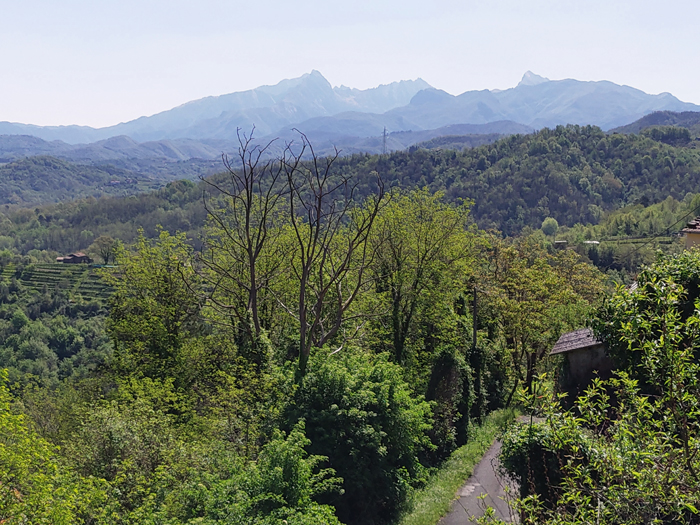
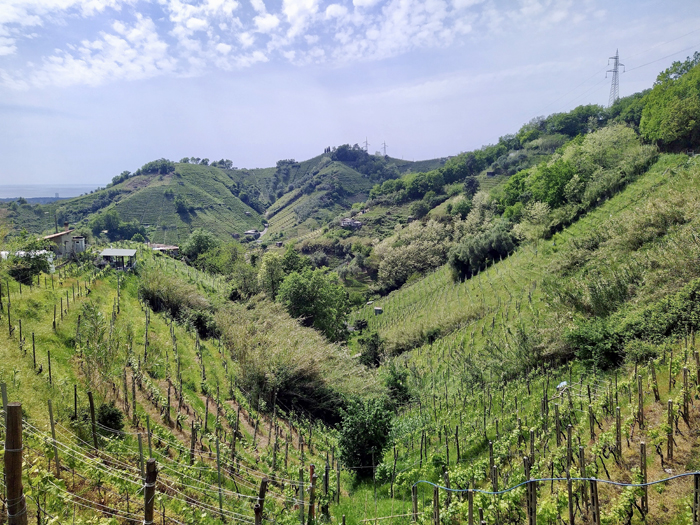
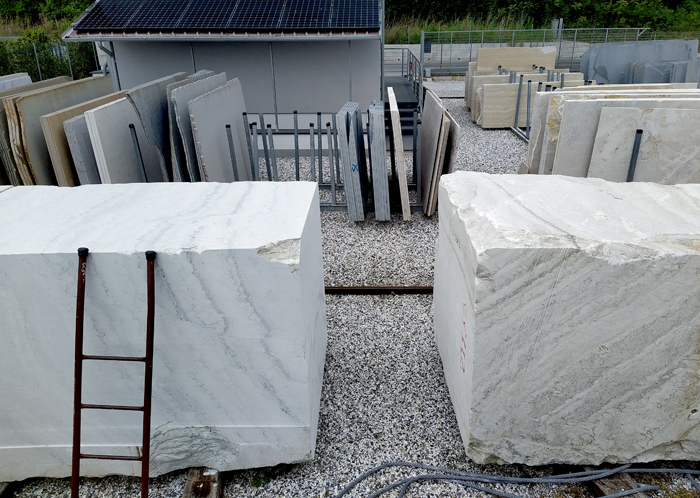
In Tuscany we walk between the Apuan Alps and the sea. Vineyards have been laid out on steep slopes. There are the imposing marble mountains of Carrara, with the stark white marble that was already loved by Michelangelo for his sculptures.

We spend the night a few kilometers before Pietrasanta. It is raining and it is ugly. But we are staying in a little oasis; agroturismo. When we walk to the town later in the afternoon to have dinner, the sun is back. And Pietrasanta turns out to be a nice artist town full of sculptures, with galleries and workshops. On a terrace we drink a nice glass of wine, with a tagliere misto.

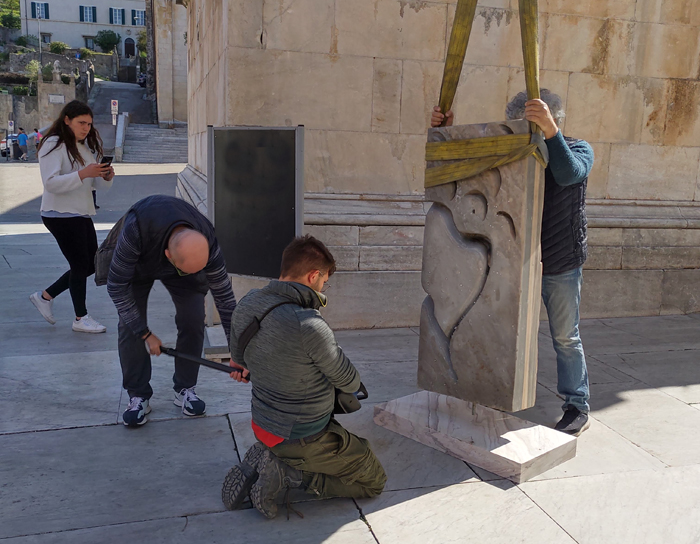
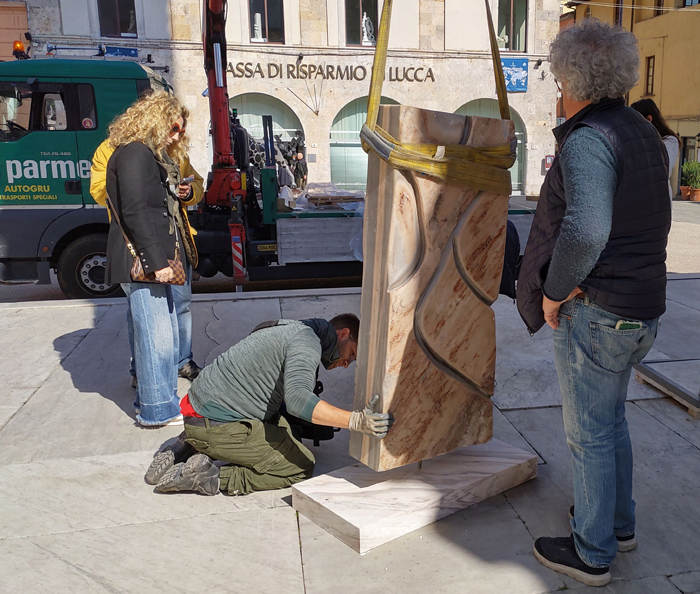
The next morning we walk through the town and we see a new work of art being placed on the Piazza Duomo.

.

.

.

Via Francigena from Parma to Siena – B

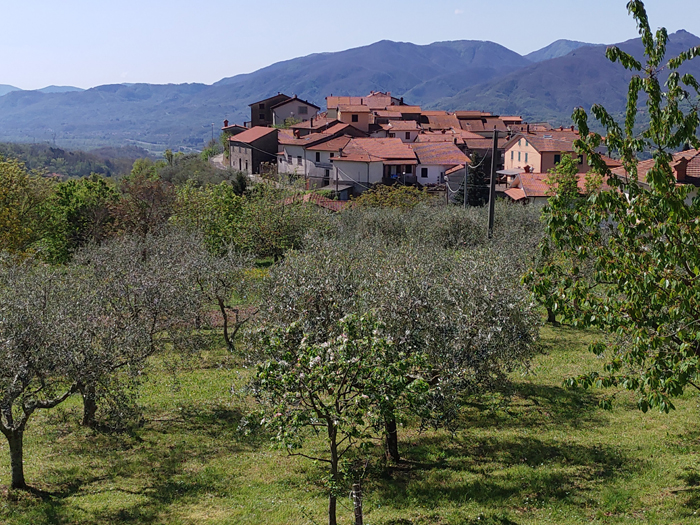
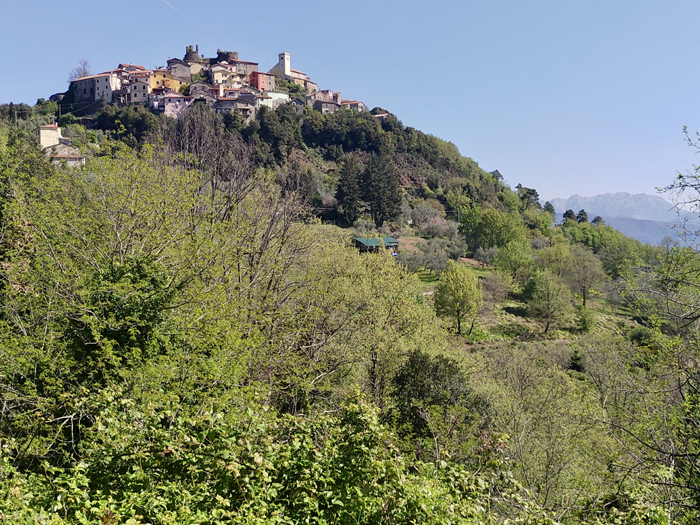
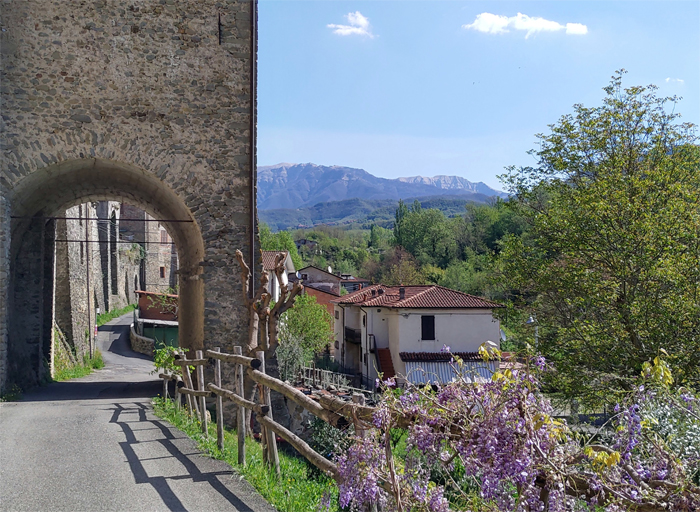
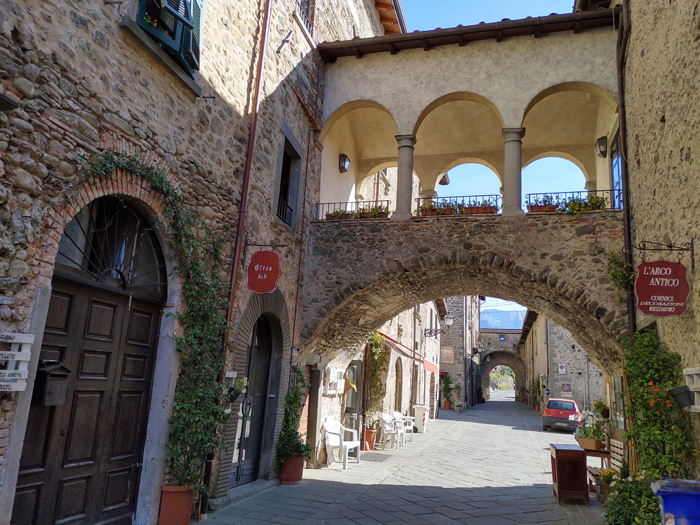
We walk through the northern Tuscan mountains. The weather is clear, the route is sometimes tough and leads past high-lying mountain villages, such as Pontremoli, Filetto, Sarzana, Aulla …

In Aulla we slept at Bike and Bed, a few kilometers outside the town of Aulla. We thought we could borrow a bike to go to the restaurant in town. But no, no way. We were brought by car. Also walking back after dinner was definitely not an option. We were warned for a long and tough stretch the next day with steep climbs over the mountain. And we had to be equipped for that.
We were picked up after a phone call. Fortunately together with two other guests.

Lees ook:

Via Francigena van Parma naar Siena – A

Via Francigena – Valle d’Aosta

Cherry picking op de Via Francigena

.

.

Via Francigena from Parma to Siena – A

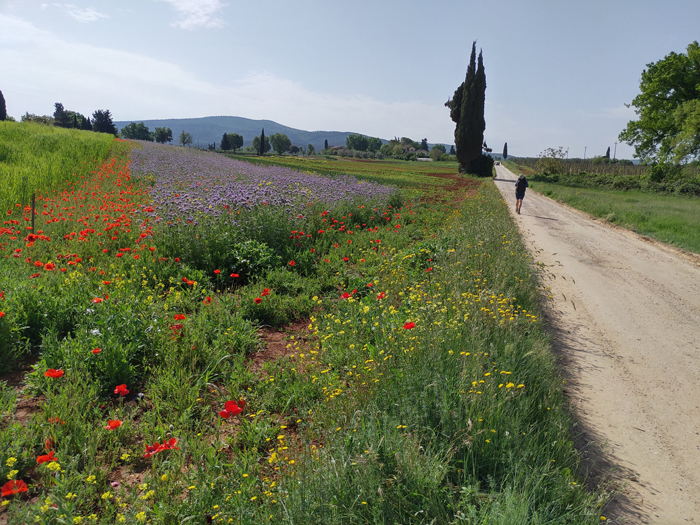
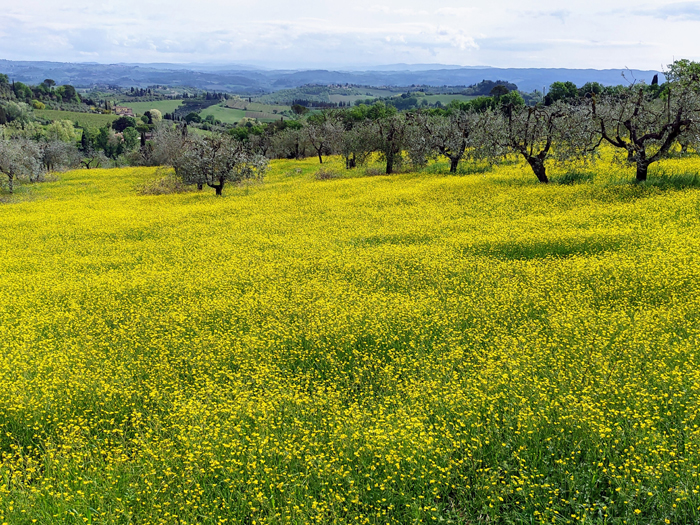
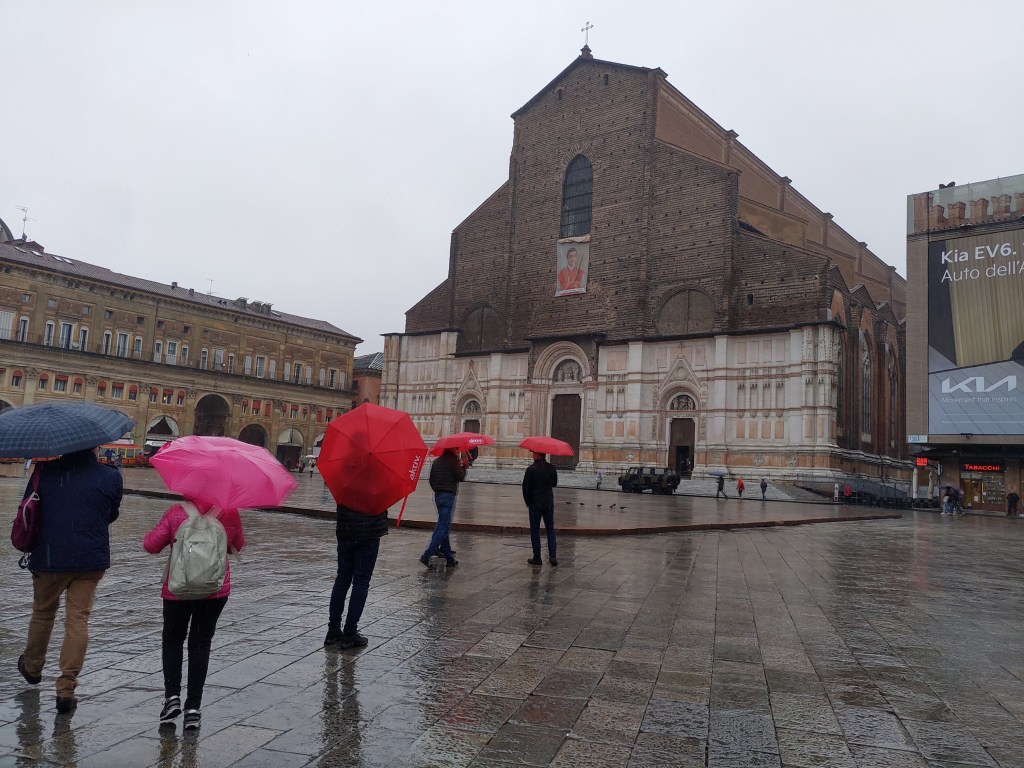
For the third time we walk part of the Via Francigena. We travel by train from Bologna to Parma where we start the day after, the walking tour. It is true that we walked part of the route earlier. In March 2019 we walked from Lucca to Siena. It was still early in the season and the fields were still bare. Now there are flowers everywhere, flowering hawthorn, poppies and buttercups. The vines have their first leaf… We notice that the hiking season has started; we meet many more people; French, Swiss, Canadians, Finns…

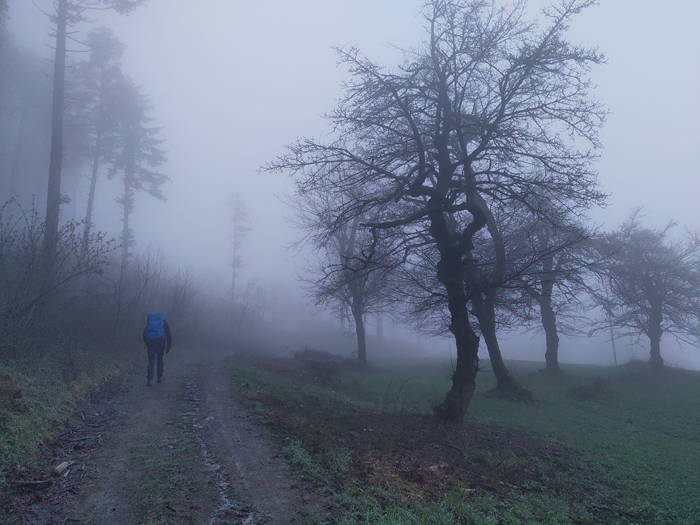
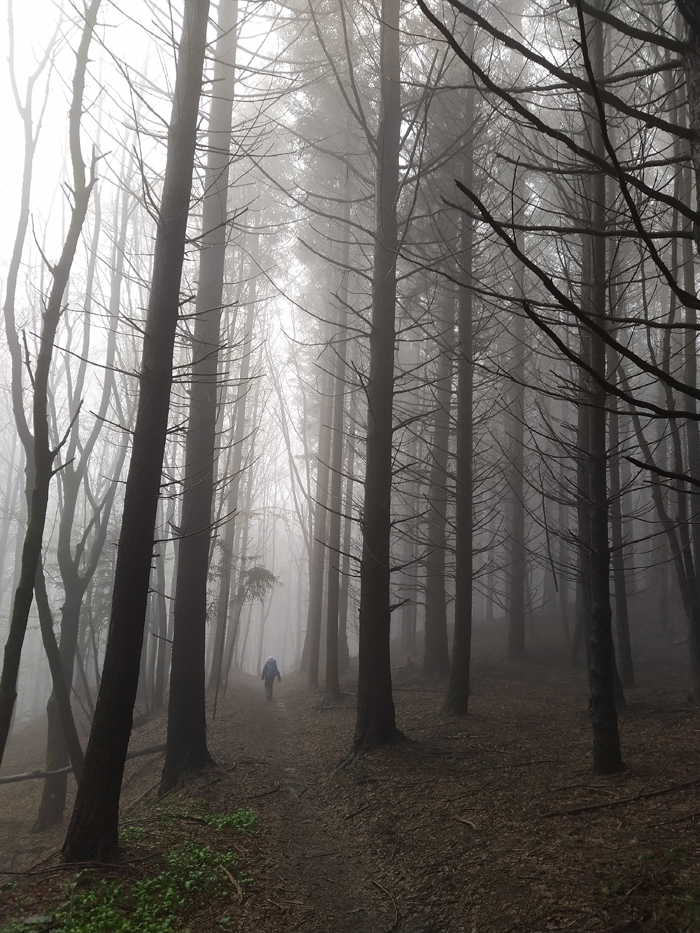
It has been dry for a while. But when we arrive in Italy it rains. The farmers are happy. For us, it’s not quite what we hoped. And yet it’s not just annoying. In thick fog we cross the Apennines via the Passo della Cisa. The highest point is formed by a wide bare ridge. When the weather is clear, we must have had a magnificent view of the landscape. Now we can see no further than a few meters. It is blowing and raining hard. Slightly descended we come to the pass. The restaurant is closed, but the shop with local products is open. Tired of clambering through the mud, and cold and hungry, we go inside to buy a sandwich. Freshly cut slices of bread, topped with mountain cheese… Next to the burning wood stove is a bench where we can warm up. There is no coffee, but there is a glass of lambrusco. An Italian living in America, who travels through his motherland out of homesickness, also noticeably enjoys the warming place. For dessert we can taste the real pecorino from the region. It might be our best lunch in Italy.

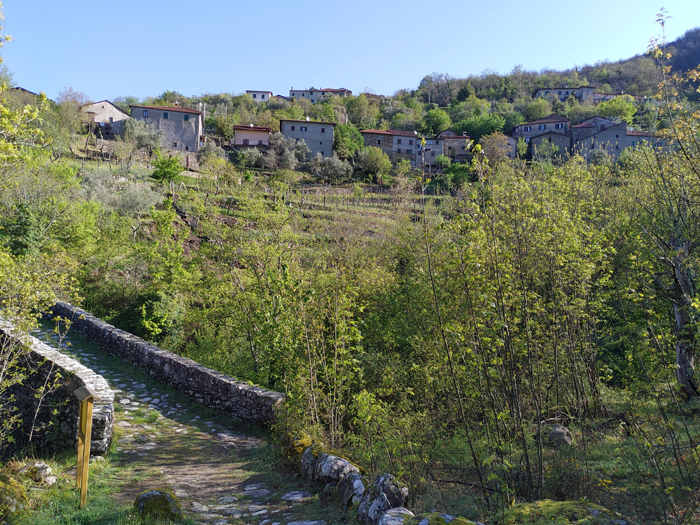
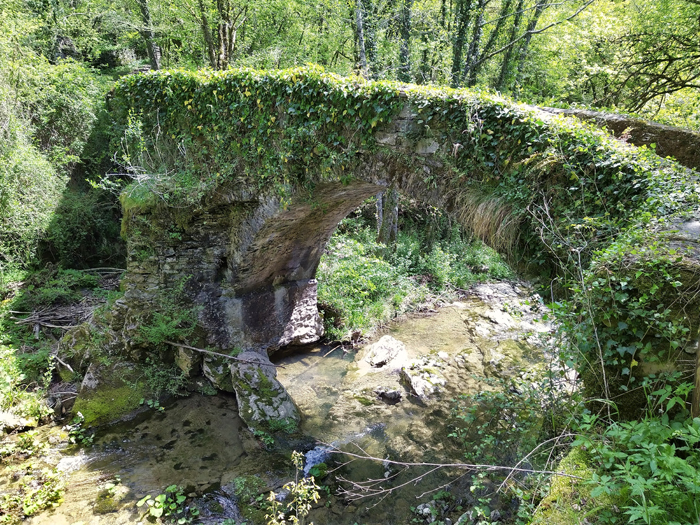
When we descend after the pass, the view becomes wider. We have reserved an overnight stay at Temperanza in the mountain village of Groppodalosio. We sleep there in the room for pellegrinos. The wood-fired stone stove is burning. They cook for us and the next morning a nice breakfast is ready for us. When we leave, walking over the Roman bridge, the bad weather of the previous day is no longer noticeable.

Our route: Parma, Sala Baganza, Calestano, Berceto, Groppodalosio, Filetto, Aulla, Molicciara, Massa, Pietrasanta, Montemagno, Lucca, San Miniato, Gambassi Terme, Gimignano, Val d’Elsa, Siena
and by bus we drove to Perugia where we stayed one last day.

Also read:

Via Francigena – Valle d’Aosta

Cherry picking op de Via Francigena

.

.