Sri Lanka is an island south-east of India in the Indian Ocean. An island has coasts.
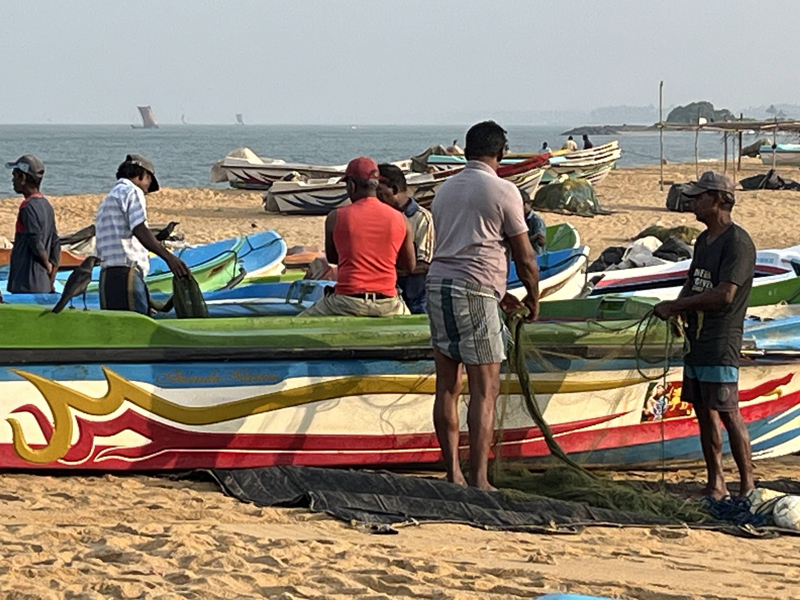
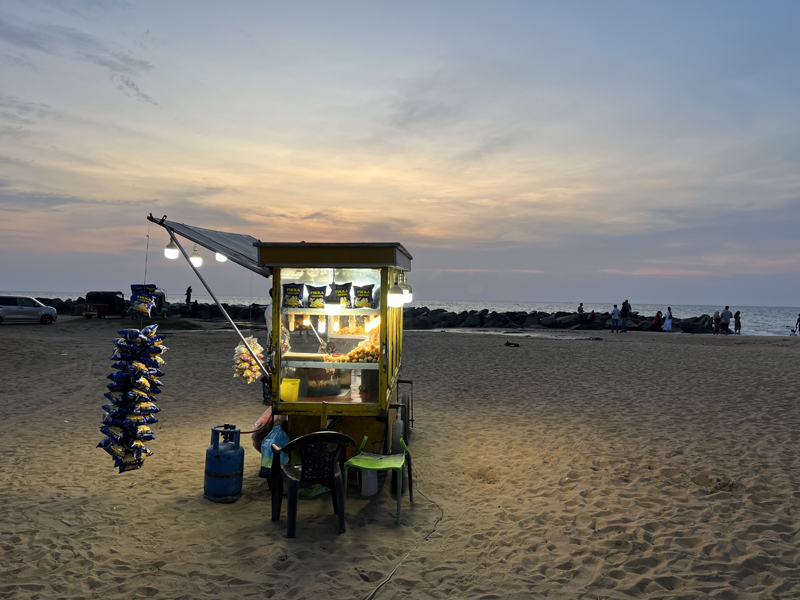
We started our trip in Negombo, near the airport. Here we could get used to the warm temperature and the time difference. In the morning, before breakfast, we took a walk along the beach. It was still relatively cool. At that time there were sportsmen and the fishermen preparing their boats.
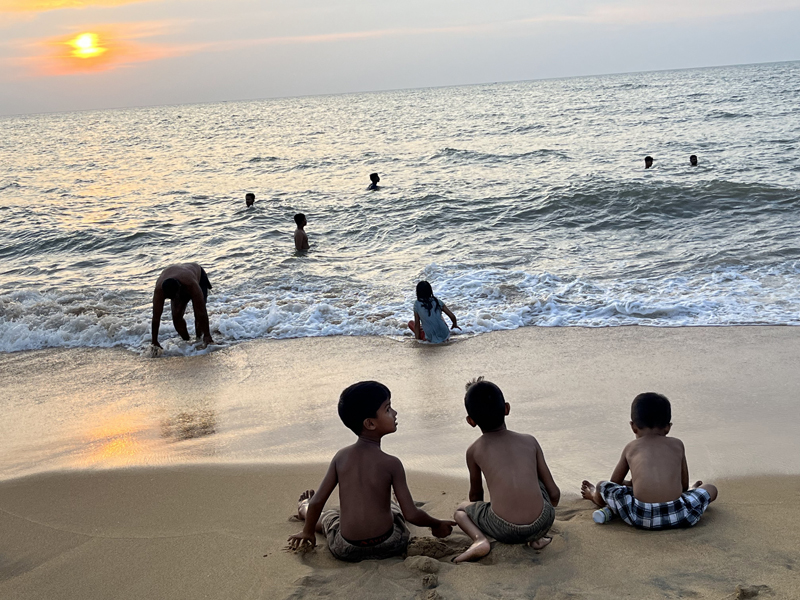
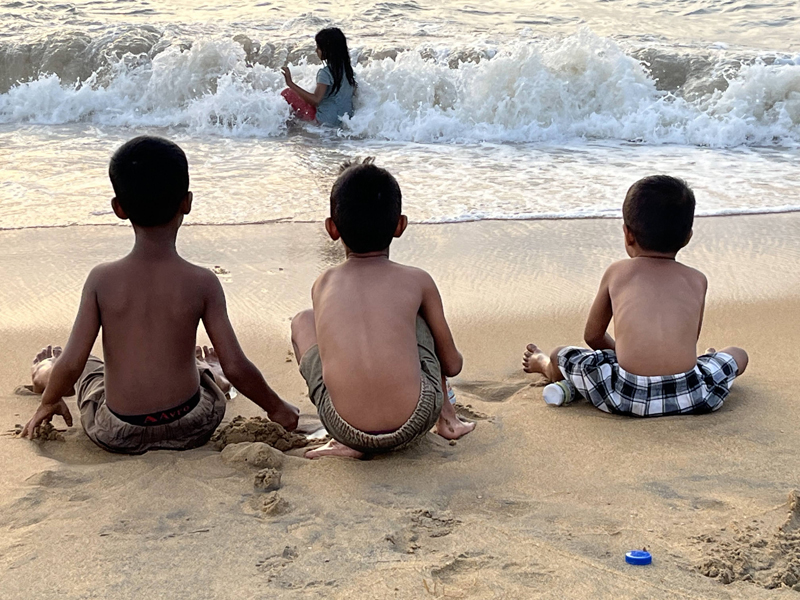
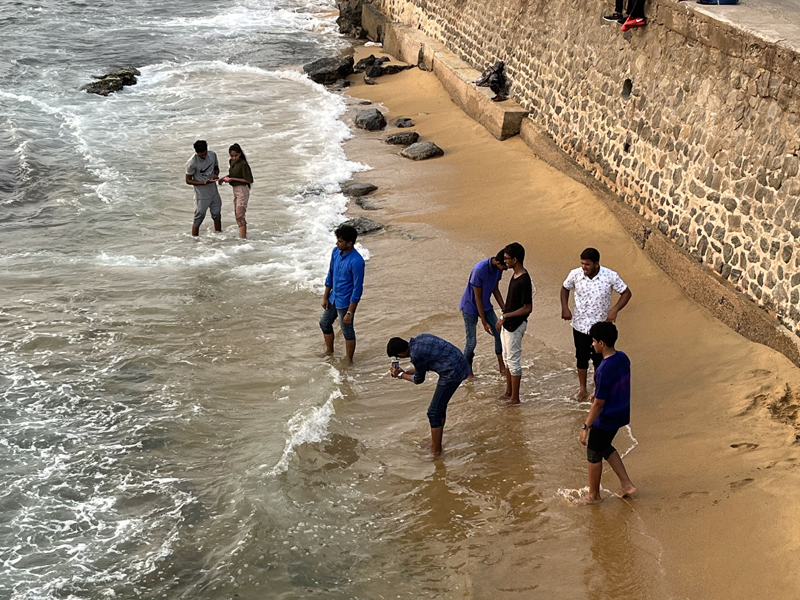
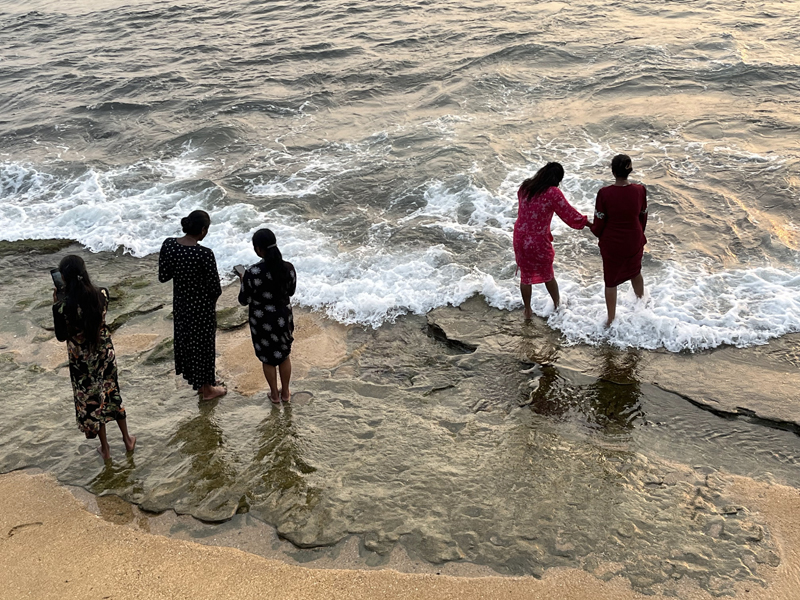
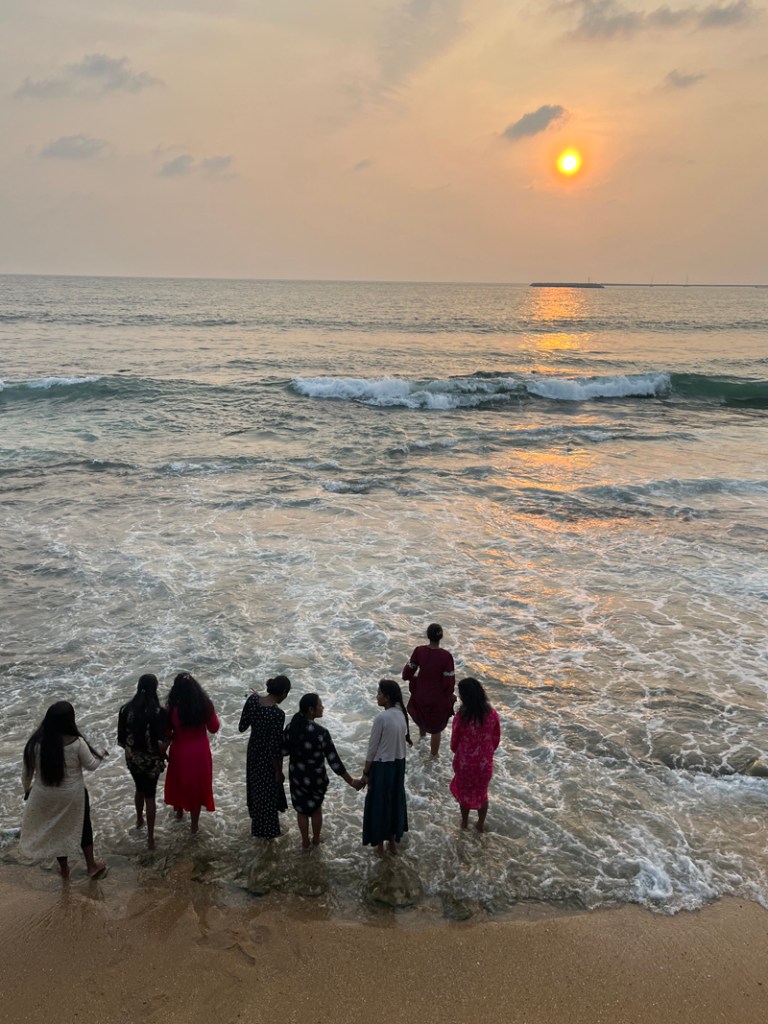
We also walked along the new boulevard in Colombo, the big city, at the end of the afternoon. Recreation time there too. Strolling, putting your feet in the water, eating a snack …
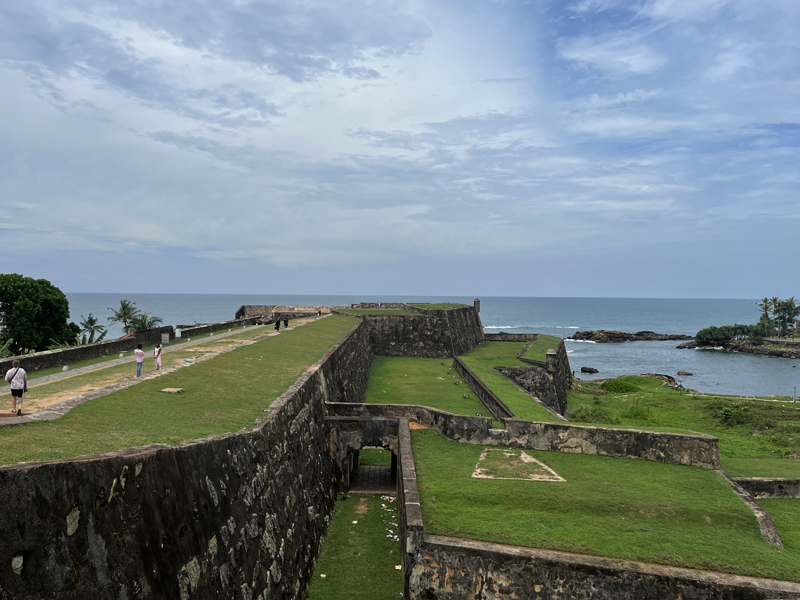
Galle is a fortified town on the south coast of the island and is now a Unesco world heritage site.
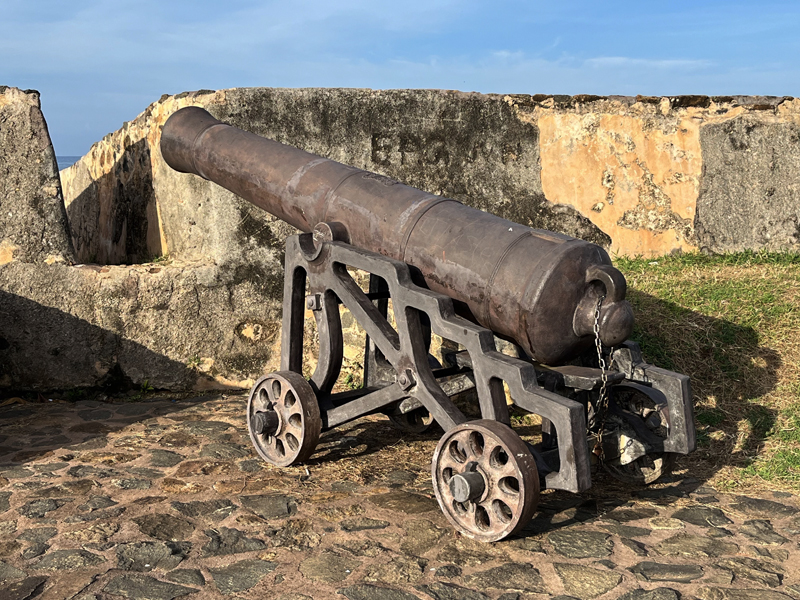
The Dutch VOC was very active in Asia and has also left its marks in Sri Lanka. The Portuguese built fortress here, but the Dutch overpowered the Galle Fort and took over the city. Galle Fort was an important spice trading port for the Dutch. They enlarged the stronghold after the conquest in 1640. They build a defensive wall, complete with bastions, powder magazines and cannons. And this is well preserved.
Some names, such as Utrecht Bastion, where the lighthouse is located, Zwart Bastion and Akersloot Bastion still remind us of the Netherlands.
Inside the fort there are white houses with red tiled roofs. There is still a Dutch church.
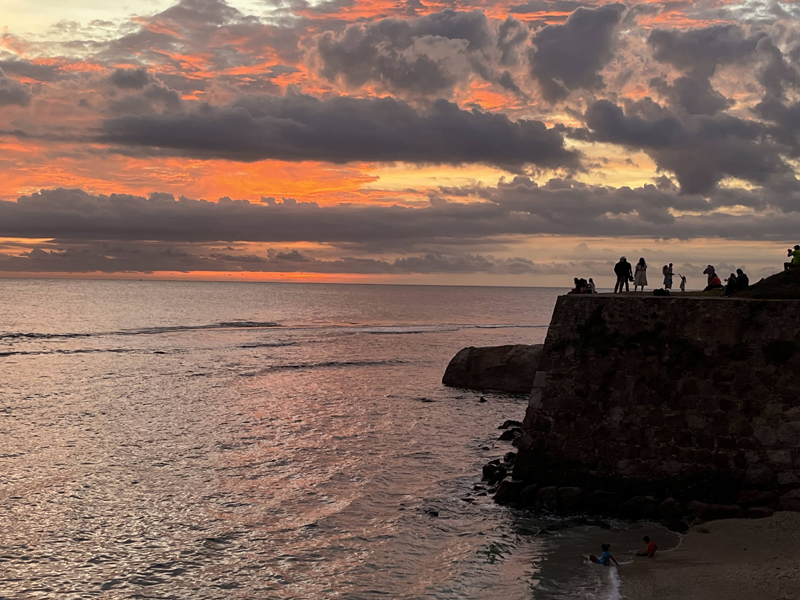
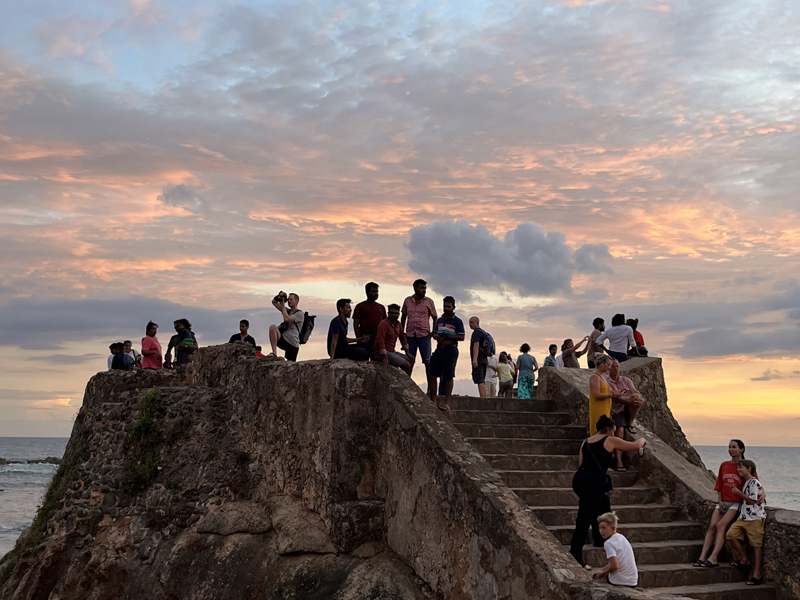
The rampart wall is a favourite place for both tourists and residents of Galle to enjoy the sunset.
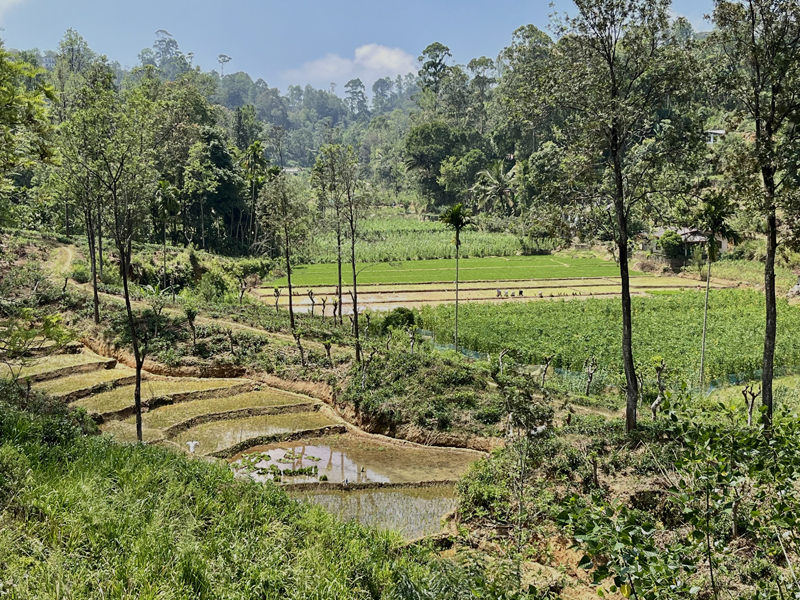
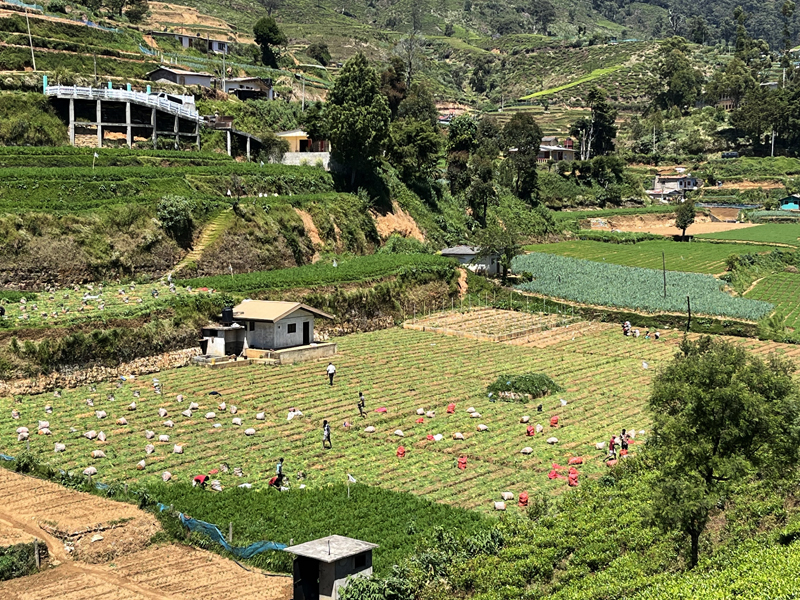
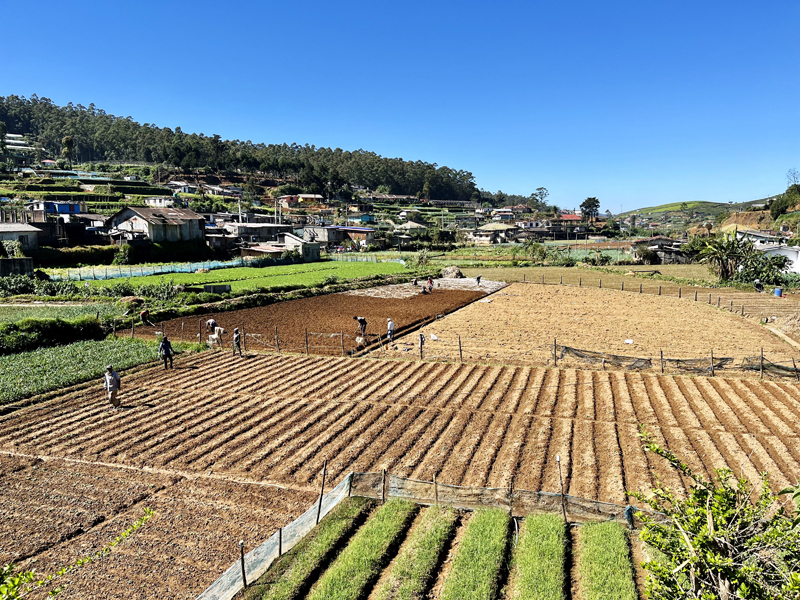
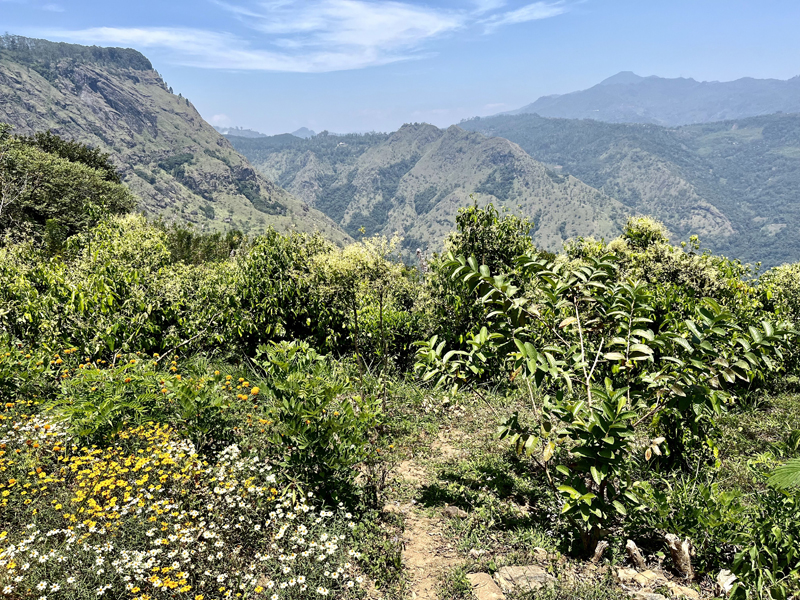
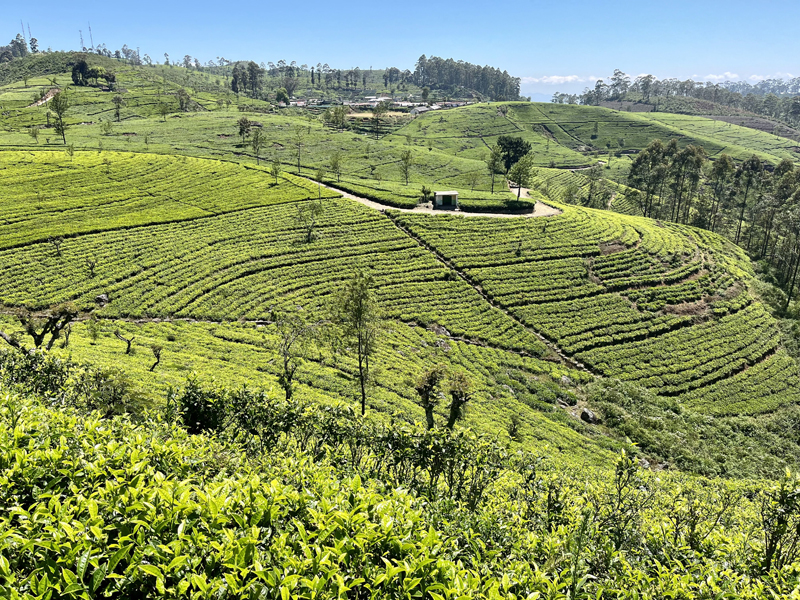
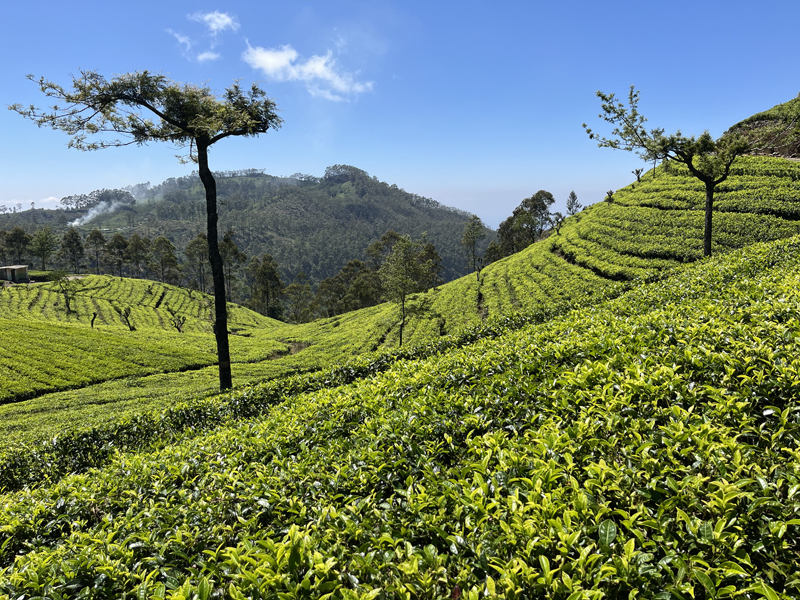
The Pekoe Trail runs through the mountain landscape in the central part of Sri Lanka; a 300 km long distance walk, divided into 22 stages. The trail shows the diversity of the region. The route runs through tea plantations, small villages, horticulture and forests.
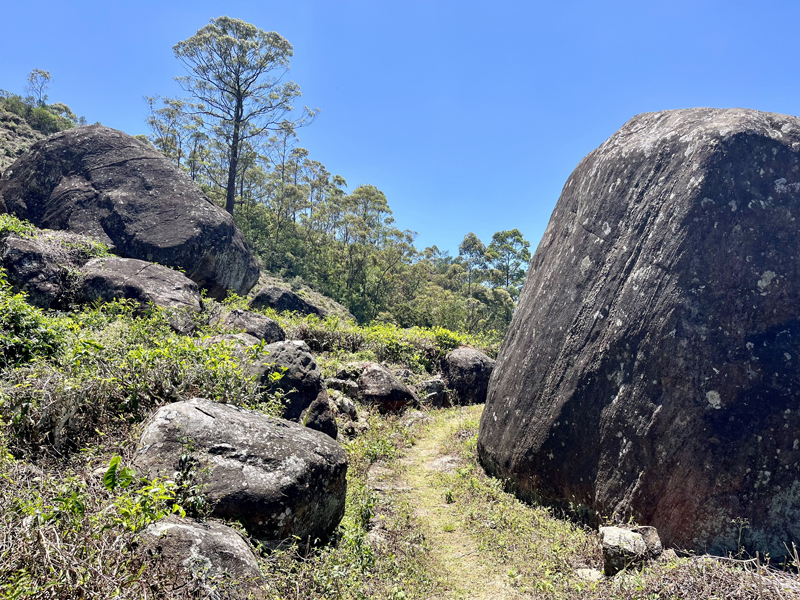
We walked a few parts of the trail using the All Trails app.
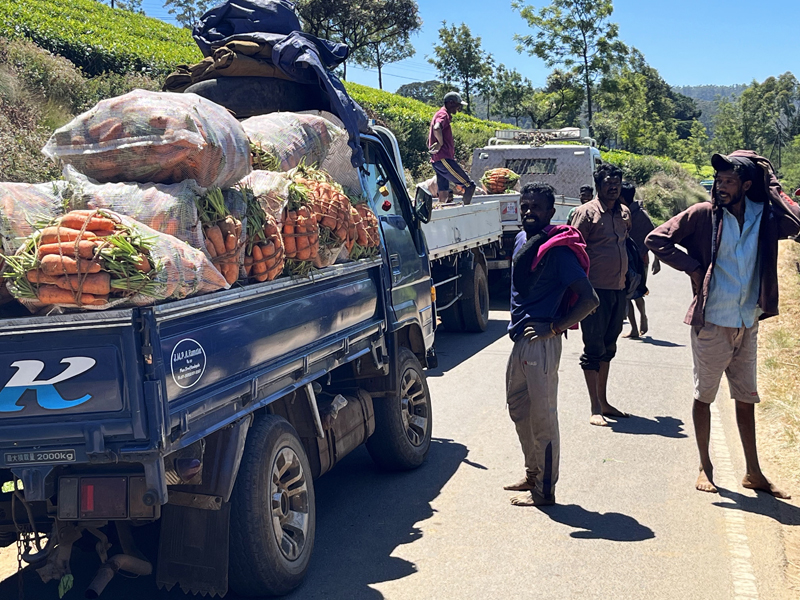
For us it was a wonderful way to experience the local life of the country. People on the road, the tea pickers, the people in the horticultural areas and in the communities were very friendly. We didn’t meet many other hikers, perhaps because it is also warm in the mountains.
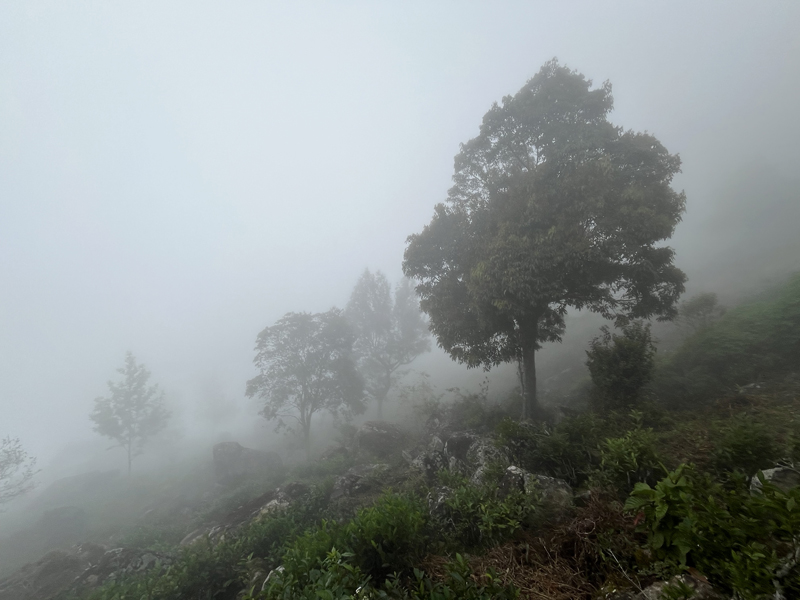
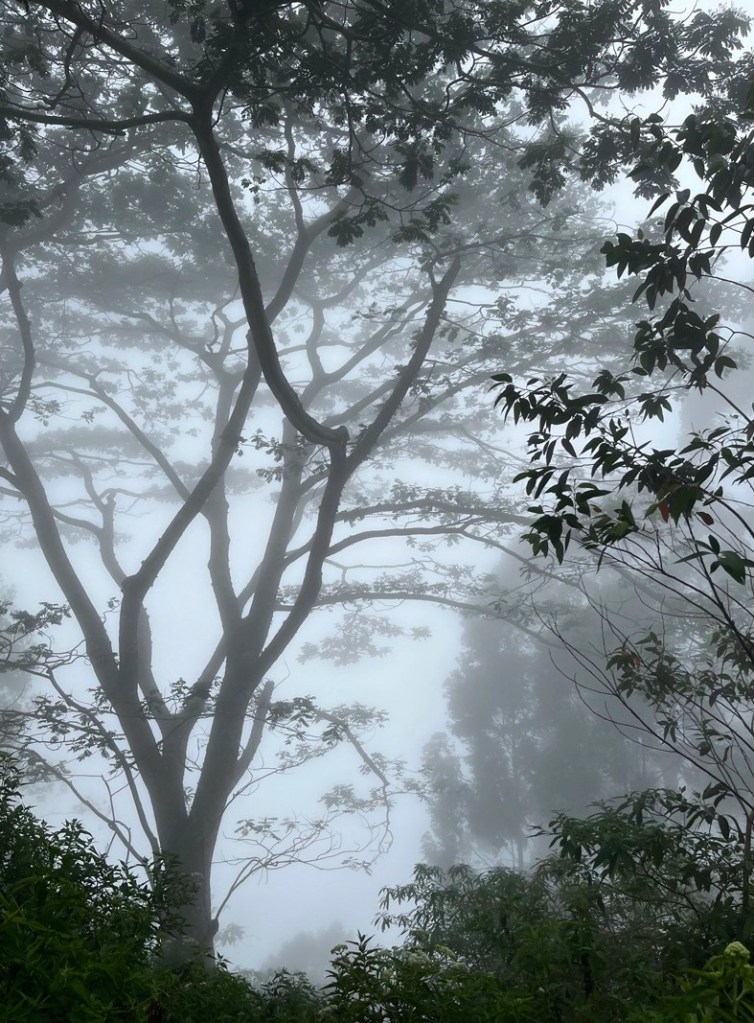
Our last walk was the longest and most spectacular. We walked from Ohiyo, a high station (1778m) , to Haputale. We started in the fog and walked along steep slopes. In the forest we climbed over fallen trees. The path is sometimes so narrow that we have difficulty finding it. The landscape is sometimes rugged and beautiful. The route also partly goes over the railway and even through a railway tunnel. It will also rain for the first time. There are no rest points. After 20 km there is the hotel, a shower and food.
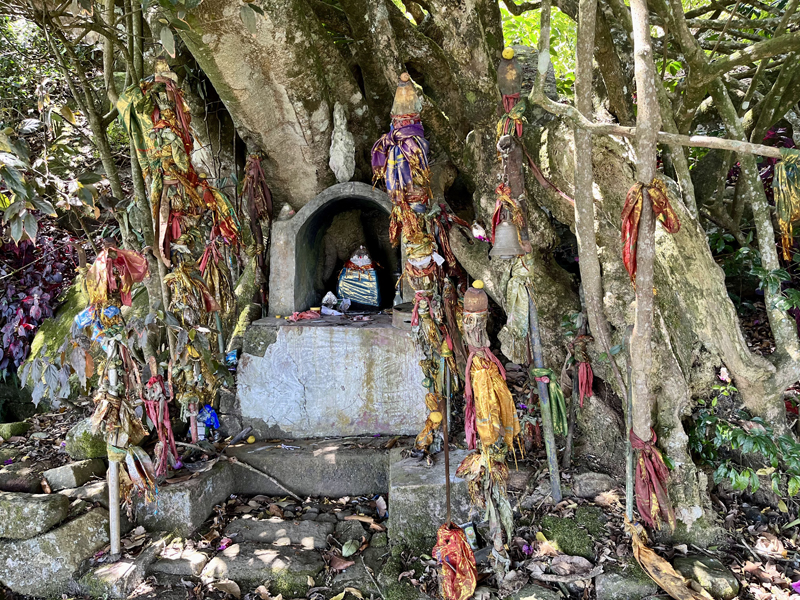
Along the way we came across Hindu shrines near enormous trees.
Tea and trains belong together. There are railways in Sri Lanka because of tea.
The English who were the tea producers in the 19th century built the railways to transport the tea from the mountains to the port of Colombo.
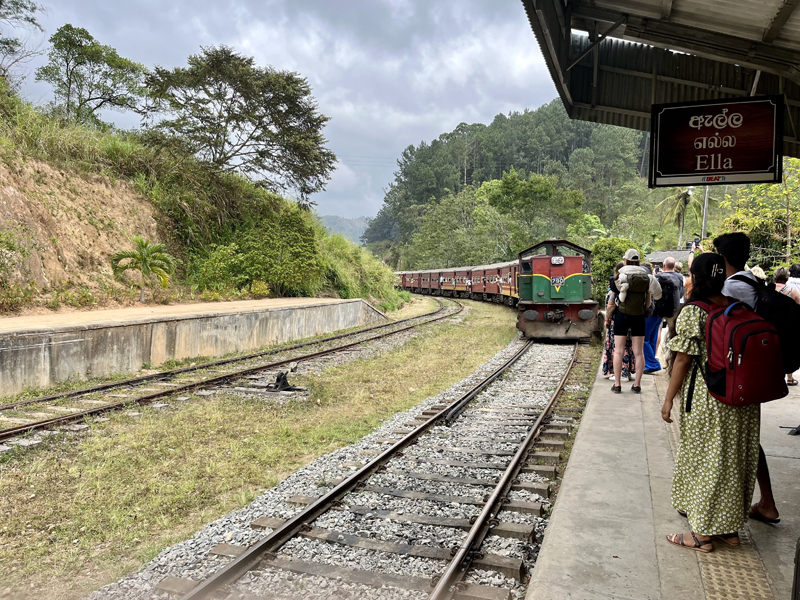
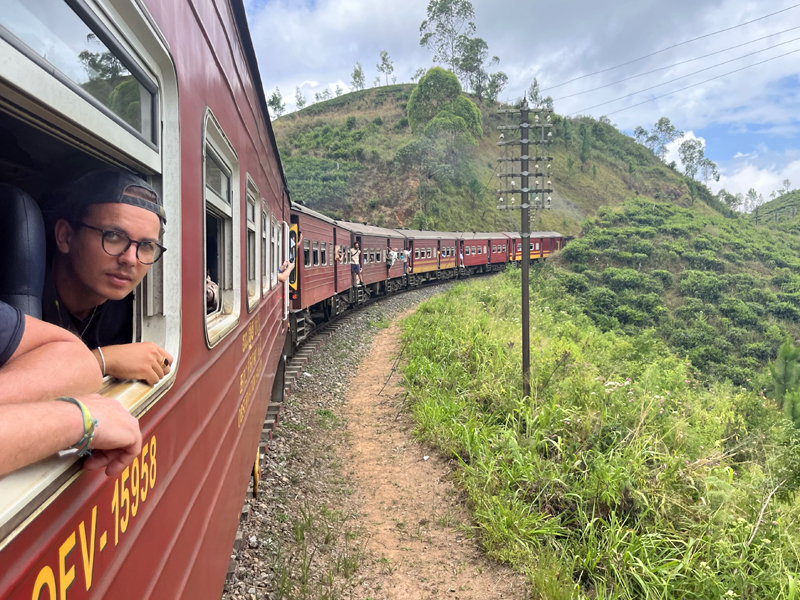
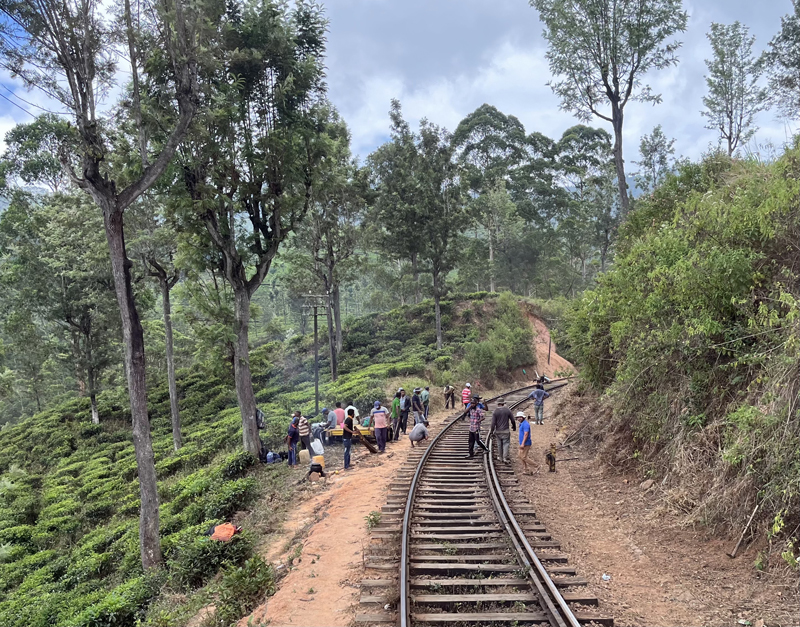
It is amazing how the routes were built in the high mountains. The Ohiyo station is located at an altitude of 1778m. There are many tunnels on the routes. From behind the open windows of the train you have a view of the slopes with tea plantations.
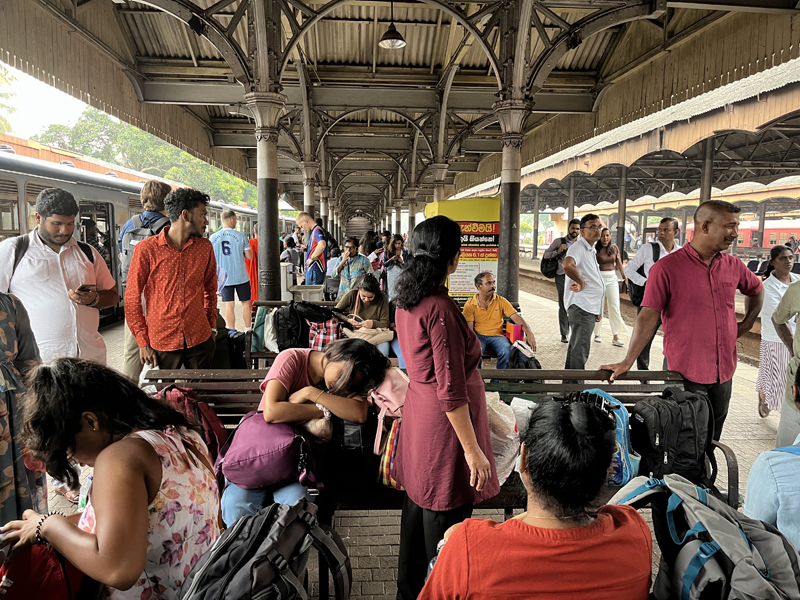
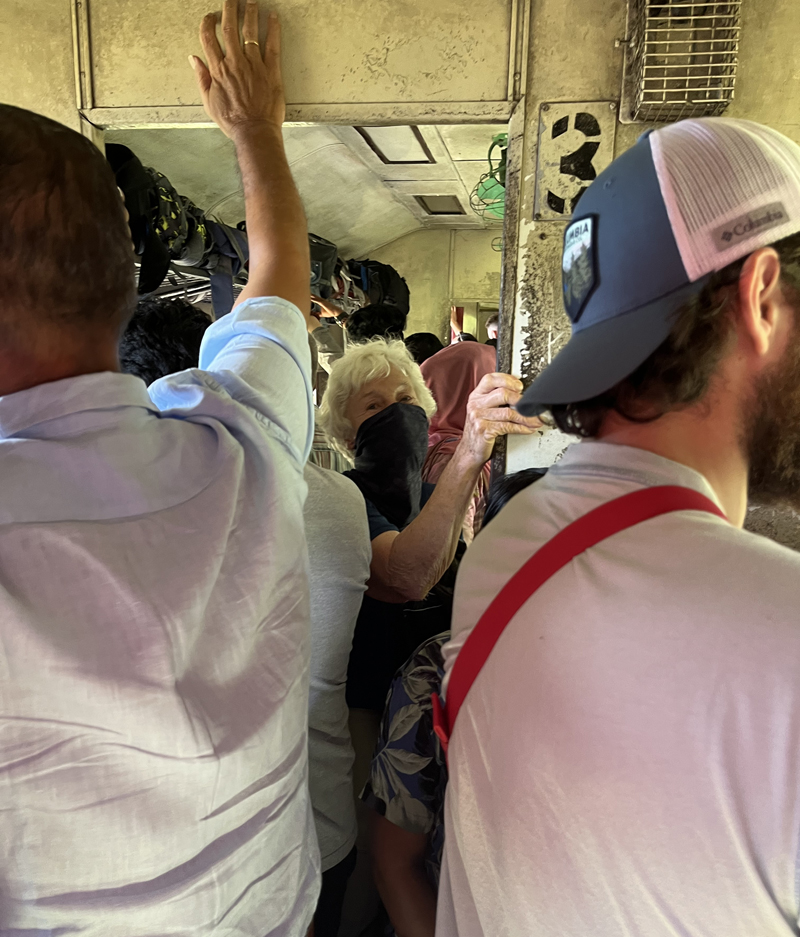
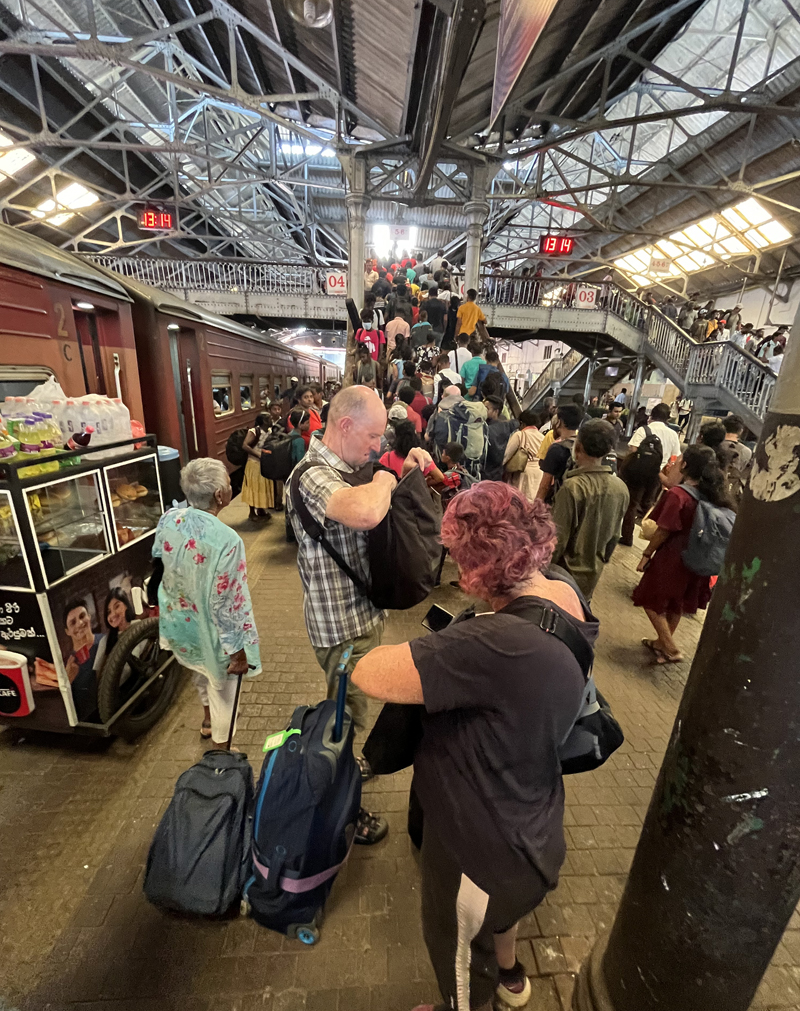
Traveling by train in Sri Lanka is a special experience. We took the train several times to our next destination. Fortunately, we travel with a backpack that is not too heavily packed. That makes traveling by train a lot easier.
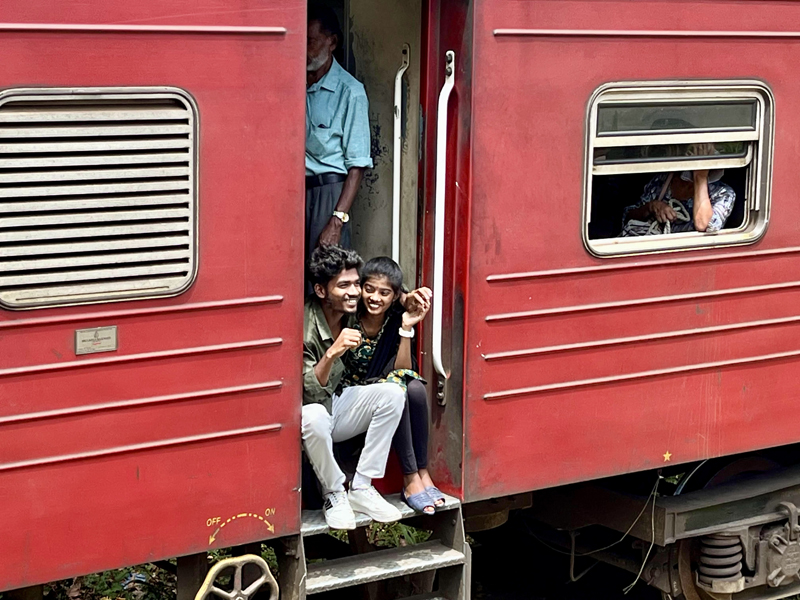
Twice we had a reserved place. But on the other routes we just had to wait and see if we could sit. Sometimes the train was so full upon arrival at the platform that we thought we would no longer be able to get in. But with fitting and measuring….
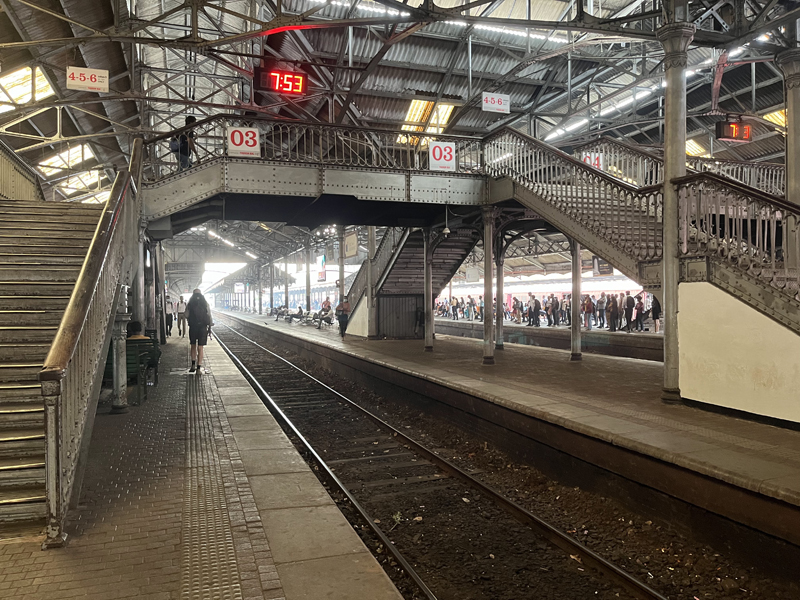
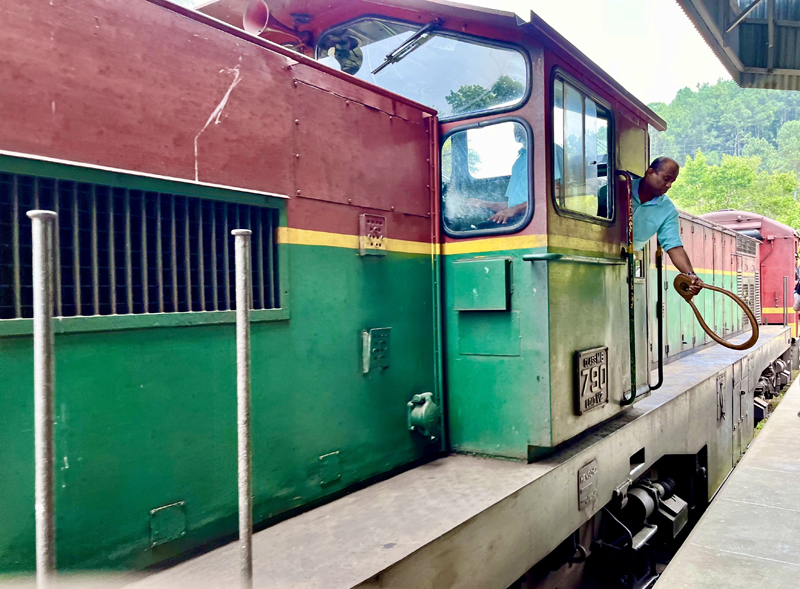
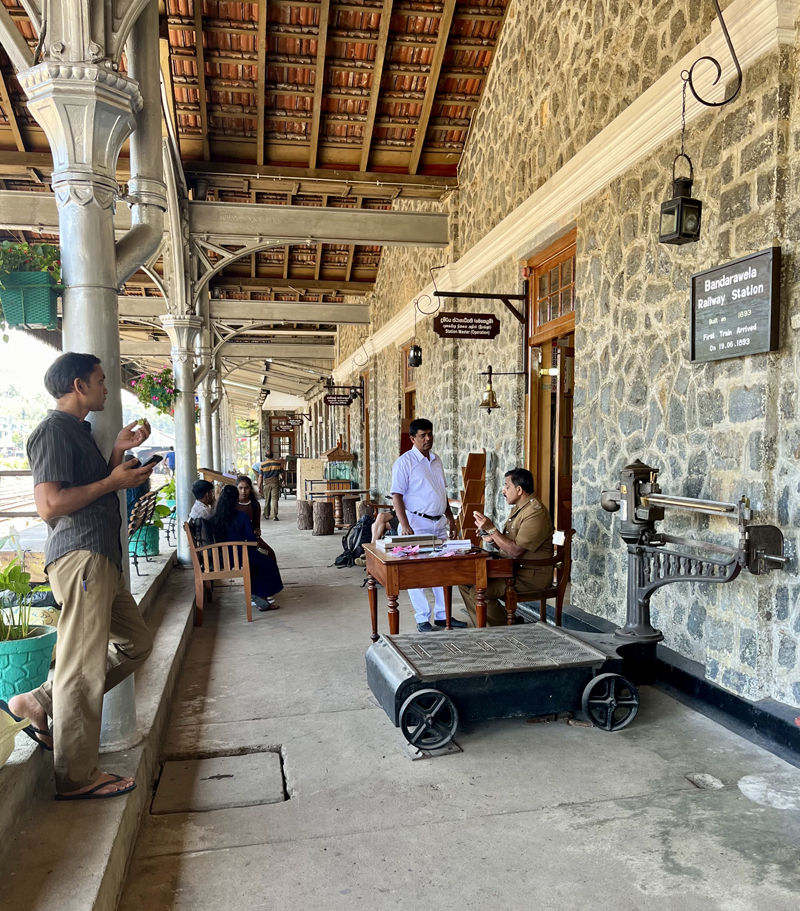
Several stations with cast iron pillars are special places. The trains are old now, but the station employees are looking great in green or bright white uniforms.
The train tracks are used by the locals as a walking path to get to the next town more directly.
Taking the train in Sri Lanka is an hype by tourists.
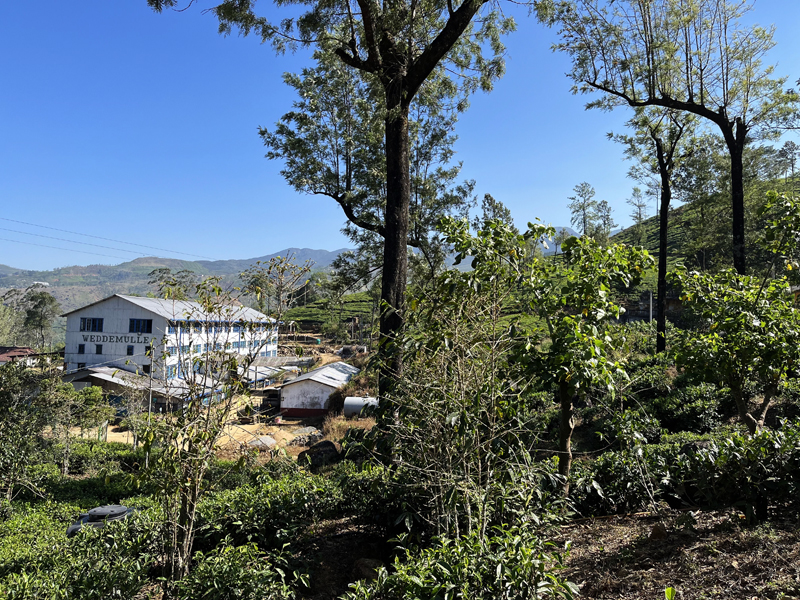
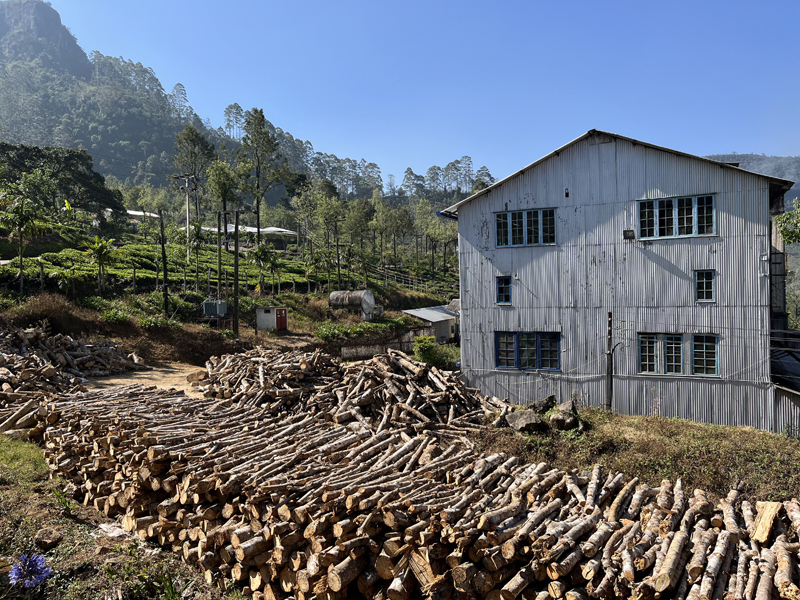
Sri Lanka is the land of tea, Ceylon tea. Tea is the country’s most important export product. The tea plantations provide employment to a large part of the population. The plantations were started by the English. As before 1800 there were coffee plantations. But the English are tea drinkers and also started producing tea. When the coffee bushes were affected by fungal diseases around 1880, production stopped. The tea plantations were worthy successors.
The Scottish Sir Thomas Lipton (1850-1931) is a well-known entrepreneur in Sri Lanka. He had plantations on the island. We know his name from the tea bags. Lipton tea is available everywhere.
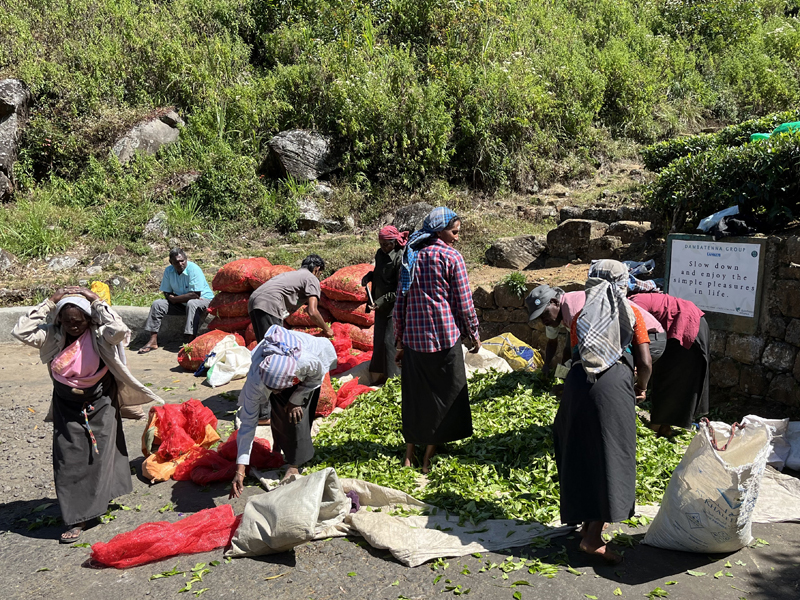
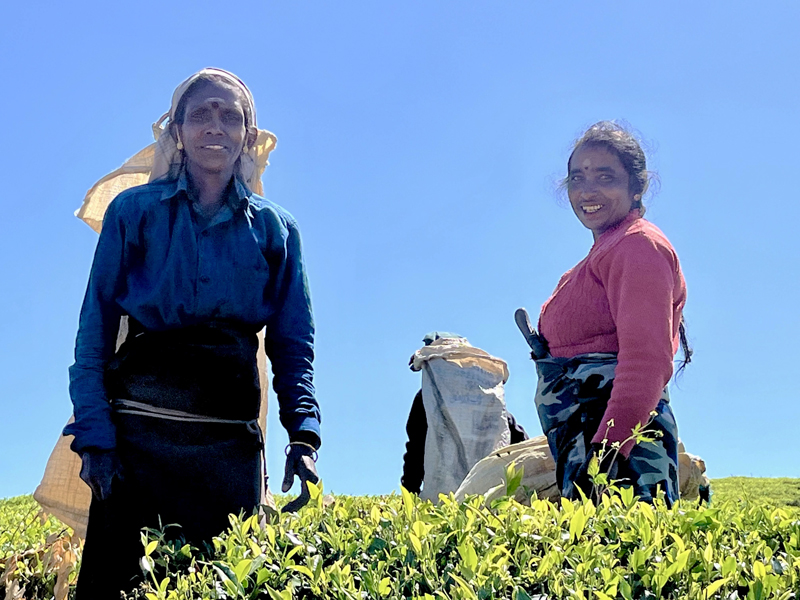
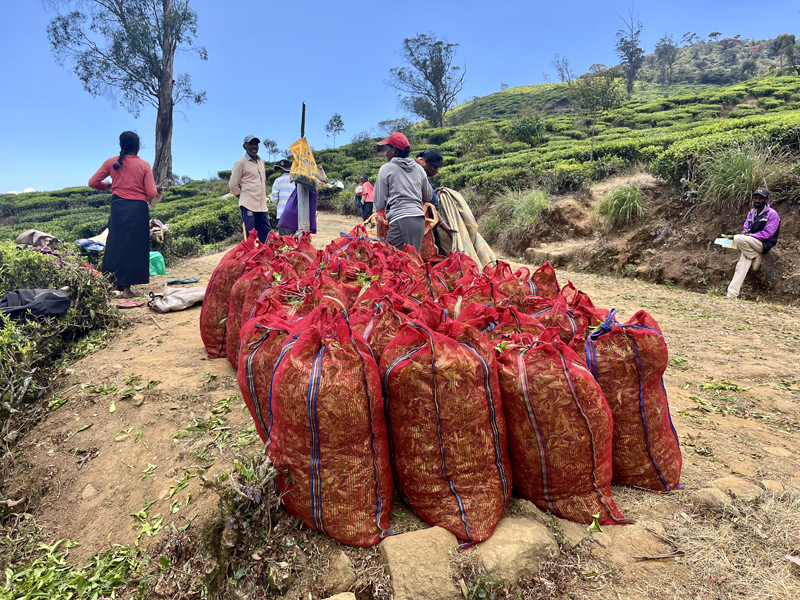
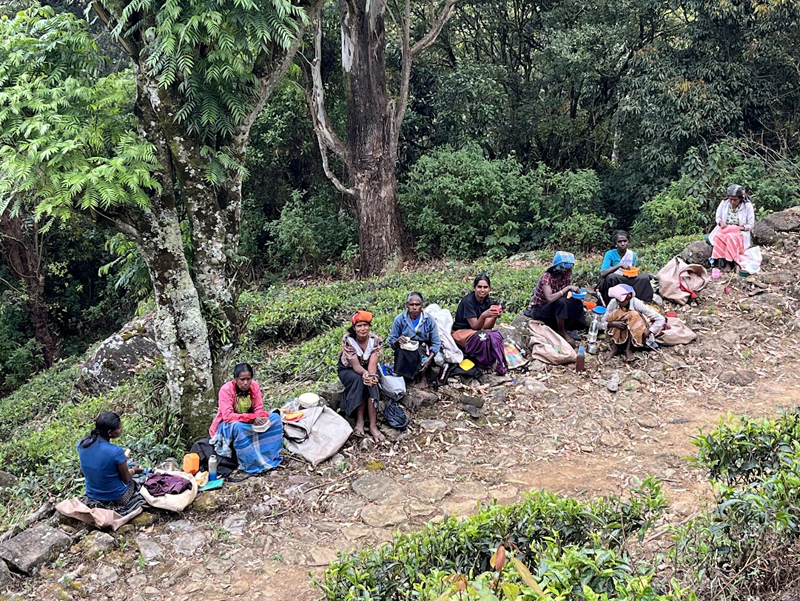
The tea is picked by hand, usually by women, and collected for further processing in the tea factories.
Nowadays there are more and more places where tea is produced sustainable.











 about walking and cycling, ...