Sri Lanka is an island south-east of India in the Indian Ocean. An island has coasts.
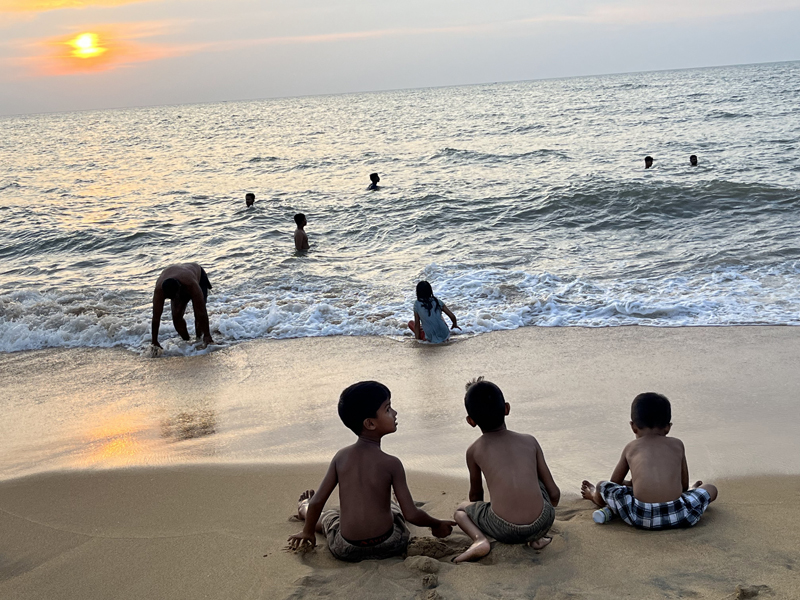
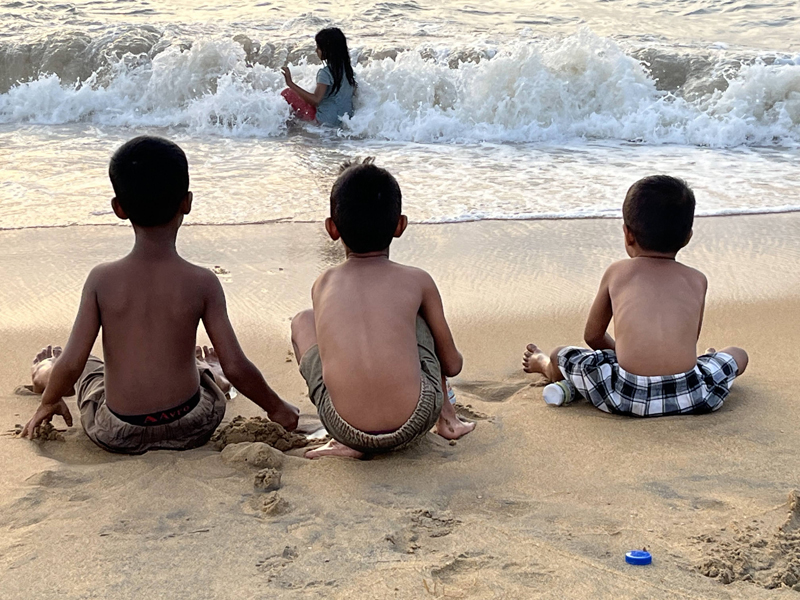
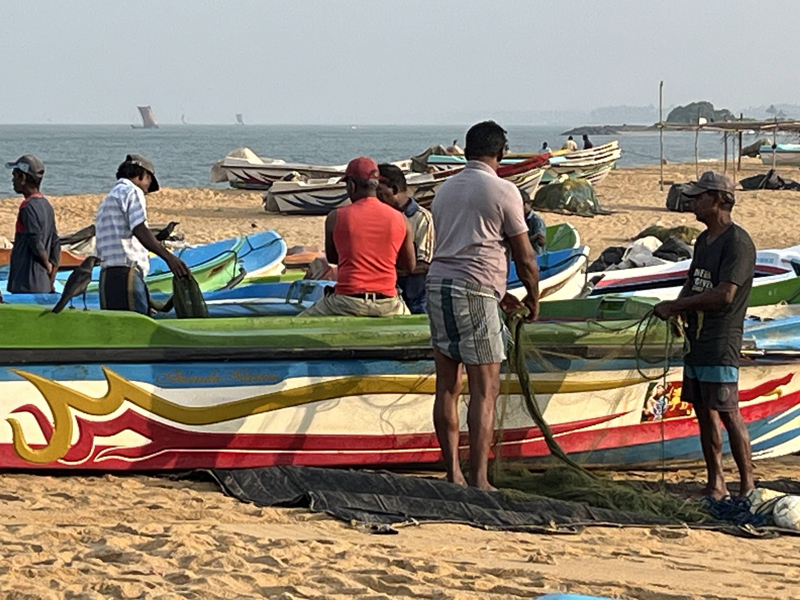
We started our trip in Negombo, near the airport. Here we could get used to the warm temperature and the time difference. In the morning, before breakfast, we took a walk along the beach. It was still relatively cool. At that time there were sportsmen and the fishermen preparing their boats.
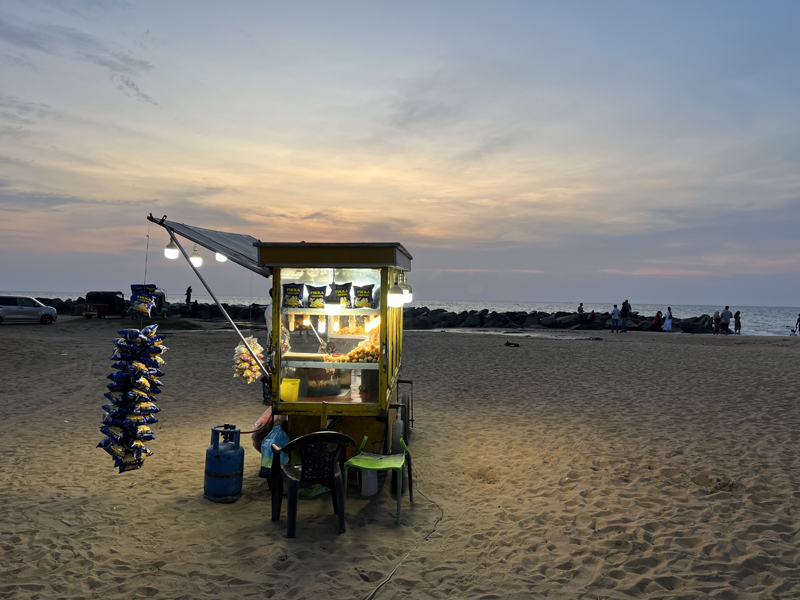
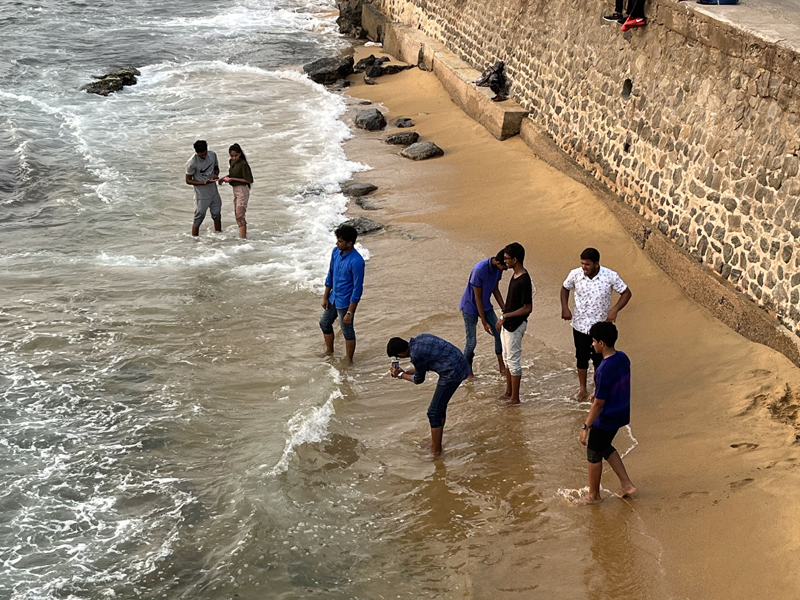
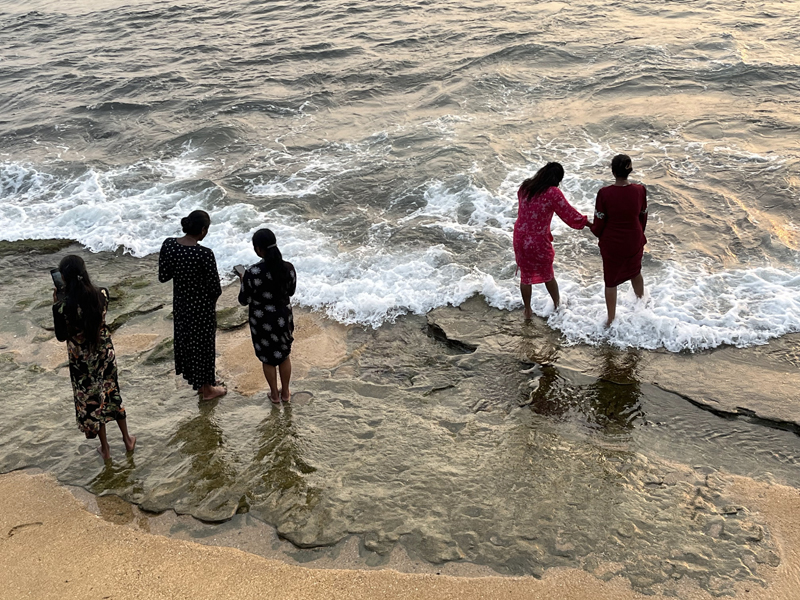
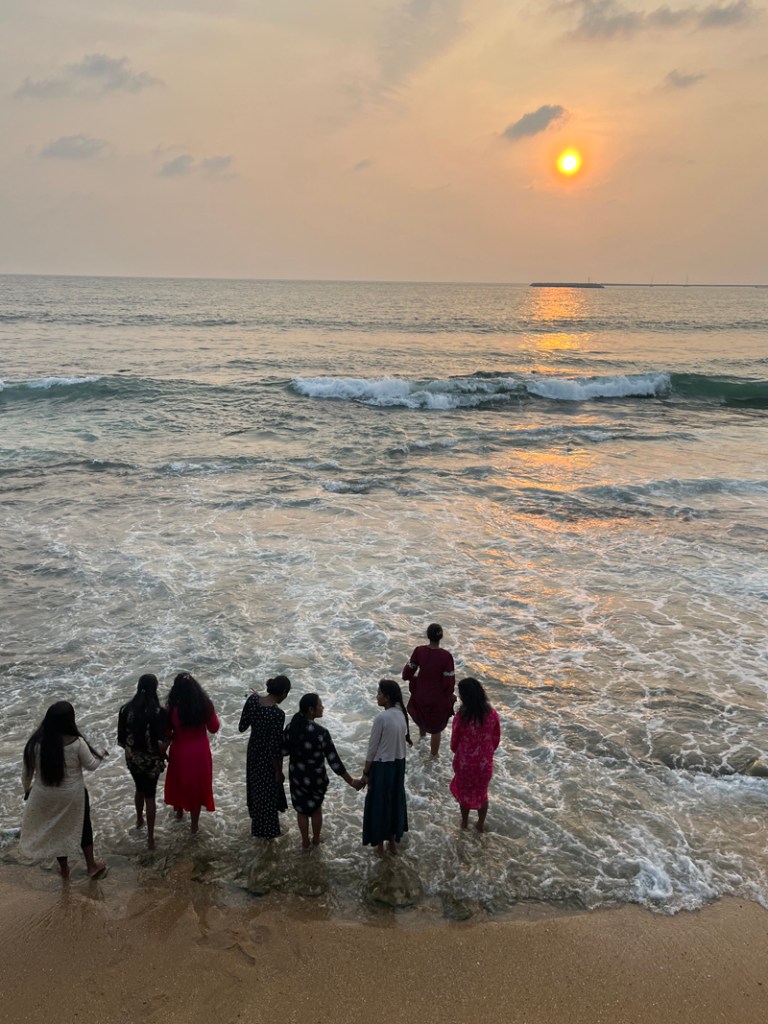
We also walked along the new boulevard in Colombo, the big city, at the end of the afternoon. Recreation time there too. Strolling, putting your feet in the water, eating a snack …
Tea and trains belong together. There are railways in Sri Lanka because of tea.
The English who were the tea producers in the 19th century built the railways to transport the tea from the mountains to the port of Colombo.
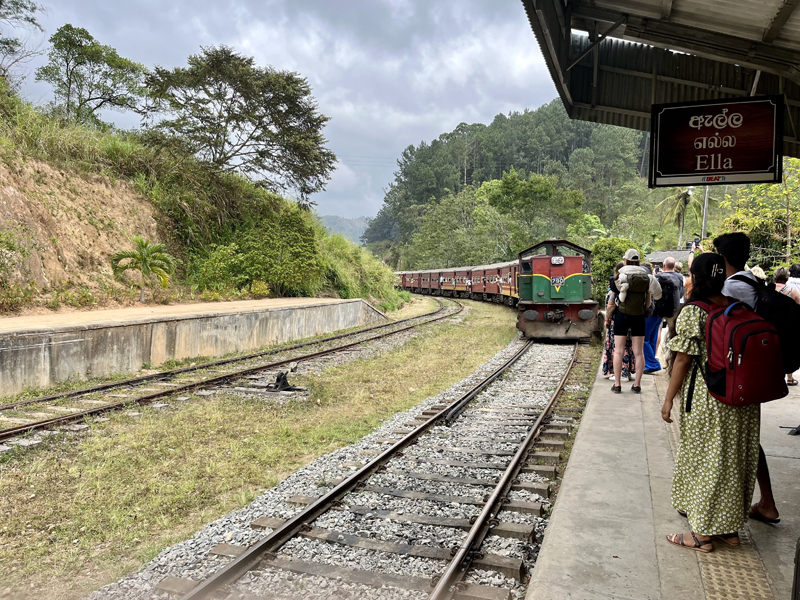
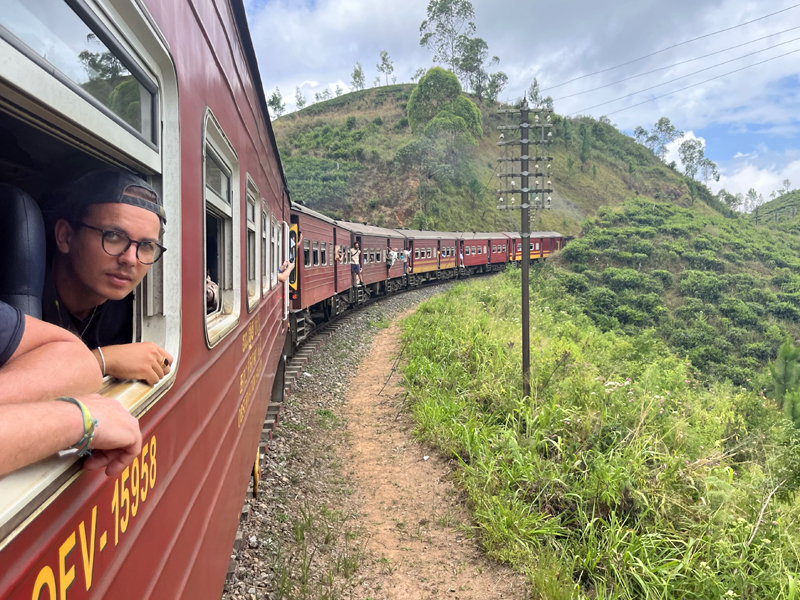
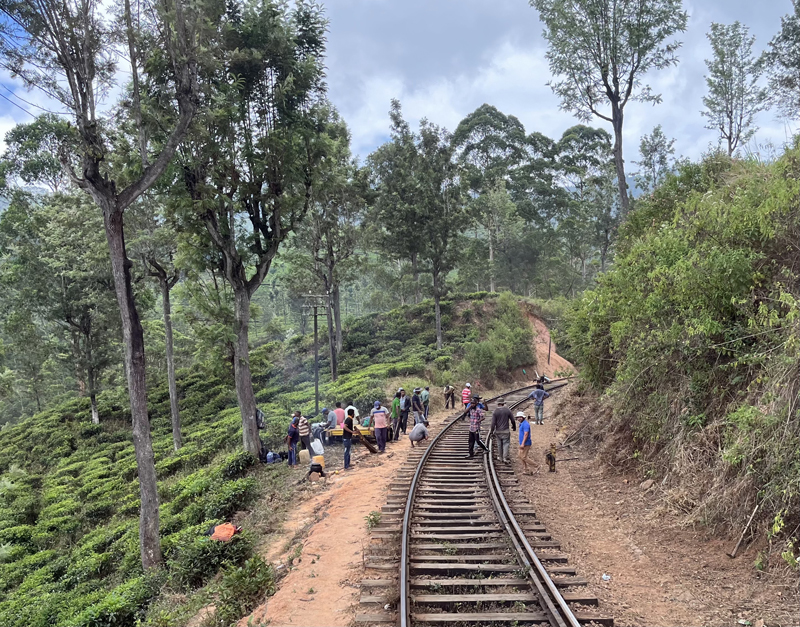
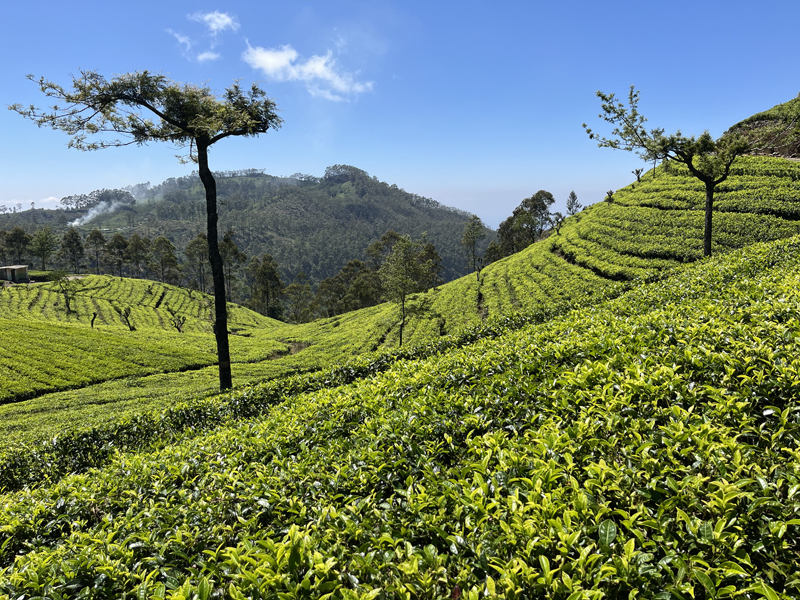
It is amazing how the routes were built in the high mountains. The Ohiyo station is located at an altitude of 1778m. There are many tunnels on the routes. From behind the open windows of the train you have a view of the slopes with tea plantations.
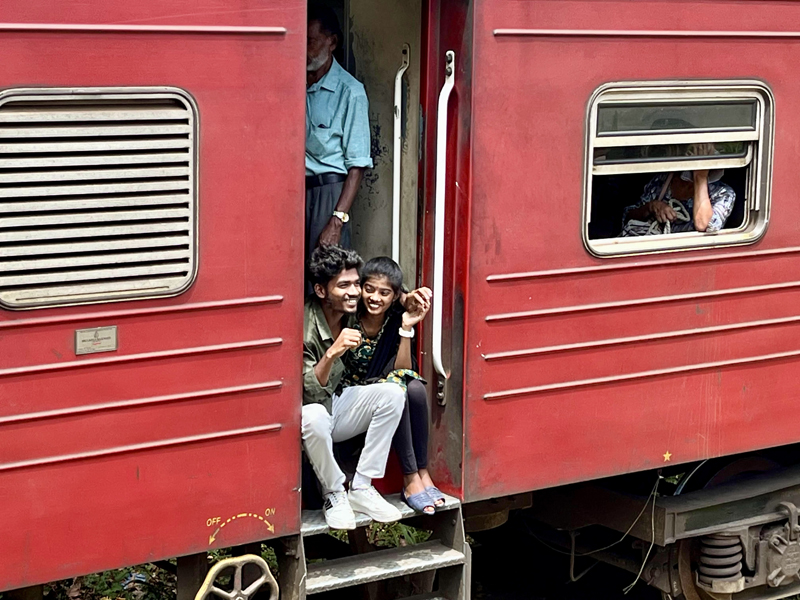
Traveling by train in Sri Lanka is a special experience. We took the train several times to our next destination. Fortunately, we travel with a backpack that is not too heavily packed. That makes traveling by train a lot easier.
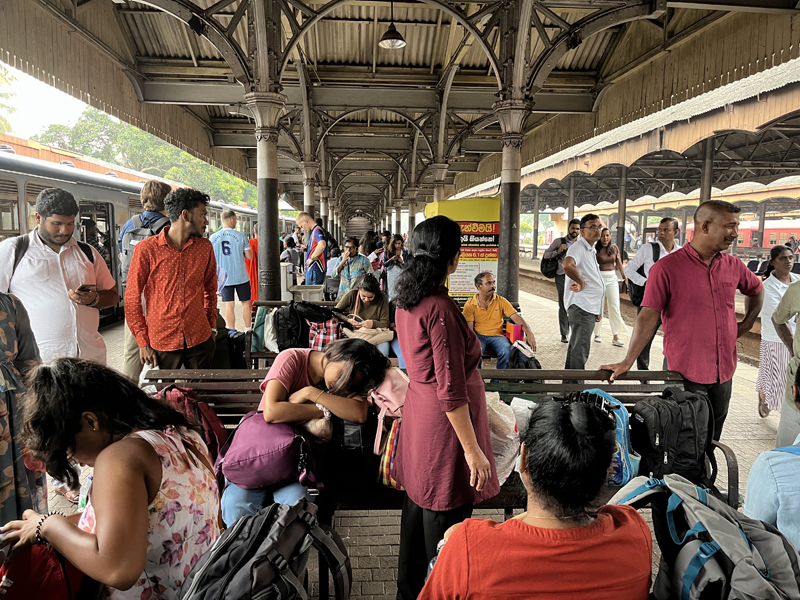
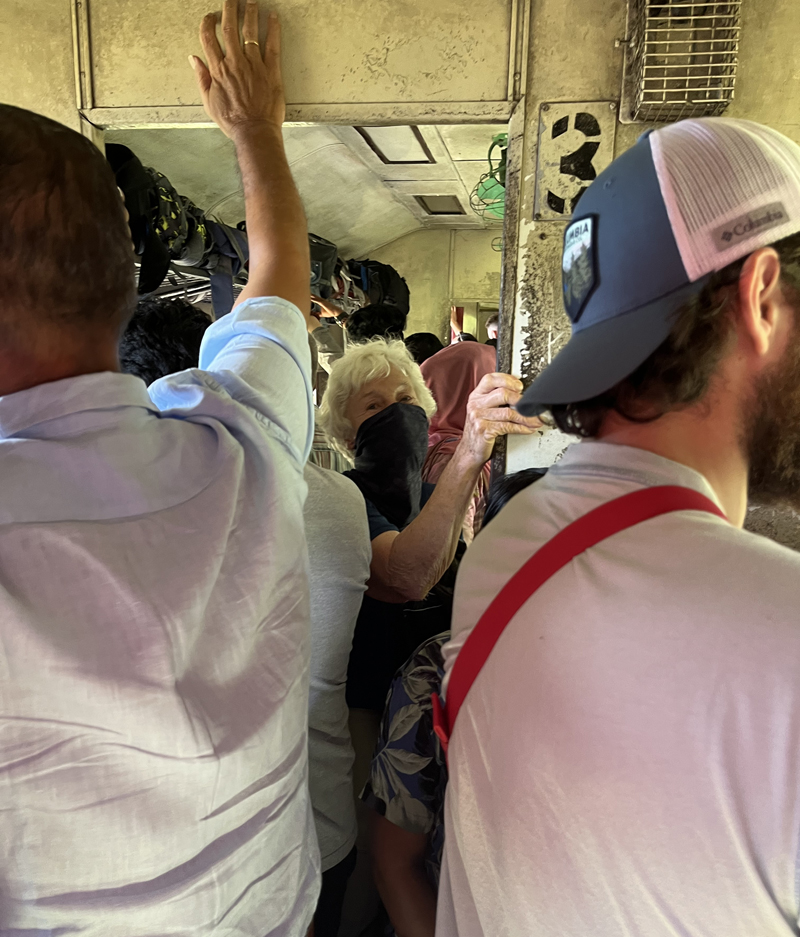
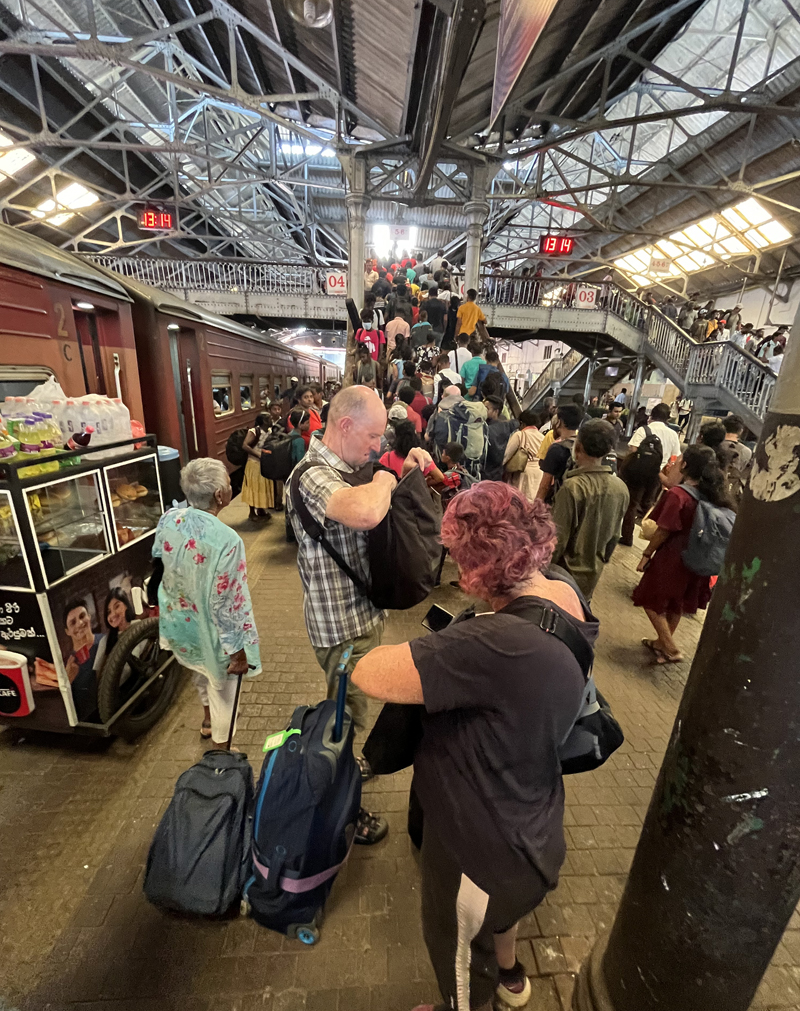
Twice we had a reserved place. But on the other routes we just had to wait and see if we could sit. Sometimes the train was so full upon arrival at the platform that we thought we would no longer be able to get in. But with fitting and measuring….
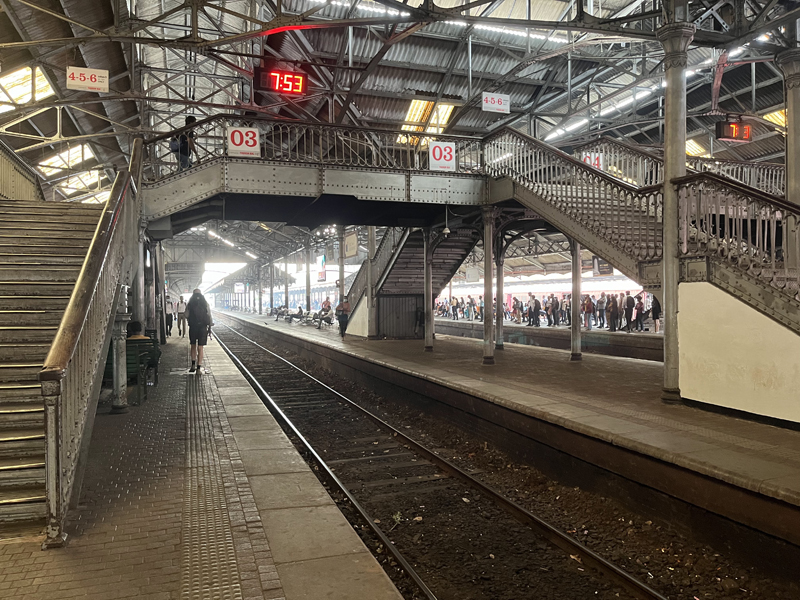
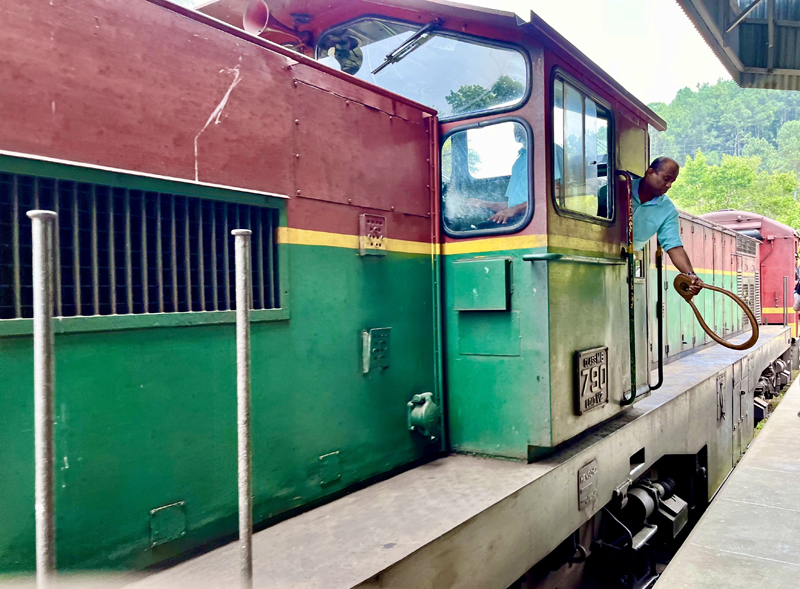
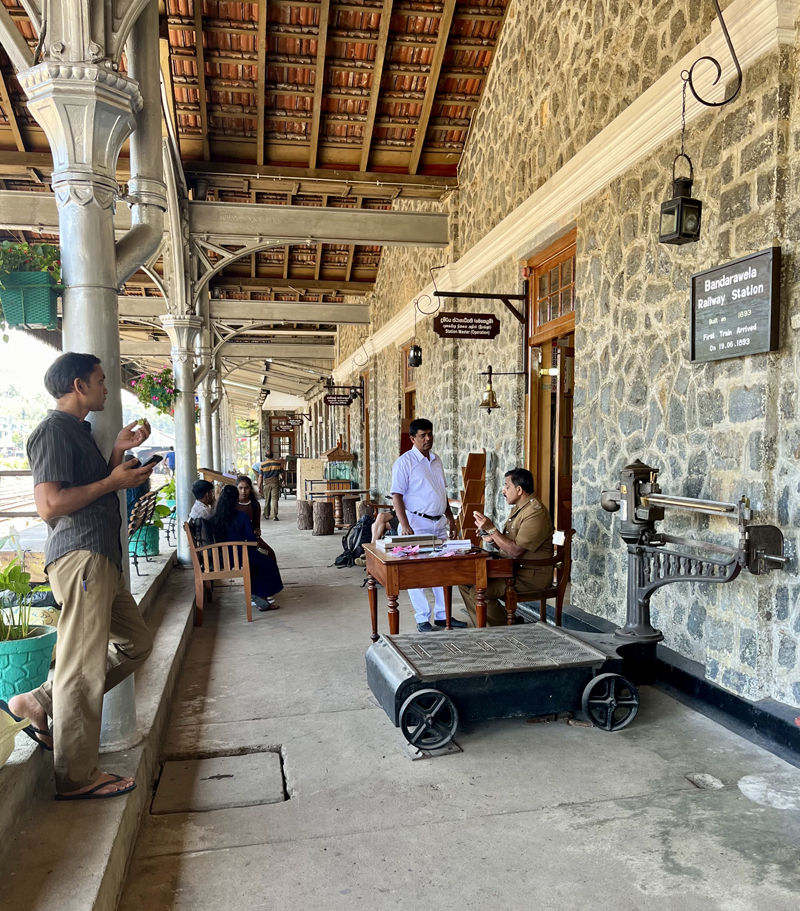
Several stations with cast iron pillars are special places. The trains are old now, but the station employees are looking great in green or bright white uniforms.
The train tracks are used by the locals as a walking path to get to the next town more directly.
Taking the train in Sri Lanka is an hype by tourists.
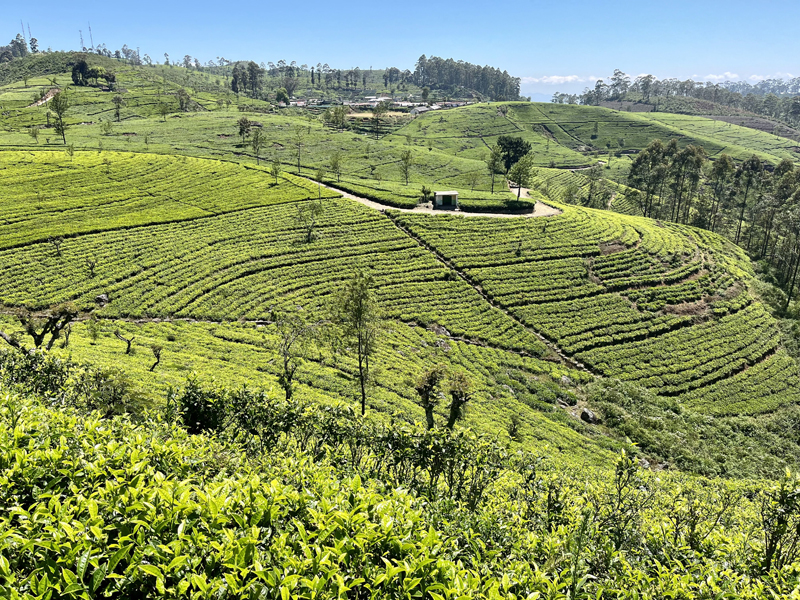
Sri Lanka is the land of tea, Ceylon tea. Tea is the country’s most important export product. The tea plantations provide employment to a large part of the population. The plantations were started by the English. As before 1800 there were coffee plantations. But the English are tea drinkers and also started producing tea. When the coffee bushes were affected by fungal diseases around 1880, production stopped. The tea plantations were worthy successors.
The Scottish Sir Thomas Lipton (1850-1931) is a well-known entrepreneur in Sri Lanka. He had plantations on the island. We know his name from the tea bags. Lipton tea is available everywhere.
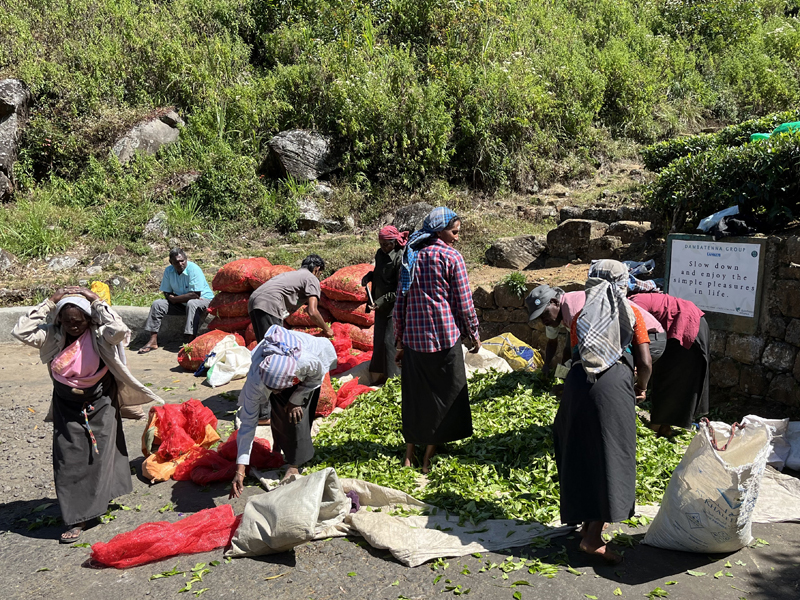
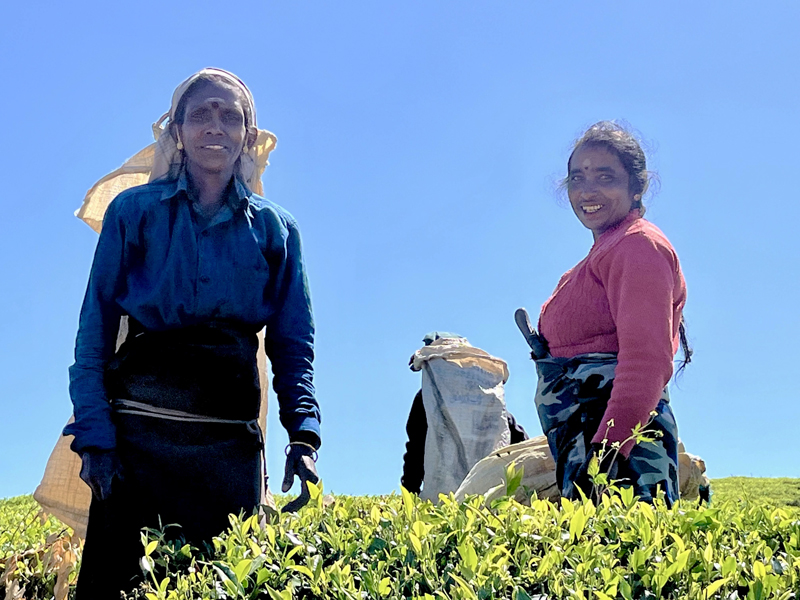
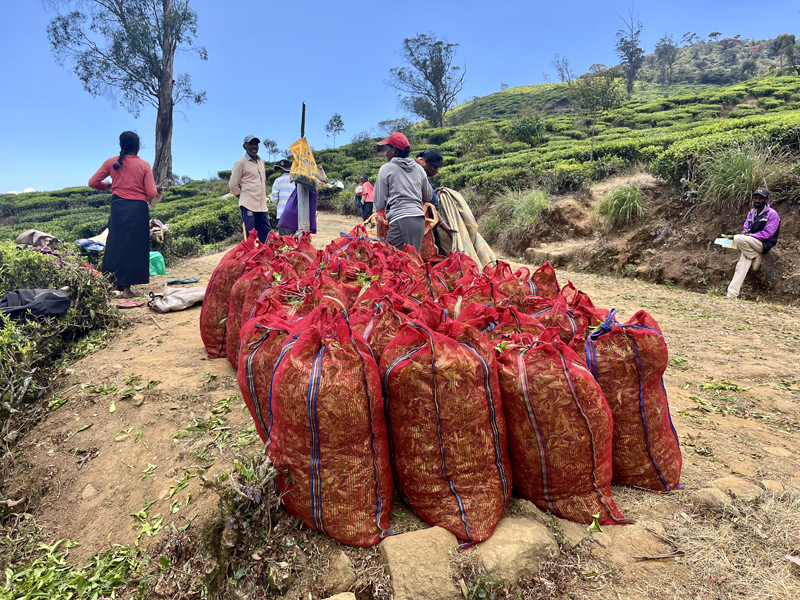
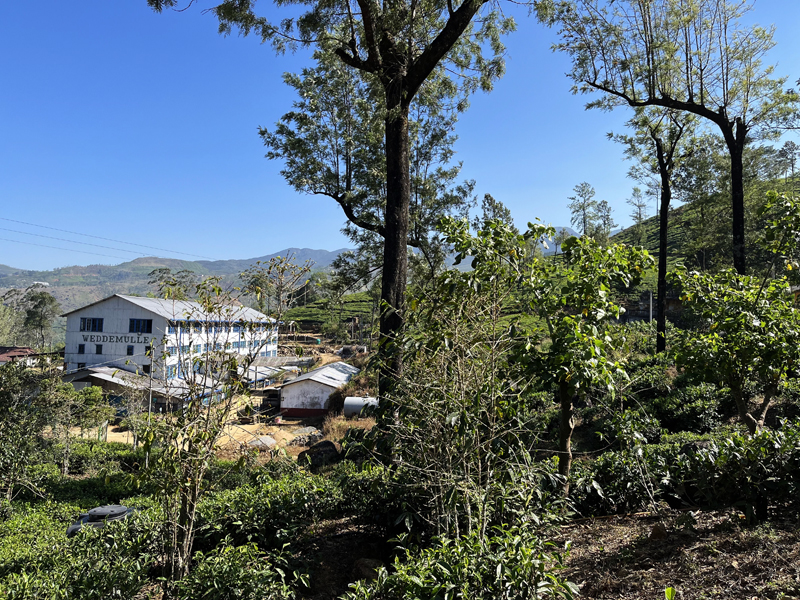
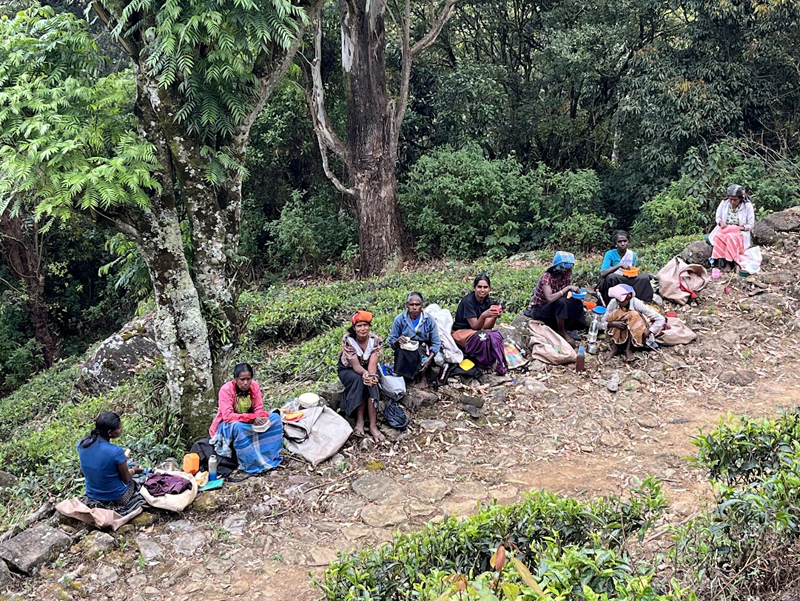
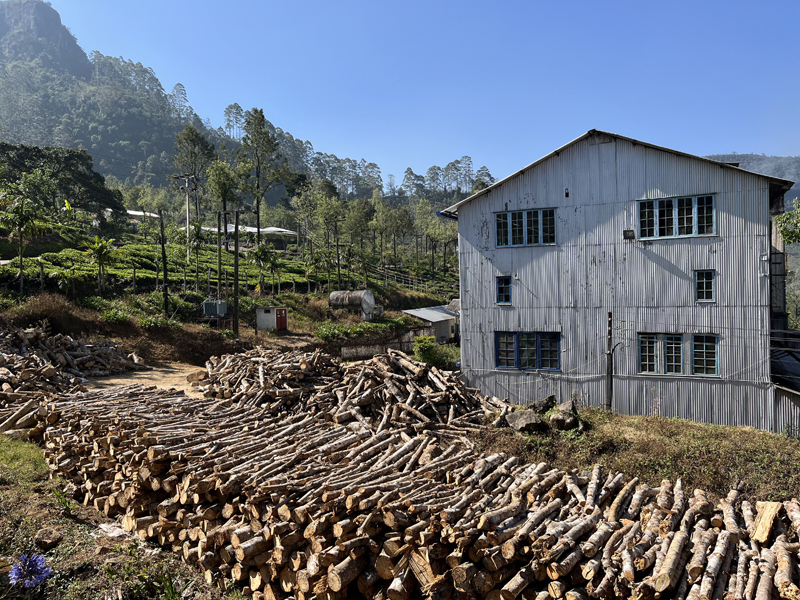
The tea is picked by hand, usually by women, and collected for further processing in the tea factories.
Nowadays there are more and more places where tea is produced sustainable.





 about walking and cycling, ...