(2) Ongi Etorri

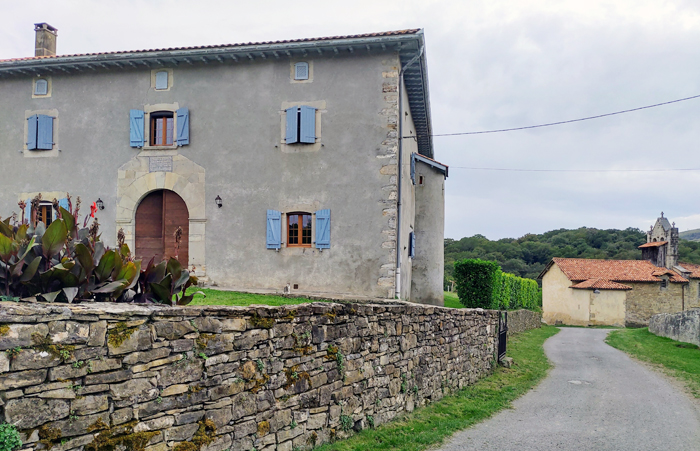
Bienvenue. We walked through the Basque area and we noticed that from the inscriptions on houses and on the double street signs. A beautiful language that could have served as an example for ‘The game of Thrones’. Route de Labastide / Bastidaxarreko errepidea.

After a spicy warm walk we arrived at Gite Etchetoa, with room for twelve pèlerins. A sober, but beautifully restored old house. Marie, who herself was fond of caminos, welcomed us with a glass of cold lemon water. “Throw your clothes from today in the laundry basket. I’ll run the washing machine during dinner later and everything will be clean and dry tomorrow.”
We ate at the big table and Marie shared dinner with us. To toast each other’s happiness, she poured each a glass of cider. Together we set the table, cut the bread and put the dishes from the kitchen on the table. Bottled water and wine. The meal was rich and delicious. Cold cucumber soup. Rice and ragout with a Basque sausage. Banana cake with ice cream for dessert. What a great experience. Pleasant buzz in which the Belgian Martine occasionally translated some of the rap told French stories for us.
The next morning after breakfast we set out early to Saint Jean Pied de Port, the place at the beginning of the Pyrenees, which is the starting point of the Camino for most hikers.
We were glad that we had already walked three days before the ascent over the mountains.
(3) Saint Jean Pied de Port and the Pyrenees

Saint Jean Pied de Port is an old walled town at the foot of the Pyrenees. For most Camino hikers, this town is the starting point, which is noticeable by the crowds. Many people were still looking for a place to sleep. Fortunately we had reserved a room in advance. We went to sleep early, because the next day promised to be spicy; across the Pyrenees to Roncevalles in Spain.

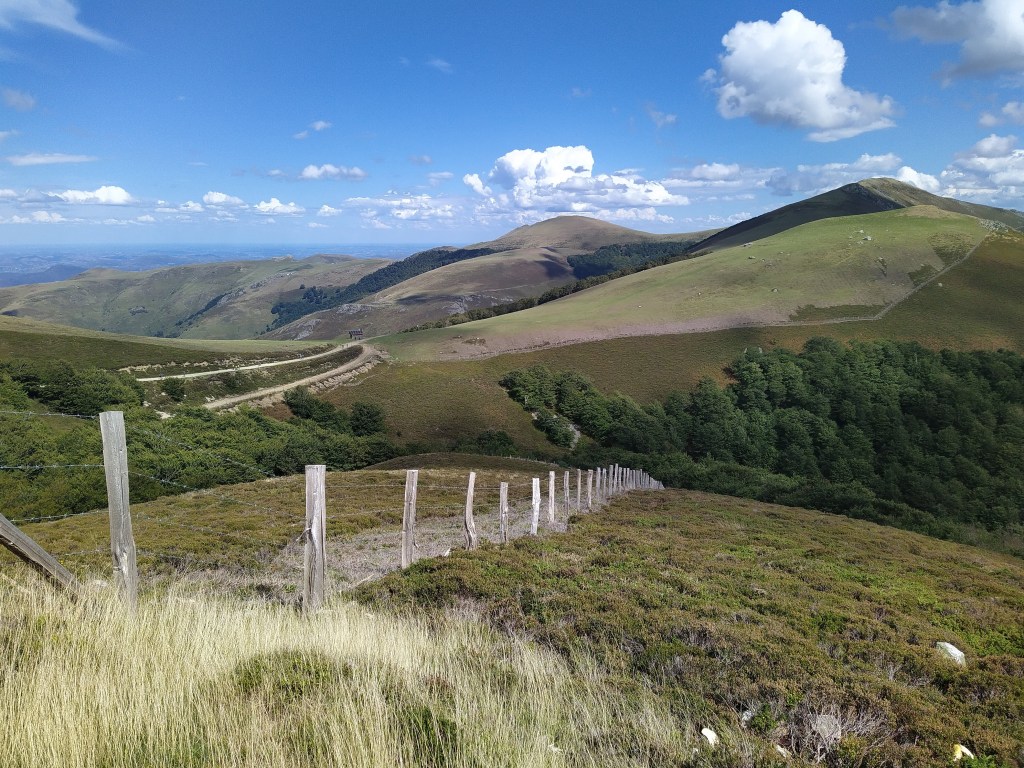
We set off at half past eight. The weather was crystal clear, but the wind was blowing hard. After a few hours there was a cafe with terrace where we drank coffee and ate a sandwich. There was a real mountain atmosphere. The view is magnificent. Vultures flying high above us.
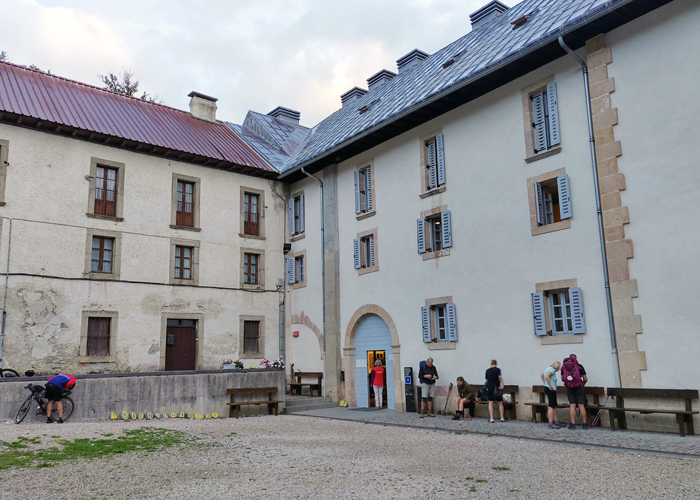
A bit after the border we are at the highest point and through a forest with mossy oaks the path goes down quite steeply. Roncevalle is the end point of the route. And almost everyone sleeps in the large Albergue in the monastery.

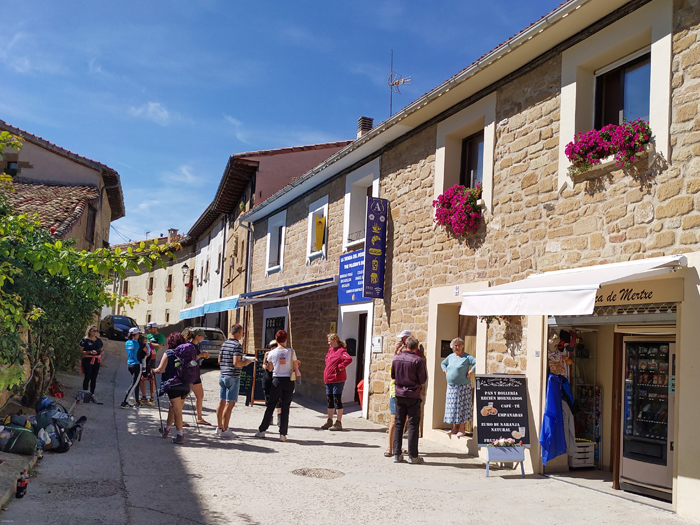
Now we are walking in Spain. The villages we pass through are old and beautifully situated in the landscape. Usually there is an opportunity to drink or eat something.

(4) Alto del Perdón

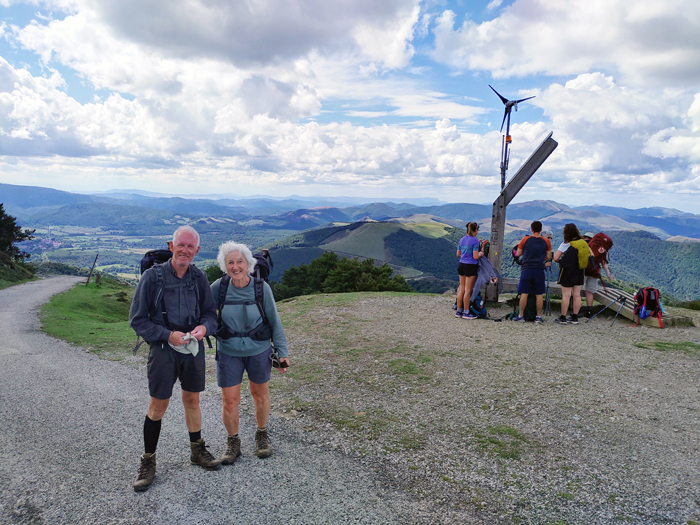
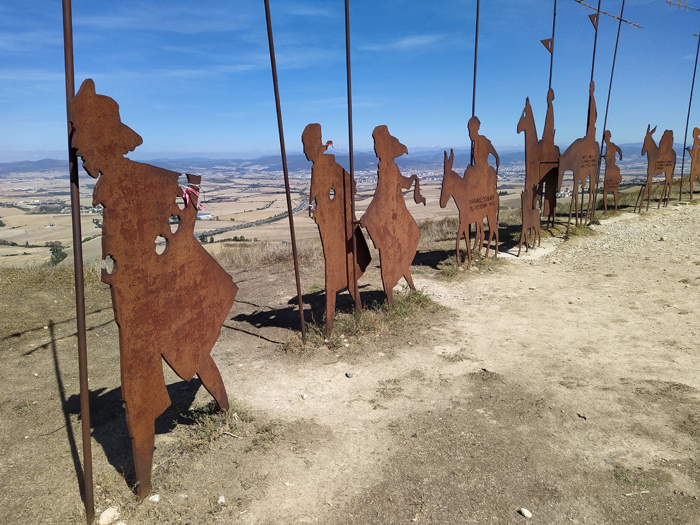
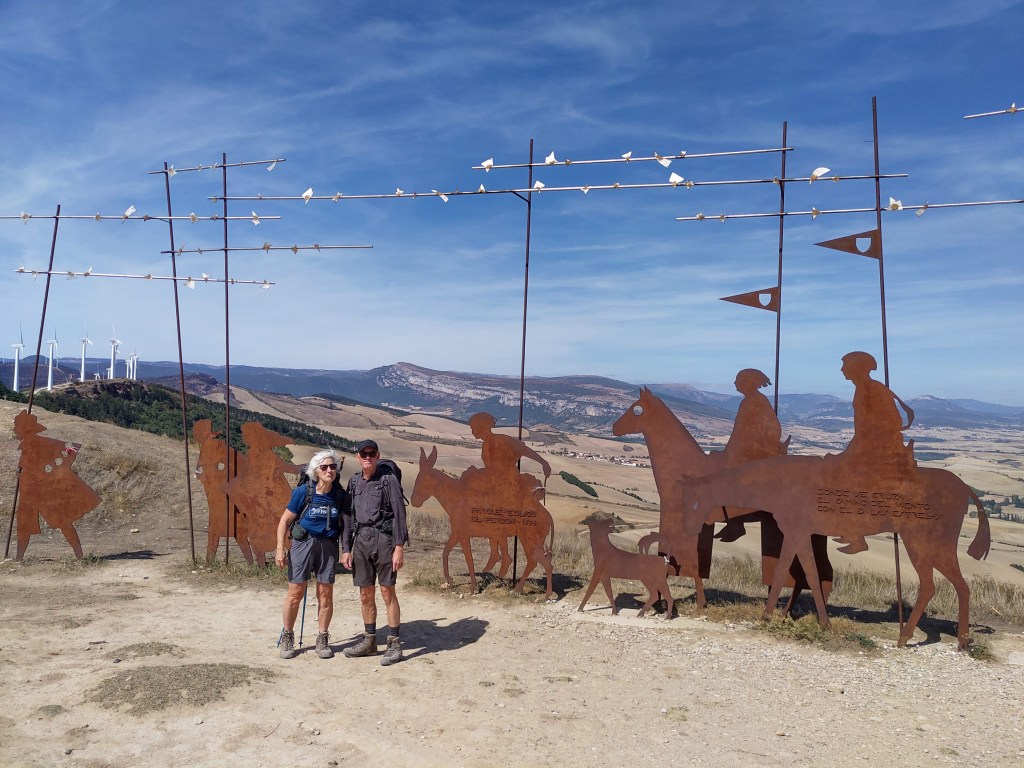
About 12 km after Pamplona, the camino crosses the Alto del Perdón, the highest point in the area. It is one of those places on the route that stays with you because of the beautiful view and because of the “Monumento del Peregrinos” from 1996 by sculptor Martinicorena, which depicts pilgrims through the ages.

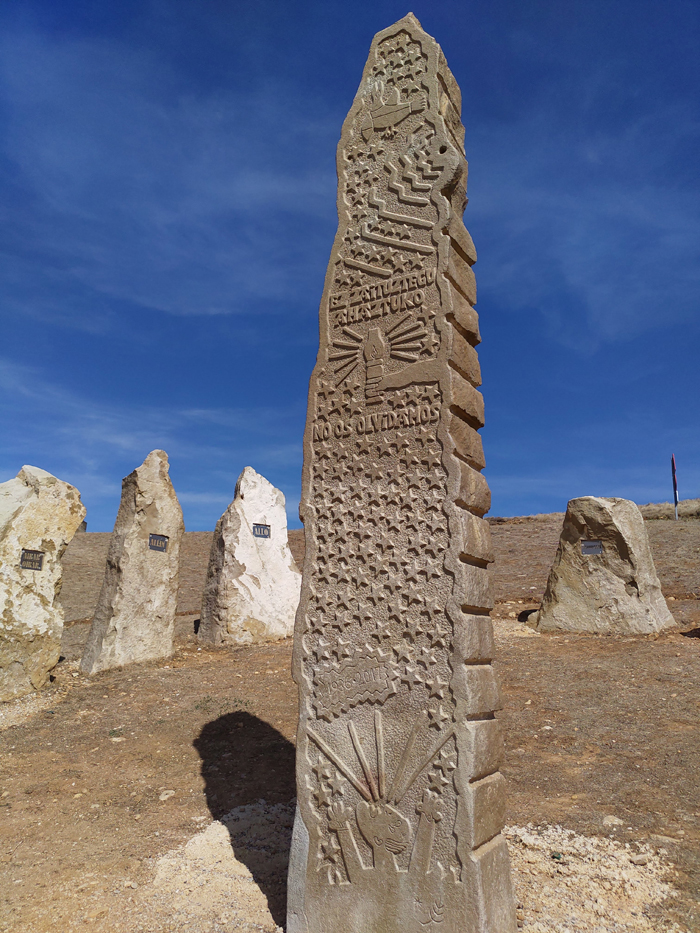
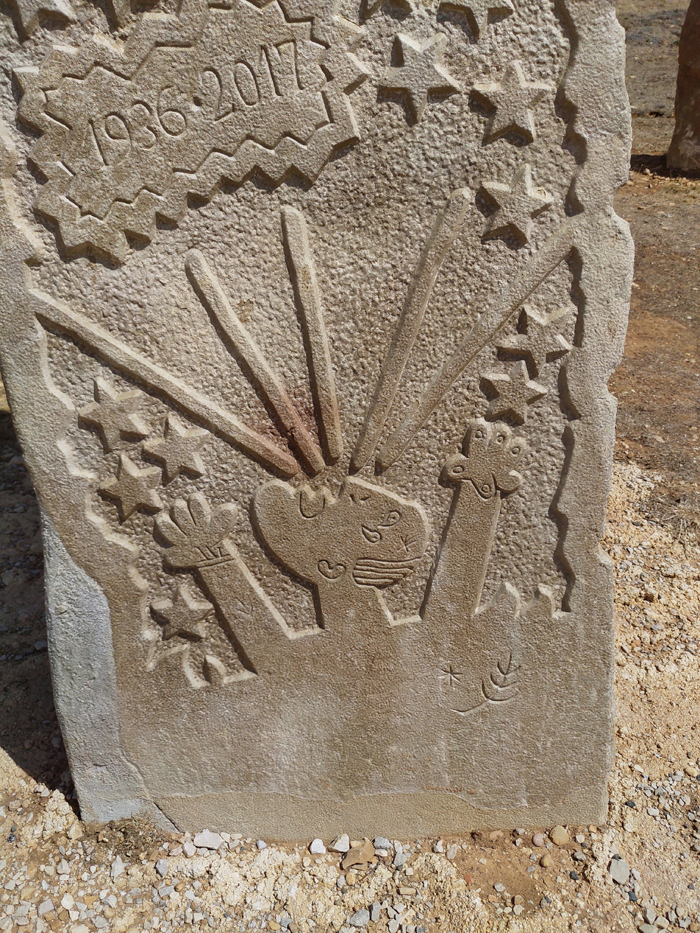
There is a second monument, slightly below the highest point, with a circle of stones and signs with place names on it. In the middle a high stone in which a screaming person is carved, reminiscent of Picasso’s Guernica. The name ‘mountain of forgiveness’ is appropriate here.

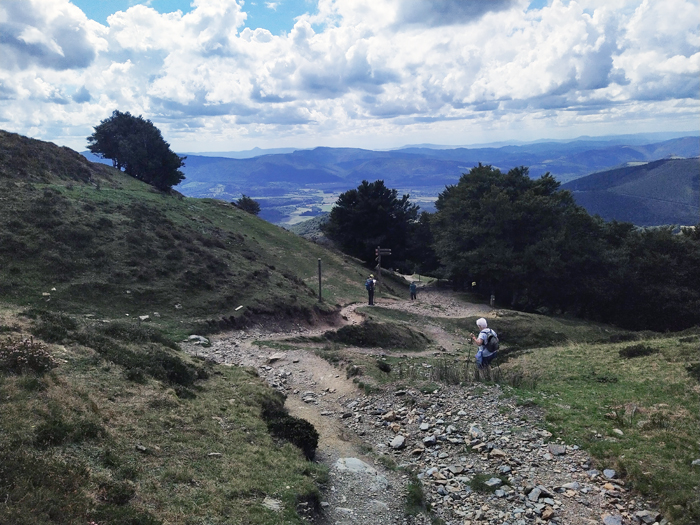
After the top there is a steep descent over a stony path to Puenta la Reina.
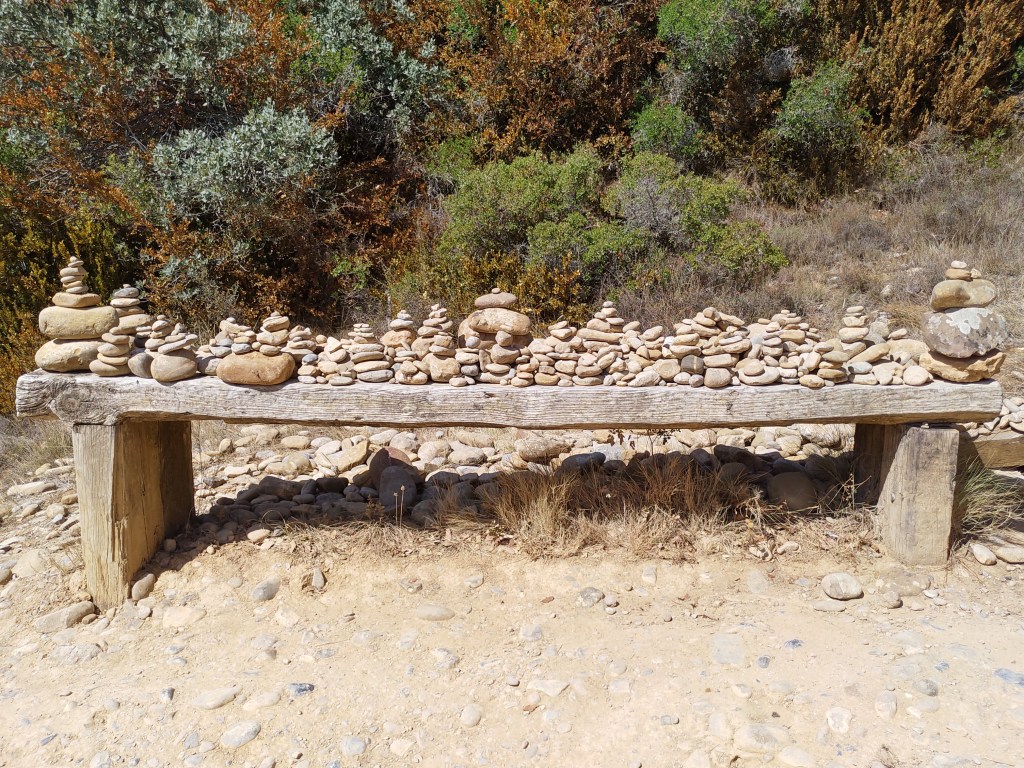
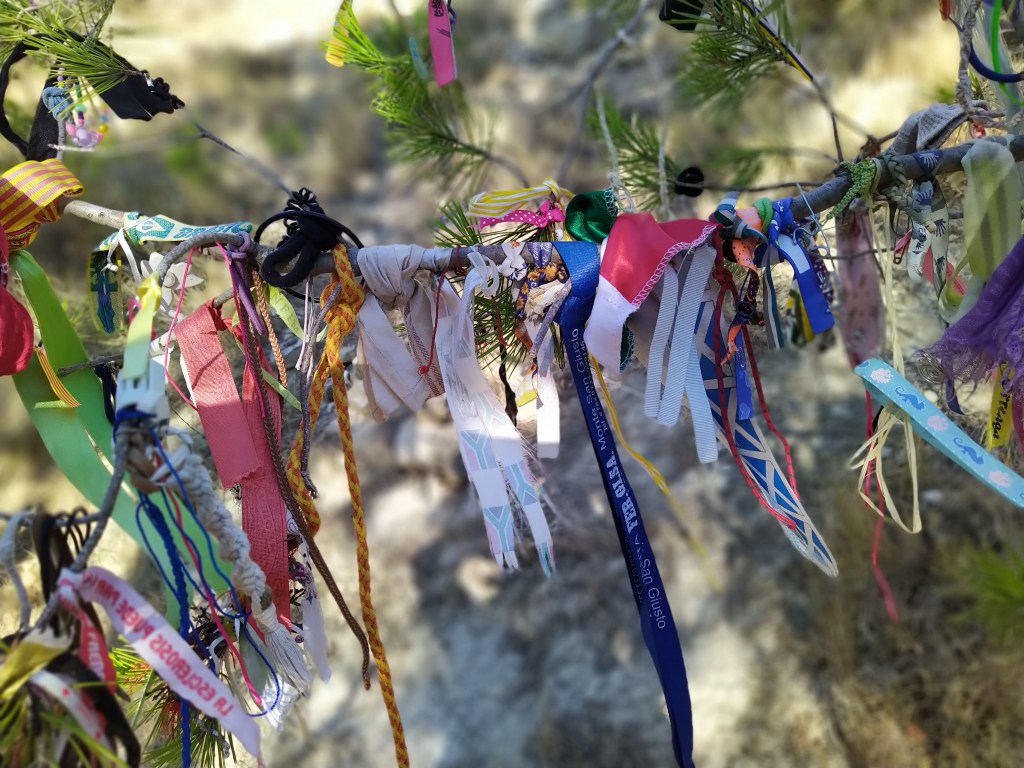
Along the trail, hikers have made their memorial signs.
Donde se cruza el camino del viento con el de las estrella

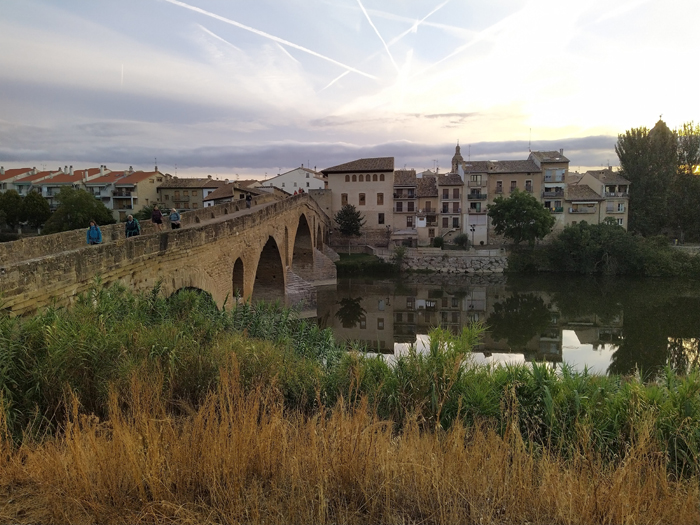
Puente la Reina in the early morning

(6) Logroño and fiesta de San Mateo

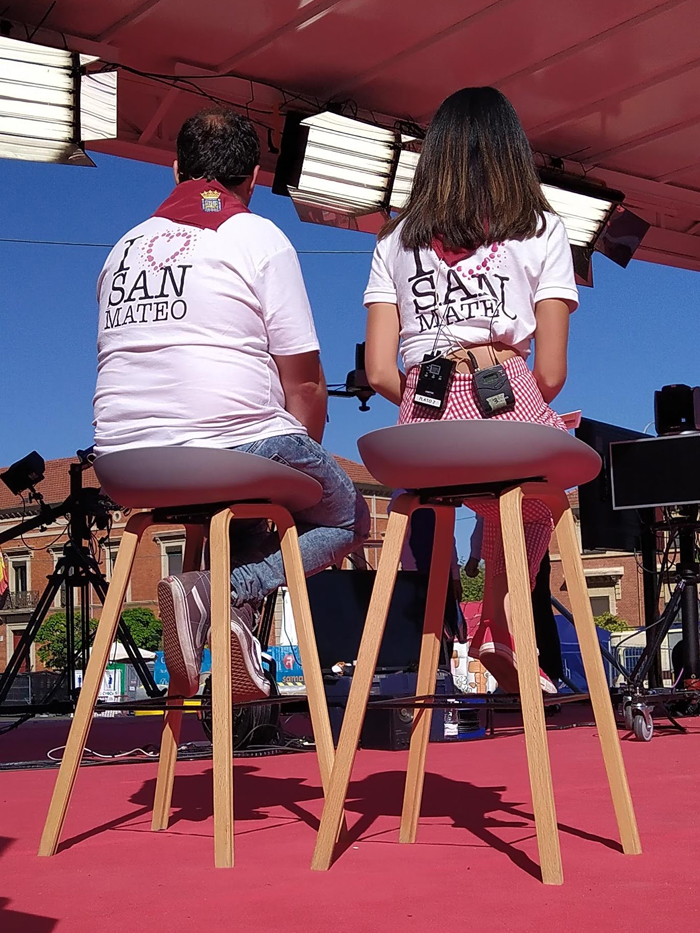
There is the festival of San Mateo, the patron saint of Logroño, in the third week of September. But at the same time it is the harvest festival, or the wine festival of the Rioja. Children from all over Rioja bring baskets of grapes to the cathedral which are then carried in procession to a wine barrel elsewhere in the city. Children stamp the wine grapes barefoot. The result is sacrificed for happiness in the next year.

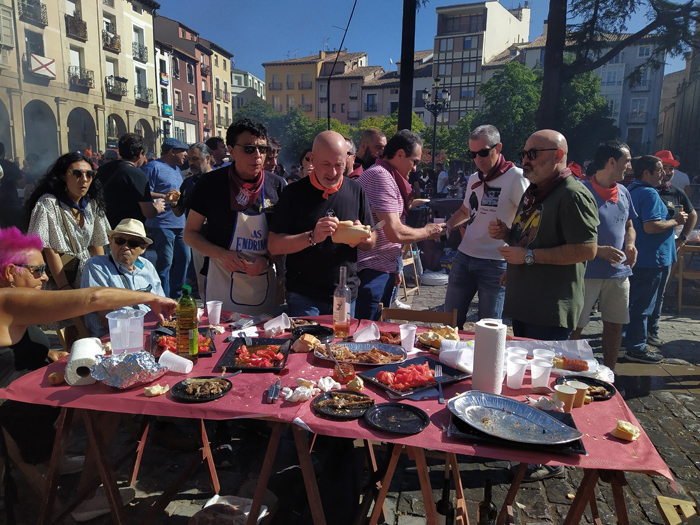
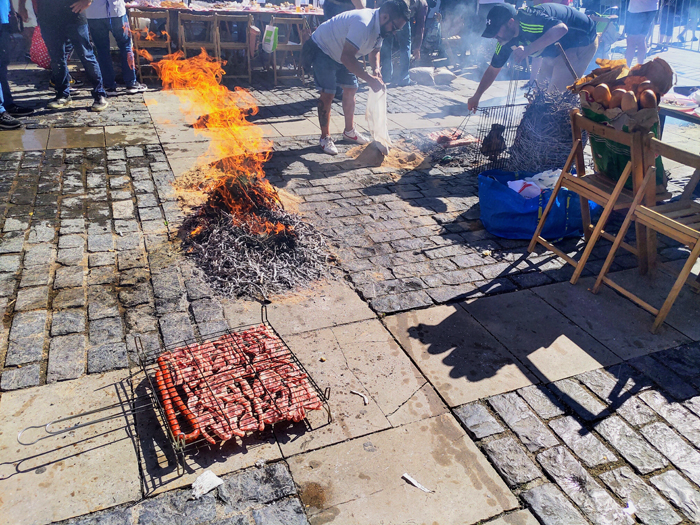
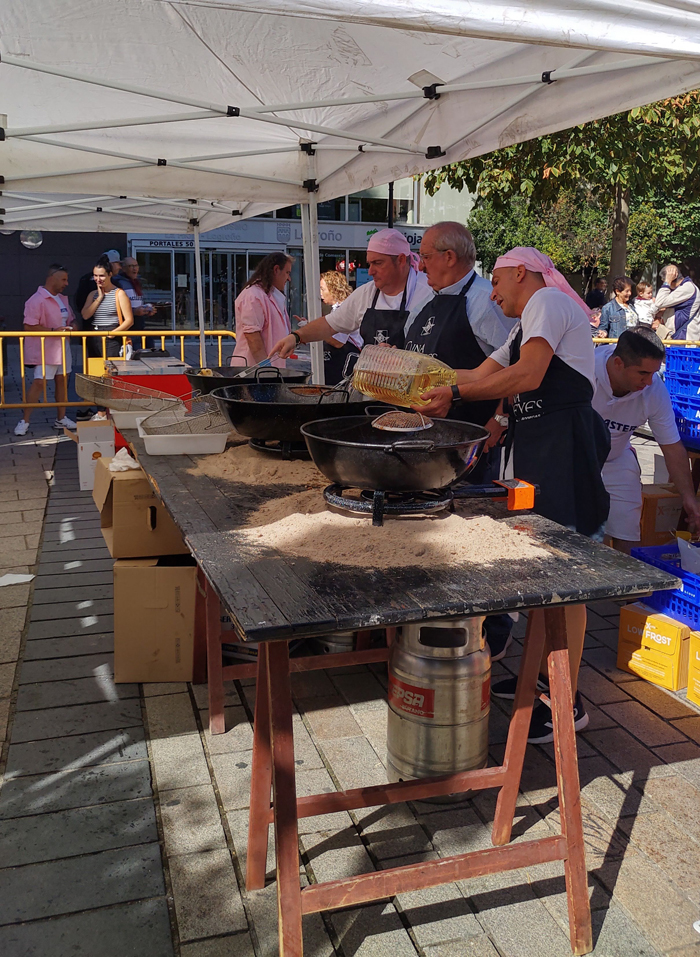
An important tradition at this festival are the chamizo’s; places where the city’s clubs offer snacks and drinks for a small fee.
There is much more this festival week; fireworks, parades and more. But we haven’t seen it all.

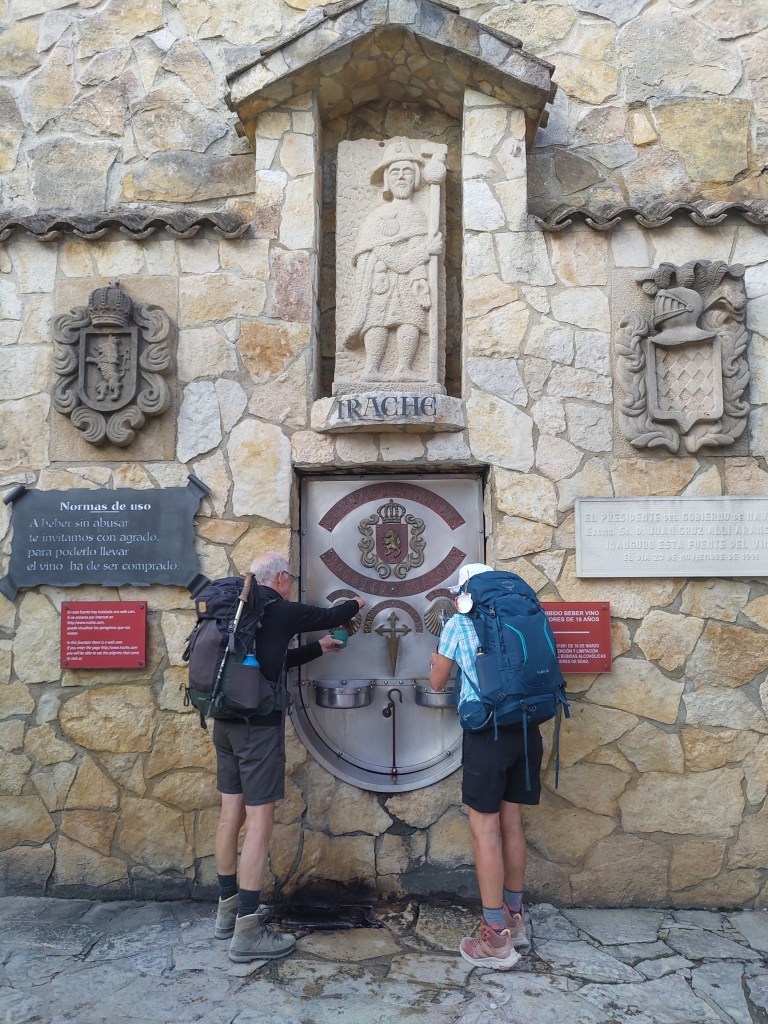
A few days before we arrived in Logroño we walked along the Fuente de Vino, of the Rioja Bodega, where you can drink wine. We were already there at nine o’clock in the morning, not really the time to drink wine yet. David and Lisel drank from their Jacobus-shell. We had our coffee-mug. A ritual sip.

(7) The Chicken in the kathedral of Santo Domingo de la Calzada

We walk through places with beautiful names; Puenta la Reina, San Juan de Ortega and Santo Domingo de la Calzada.
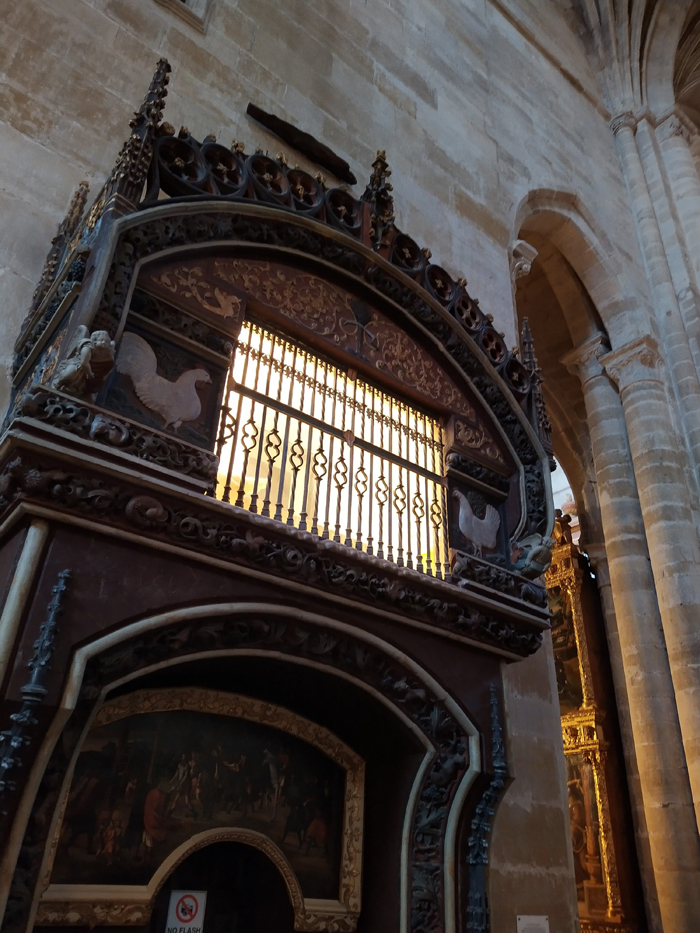
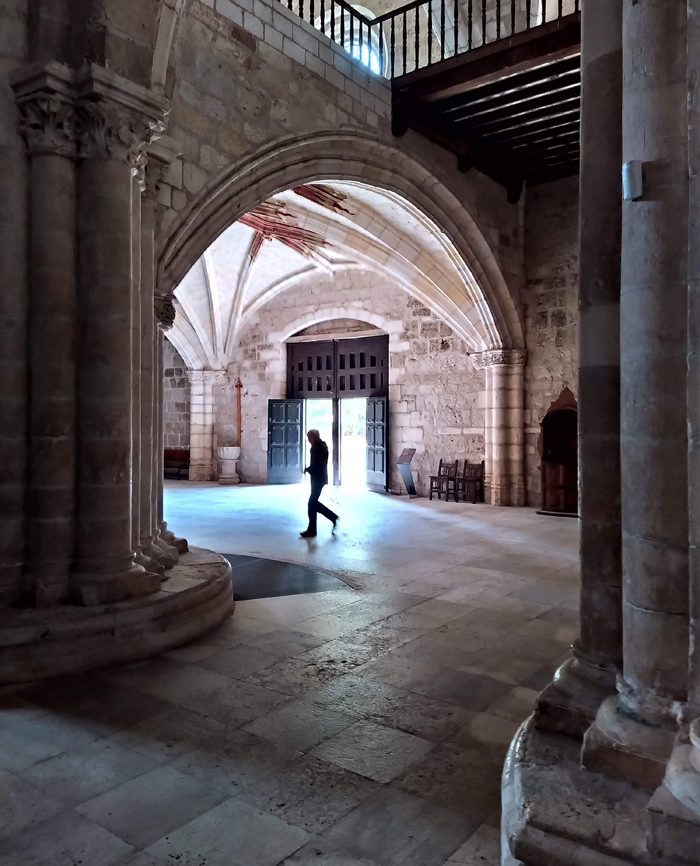
Santo Domingo has been important for pilgrims in the Middle Ages. He is the founder of the town. He built a road in the rugged forest and built a bridge over the Oja River to make it easier for pilgrims on their way to Santiago. He also built a hospital for pilgrims; now converted into a luxury parador. Most striking is the large, beautifully restored cathedral with the bell tower next to it. Special for a town with about 7000 inhabitants. But the cathedral is most famous for the chicken and rooster that are kept there.
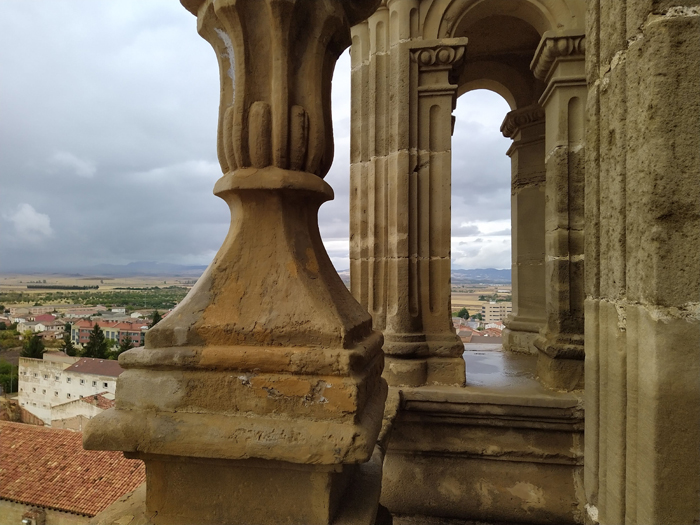
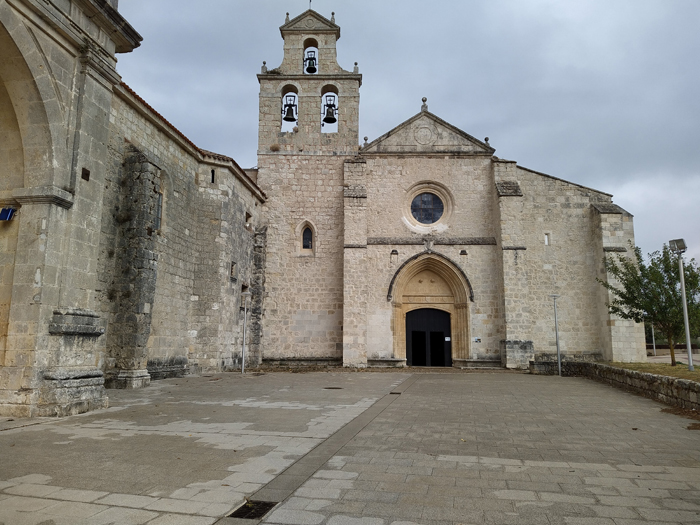
the chicken and rooster are not visible in this photo, but they are behind the fence
in the crypt

Legend
In the fourteenth century, a German couple with their 18-year-old son went on a pilgrimage to Santiago. During the night in Santo Domingo, a girl tried to seduce the son, but the boy refused. The girl then accused the boy of theft. He was convicted and hanged. The grieving parents continued on their way. On the return journey they found that their son was hanging alive on the gallows. They went to the judge, who was just sitting at the table at the time. “That boy is as alive as this fried chicken!” said the judge. The sequel can be guessed: the chicken came to life and the judge returned the boy to his parents.

Santo Domingo also played a role in the tiny ‘pueblo’ of San Juan de Ortega, about fifty kilometers away. San Juan built around 1150, with the help of San Domingo, a monastery with a hospice as an aid post for pilgrims. Originally, the monastery was inhabited by Augustinian monks. Over time the monastery fell into disrepair, but with the revival of the camino it has been restored piecemeal and now houses an albergue.

(8) Burgos, our end point

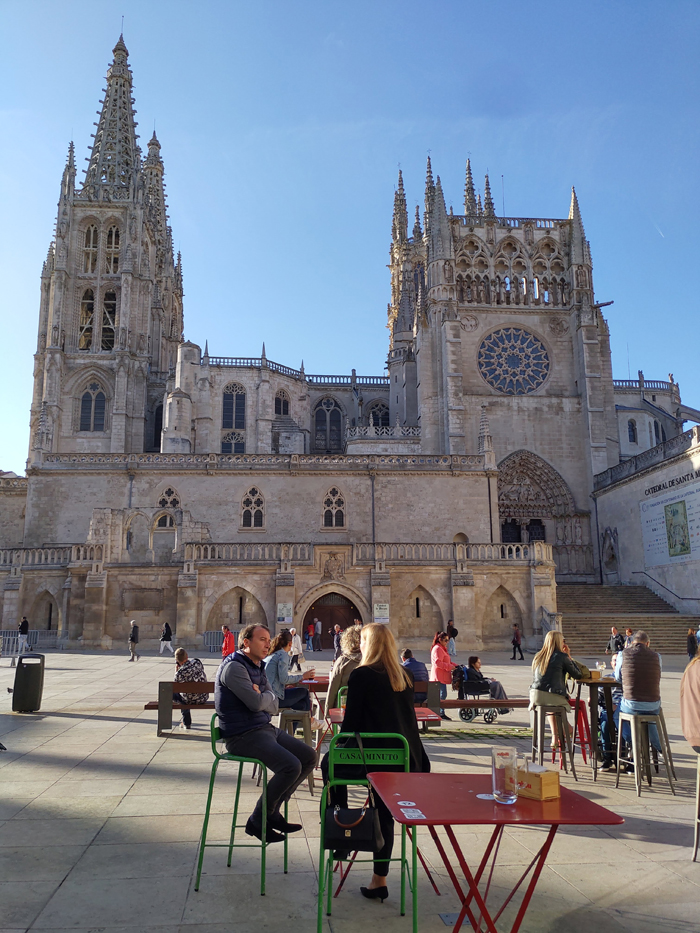
Burgos, our end point, is about half way up the camino. Most of the people we spoke to walk as far as Santiago de Compostela. To our great surprise, we found people in Burgos that we had lost for a while. We had split a route into two short distances, they took a rest day. Our last night on the camino we ate a pizza with six of them.

We are back in the Netherlands, they are still walking. With all those nice people in mind, we’re not quite home yet.

We hope to continue our camino next spring.


more photos about our caminos can be found on Instagram: ‘remembering_my_camino’

.

Perugia, the etruscan city

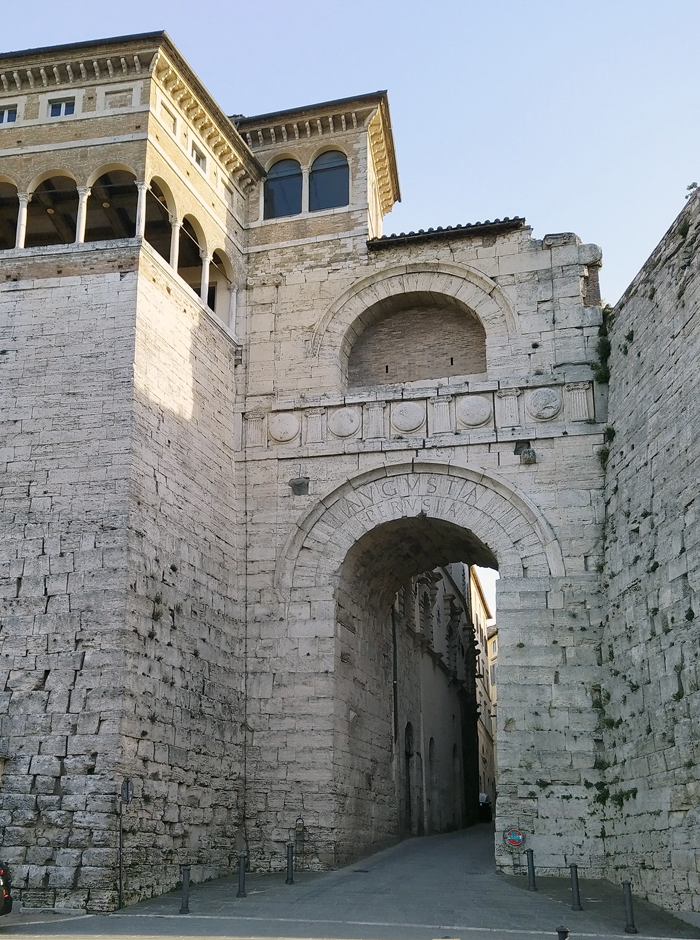
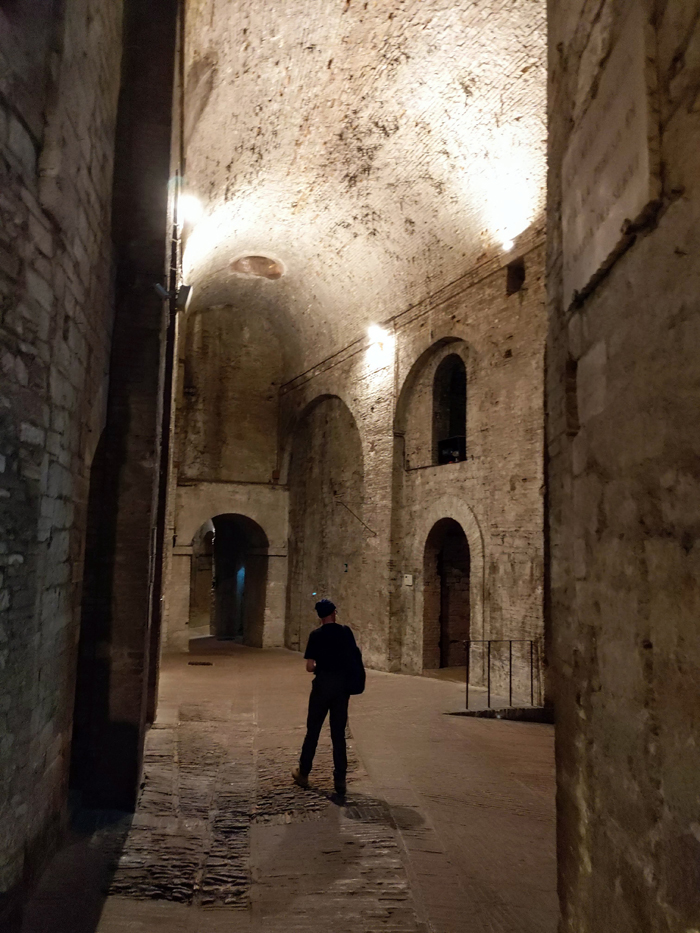
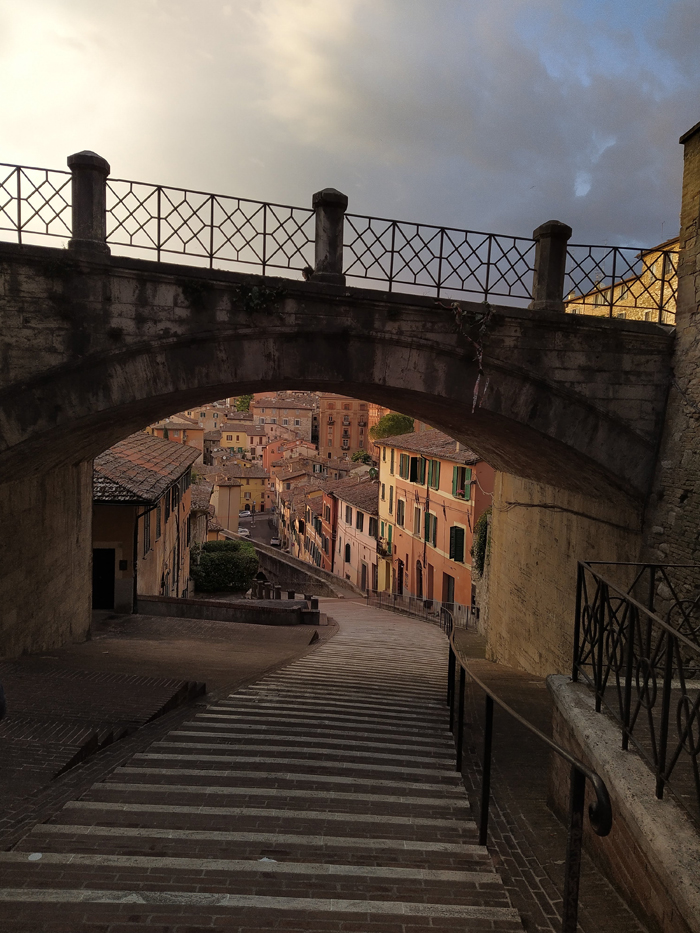
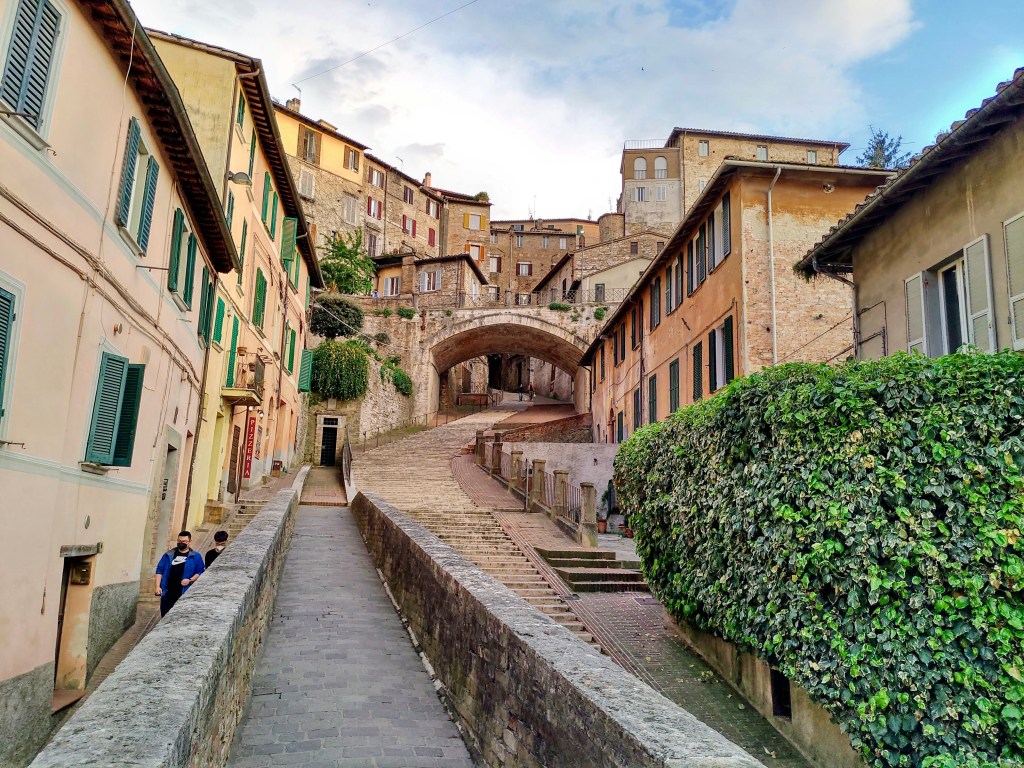
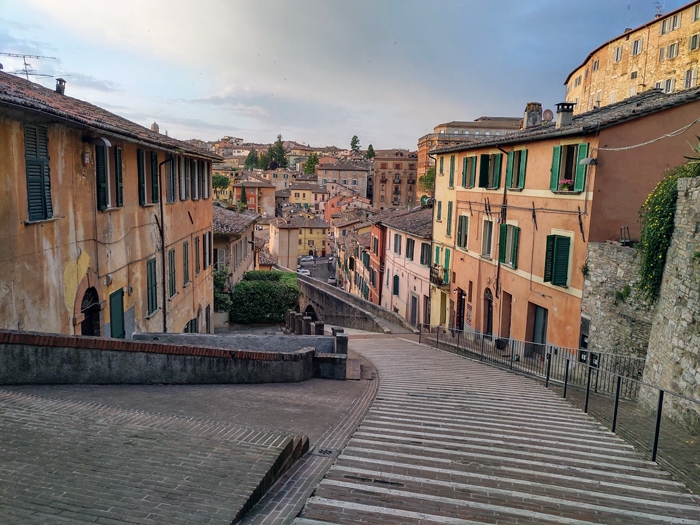
After our walking tour on the Via Francigena, we took the bus from Siena to Perugia; an ancient city in Umbria. Via escalators we reach the high city. The escalators end in subterranean corridors, which are left over from an old castle. The city has large elevation differences. The many stairs give the city its own character. The city is old. The Arco Etrusco, the Gate of Augustus, is a gate in the Etruscan city wall. The gate was built about 250 years before Chr. and 40 years before Chr. restored by Augustus.

After the visit to Perugia we said goodbye to Italy.

.

.

.

Siena, parade of the contrade

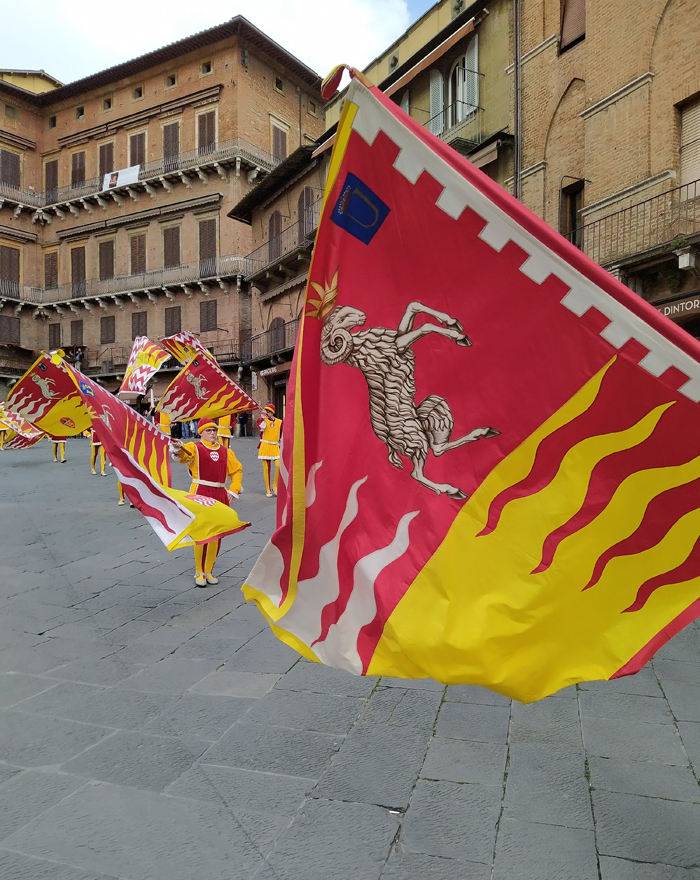
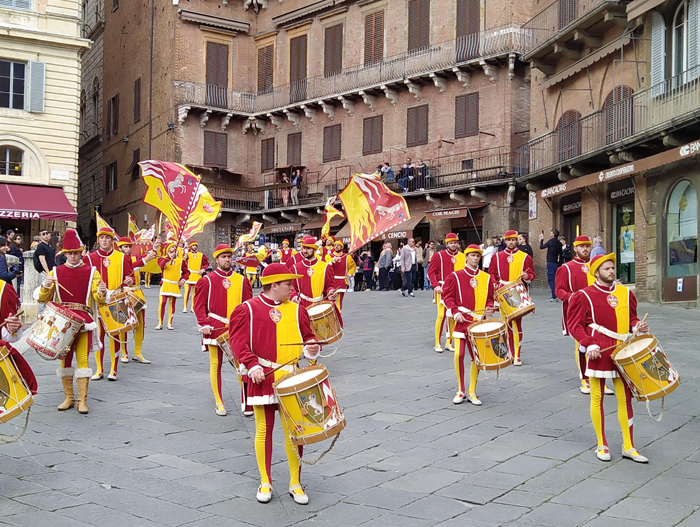
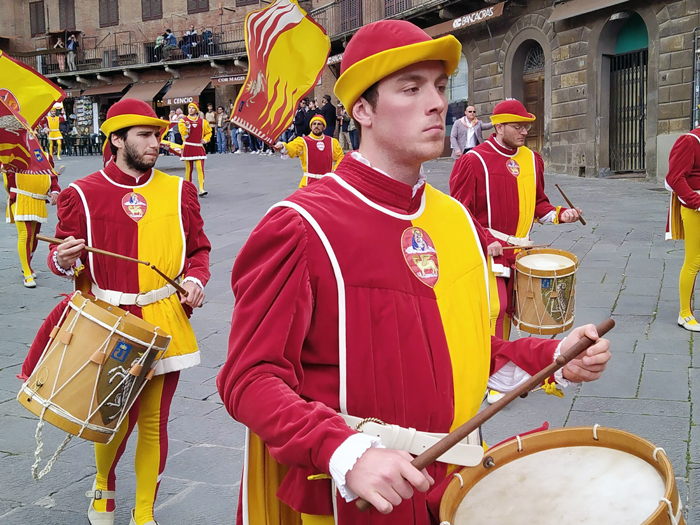
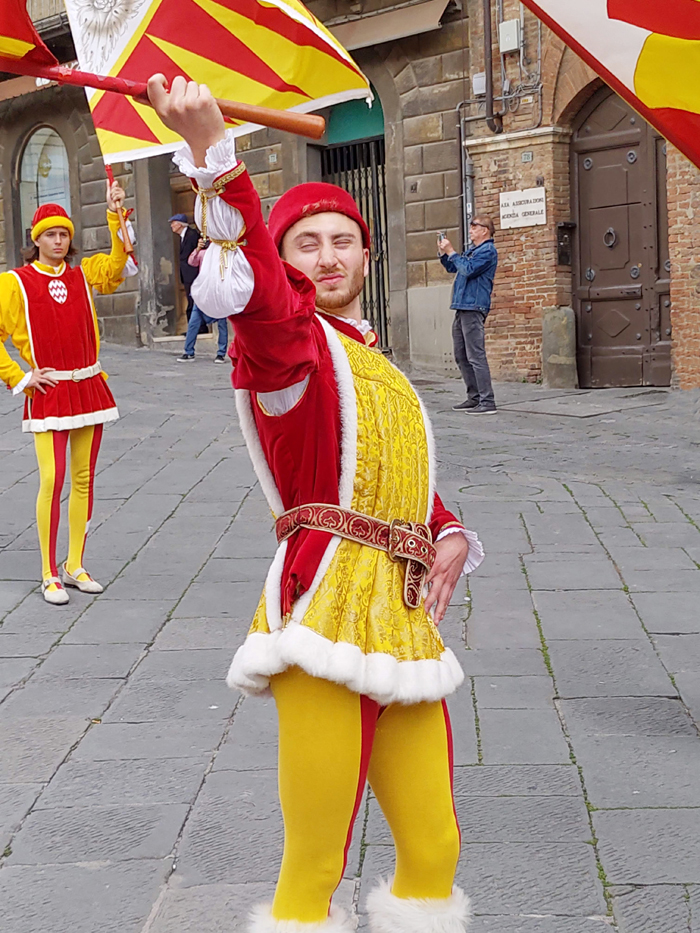
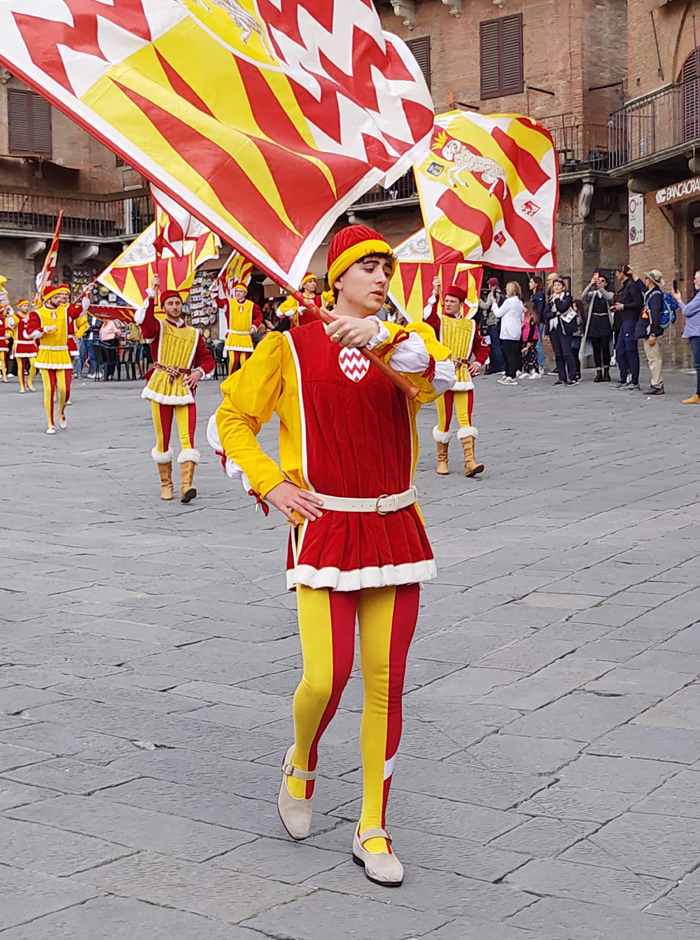
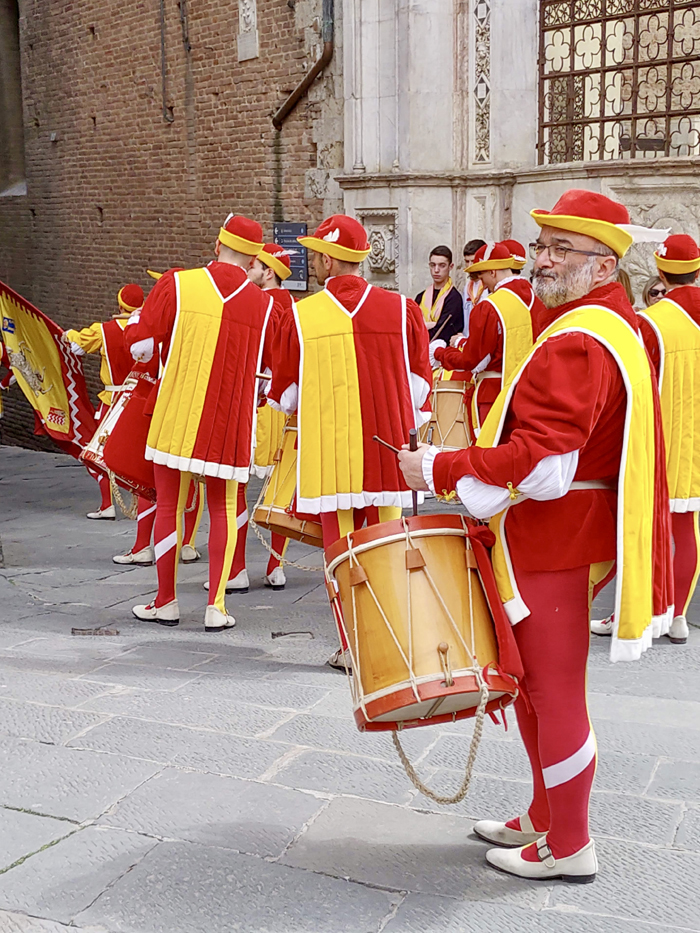
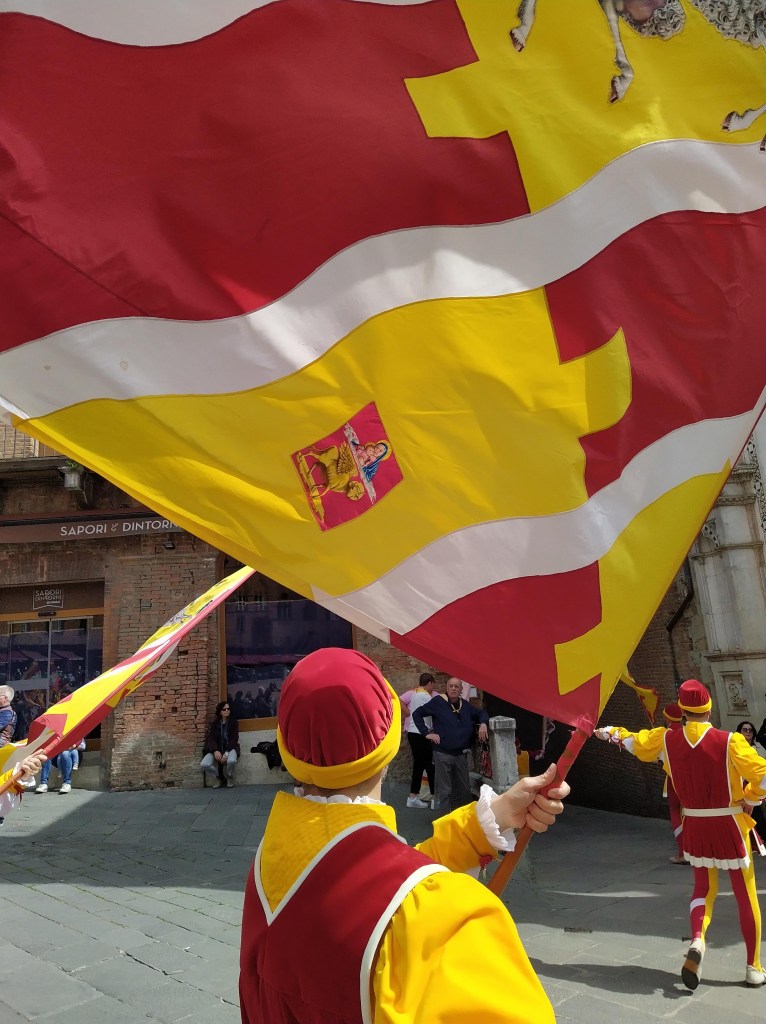
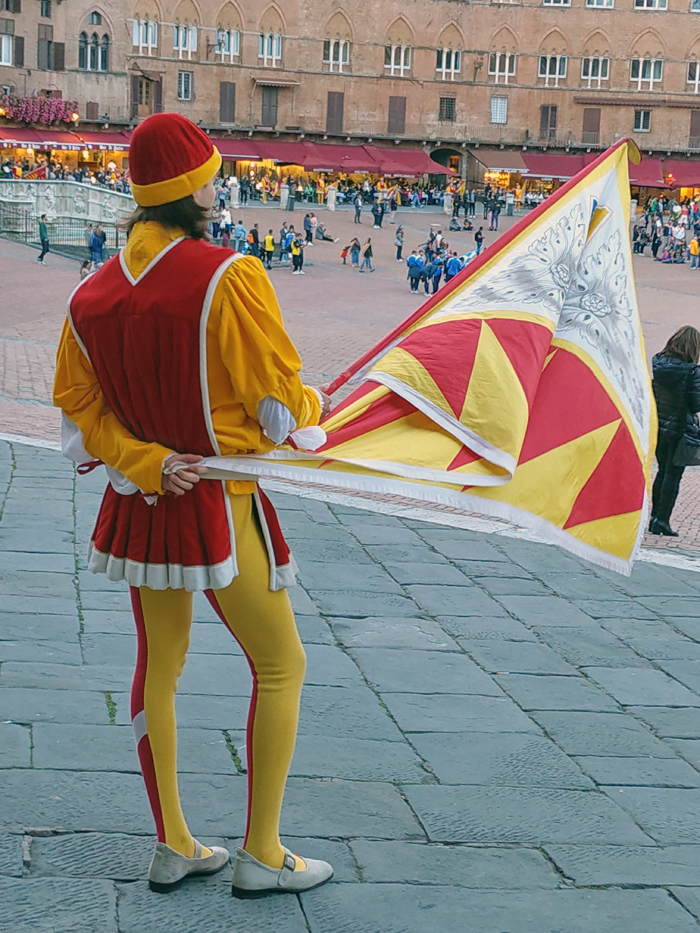
We hear drums. It is coming closer. We are in Piazza del Campo, the main town square of Siena. Siena is the end point of our walking tour on the Via Francigena. The drummers come into the square. Dressed in medieval-looking clothes. They are beautiful costumes. The standard bearers appear behind the drummers. A beautiful parade of the city’s contrade (urban quarters) in preparation for the annual Palio, the horse race.

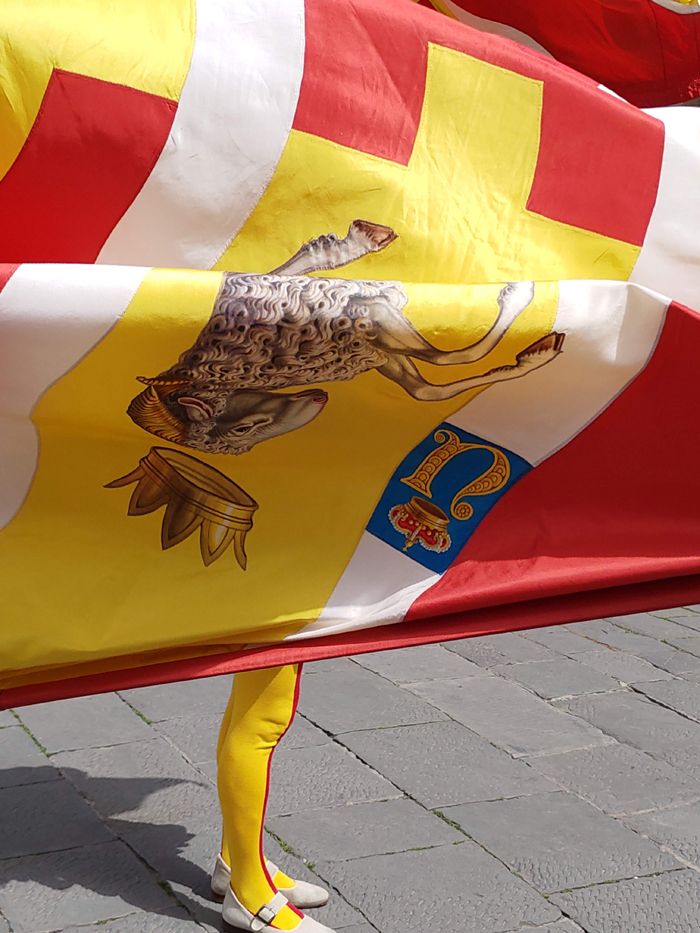
Siena consists of 17 contrade (city districts). Each contrada has its own name, banner and church.
There is the contrade of the goose, of the snail, the tortoise, the wolf …
Every year, after drawing lots, 10 of the 17 contrade participate in the Palio, the horse race in Piazza del Campo. The races date back to the early Middle Ages, but since 1650 they are still as they are today. The preparation for the Palio is long. The city districts present themselves with their drums and banners in a parade. The inhabitants of the neighborhoods sing and wear the scarves of their neighborhood (Fazoletto). And we are lucky to be able to experience such a parade.

The race is held with horses that are assigned to a city district by lottery. It is therefore not the case that a district has its own horses. The jockey is also an outsider. Before the race, horse and jockey (fantino) are blessed in the church of the city district. Riding without a saddle. And it can get rough. The winning contrada receives the Palio, a precious silk banner. There is a party after the race.

This colorful celebration reinforced our feeling that we had arrived at the final destination of our walking tour.

.

.

.

Via Francigena from Parma to Siena – E

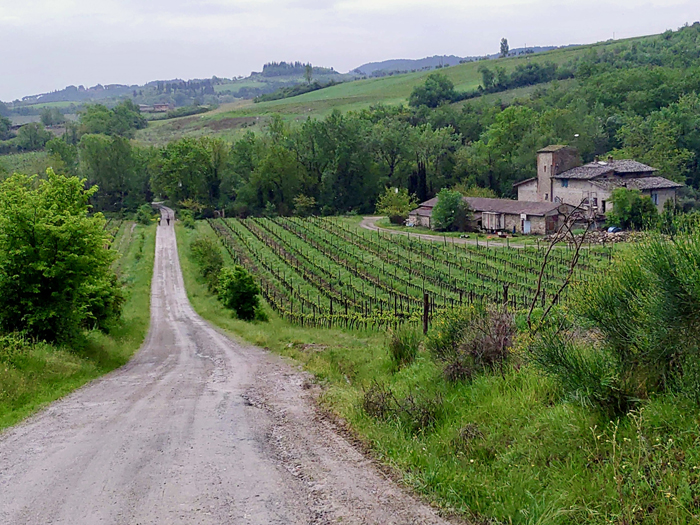
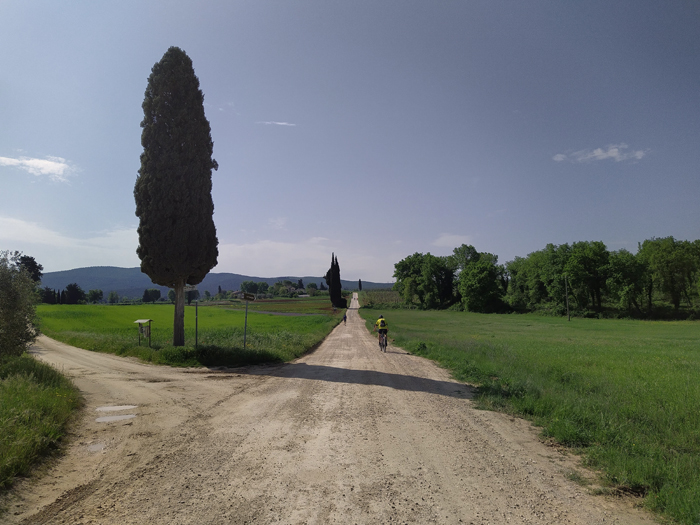
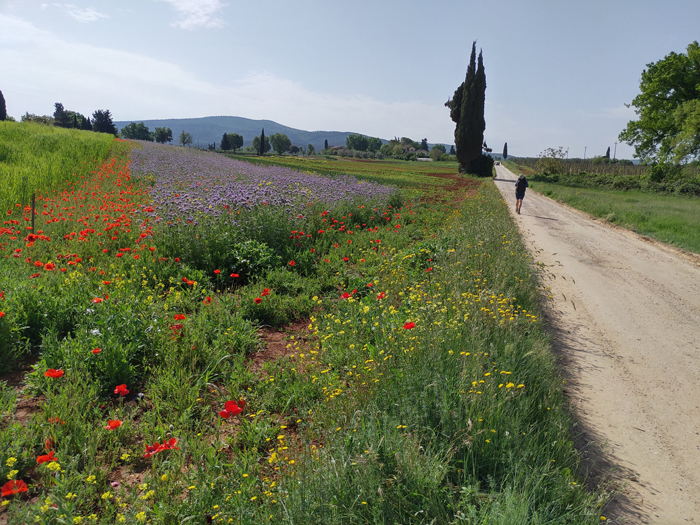
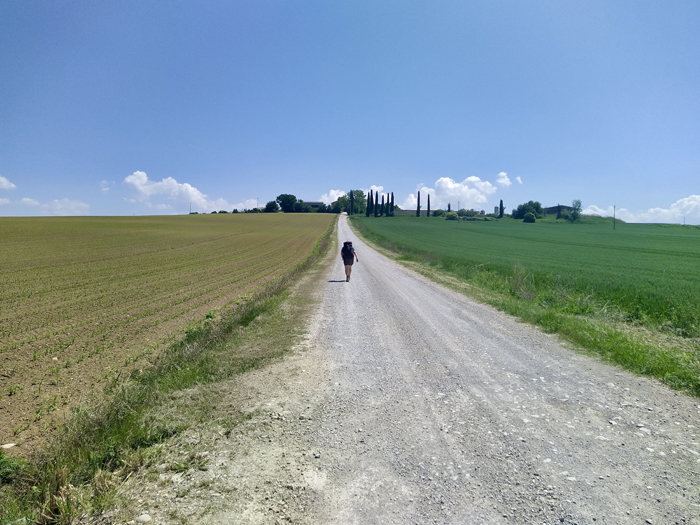
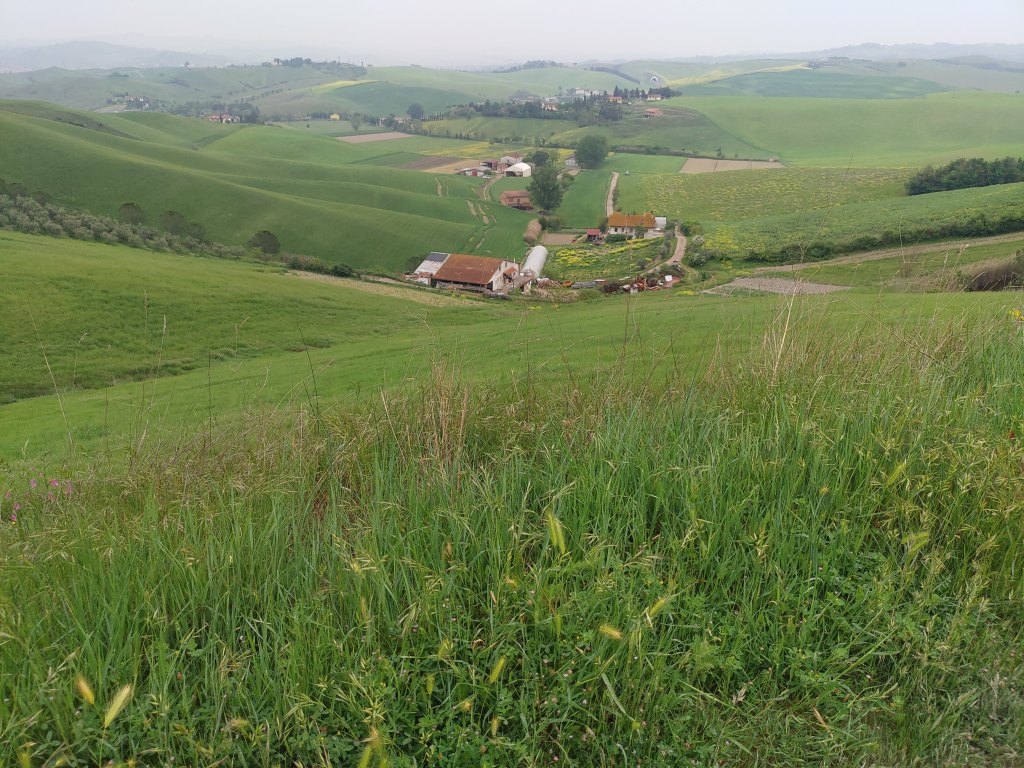
The route through Tuscany is known for the strade bianche, the white paths. They are unpaved farm roads through often remote areas. Many farms have been empty for a long time. You may know the name Strade Bianche from the cycling race for professional teams.

On this part of the route we see and talk to more walkers. In the empty landscape, after a hill, there is unexpectedly a garden with a blackboard at the gate stating that you can tap water and you can eat or drink something. We drink cola at a large table (it tastes different during a long walk than at home on the couch). The owner gives us dates and biscuits, ‘for new energy’. Then the two Canadian women, mother and daughter, come around the corner. We have passed each other several times. They could also use a cold cola. They come and sit at our table. Another small meeting and then we each continue at our own pace.

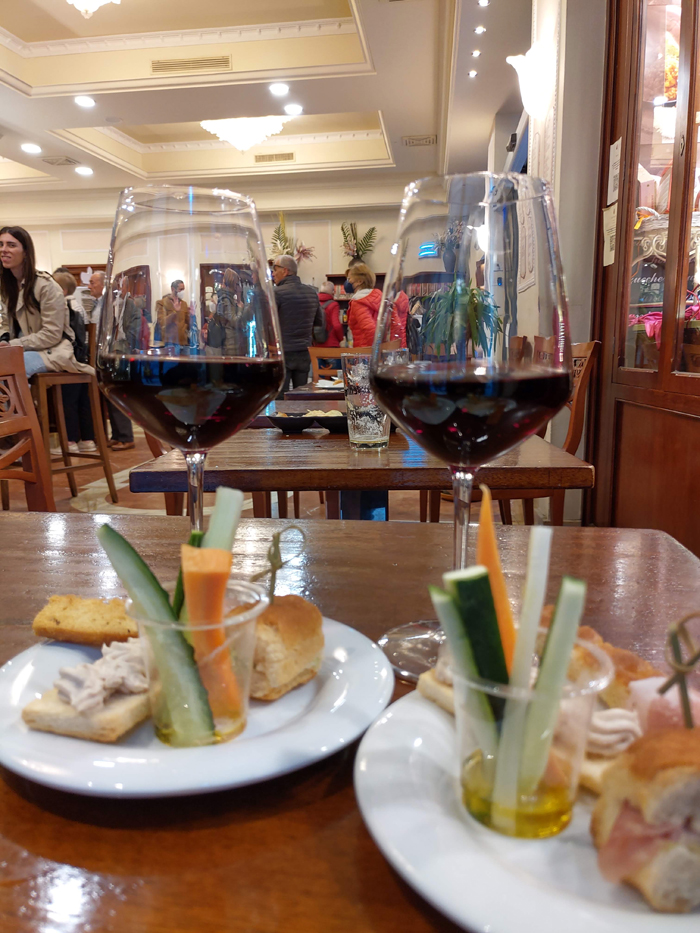
And then we are in Siena, the end point of our walking tour. We drink a delicious glass of wine in one of the old cafes. And as the Italians are used to, with some tasty snacks.
We don’t know yet if we’ll ever walk to Rome.

.

.

.

.

.

Via Francigena from Parma to Siena – D

In Lucca we enter ‘familiar’ territory. We recognize the green city wall and the Duomo from our walk from 2019. I was already surprised by the decorated columns of the front facade; each column has a different pattern. We then started the walk in this city. Because the first two legs are long and a bit boring, now take the train to San Miniato.

From San Miniato we walk to Gambassi Terrme, a beautiful old town, where we spend the night in a romantic room. It rains for the last few kilometers. But after a shower and a nap we have enough energy again to drink a glass of wine in the cafe on the village square. It’s busy there; the people of the village come there for an espresso or a glass of wine. Christian and Philip, the men from the Ecrins, with whom we had regular contact along the way, join us a little later. It is nice to exchange stories with them. The rain outside doesn’t matter anymore. And a good pizza makes the day complete.

The next morning we go back to the cafe for a cappuccino and a brioche for breakfast. It is just as pleasantly busy as the day before.

.

.

.

.

Via Francigena from Parma to Siena – C

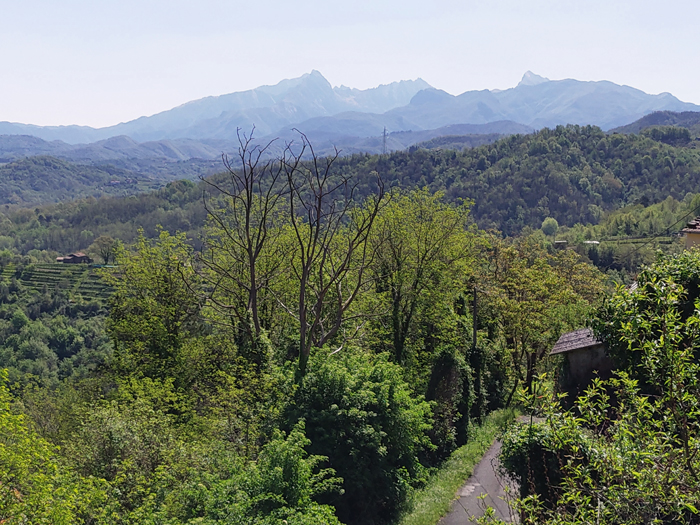
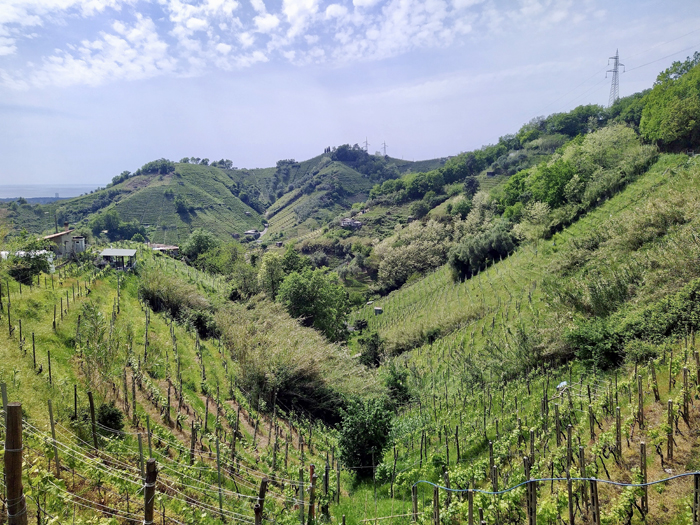
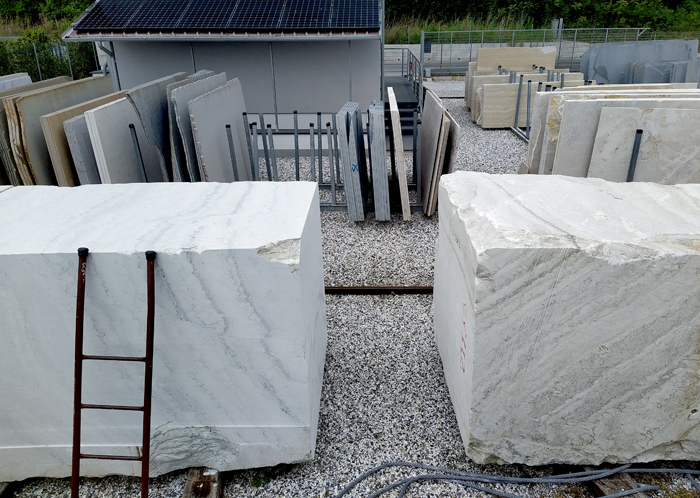
In Tuscany we walk between the Apuan Alps and the sea. Vineyards have been laid out on steep slopes. There are the imposing marble mountains of Carrara, with the stark white marble that was already loved by Michelangelo for his sculptures.

We spend the night a few kilometers before Pietrasanta. It is raining and it is ugly. But we are staying in a little oasis; agroturismo. When we walk to the town later in the afternoon to have dinner, the sun is back. And Pietrasanta turns out to be a nice artist town full of sculptures, with galleries and workshops. On a terrace we drink a nice glass of wine, with a tagliere misto.

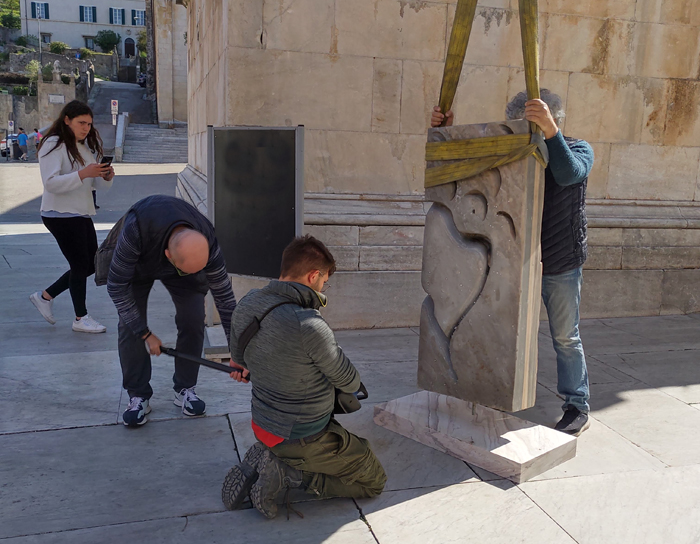
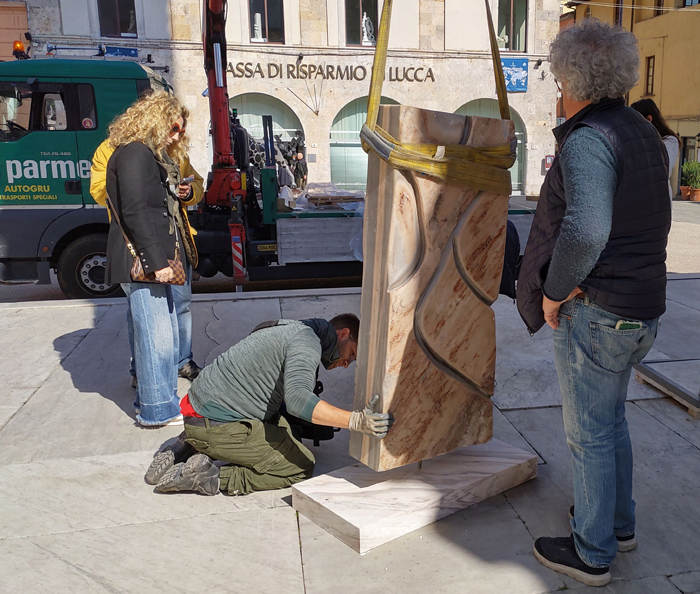
The next morning we walk through the town and we see a new work of art being placed on the Piazza Duomo.

.

.

.