Via Francigena : Siena – Rome

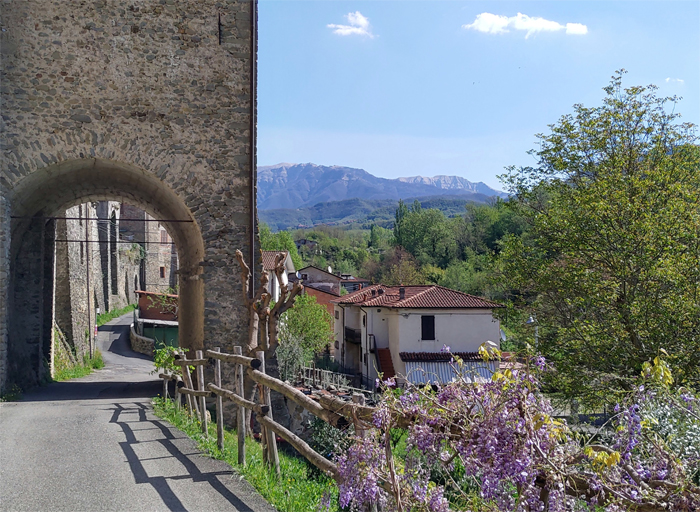
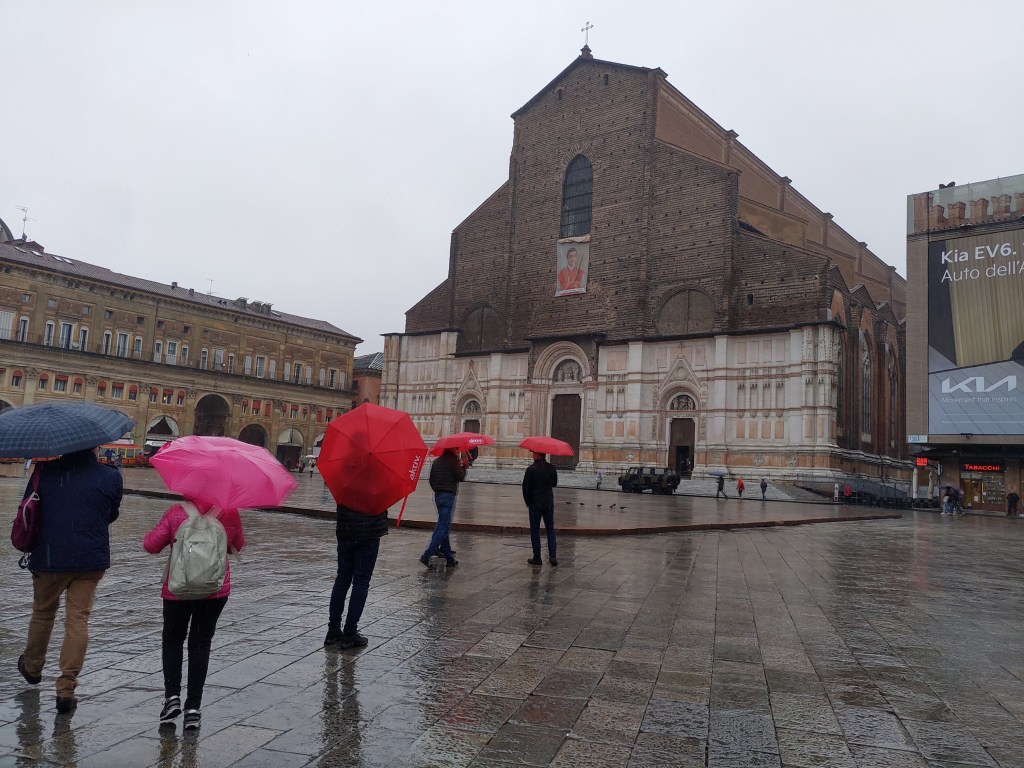
In March we were back in Siena. Last year, May 2022, it was the finish of our walking tour on the Via Francigena. This time it was the starting point, on our way to Rome.

from Bagno Vignoni to Radicofani
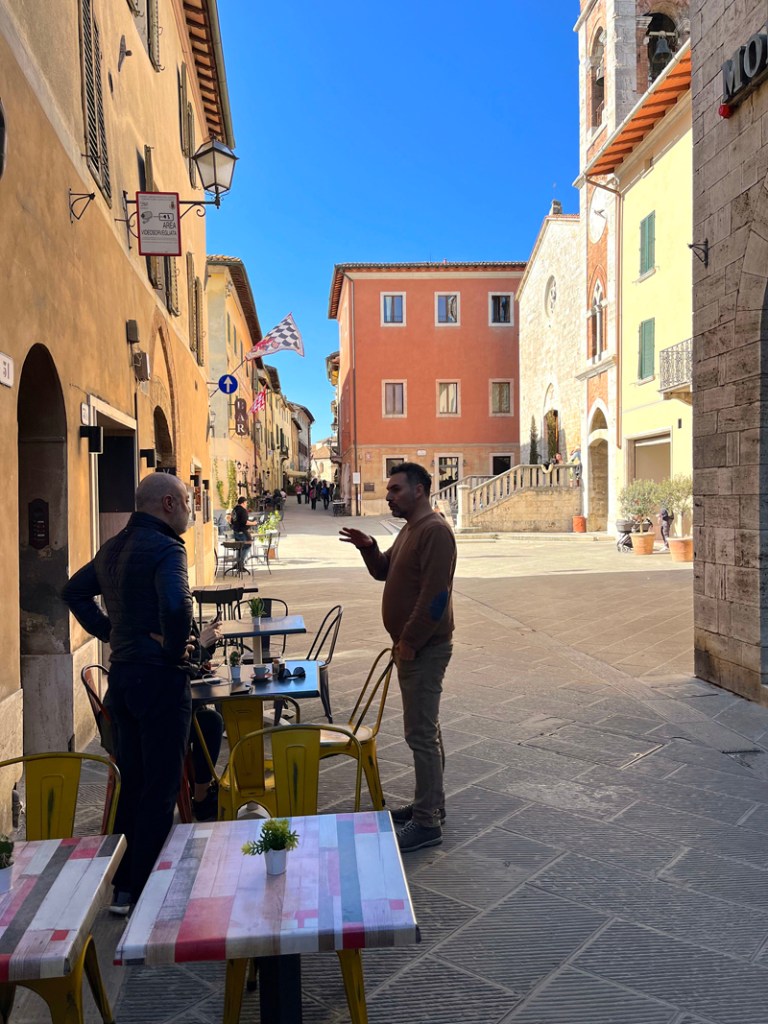
S.Quirico d’Orca
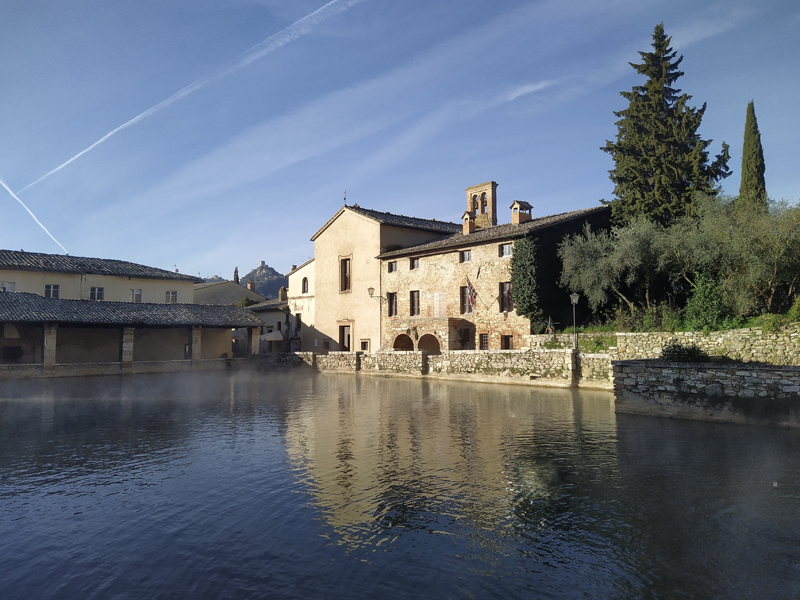
Bagno Vignoni

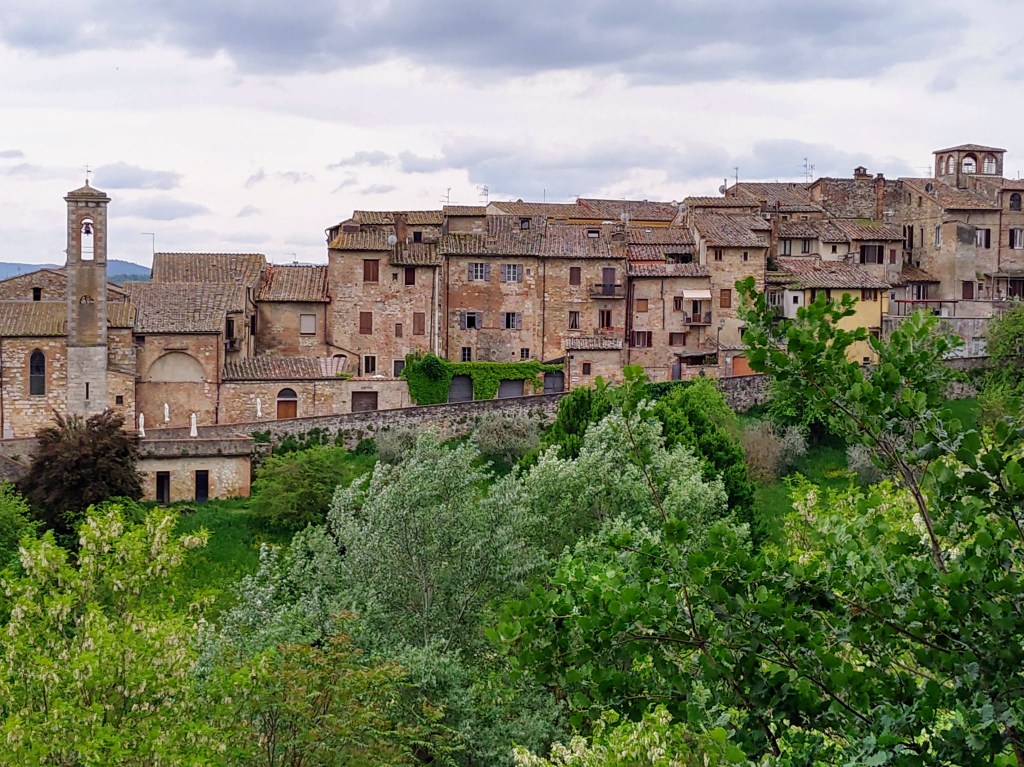
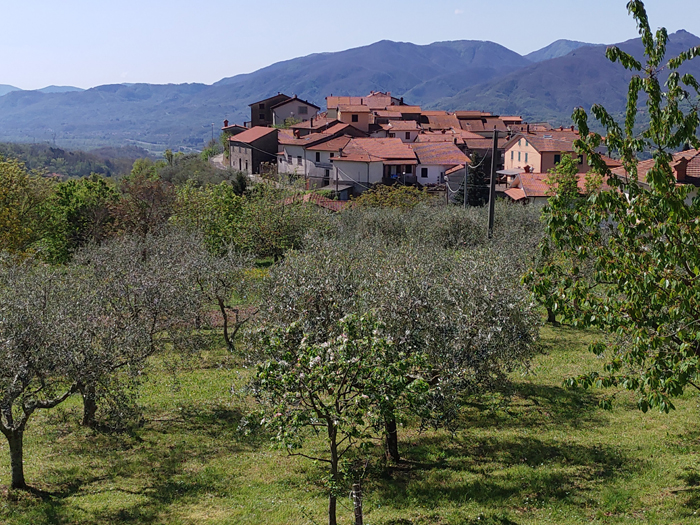
It was a long, but beautiful walk to Bagno Vignoni. It was Sunday and the weather was beautiful. From S.Quirico d’Orca we descended to the valley of the river d’Orca. Bagno Vignoni turned out to be a popular Sunday afternoon outing. The town has only thirty inhabitants and when the day-trippers left it became quiet.

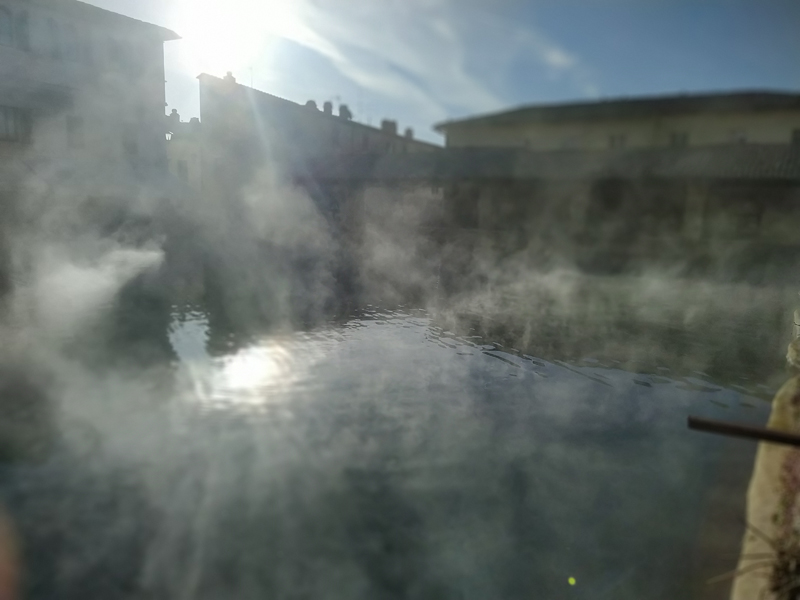
We had a room in an old house on Piazza delle Sorgenti, dominated by a large 16th century water basin, famous for its hot springs. Already in the Middle Ages, the springs were known to pelgrims who walked via the Via Francigena to Rome.
In the early morning, the next day, the hot water steamed through the morning cold. The sun was shining and it was beautiful.
to Radicofani
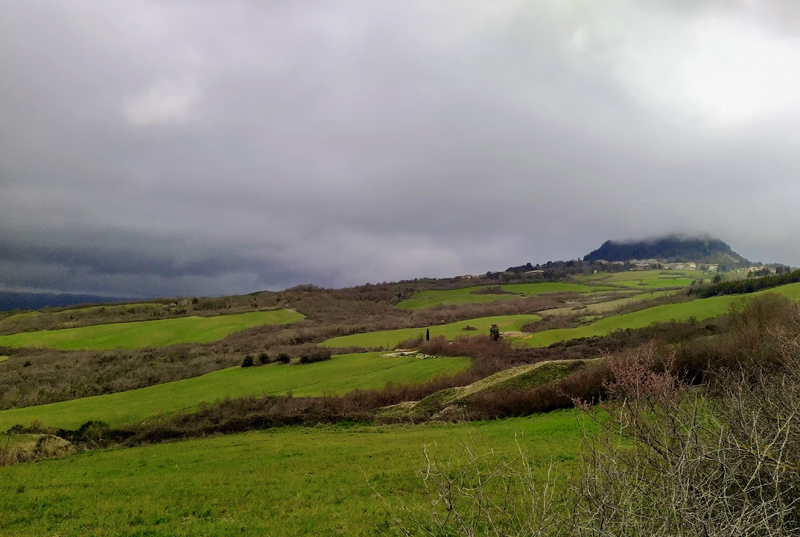
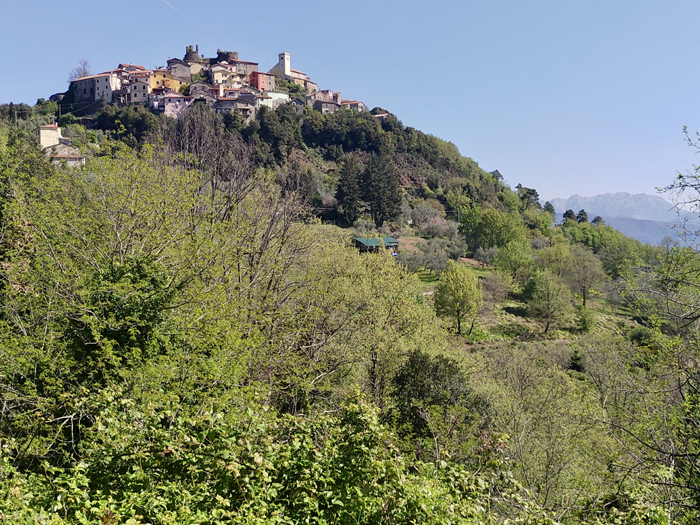
After a nice breakfast we left for Radicofani, about 28 km away. A long walk. and we already saw the town in the distance when we left; high on the mountain. The walk went out through an empty and rolling landscape. .
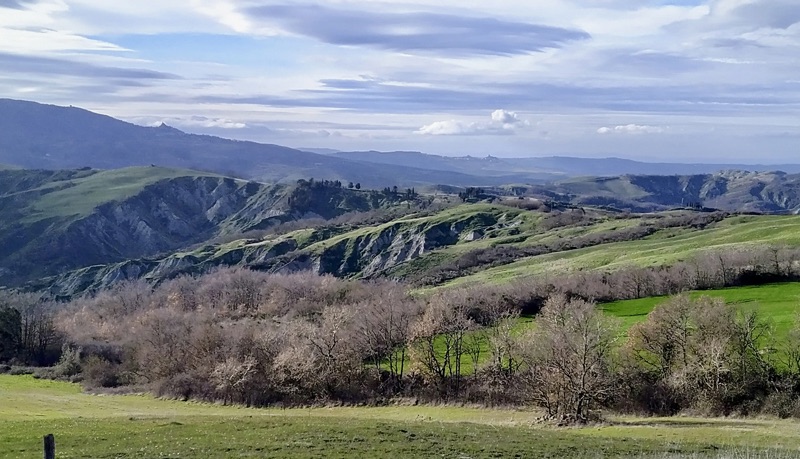
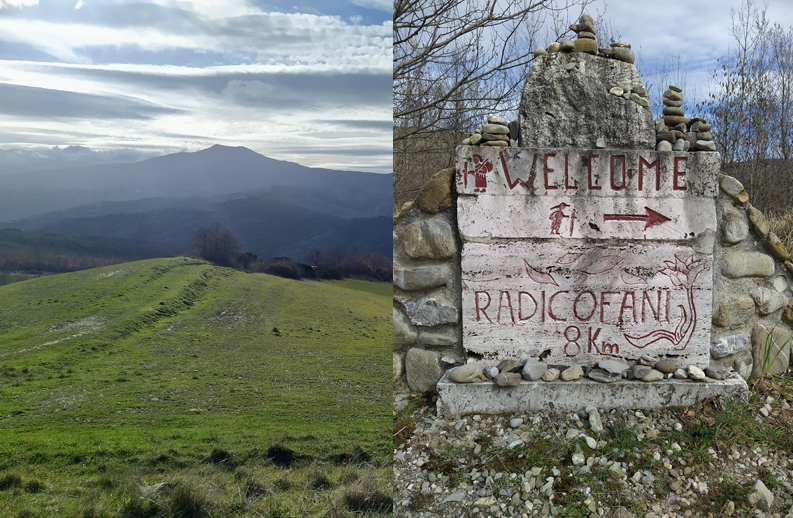
It was a warm day, but in the afternoon the weather turned. The last twelve kilometers the trail went up steadily and the wind picked up. It got cold.

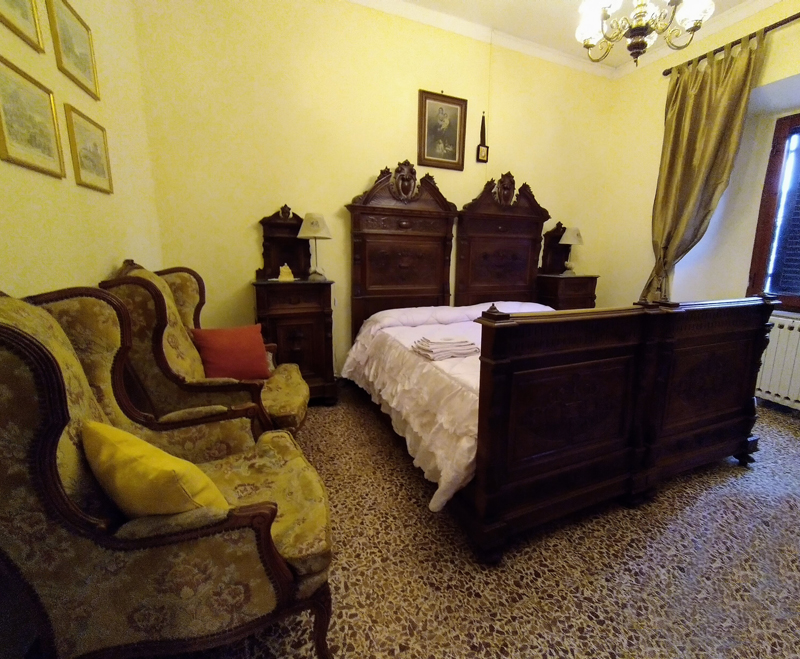
We had rented a house in Radicofani, opposite the church. A special place.
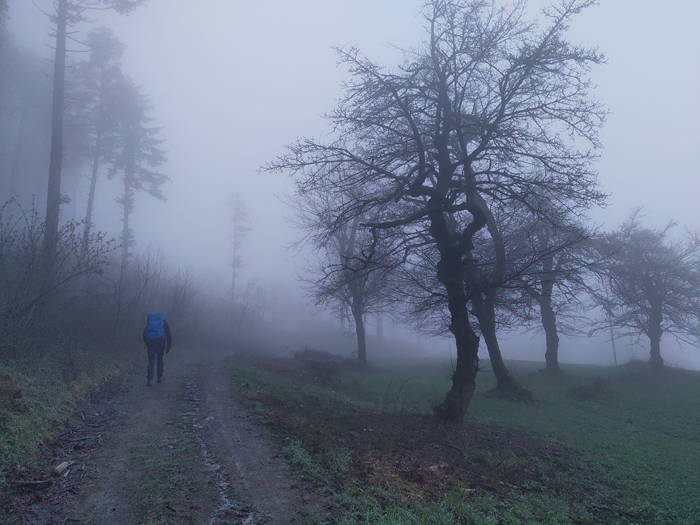
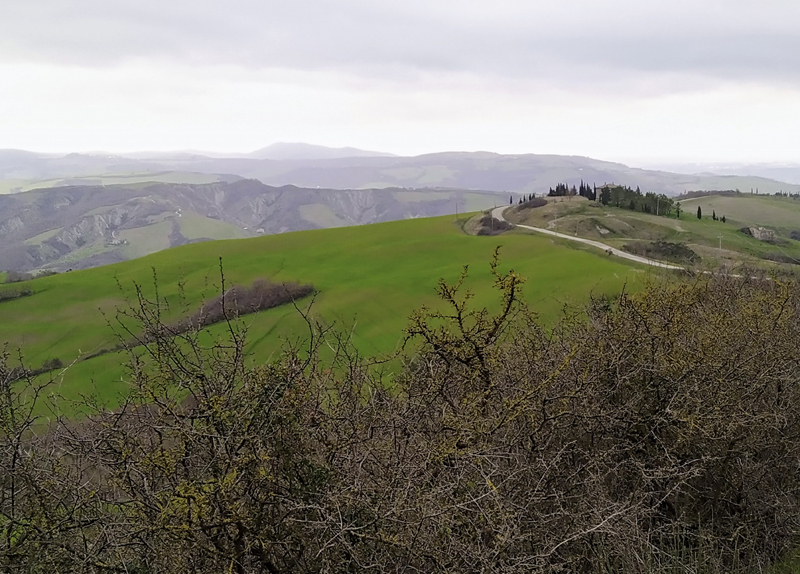
The next morning we left in the fog. As we descended dark clouds appear. Via a winding ‘strada’ we walked down. Fortunately it stayed dry for a long time.

to Acquapendente

Near the main road we accidentally discovered a restaurant and we ate a nice plate of pasta. When we went out, it was raining. And hard.

Another 8 km to go to Acquapendente, along a busy main road. There was barely a shoulder. It was dark because of the rain and we didn’t feel really safe out there.
But we were lucky; pretty soon we got a lift, even though we were already soaking wet.

I was so glad I told the young man:’you are an angel to us’. He asked our names and of course we asked his. ‘Gabriel’ … yes, he was our saving angel!

Our route:
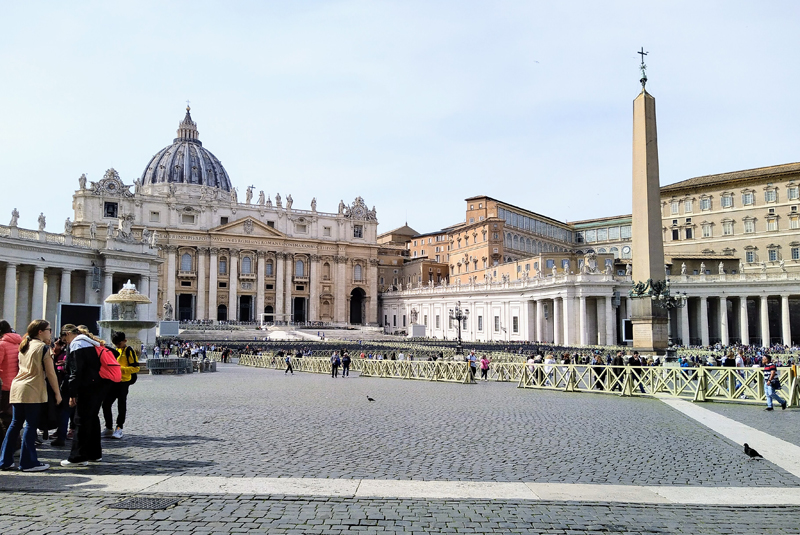
Siena – Ponte a Tressa – Buonconvento – Bagno Vignoni – Radicofani – Acquapendente – Bolsena – Montefiascone – Viterbo – Vetralla – Sutri – Campagnano – Storta – Rome
.

.

.

.

.

.
(2) Ongi Etorri

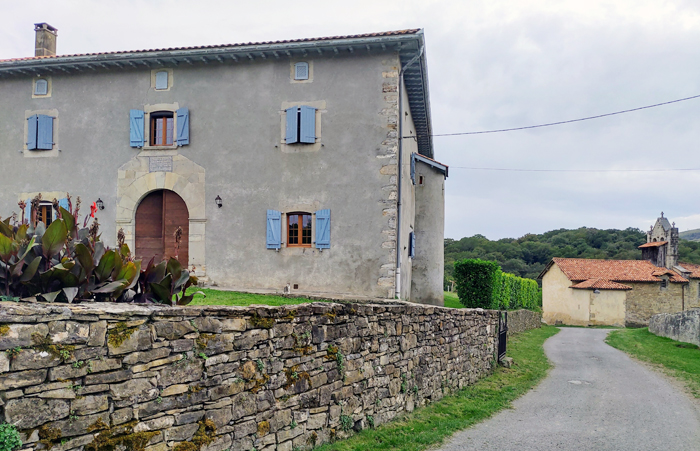
Bienvenue. We walked through the Basque area and we noticed that from the inscriptions on houses and on the double street signs. A beautiful language that could have served as an example for ‘The game of Thrones’. Route de Labastide / Bastidaxarreko errepidea.

After a spicy warm walk we arrived at Gite Etchetoa, with room for twelve pèlerins. A sober, but beautifully restored old house. Marie, who herself was fond of caminos, welcomed us with a glass of cold lemon water. “Throw your clothes from today in the laundry basket. I’ll run the washing machine during dinner later and everything will be clean and dry tomorrow.”
We ate at the big table and Marie shared dinner with us. To toast each other’s happiness, she poured each a glass of cider. Together we set the table, cut the bread and put the dishes from the kitchen on the table. Bottled water and wine. The meal was rich and delicious. Cold cucumber soup. Rice and ragout with a Basque sausage. Banana cake with ice cream for dessert. What a great experience. Pleasant buzz in which the Belgian Martine occasionally translated some of the rap told French stories for us.
The next morning after breakfast we set out early to Saint Jean Pied de Port, the place at the beginning of the Pyrenees, which is the starting point of the Camino for most hikers.
We were glad that we had already walked three days before the ascent over the mountains.

Via Francigena from Parma to Siena – E

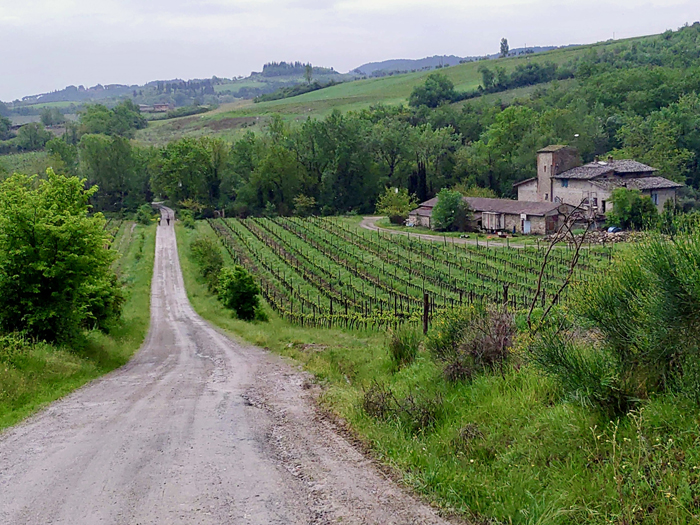
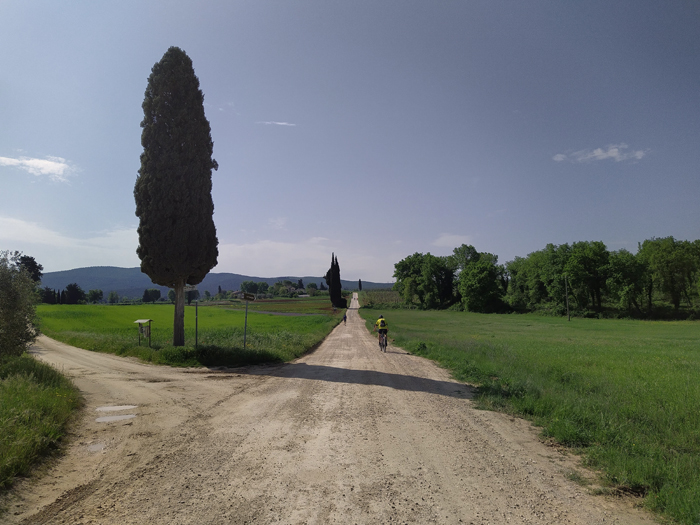
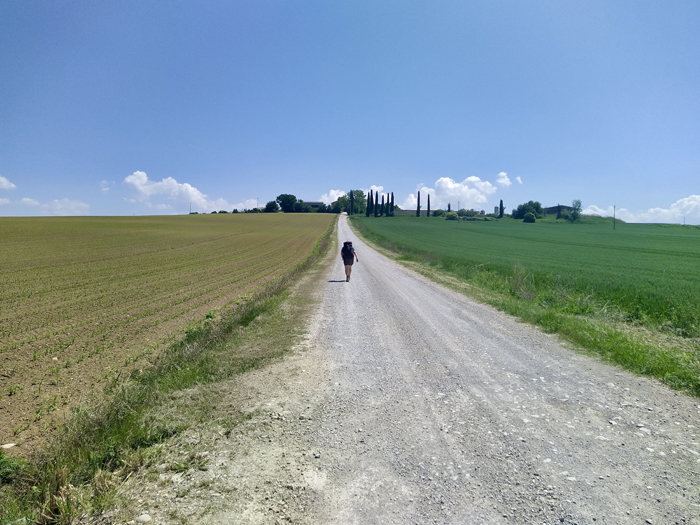
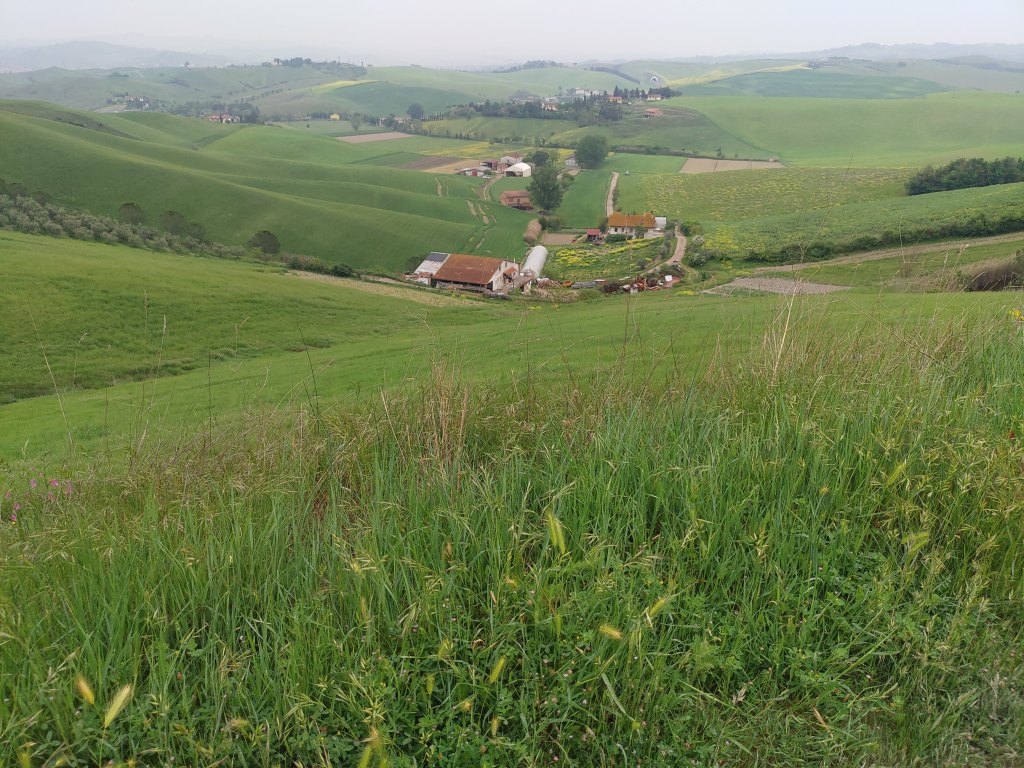
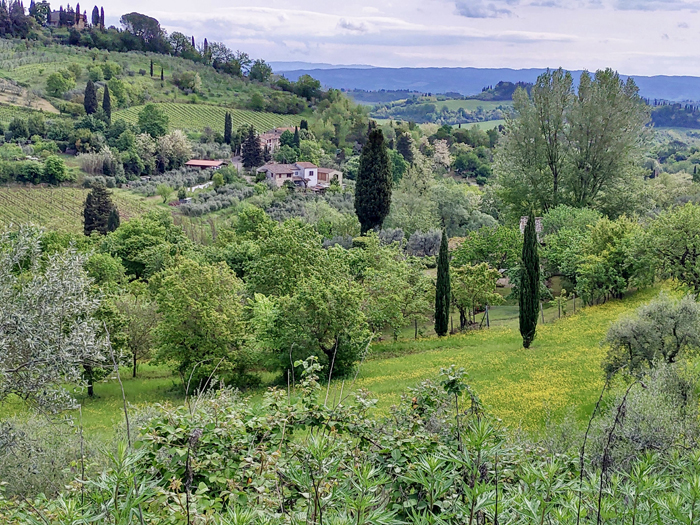
The route through Tuscany is known for the strade bianche, the white paths. They are unpaved farm roads through often remote areas. Many farms have been empty for a long time. You may know the name Strade Bianche from the cycling race for professional teams.

On this part of the route we see and talk to more walkers. In the empty landscape, after a hill, there is unexpectedly a garden with a blackboard at the gate stating that you can tap water and you can eat or drink something. We drink cola at a large table (it tastes different during a long walk than at home on the couch). The owner gives us dates and biscuits, ‘for new energy’. Then the two Canadian women, mother and daughter, come around the corner. We have passed each other several times. They could also use a cold cola. They come and sit at our table. Another small meeting and then we each continue at our own pace.

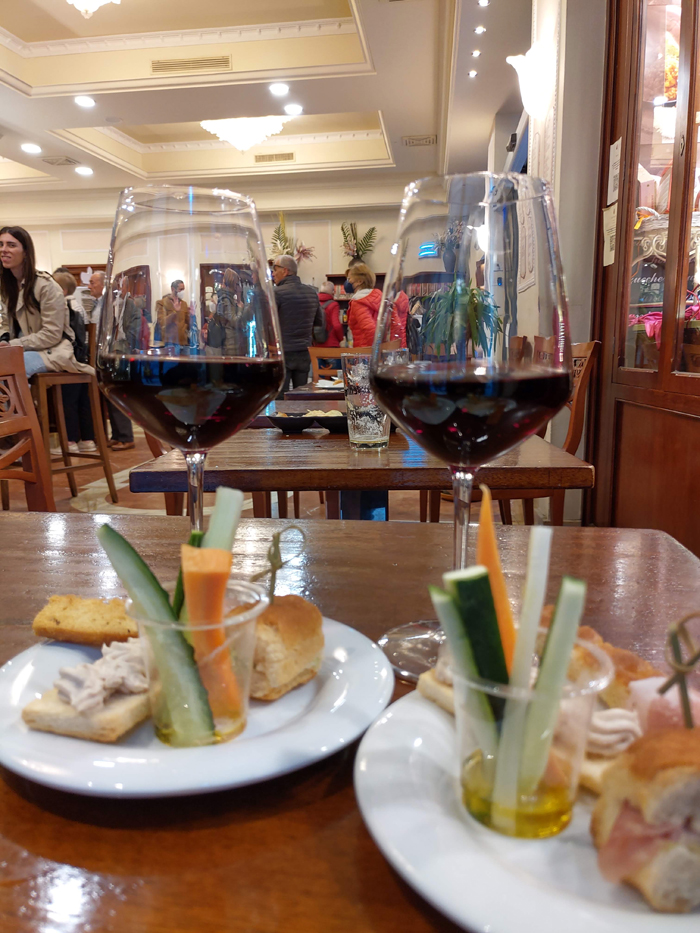
And then we are in Siena, the end point of our walking tour. We drink a delicious glass of wine in one of the old cafes. And as the Italians are used to, with some tasty snacks.
We don’t know yet if we’ll ever walk to Rome.

.

.

.

.

.
Via Francigena from Parma to Siena – D

In Lucca we enter ‘familiar’ territory. We recognize the green city wall and the Duomo from our walk from 2019. I was already surprised by the decorated columns of the front facade; each column has a different pattern. We then started the walk in this city. Because the first two legs are long and a bit boring, now take the train to San Miniato.

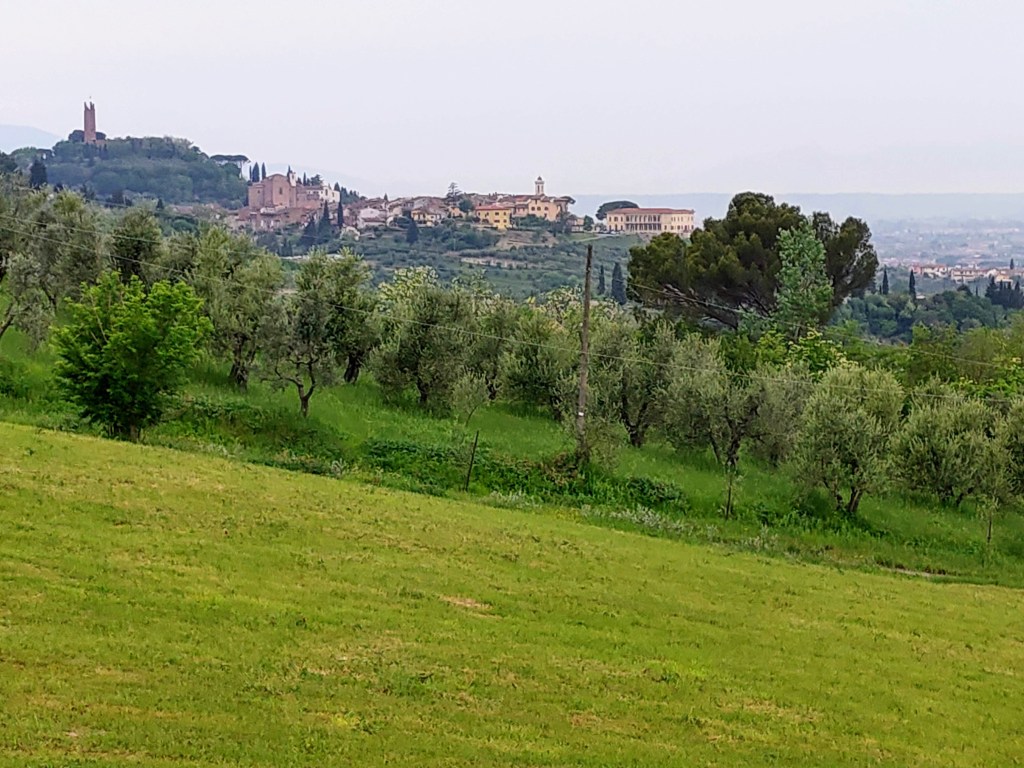
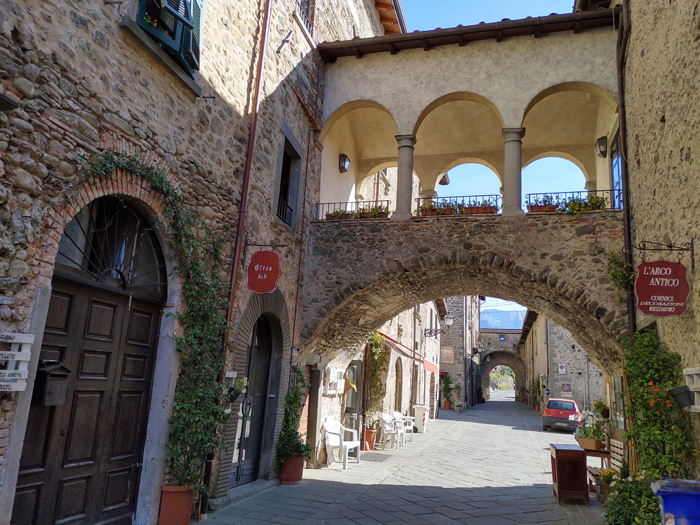
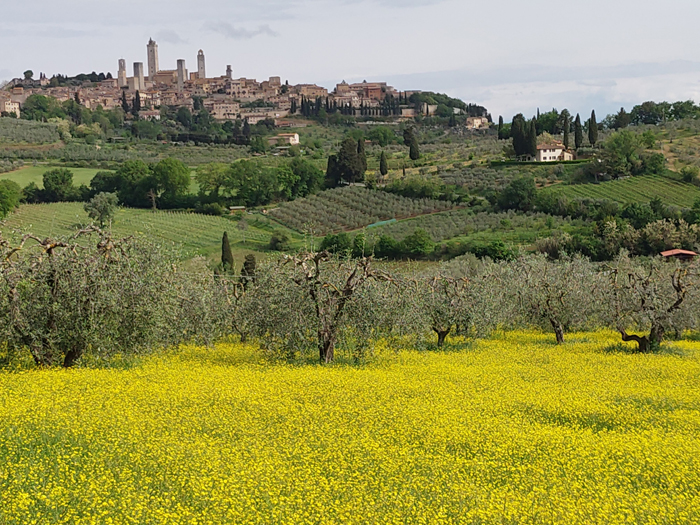
From San Miniato we walk to Gambassi Terrme, a beautiful old town, where we spend the night in a romantic room. It rains for the last few kilometers. But after a shower and a nap we have enough energy again to drink a glass of wine in the cafe on the village square. It’s busy there; the people of the village come there for an espresso or a glass of wine. Christian and Philip, the men from the Ecrins, with whom we had regular contact along the way, join us a little later. It is nice to exchange stories with them. The rain outside doesn’t matter anymore. And a good pizza makes the day complete.

The next morning we go back to the cafe for a cappuccino and a brioche for breakfast. It is just as pleasantly busy as the day before.

.

.

.

.
Via Francigena from Parma to Siena – C

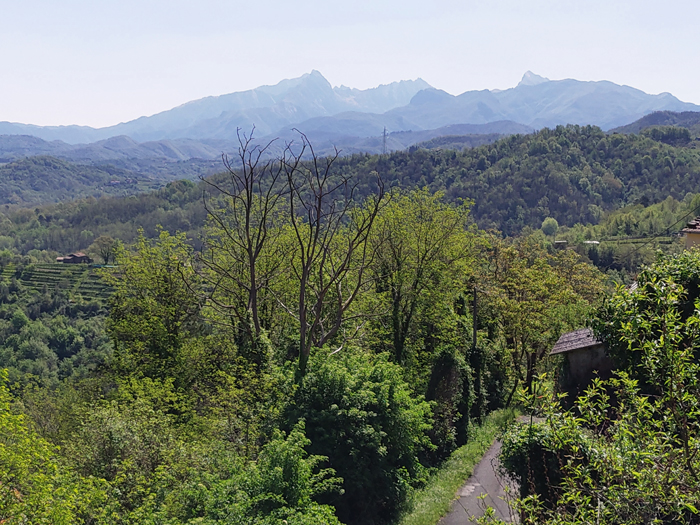
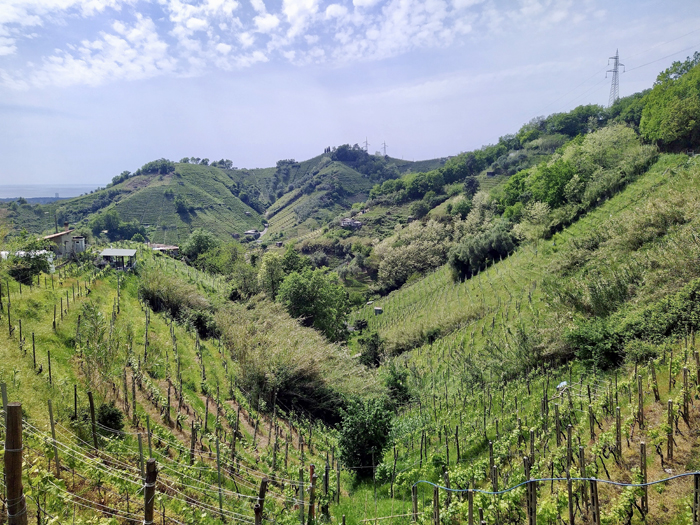
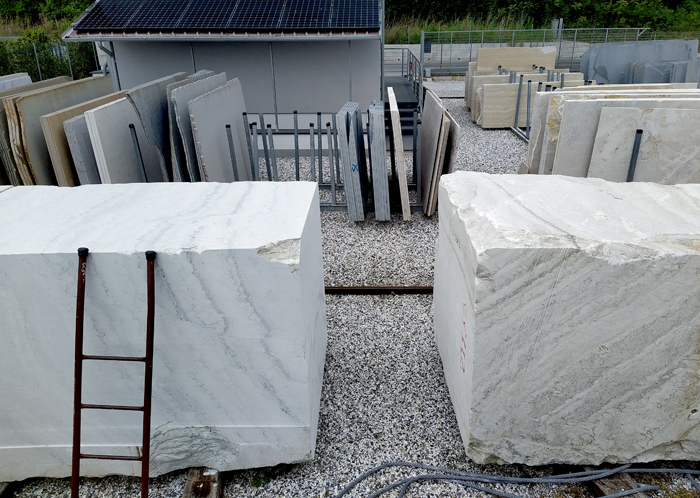
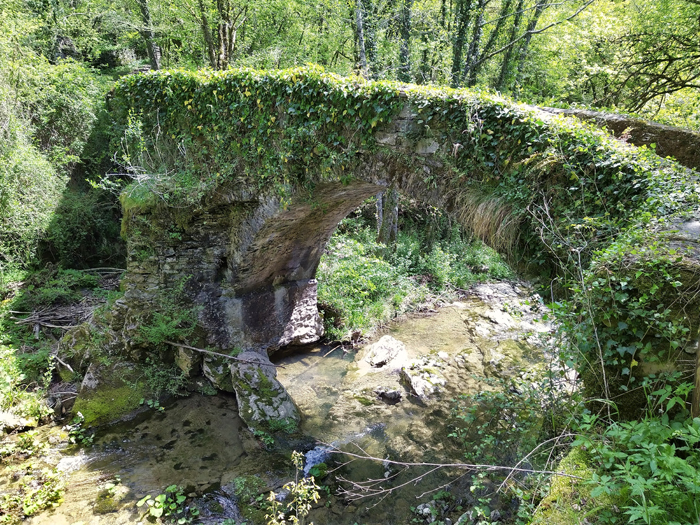
In Tuscany we walk between the Apuan Alps and the sea. Vineyards have been laid out on steep slopes. There are the imposing marble mountains of Carrara, with the stark white marble that was already loved by Michelangelo for his sculptures.

We spend the night a few kilometers before Pietrasanta. It is raining and it is ugly. But we are staying in a little oasis; agroturismo. When we walk to the town later in the afternoon to have dinner, the sun is back. And Pietrasanta turns out to be a nice artist town full of sculptures, with galleries and workshops. On a terrace we drink a nice glass of wine, with a tagliere misto.

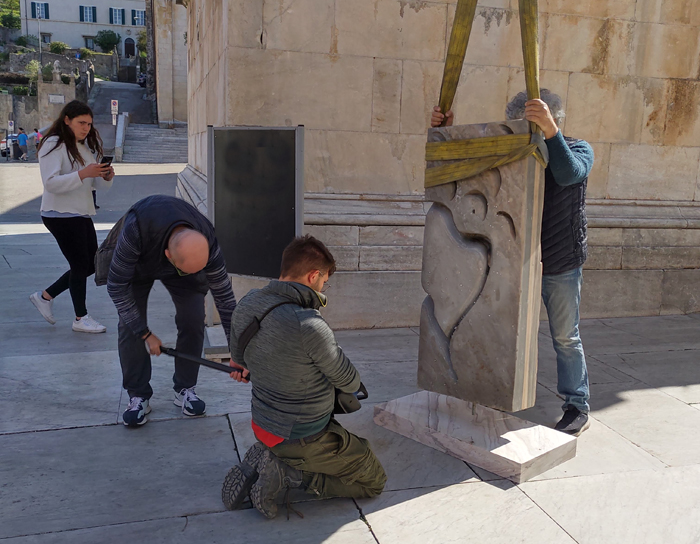
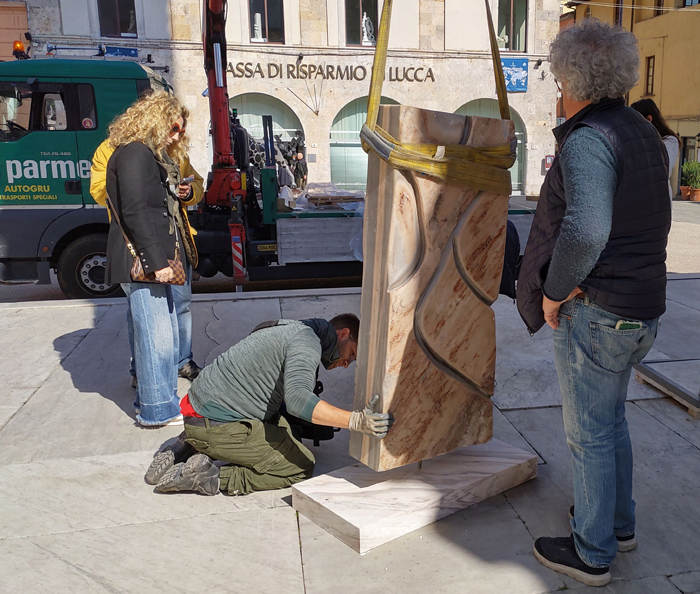
The next morning we walk through the town and we see a new work of art being placed on the Piazza Duomo.

.

.

.
Via Francigena from Parma to Siena – B

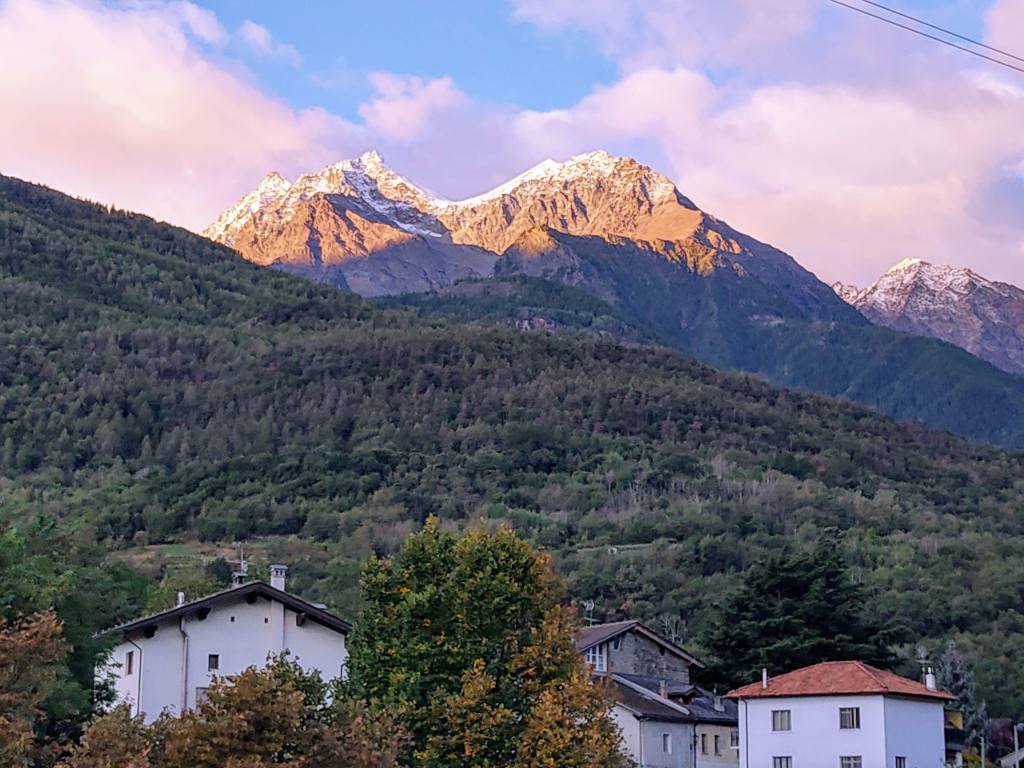
We walk through the northern Tuscan mountains. The weather is clear, the route is sometimes tough and leads past high-lying mountain villages, such as Pontremoli, Filetto, Sarzana, Aulla …

In Aulla we slept at Bike and Bed, a few kilometers outside the town of Aulla. We thought we could borrow a bike to go to the restaurant in town. But no, no way. We were brought by car. Also walking back after dinner was definitely not an option. We were warned for a long and tough stretch the next day with steep climbs over the mountain. And we had to be equipped for that.
We were picked up after a phone call. Fortunately together with two other guests.

Lees ook:

Via Francigena van Parma naar Siena – A

Via Francigena – Valle d’Aosta

Cherry picking op de Via Francigena

.

.
Via Francigena from Parma to Siena – A

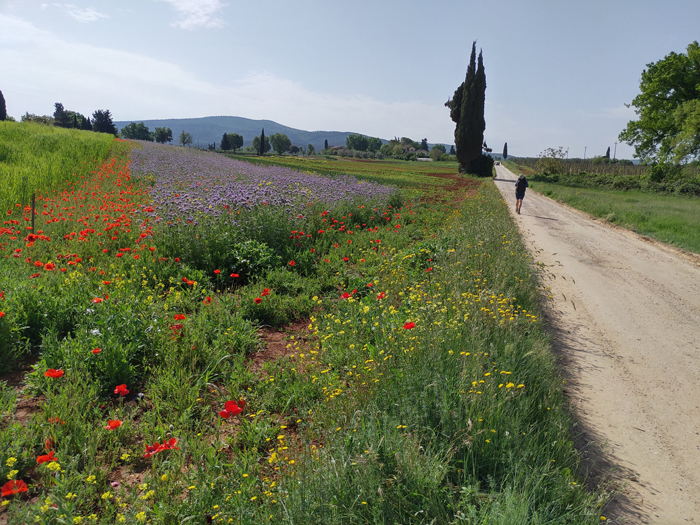
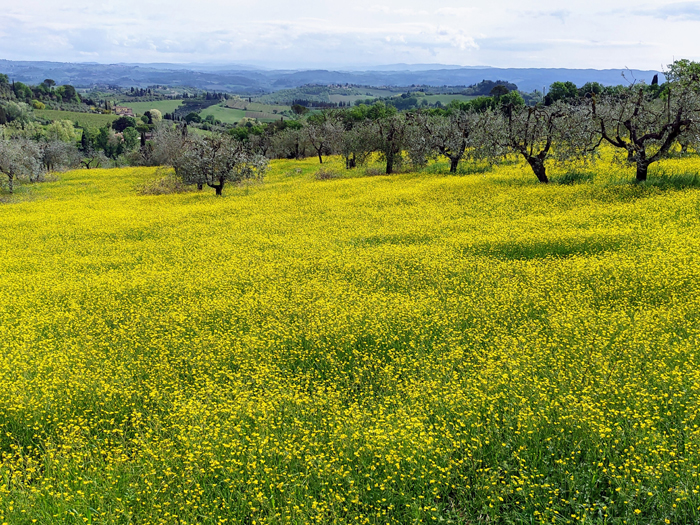
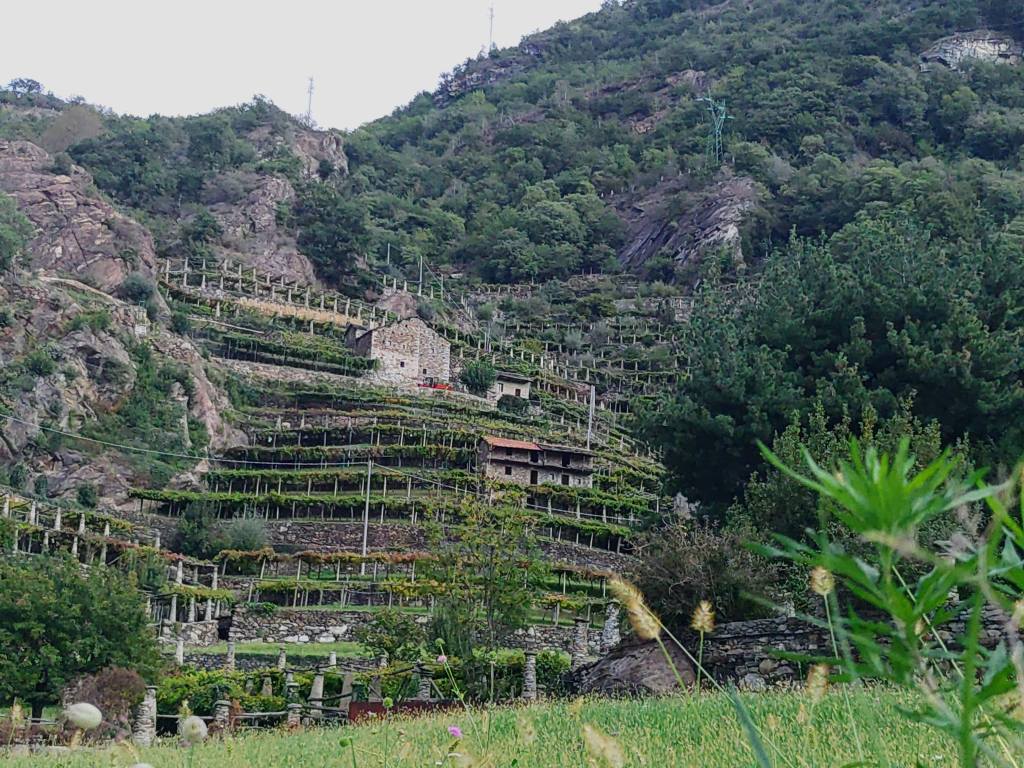
For the third time we walk part of the Via Francigena. We travel by train from Bologna to Parma where we start the day after, the walking tour. It is true that we walked part of the route earlier. In March 2019 we walked from Lucca to Siena. It was still early in the season and the fields were still bare. Now there are flowers everywhere, flowering hawthorn, poppies and buttercups. The vines have their first leaf… We notice that the hiking season has started; we meet many more people; French, Swiss, Canadians, Finns…

It has been dry for a while. But when we arrive in Italy it rains. The farmers are happy. For us, it’s not quite what we hoped. And yet it’s not just annoying. In thick fog we cross the Apennines via the Passo della Cisa. The highest point is formed by a wide bare ridge. When the weather is clear, we must have had a magnificent view of the landscape. Now we can see no further than a few meters. It is blowing and raining hard. Slightly descended we come to the pass. The restaurant is closed, but the shop with local products is open. Tired of clambering through the mud, and cold and hungry, we go inside to buy a sandwich. Freshly cut slices of bread, topped with mountain cheese… Next to the burning wood stove is a bench where we can warm up. There is no coffee, but there is a glass of lambrusco. An Italian living in America, who travels through his motherland out of homesickness, also noticeably enjoys the warming place. For dessert we can taste the real pecorino from the region. It might be our best lunch in Italy.

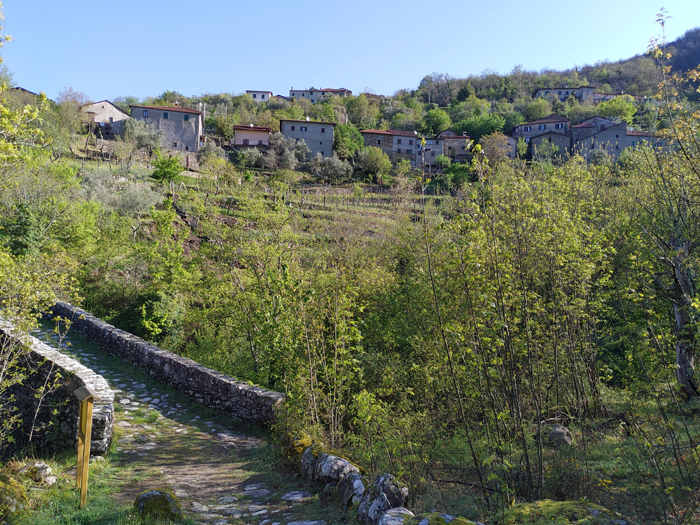
When we descend after the pass, the view becomes wider. We have reserved an overnight stay at Temperanza in the mountain village of Groppodalosio. We sleep there in the room for pellegrinos. The wood-fired stone stove is burning. They cook for us and the next morning a nice breakfast is ready for us. When we leave, walking over the Roman bridge, the bad weather of the previous day is no longer noticeable.

Our route: Parma, Sala Baganza, Calestano, Berceto, Groppodalosio, Filetto, Aulla, Molicciara, Massa, Pietrasanta, Montemagno, Lucca, San Miniato, Gambassi Terme, Gimignano, Val d’Elsa, Siena
and by bus we drove to Perugia where we stayed one last day.

Also read:

Via Francigena – Valle d’Aosta

Cherry picking op de Via Francigena

.

.
Via Francigena – Valle d’Aosta

We hiked part of the Via Francigena, the pilgrimage route to Rome, through Valle d’Aosta, from Aosta to Santhia. And it was beautiful.

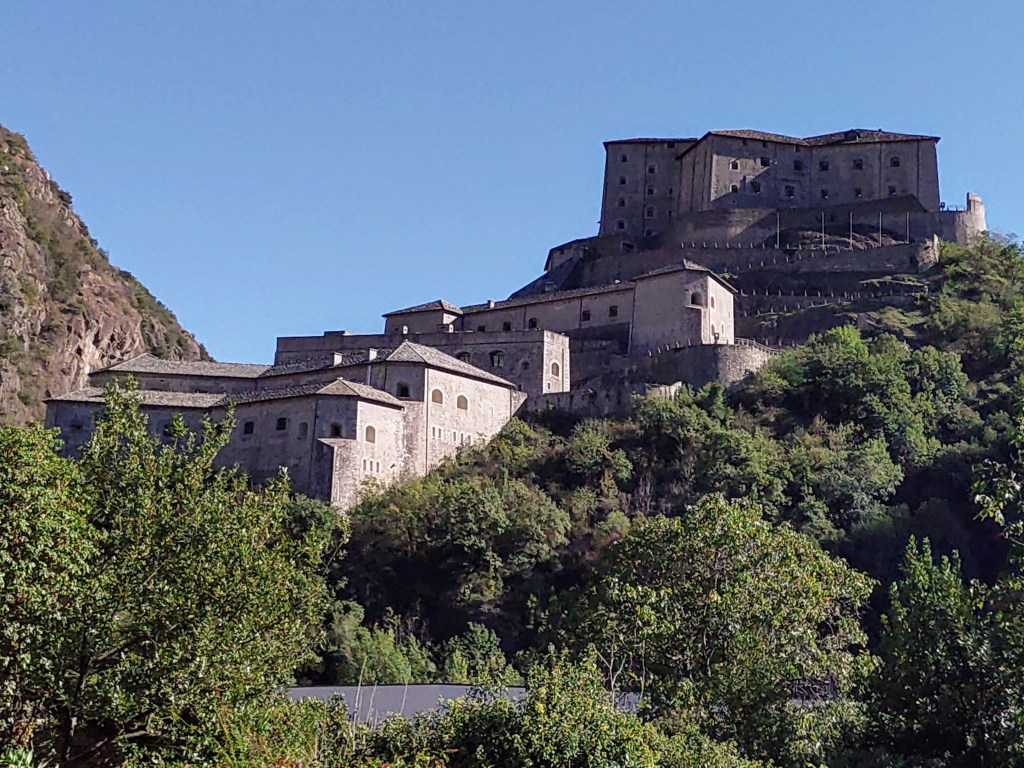
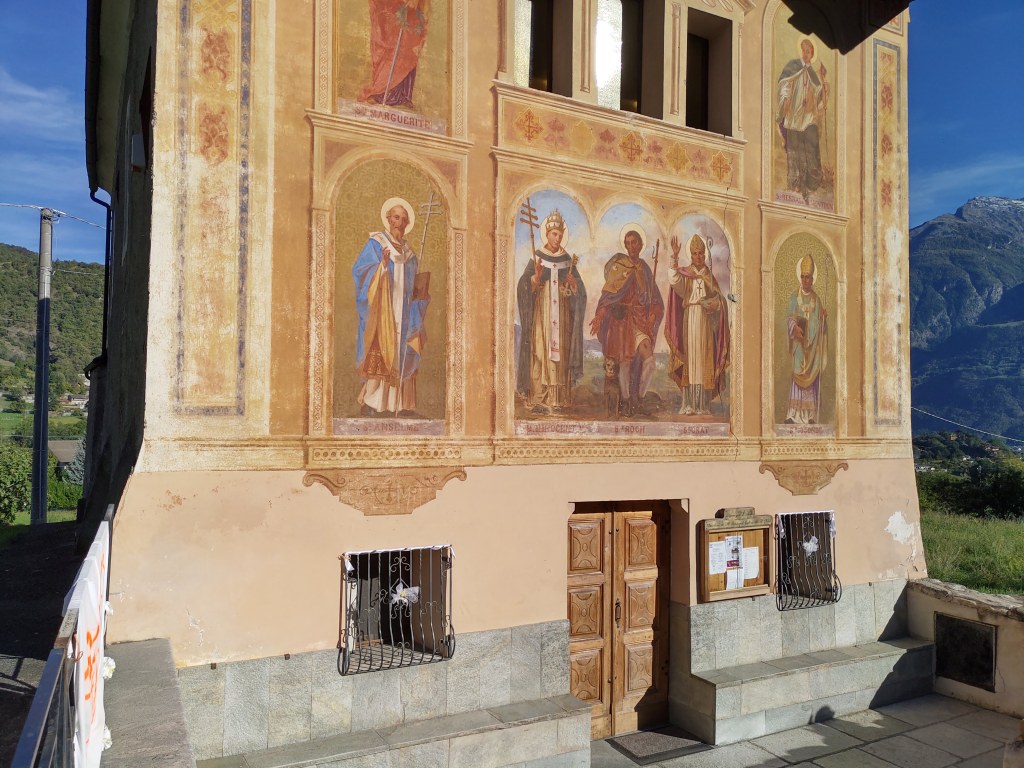
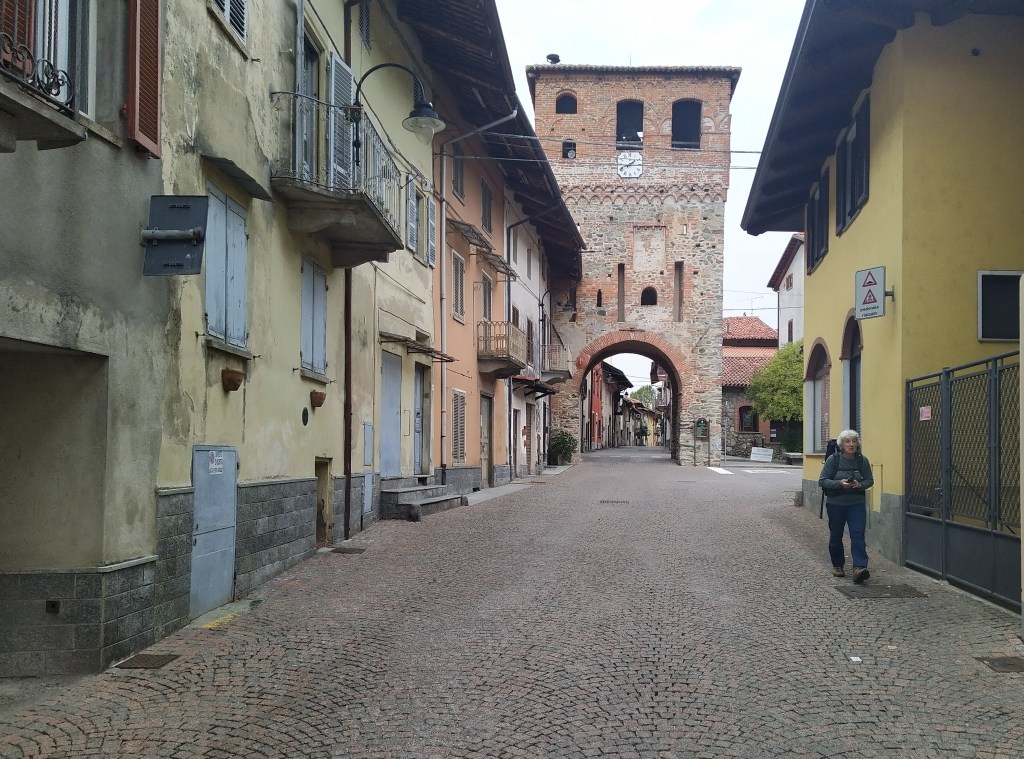
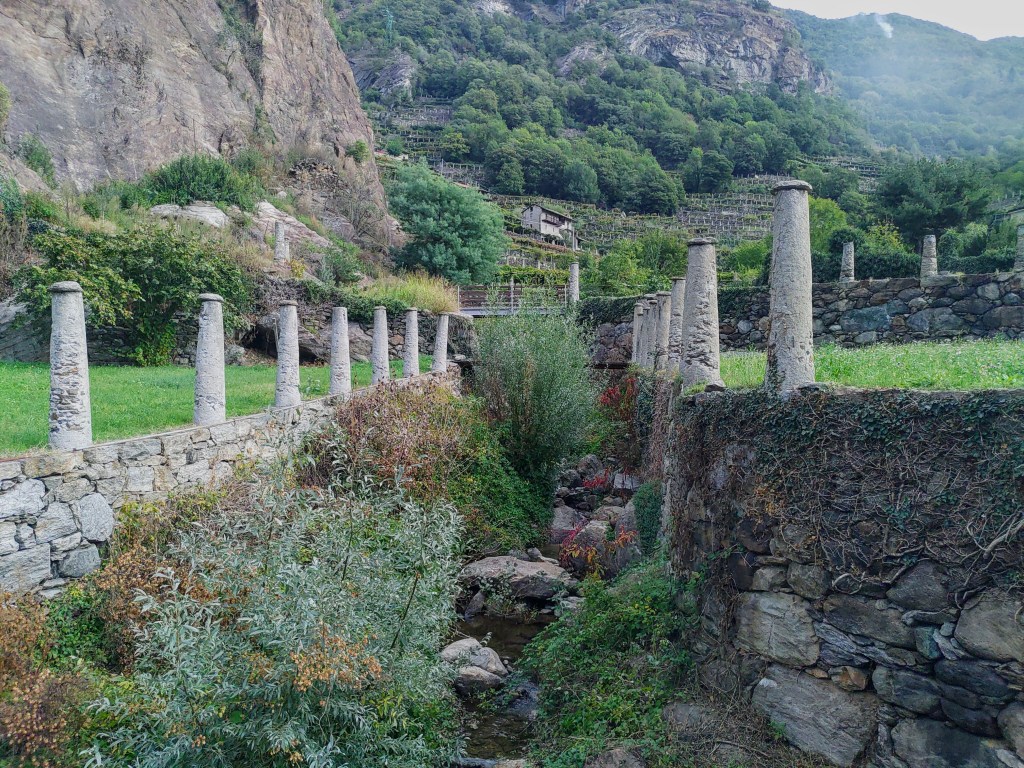
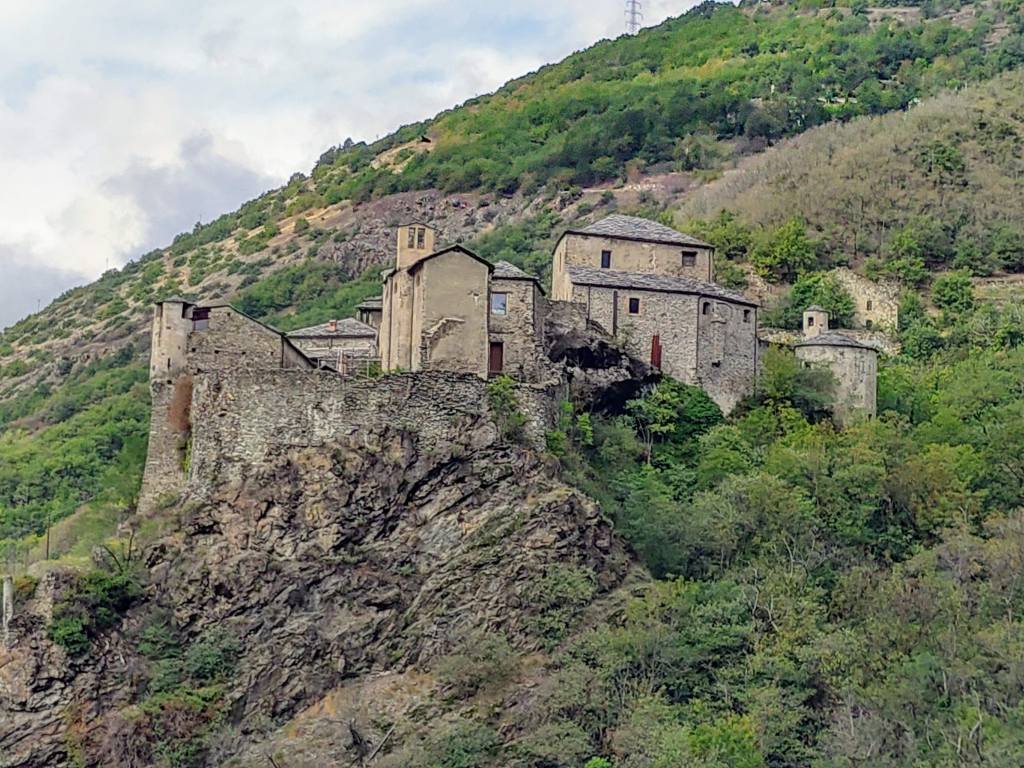
It is special to walk all day, through beautiful surroundings, and arrive at a new place at the end of the afternoon. And the next day, after breakfast, the colazione, to leave again. Being on the move, moving. Slowly the landscape changes. We walk over fallen prickly balls of the tame chestnuts.We walk past vegetable gardens, with courgettes and pumpkins. A lady offers us her freshly picked grapes. Small encounters. We walk through old vineyards laid out on terraces. And again and again there are small villages with their medieval churches. And the castles are located on strategically located heights. It is old country with a rich history.

The days seem longer when you walk, time expands. It is simple living, but intense living. The senses seem sharper; you see and smell and feel… And you feel strong. Even if you get tired at the end of the journey and long for a beer at the destination of that day, you know that you can do more than you thought and that you can still walk those last kilometers. And when you have arrived and are warmly welcomed, when you have showered and had a drink, then the fatigue quickly disappears.

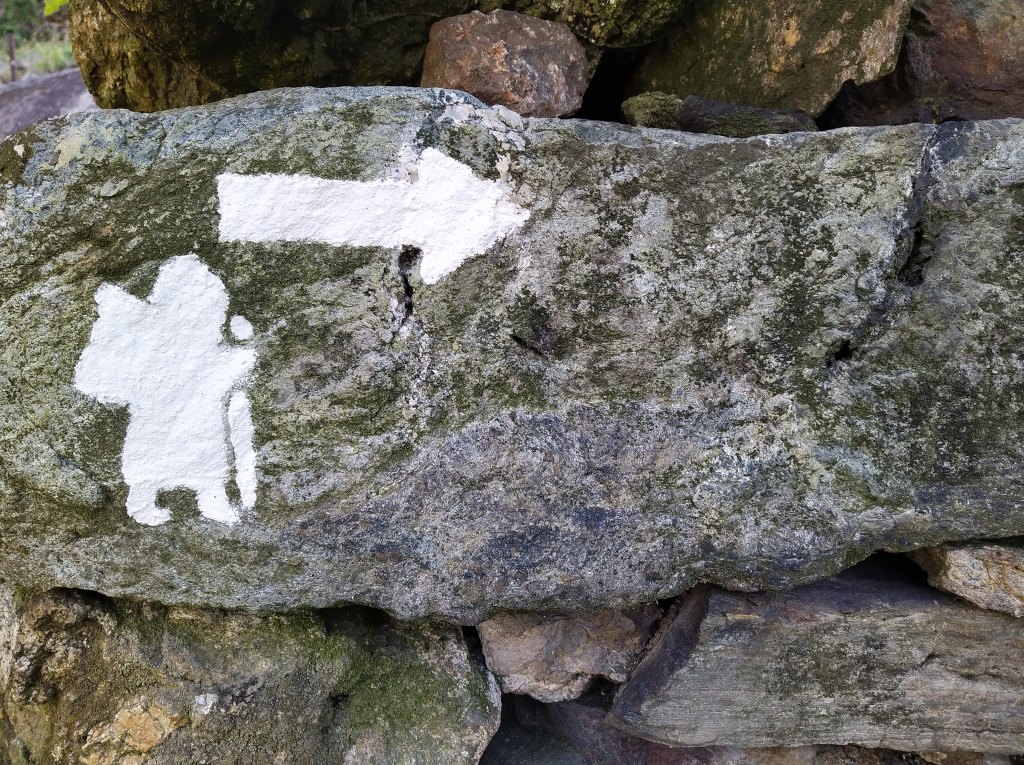
The entire route is marked with signs and arrows, making it easy to find your way. Along the route are ostellos, inns where you can spend the night cheaply, but there are fewer of them than along the Camino’s in Spain. And we were already out of season. The ostello’s we passed were closed. We opted for hotels or B&B’s. There are restaurants that offer a ‘menu de peregrino’. Two courses including bread, water and a carafe of wine. Polenta is a commonly eaten part of the meal. Pasta seems more for lunch.

There were not many other hikers. It only became busier at the weekend with Italians walking part of the route on days off.

Earlier we walked a small part of the Via Francígena, from Lucca to Sienna. Cherry Picking I called it. And I can also call this trajectory that way.
The route is centuries old and starts in Canterbury. The route in Italy starts on the Col du Grand-Saint-Bernard and descends the mountain, via Echevennoz to Aosta. We started the walk in Aosta, and after returning we walked the route from Echevennoz.
We prepare a trip, are already figuring things out at home, but when we are there it is always different than we had imagined. And this time it was more beautiful, more varied. Wonderfull.
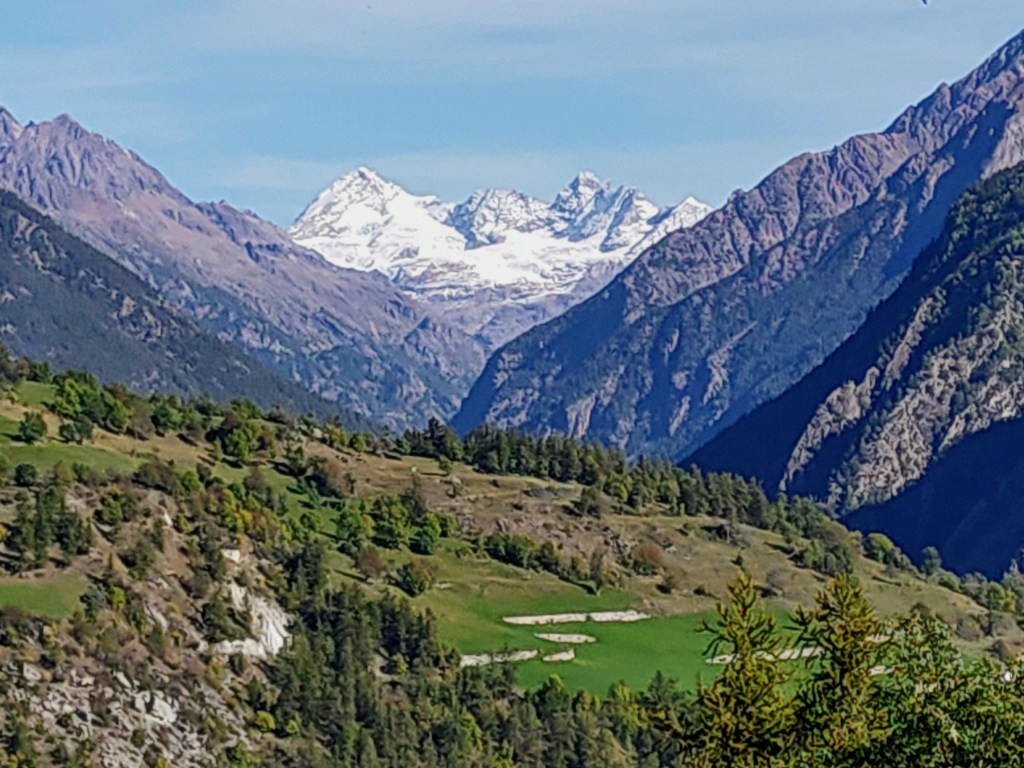
The weather played a major role in this. On the journey to Aosta it rained, it was gray and foggy. But the first day of hiking, the clouds cleared and the rest of the week the sky was clear and blue and we had a view of the majestic snow-capped mountain peaks.

Because Aosta is close to Courmayeur on the TMB, we drove there by car to enjoy the view of Mont Blanc.

Some place names on the way: Aosta – Nus/Fenis – Saint Vincent – Chatillon – Verres – Plout – Pont Saint Martin – Ivrea – Viverone – Roppolo – Cavaglia – Santhia + Echevennoz

lees ook: https://froukefeijen.wordpress.com/2019/03/22/cherry-picking/

.
from Barcelos to Durraes

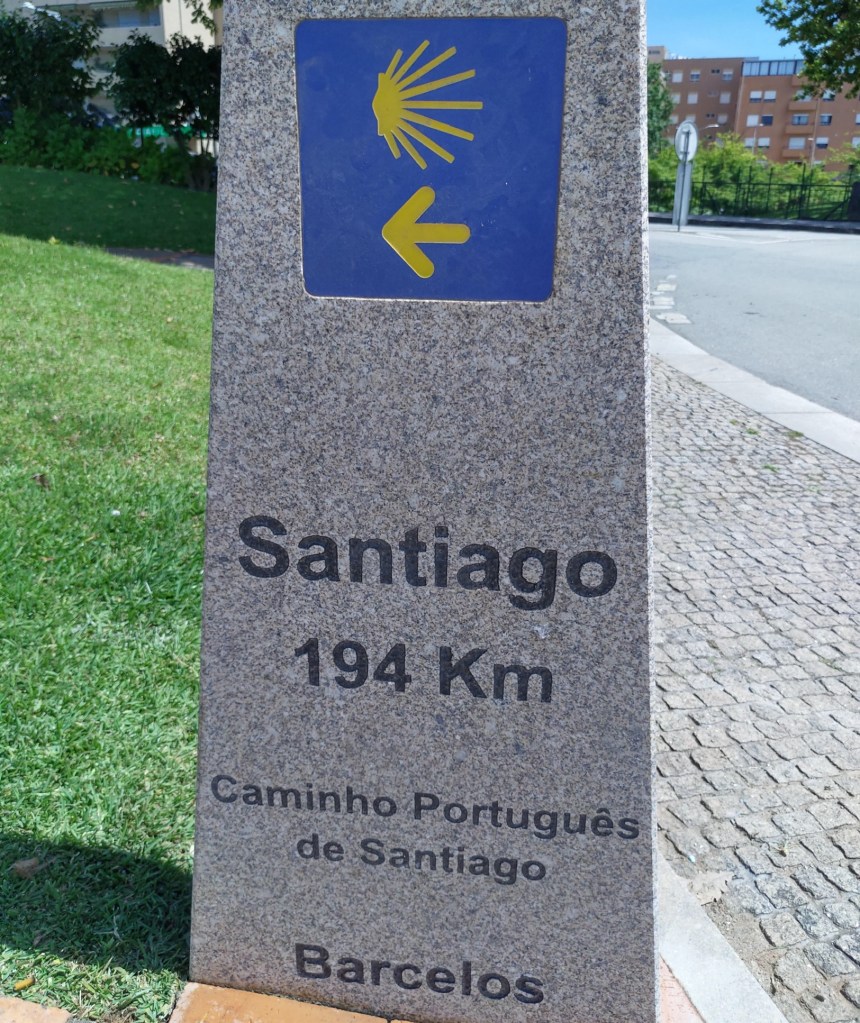
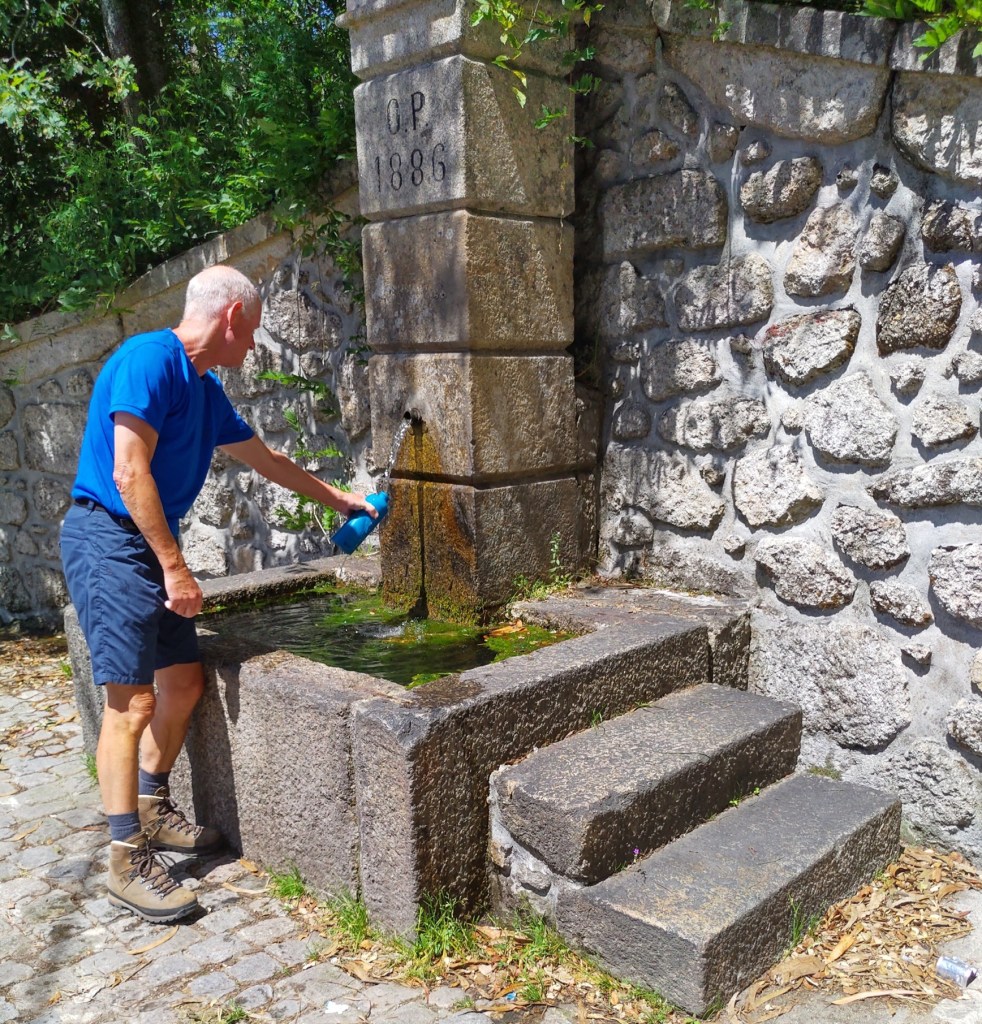
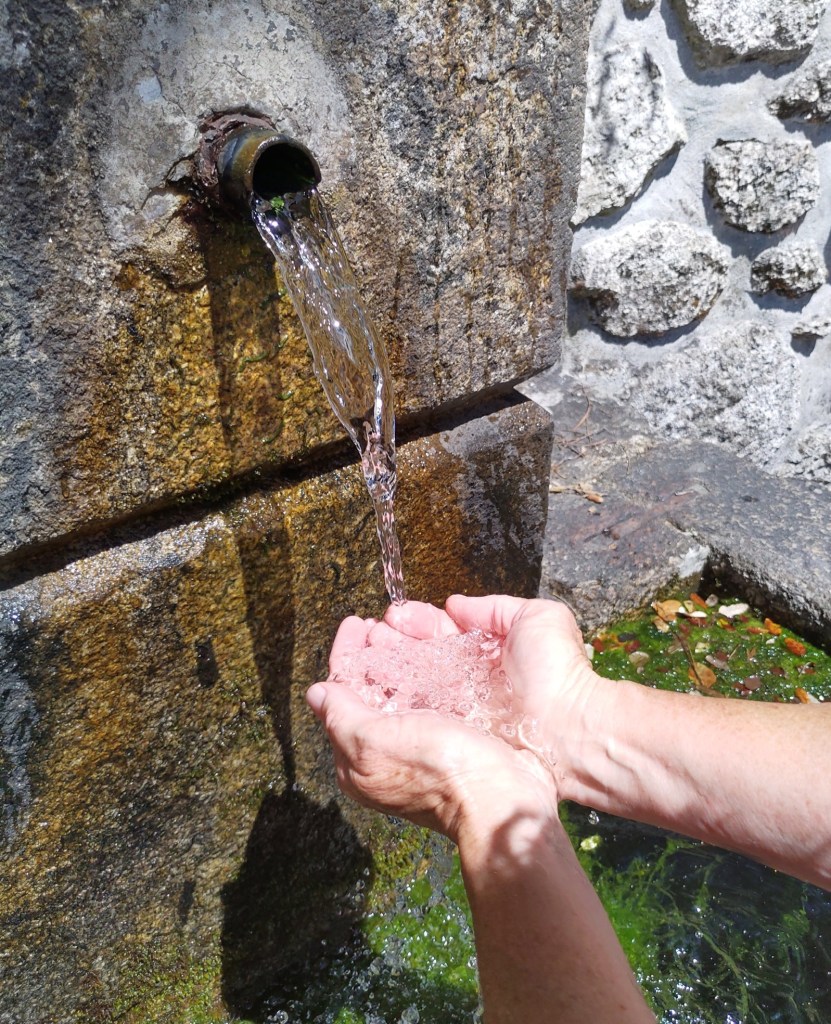
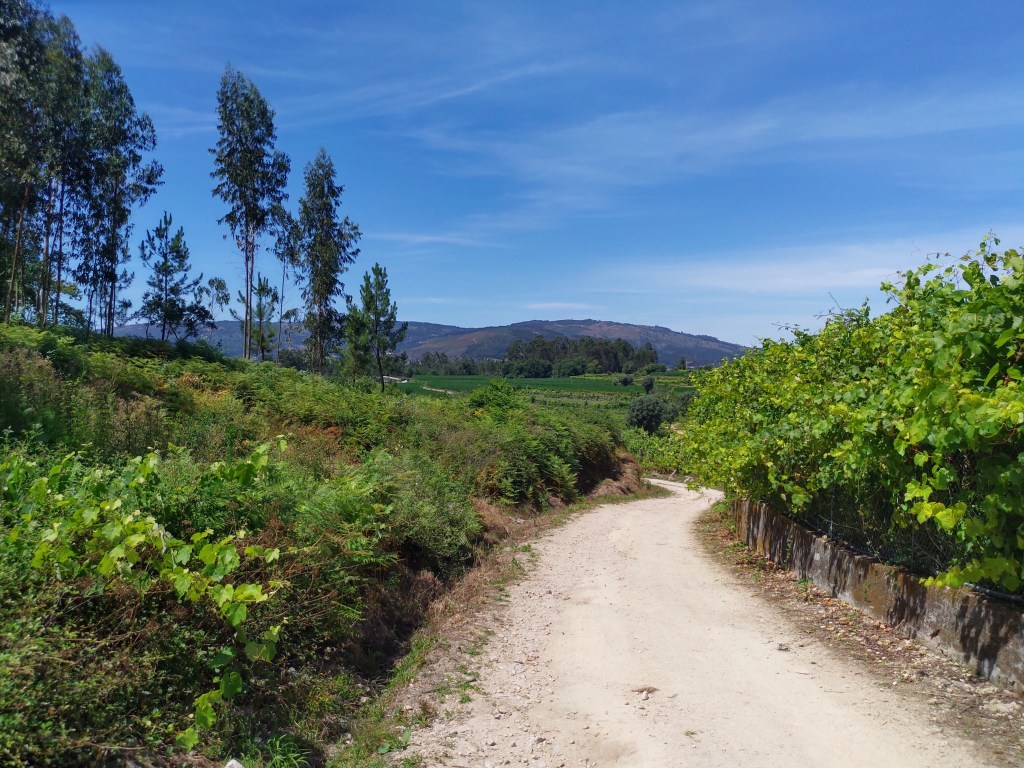
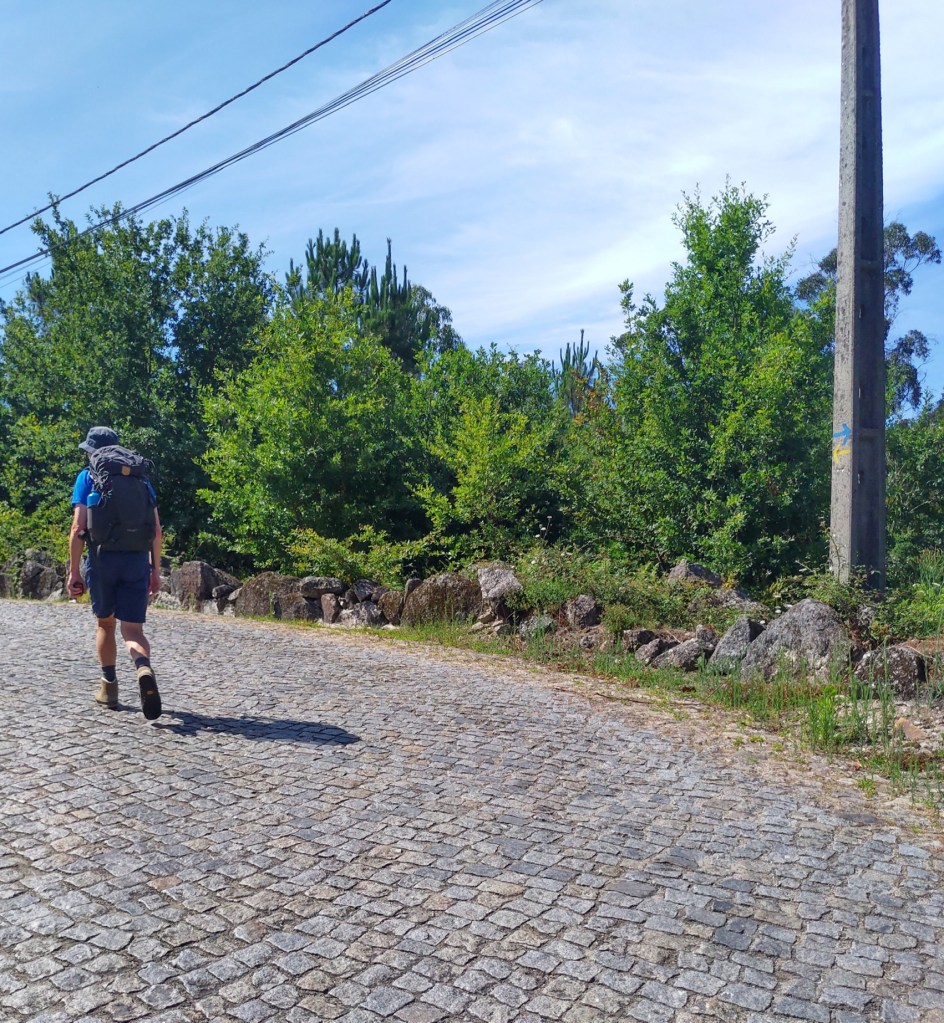
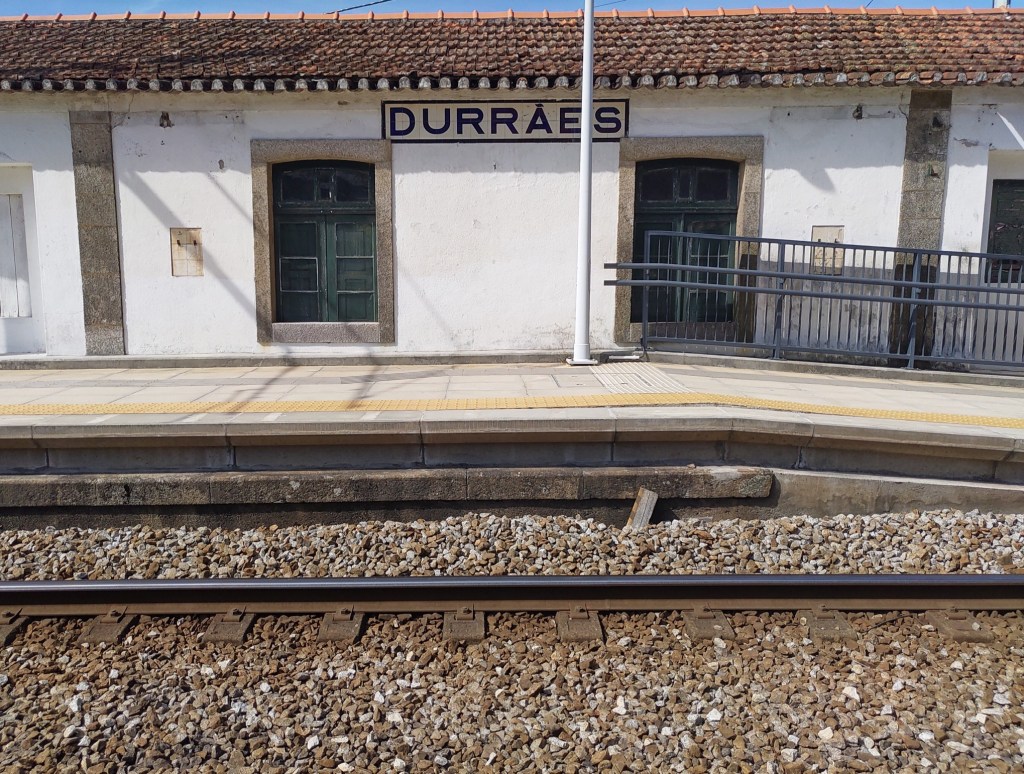
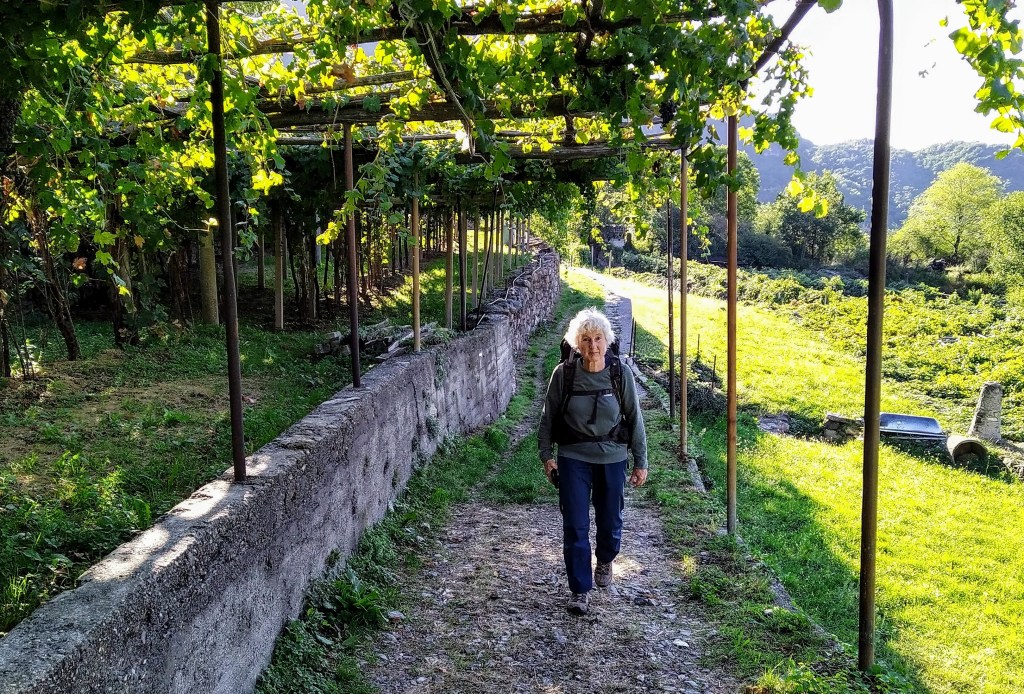
Today we made the start of the Caminho. We started the route in Barcelos. Two hours by train from Porto, past many stations. In Barcelos we had a coffee and then we were on our way. It took quite a while before we left all the neighborhoods of Barcelos behind us. But slowly the landscape became more beautiful. It was hot and there wasn’t much shade. The terraces that we thought we remembered from the cycling trip were not there either. Fortunately there was a well with cold water. And later we could have a cold Coke in a bakery. In Durraes we crossed the railway and then it was a short climb to our sleeping place. A lovely room in an agricultura hotel. People come here to relax for a week. We are the only walkers there. They even bought beers in the supermarket especially for us. We are about to warm up the vegan dishes that are waiting for us.
and tomorrow to Ponte de Lima