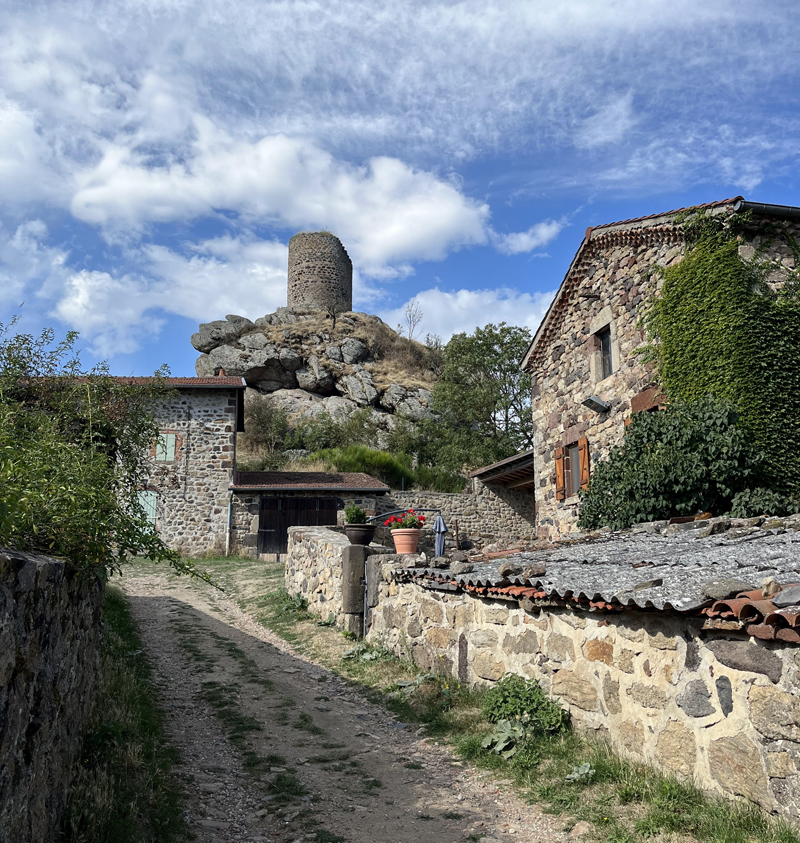
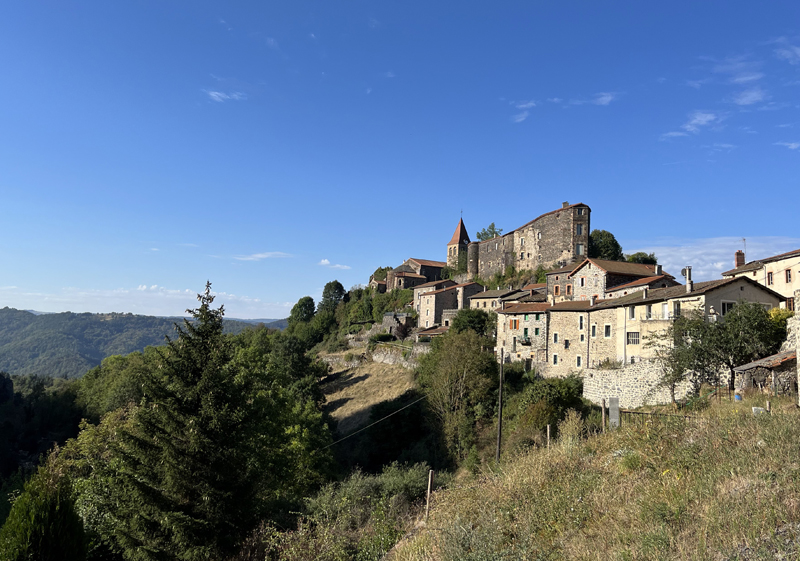
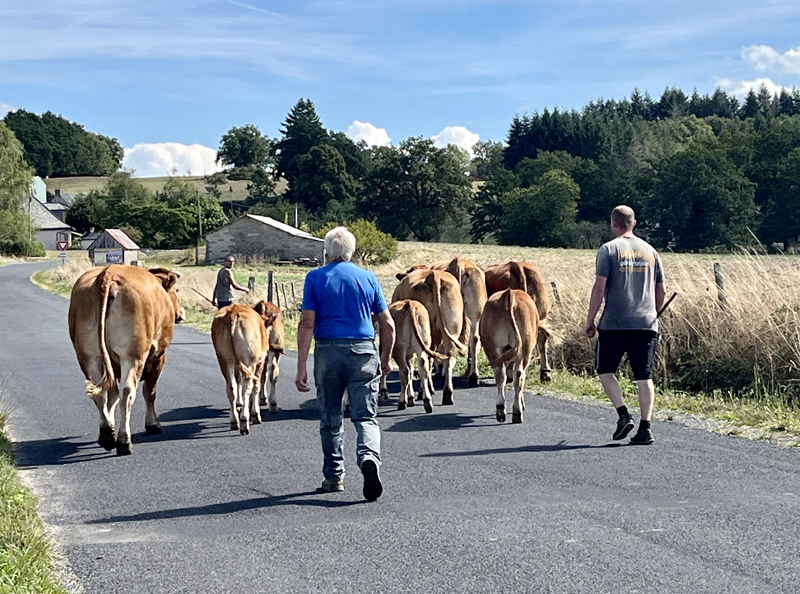
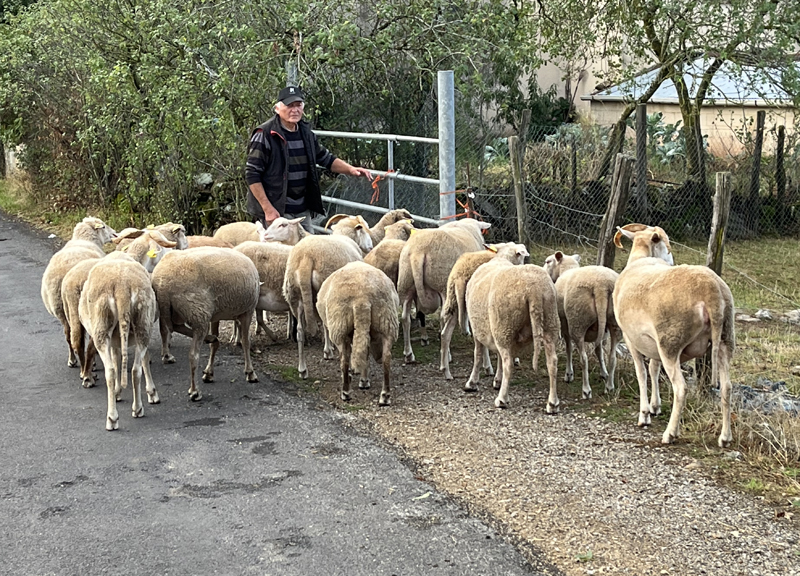

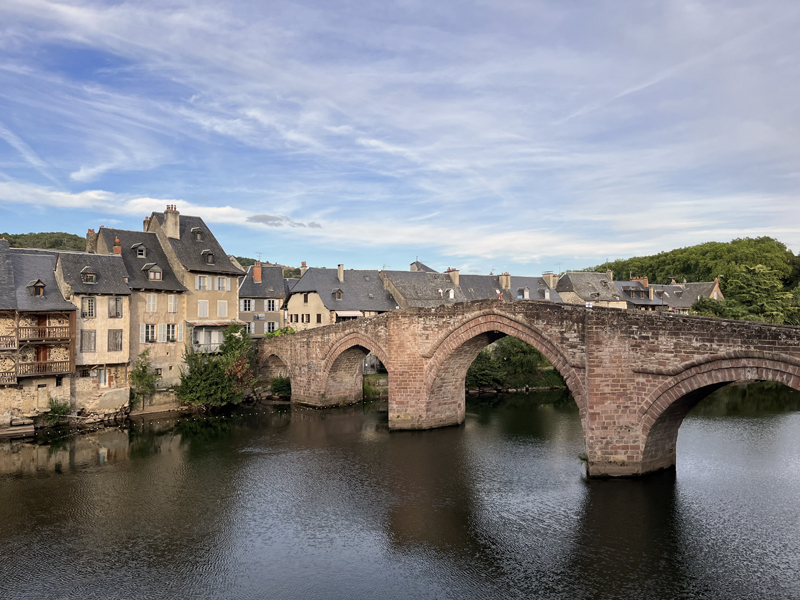
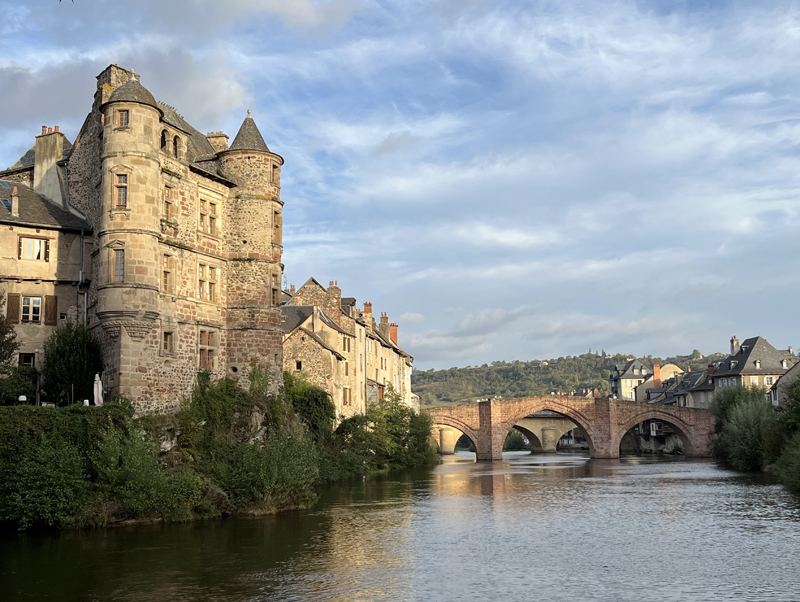
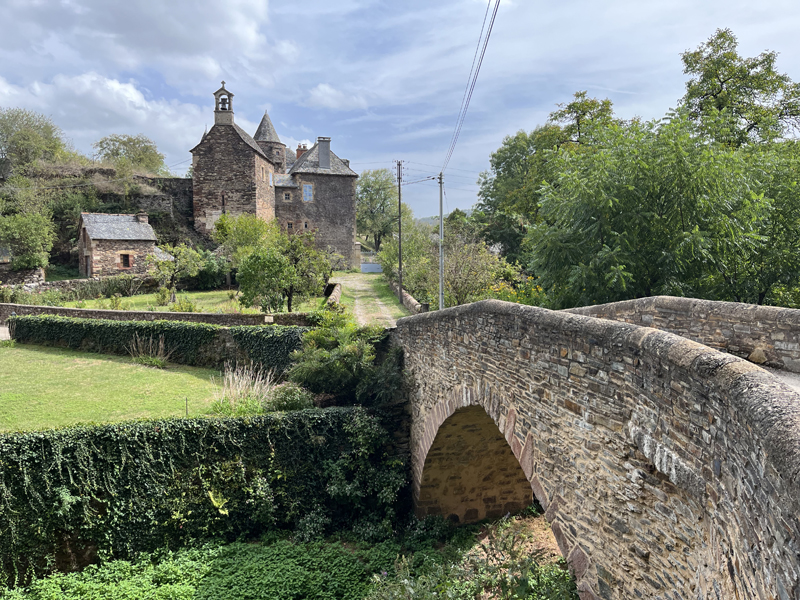
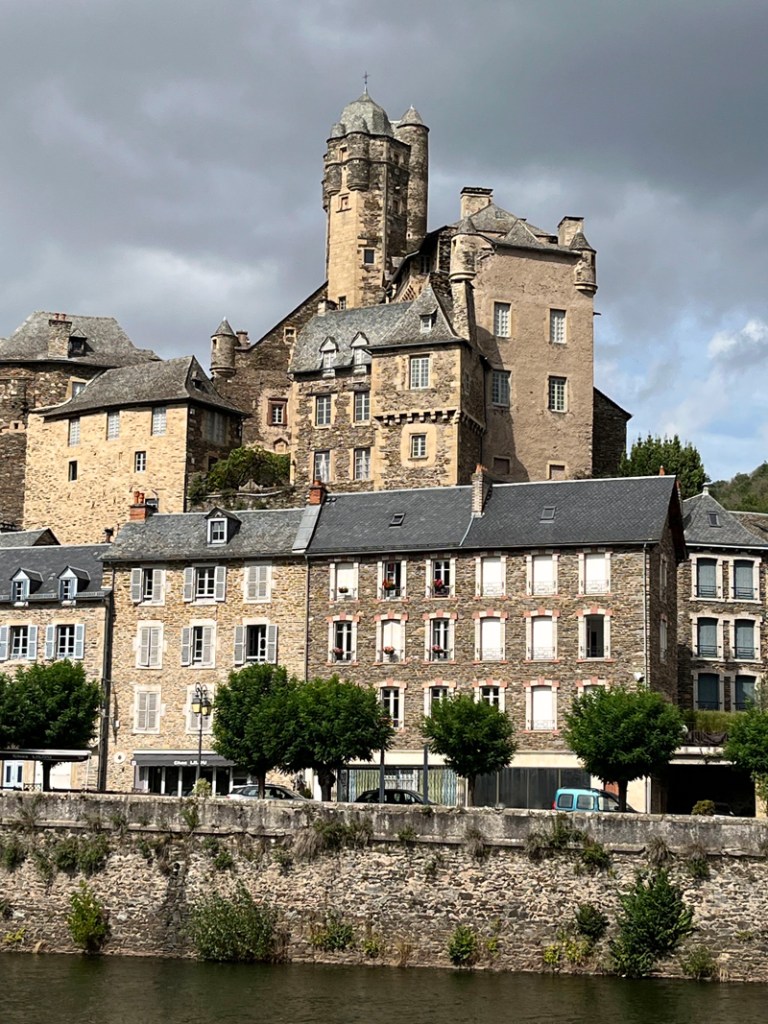
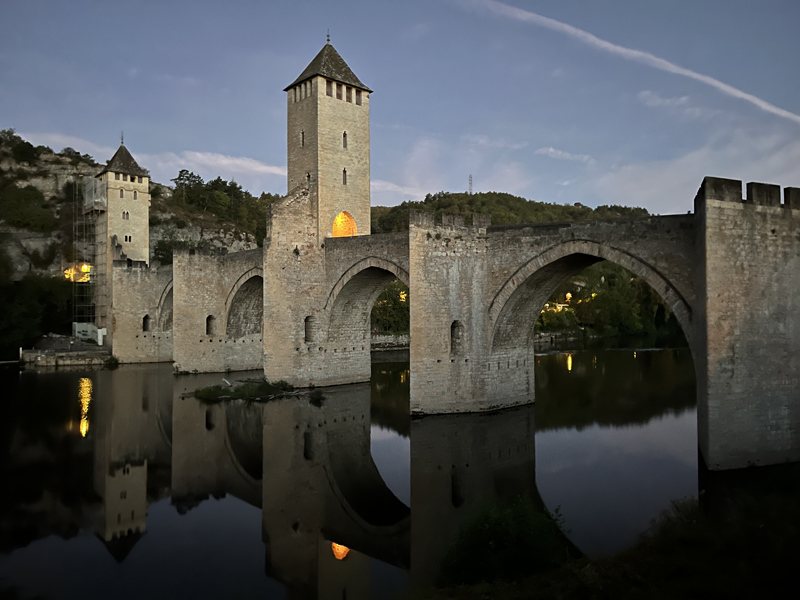
The GR65 goes through rural areas, but also passes beautiful villages and historic towns, usually located on the river and with a castle as defense.
.
The GR65 goes through rural areas, but also passes beautiful villages and historic towns, usually located on the river and with a castle as defense.
.

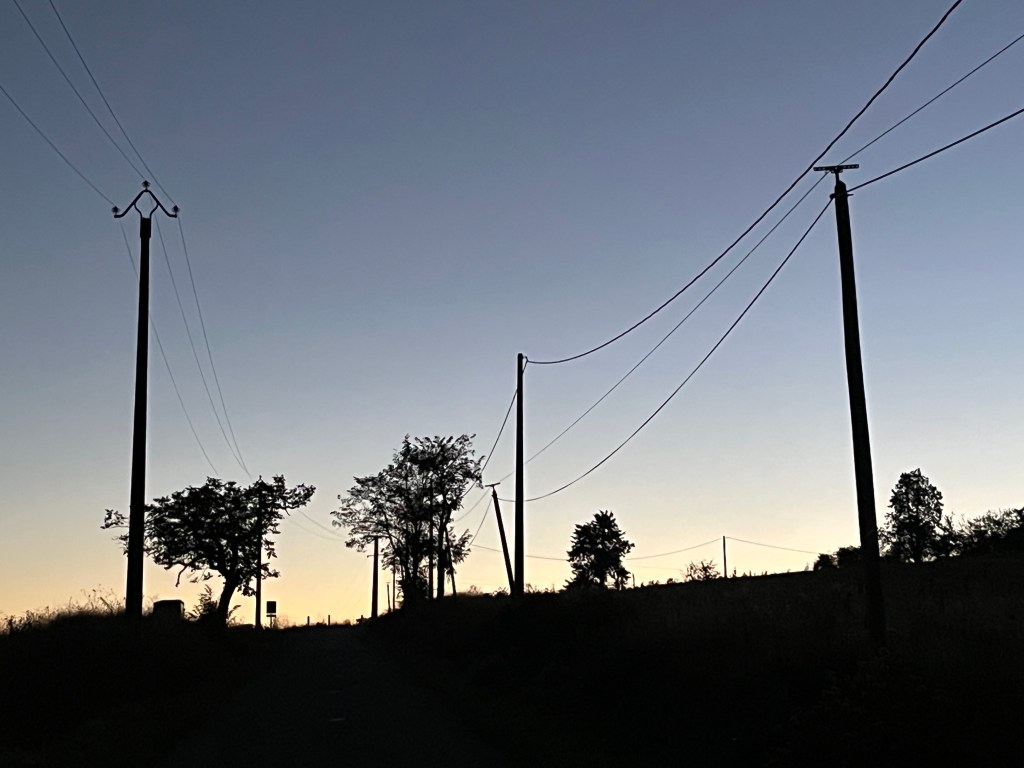
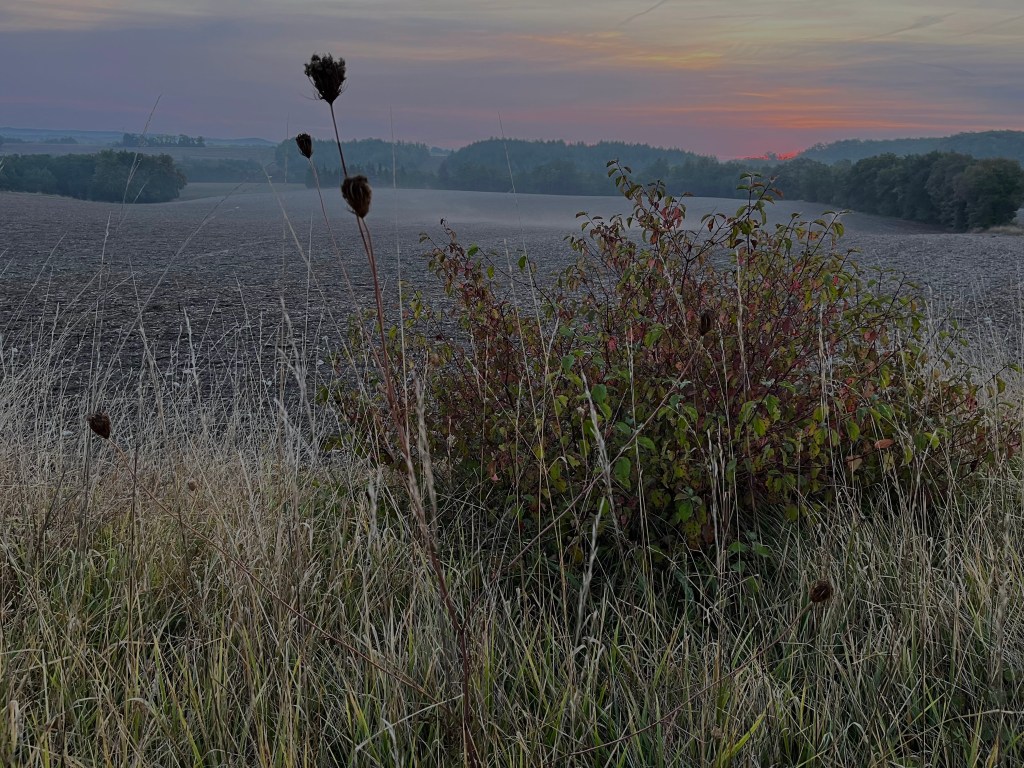
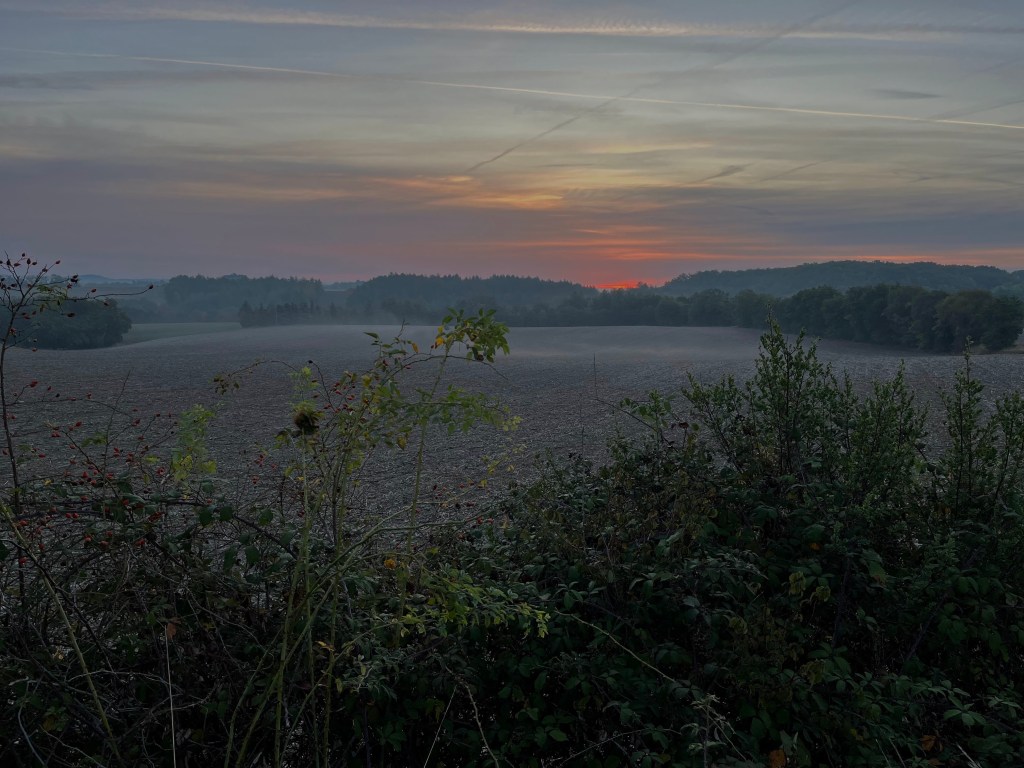
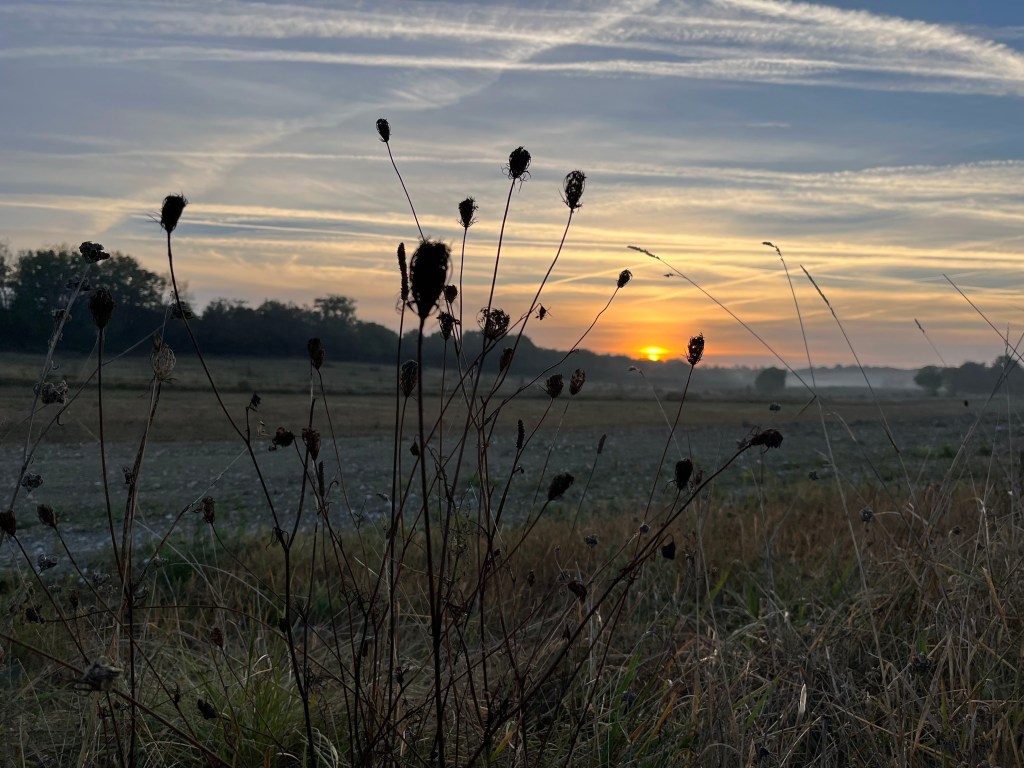
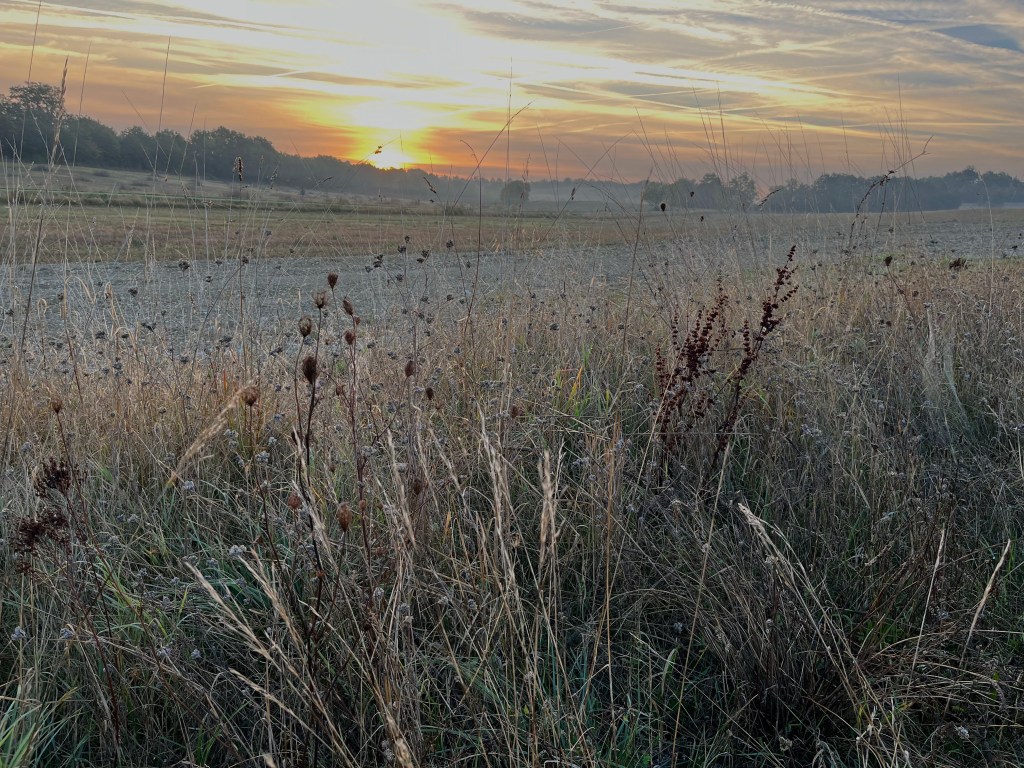
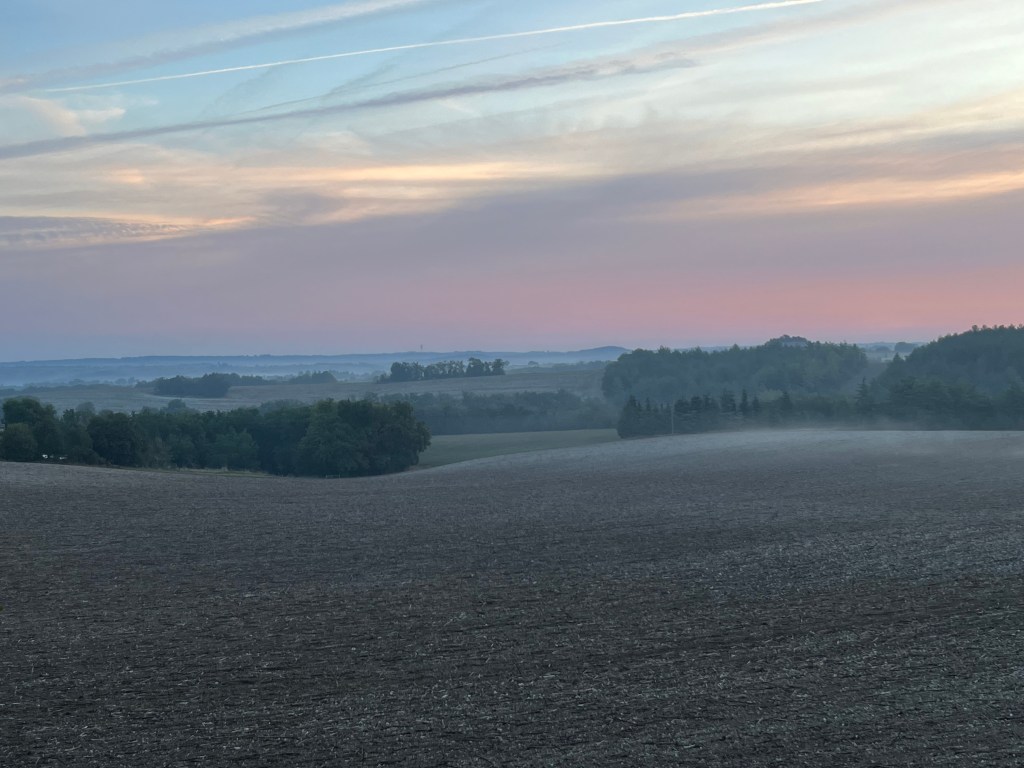
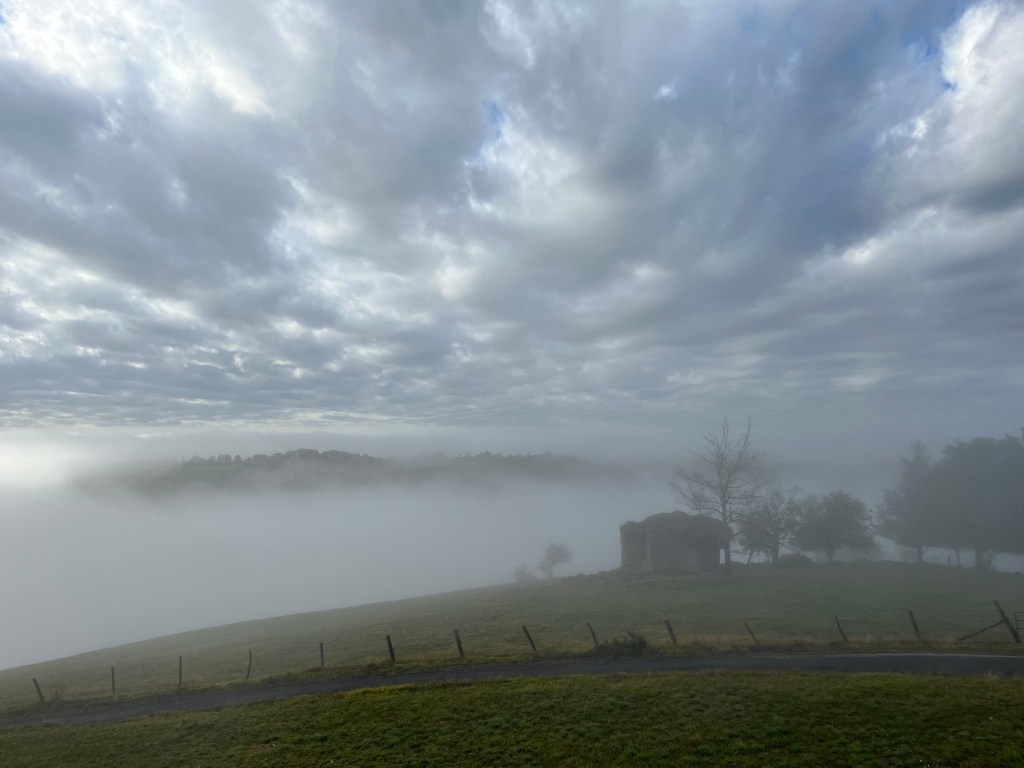
It’s the end of September, but it is still so warm in the afternoon. That’s why we decided to leave very early in the morning. A few times we left before 7 a.m.; still in the dark. Watching the stars and the moon and hearing the owls calling. So special to see it slowly become light.


.
“if we were meant to stay in one place, we ‘d have roots instead of feet”
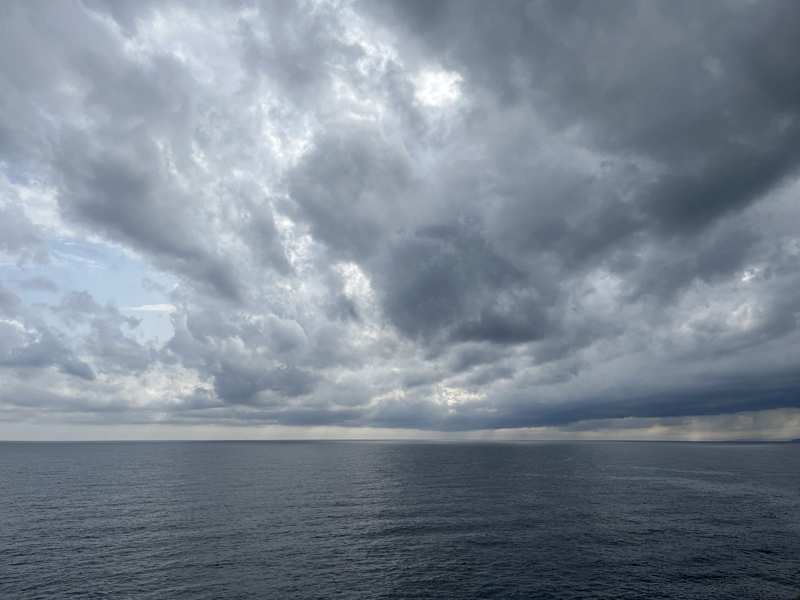
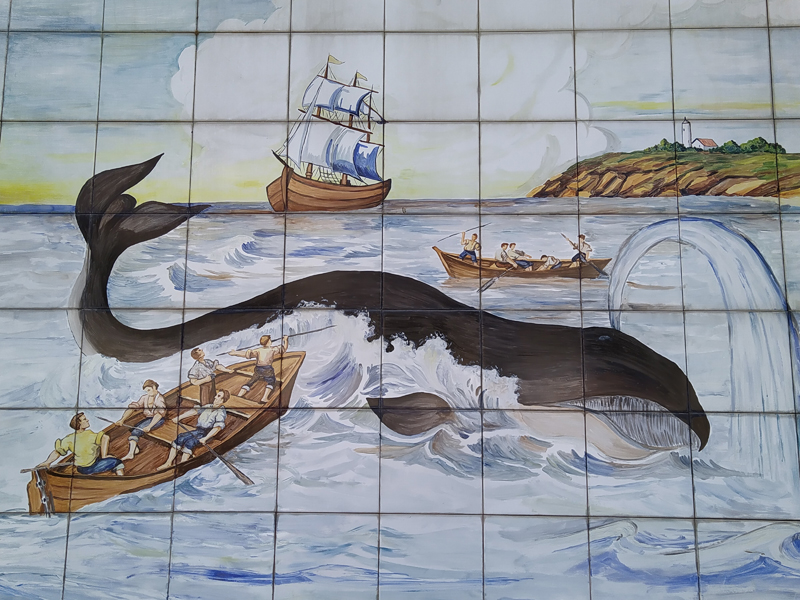
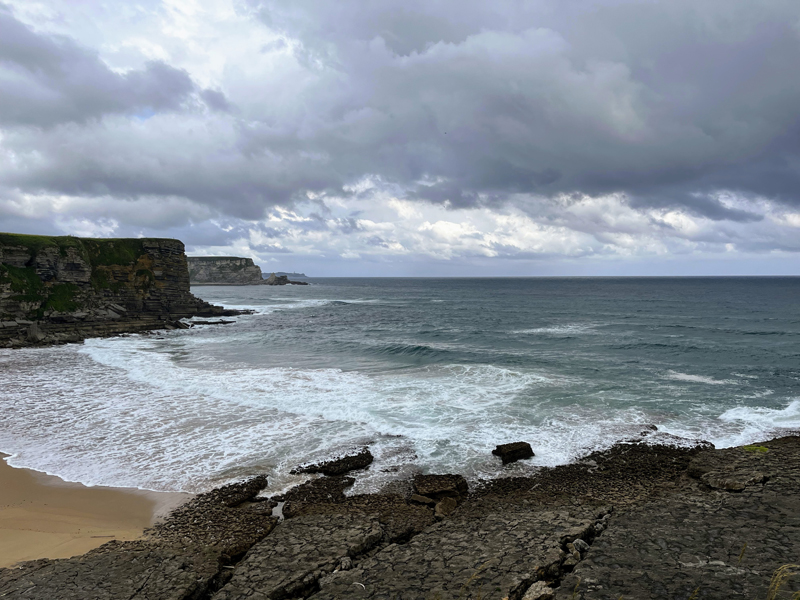
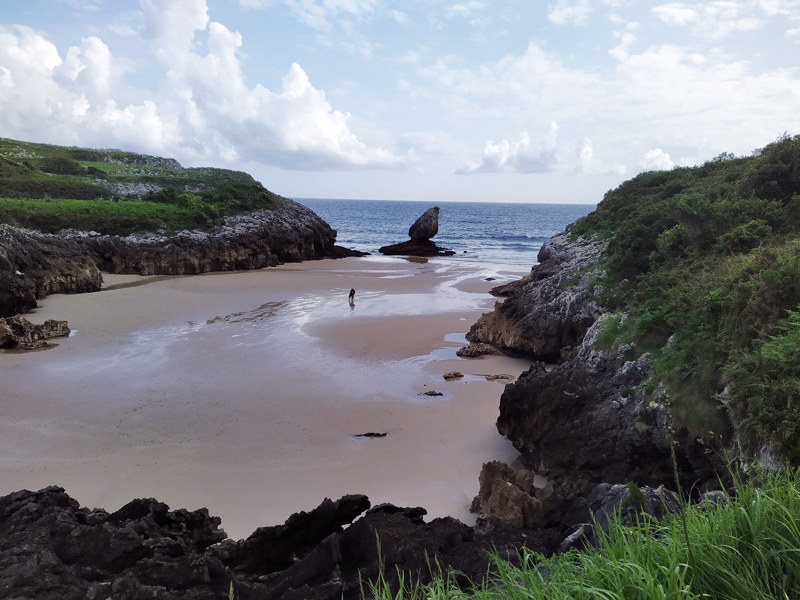
Walking the Camino del Norte is walking along the ocean, along the Bay of Biscay, or in Spanish the Golfo de Vizcaya. The vastness, the infinity of the ocean, and the light attract us. The coast on the north side of Spain is rugged with cliffs and coves. The influence of the water on the stone of the rocks, over the centuries, is visible everywhere. The ocean is deep (4 km) and is the habitat of dolphins, sharks and whales.
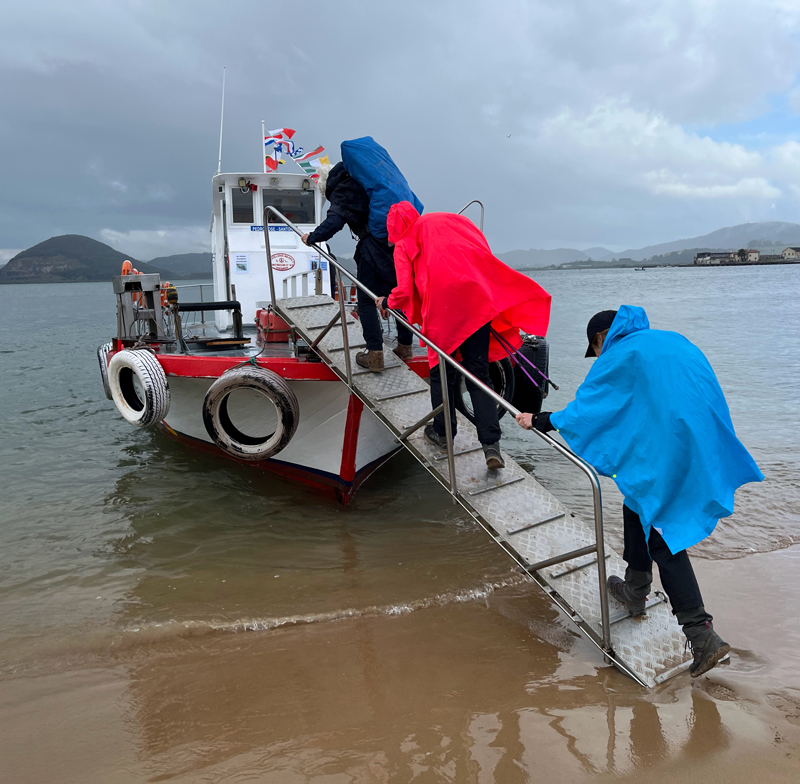
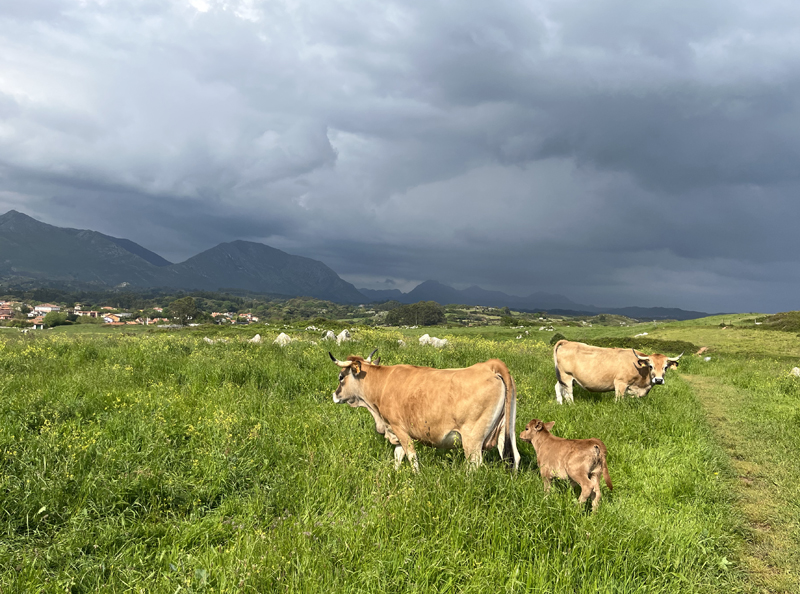
Asturia and Galicia are green and that is because of the north-westerly wind that brings rain from across the ocean. A raincoat or poncho are therefore no luxury.
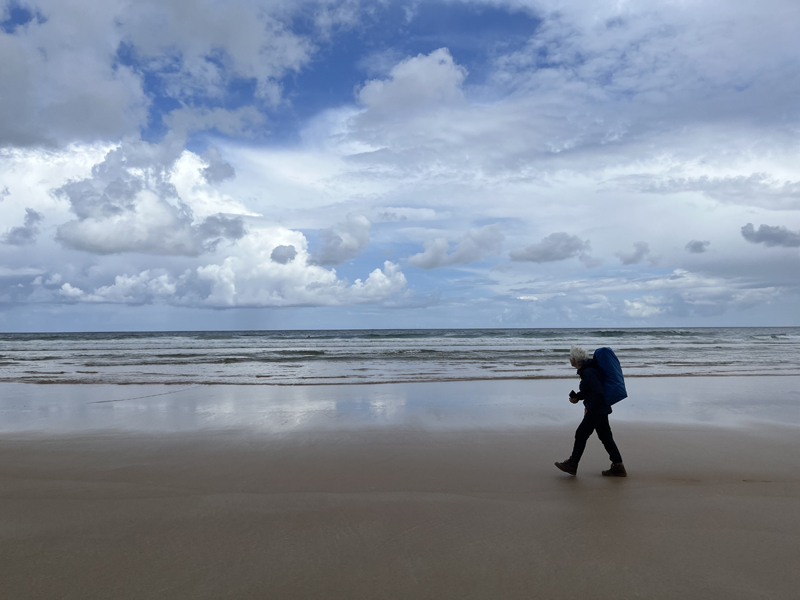

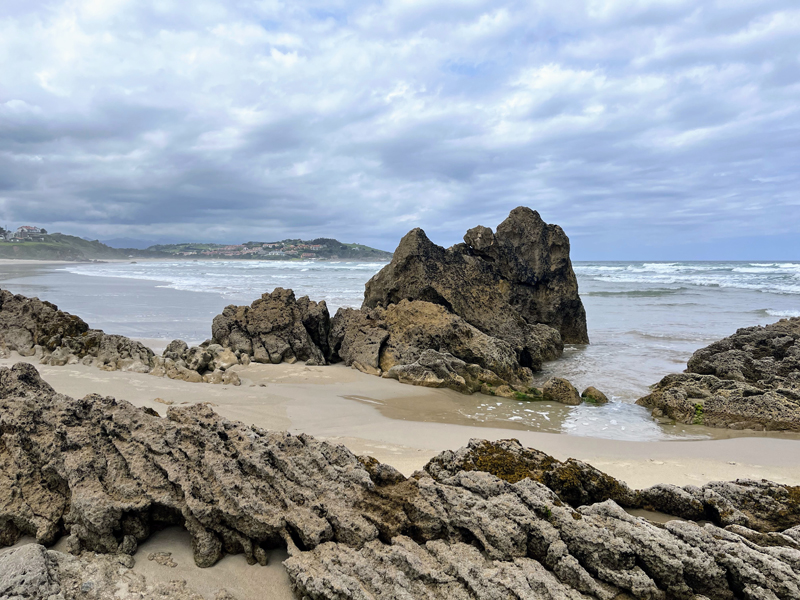
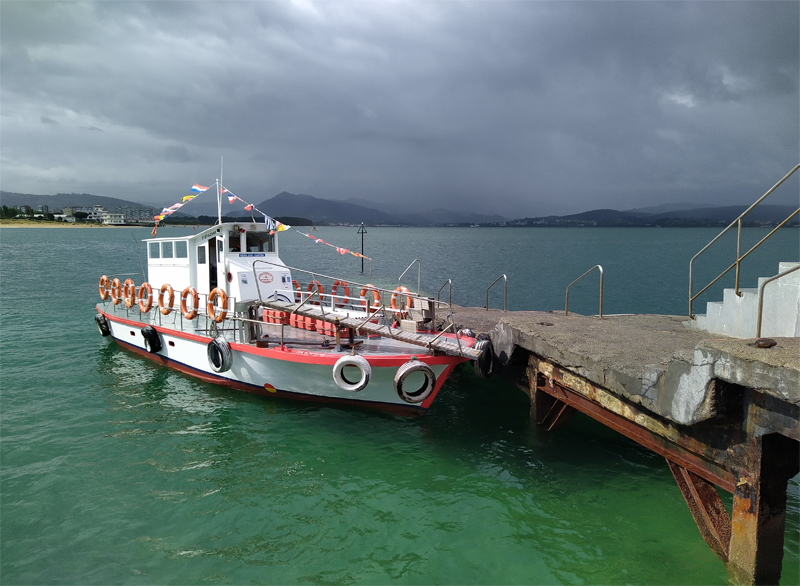
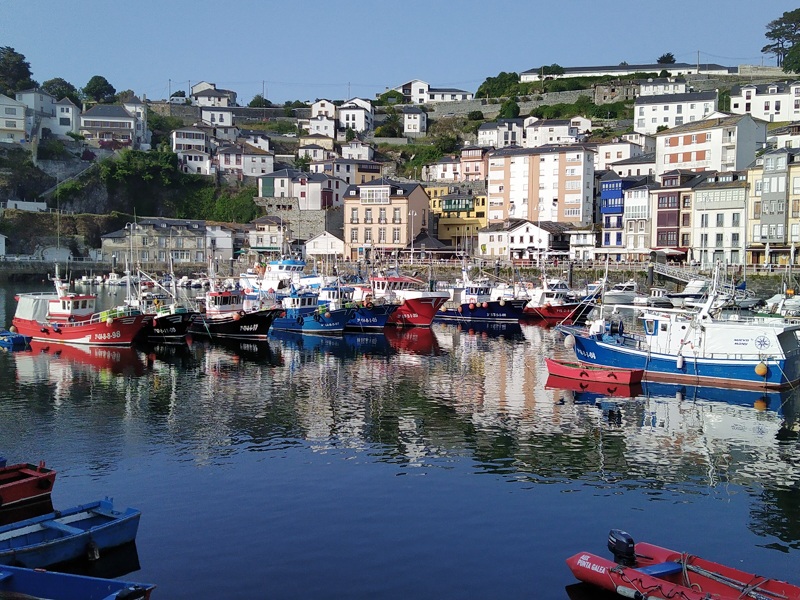
The coast is so different from the dune coast of the Netherlands. It’s not like you walk in straight lines. There are rifts and deep coves that you have to go around or sometimes have to cross with a small ferry. Sometimes you walk on the beach, then higher over a cliff. The fishing villages, with their ports, are located around bays.

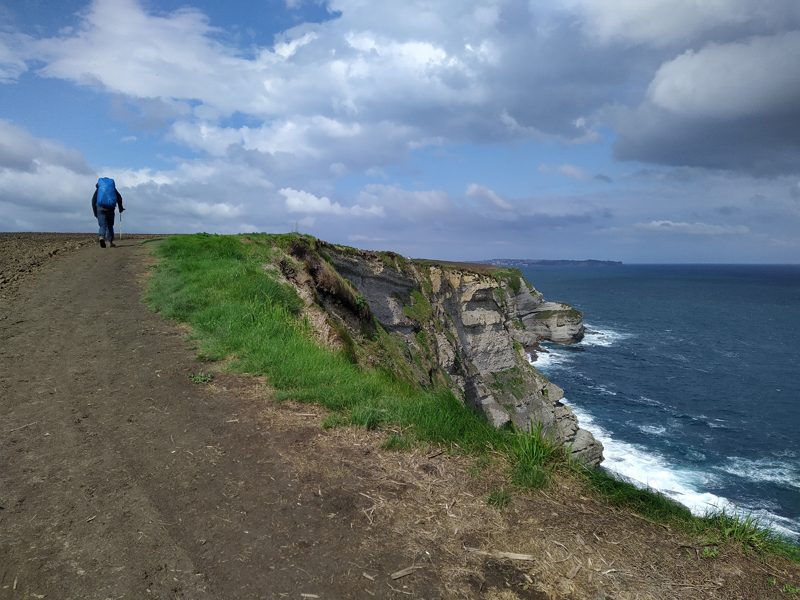

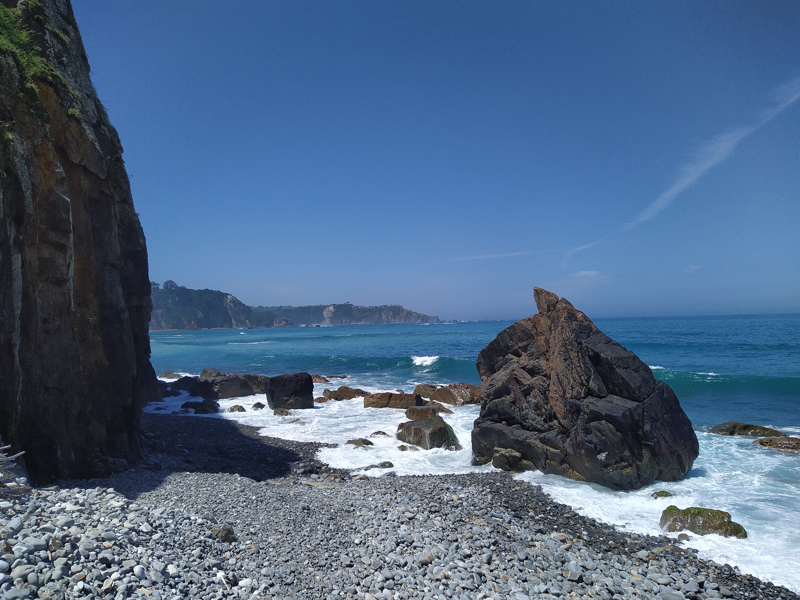
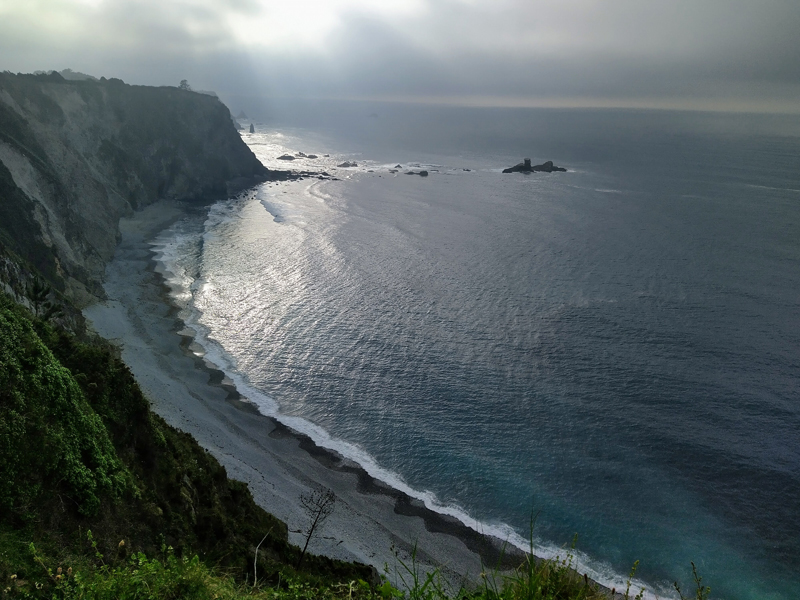
The Camino del Norte starts in Irun. We started in Bilbao. And walked to:
Castro-Urdiales, Laredo, Güemes, Santander, Santilliana del Mar, Comillas, San Vincente de la Barquera, Colombres, Llanes, Nueva, Ribadesella, Colunga, Villaviciosa, Gijon, Aviles, Muros de Nalon, Cadavedo, Luarca, Vilapedre, la Caridad, Ribadeo.
From Ribadeo we walked south-west to Santiago de Compostella.

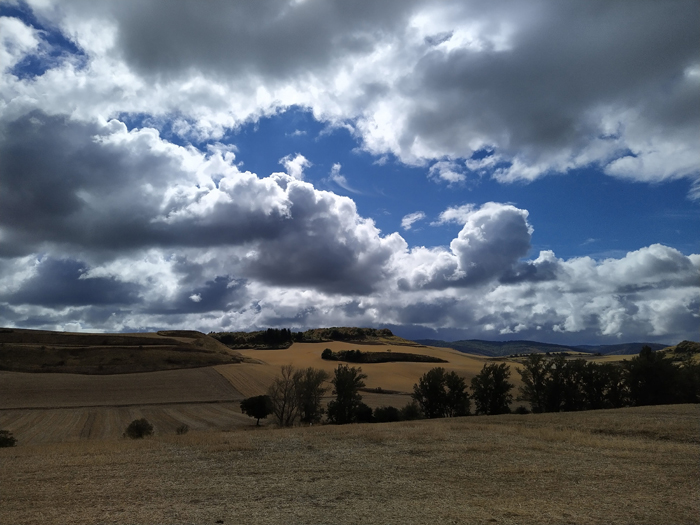

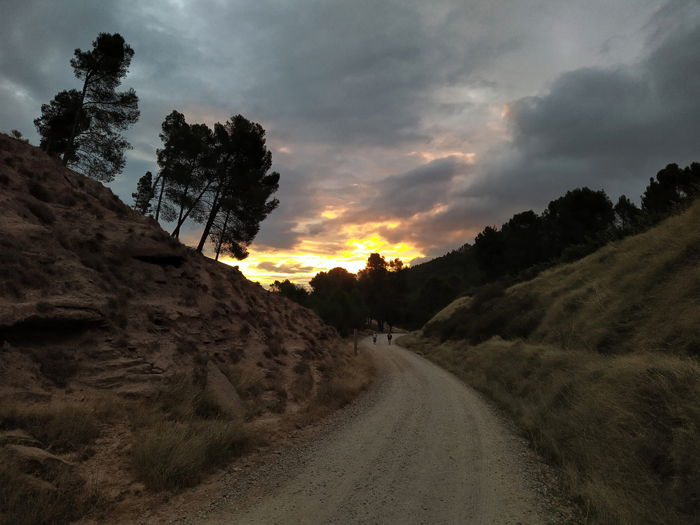

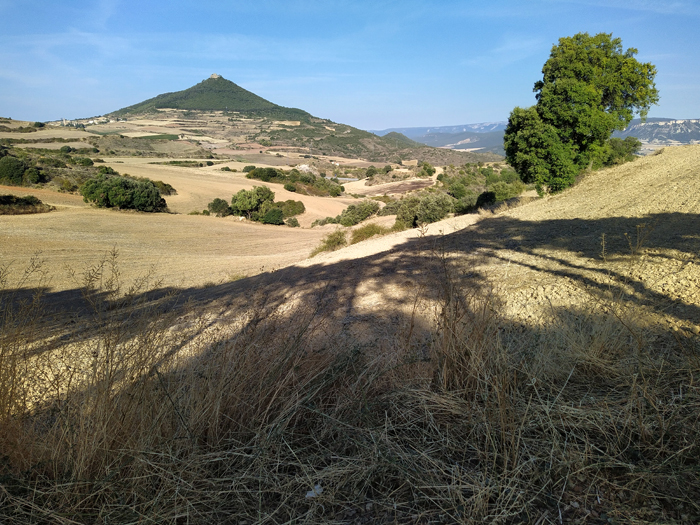
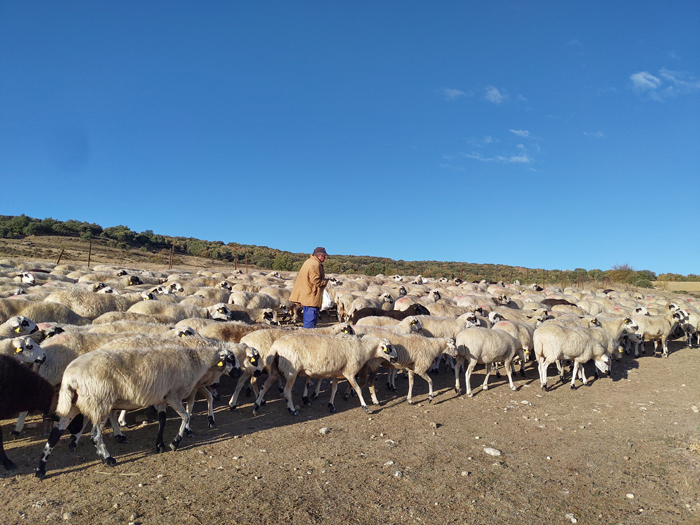

How nice it is to walk in an area that is so completely different than we are used to at home. We look sharper and notice how beautiful the light is.
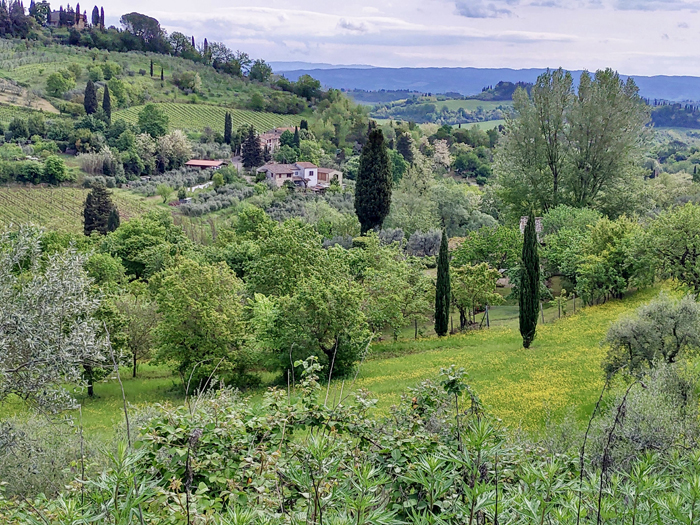
In Tuscany we walk between the Apuan Alps and the sea. Vineyards have been laid out on steep slopes. There are the imposing marble mountains of Carrara, with the stark white marble that was already loved by Michelangelo for his sculptures.
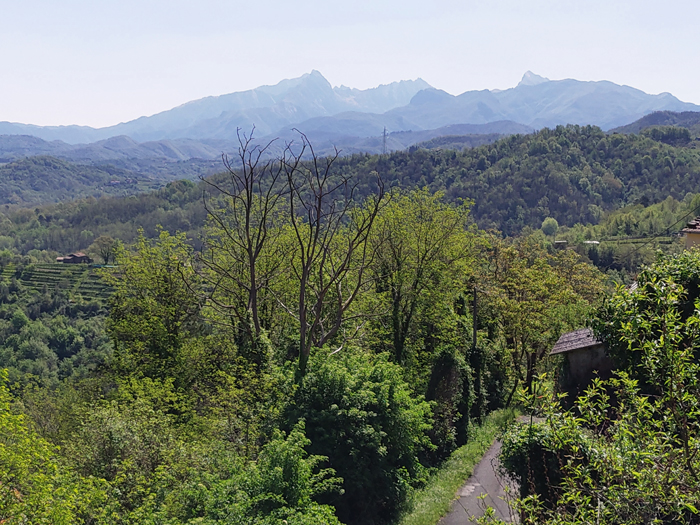
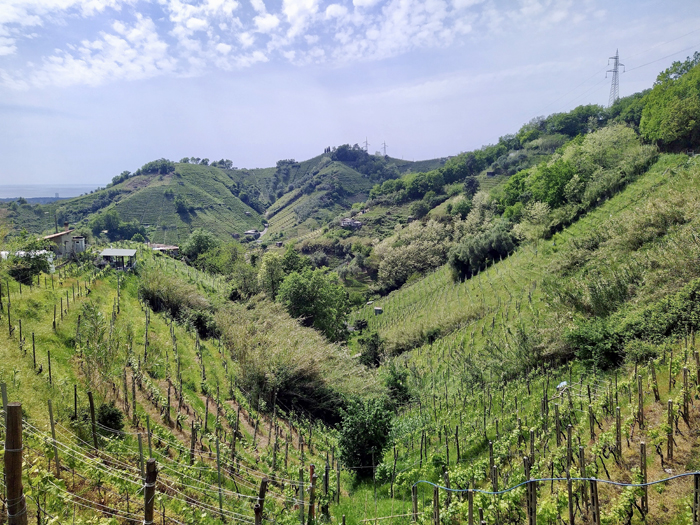

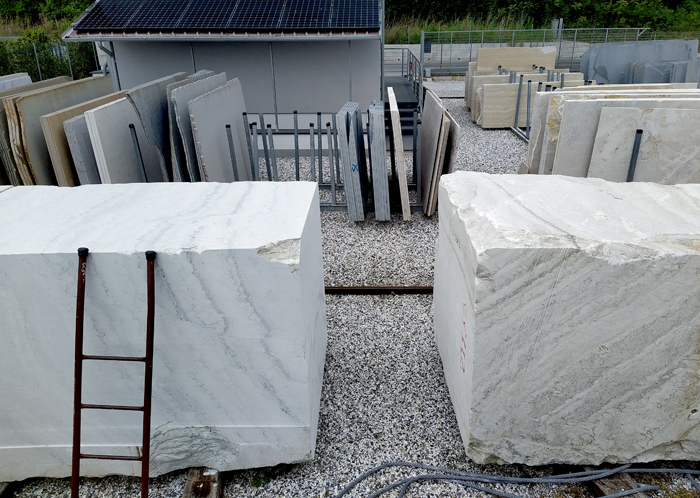
We spend the night a few kilometers before Pietrasanta. It is raining and it is ugly. But we are staying in a little oasis; agroturismo. When we walk to the town later in the afternoon to have dinner, the sun is back. And Pietrasanta turns out to be a nice artist town full of sculptures, with galleries and workshops. On a terrace we drink a nice glass of wine, with a tagliere misto.

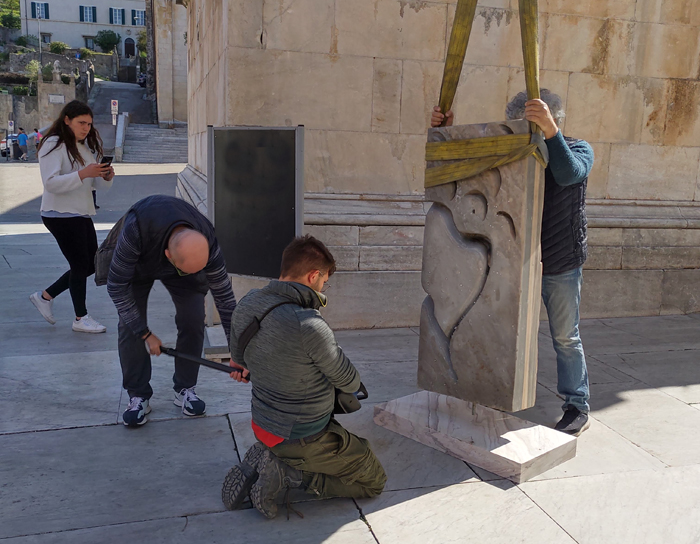
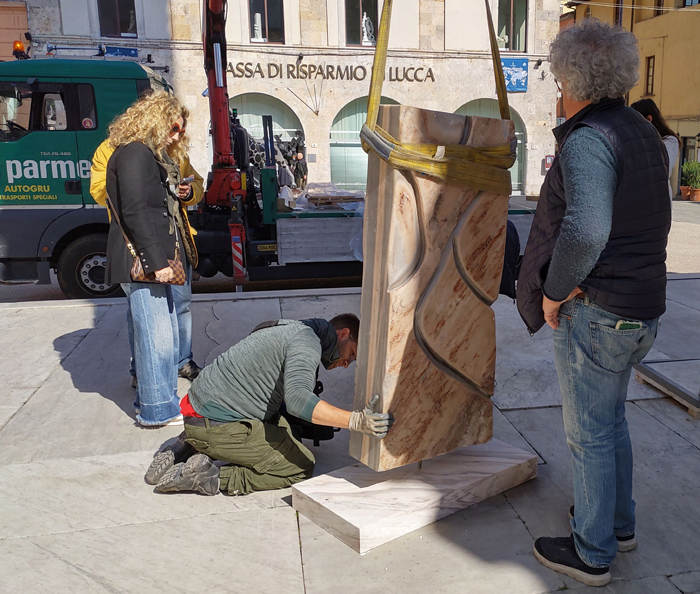
The next morning we walk through the town and we see a new work of art being placed on the Piazza Duomo.
.
.
.
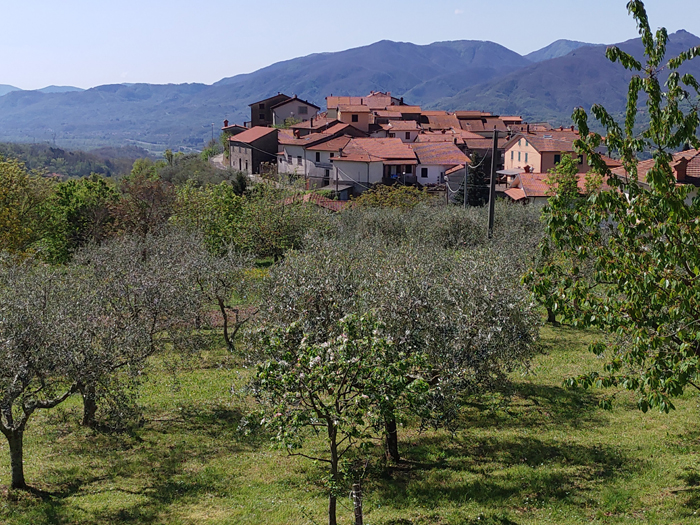
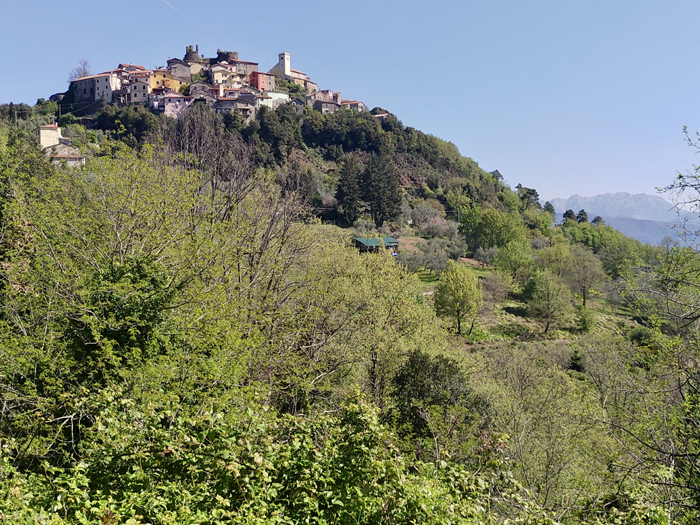
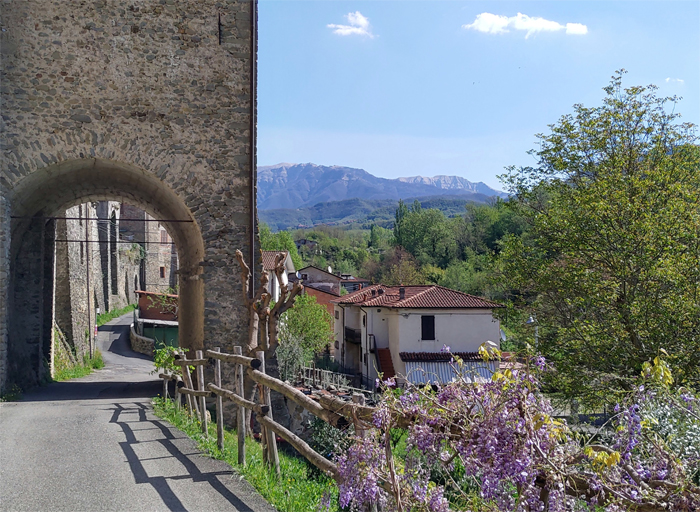
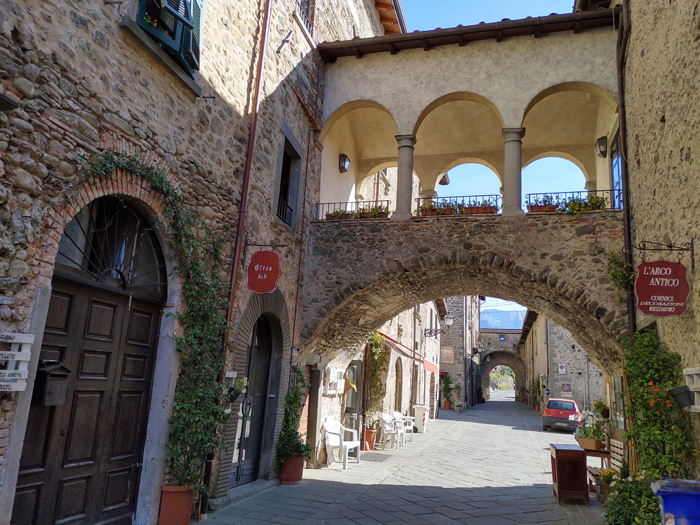
We walk through the northern Tuscan mountains. The weather is clear, the route is sometimes tough and leads past high-lying mountain villages, such as Pontremoli, Filetto, Sarzana, Aulla …
In Aulla we slept at Bike and Bed, a few kilometers outside the town of Aulla. We thought we could borrow a bike to go to the restaurant in town. But no, no way. We were brought by car. Also walking back after dinner was definitely not an option. We were warned for a long and tough stretch the next day with steep climbs over the mountain. And we had to be equipped for that.
We were picked up after a phone call. Fortunately together with two other guests.
Lees ook:
Via Francigena van Parma naar Siena – A
Via Francigena – Valle d’Aosta
Cherry picking op de Via Francigena
.
.
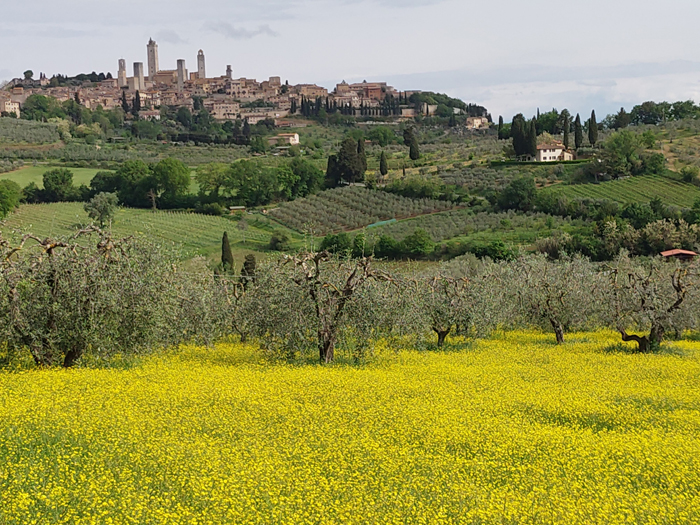
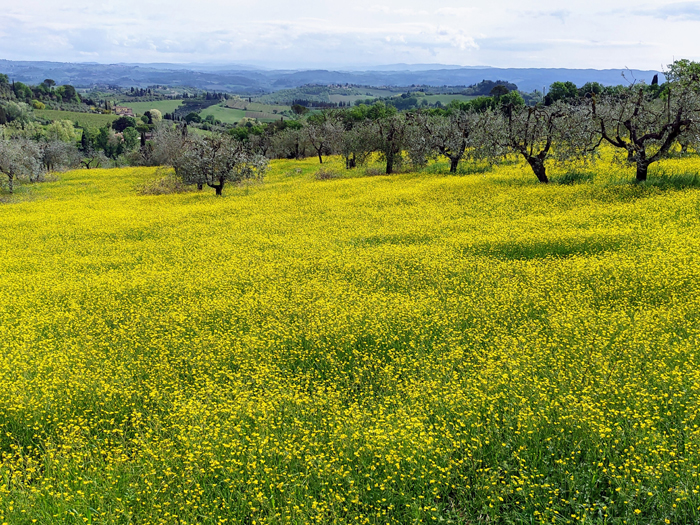
For the third time we walk part of the Via Francigena. We travel by train from Bologna to Parma where we start the day after, the walking tour. It is true that we walked part of the route earlier. In March 2019 we walked from Lucca to Siena. It was still early in the season and the fields were still bare. Now there are flowers everywhere, flowering hawthorn, poppies and buttercups. The vines have their first leaf… We notice that the hiking season has started; we meet many more people; French, Swiss, Canadians, Finns…
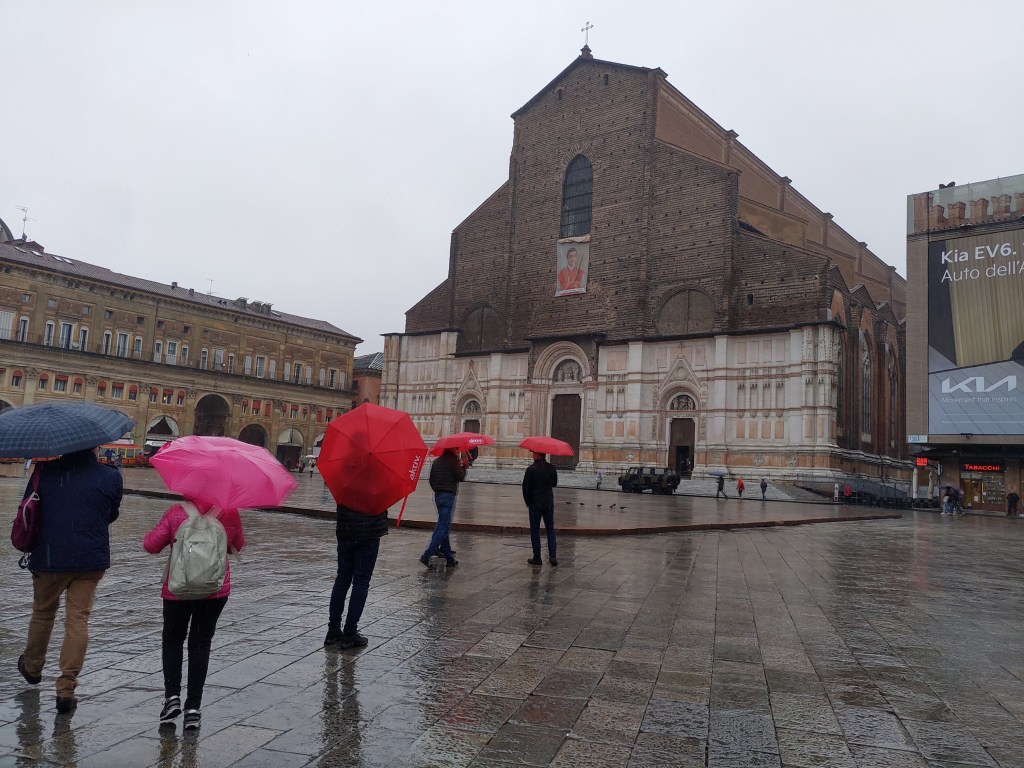
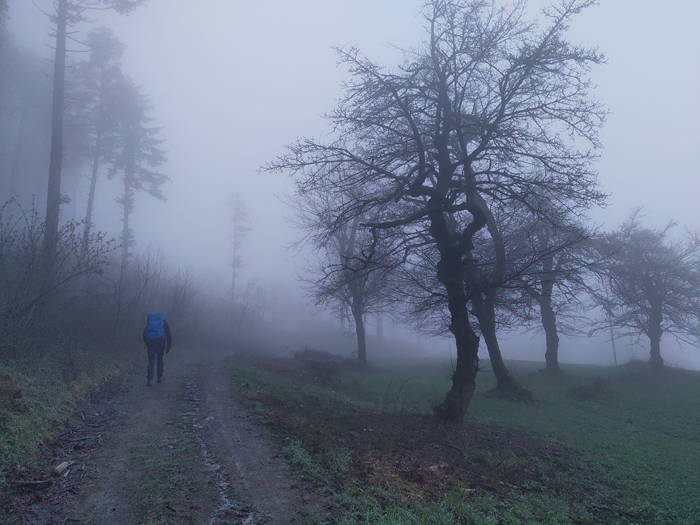
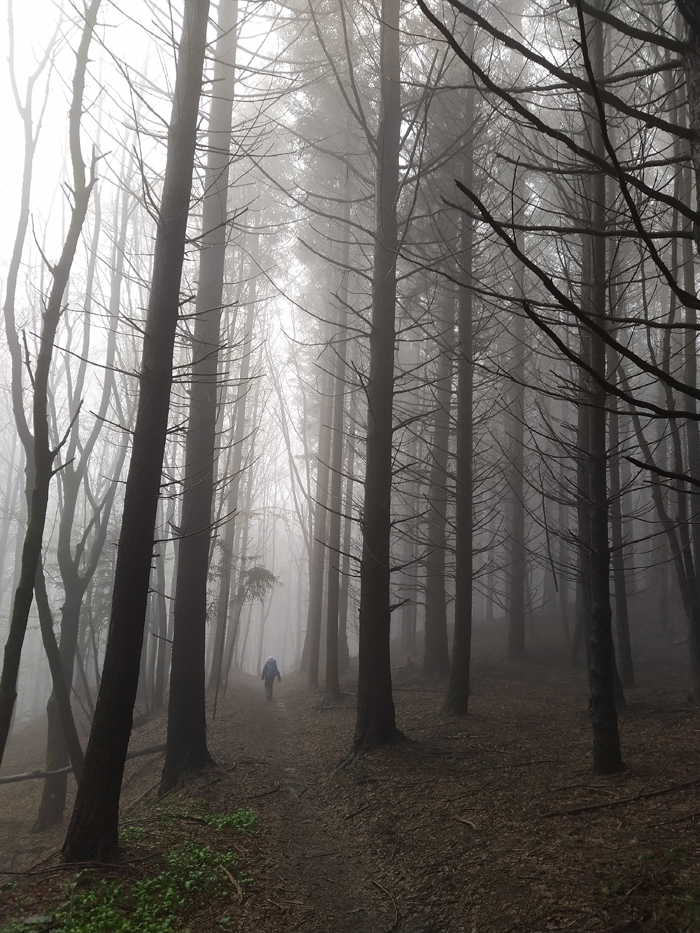
It has been dry for a while. But when we arrive in Italy it rains. The farmers are happy. For us, it’s not quite what we hoped. And yet it’s not just annoying. In thick fog we cross the Apennines via the Passo della Cisa. The highest point is formed by a wide bare ridge. When the weather is clear, we must have had a magnificent view of the landscape. Now we can see no further than a few meters. It is blowing and raining hard. Slightly descended we come to the pass. The restaurant is closed, but the shop with local products is open. Tired of clambering through the mud, and cold and hungry, we go inside to buy a sandwich. Freshly cut slices of bread, topped with mountain cheese… Next to the burning wood stove is a bench where we can warm up. There is no coffee, but there is a glass of lambrusco. An Italian living in America, who travels through his motherland out of homesickness, also noticeably enjoys the warming place. For dessert we can taste the real pecorino from the region. It might be our best lunch in Italy.
When we descend after the pass, the view becomes wider. We have reserved an overnight stay at Temperanza in the mountain village of Groppodalosio. We sleep there in the room for pellegrinos. The wood-fired stone stove is burning. They cook for us and the next morning a nice breakfast is ready for us. When we leave, walking over the Roman bridge, the bad weather of the previous day is no longer noticeable.
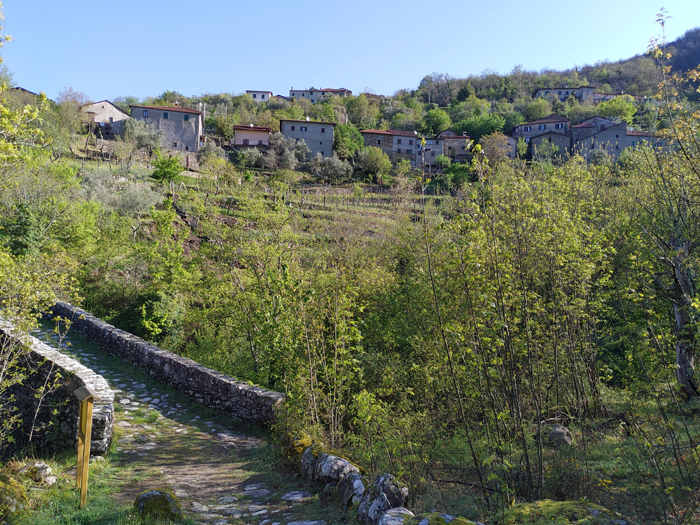
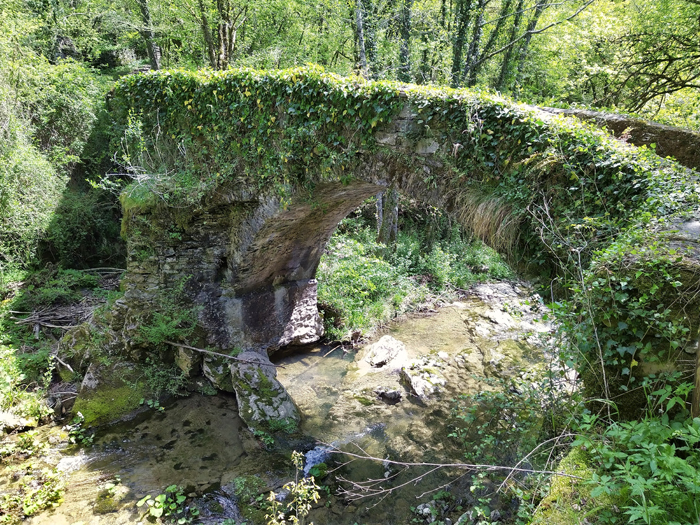
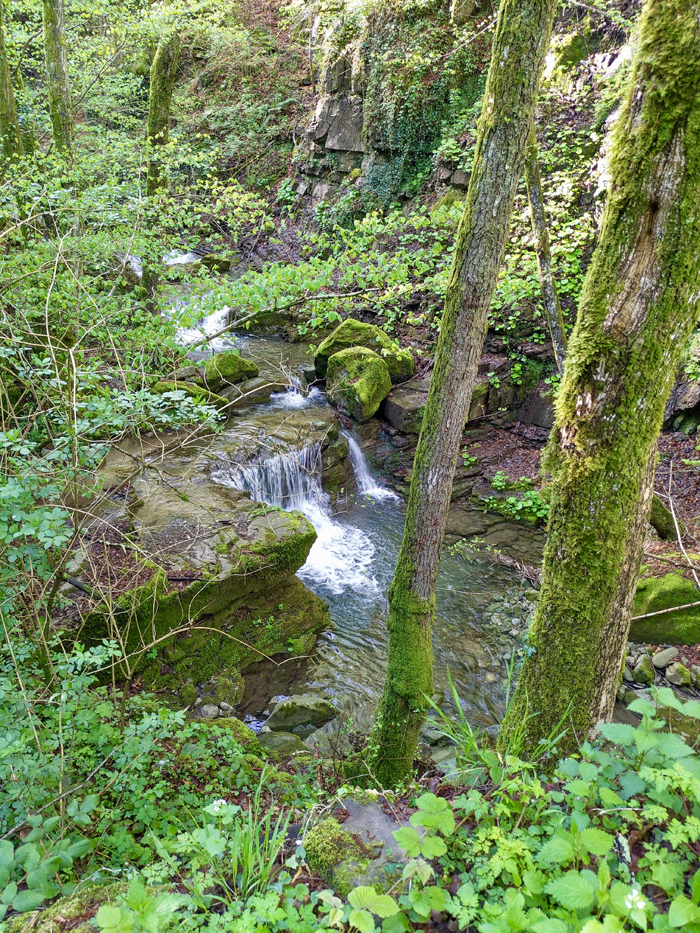
Our route: Parma, Sala Baganza, Calestano, Berceto, Groppodalosio, Filetto, Aulla, Molicciara, Massa, Pietrasanta, Montemagno, Lucca, San Miniato, Gambassi Terme, Gimignano, Val d’Elsa, Siena
and by bus we drove to Perugia where we stayed one last day.
Also read:
Via Francigena – Valle d’Aosta
Cherry picking op de Via Francigena
.
.
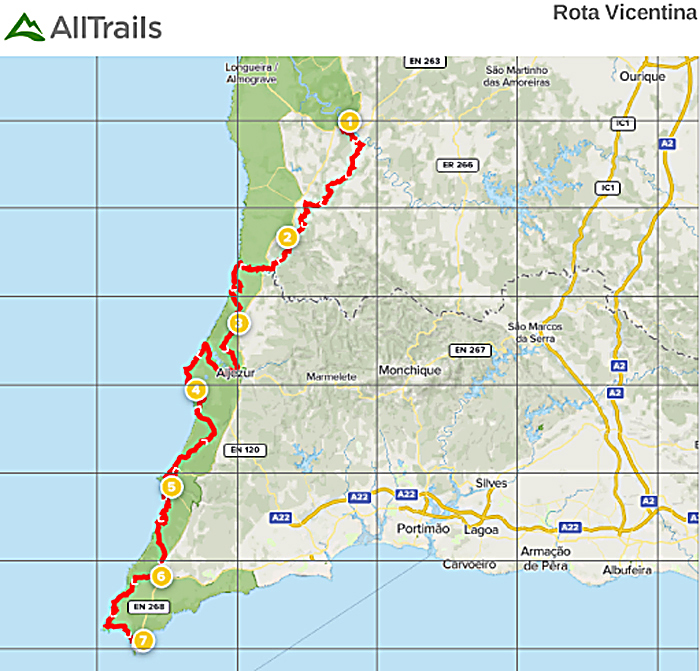
We walk on the Rota Vicentina along the coast of Alentejo in the south of Portugal, to Cabo Sao Vicente, where the lighthouse is; on the extreme southwestern tip of Europe.
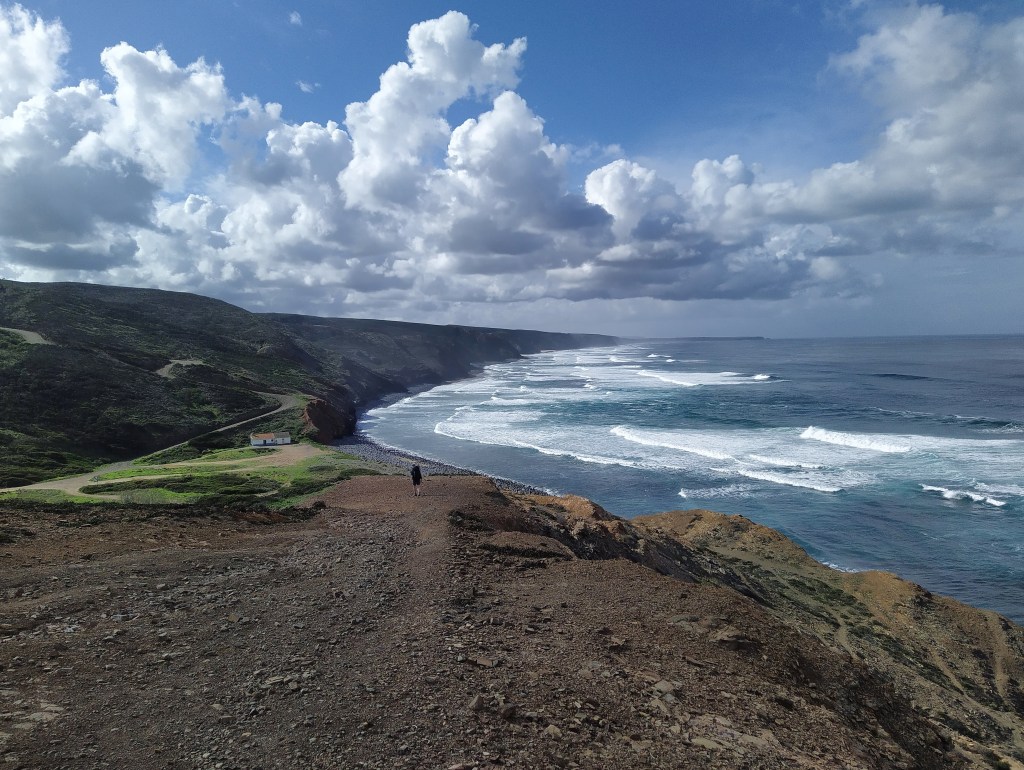
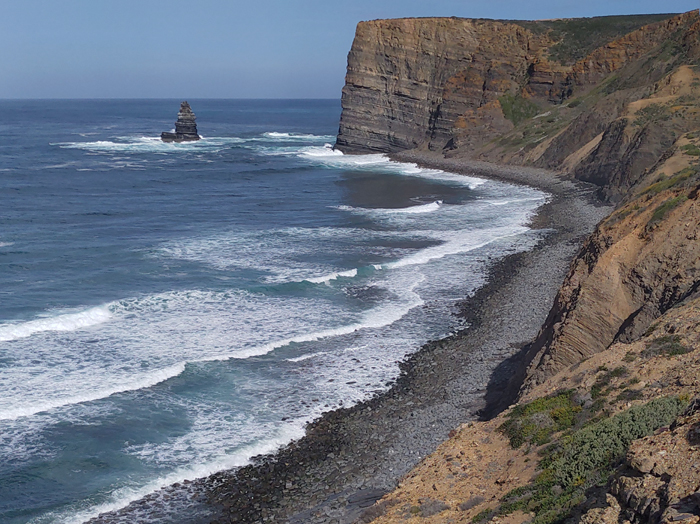
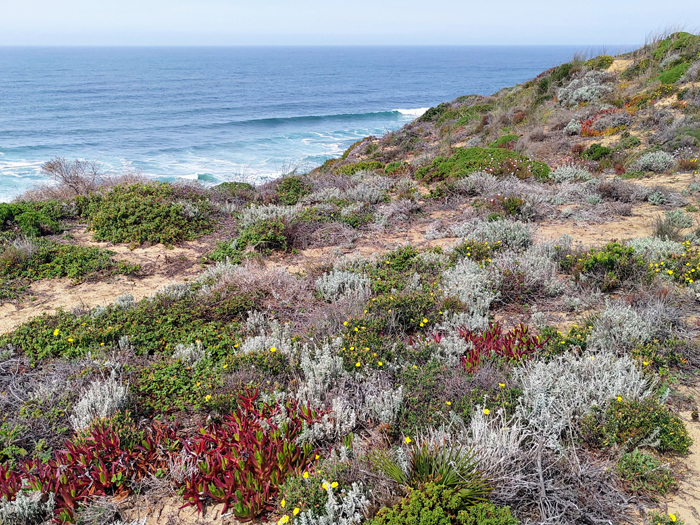

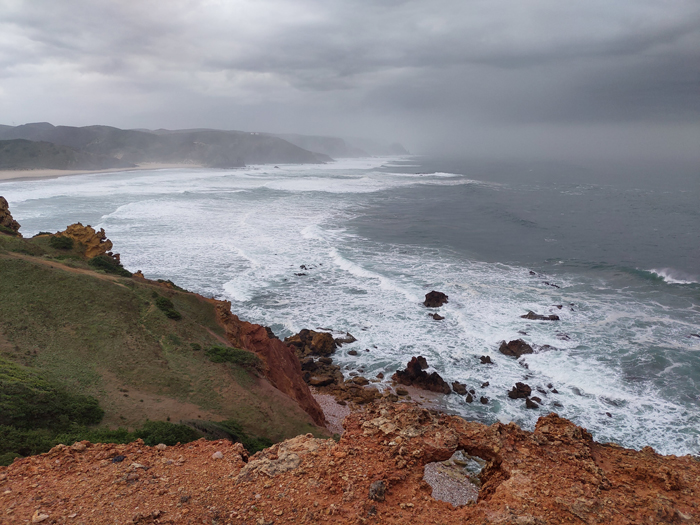
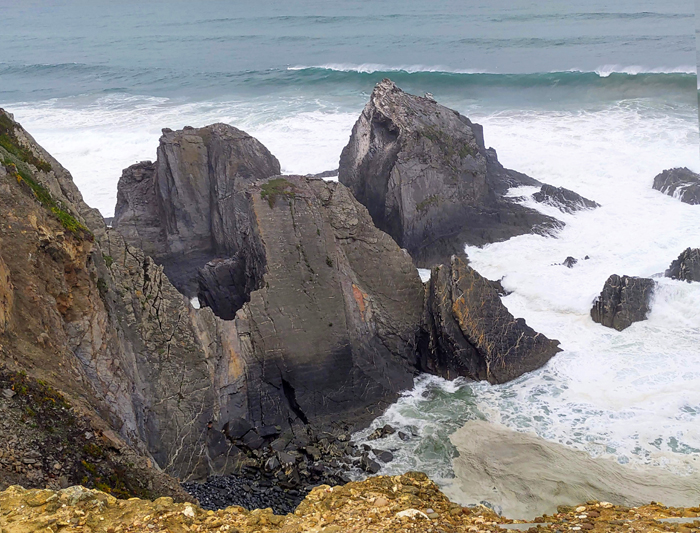
The Rota Vicentina is not an unambiguous path like the old pilgrimage routes. The trail runs over the rugged cliffs along the ocean, where the surf has washed away chunks. There are bays and rifts. The coastal region is a national park and there are hardly any buildings. (no coffee). For our overnight places we have to go inland to the small villages.
Rota Vicentina is a combination of the Fishermen’s Trail and the Historical Way.
Here and there we see campers where surfers stay. There aren’t many now. The ocean is too rough for surfing.
There are no harbors with fishing boats. Fishermen fish with rods, standing high on the edge of the cliff.
The paths over the cliffs are loose and sandy, sometimes descending steeply via a narrow stony path to the beach in the bay before climbing steeply again on the other side and continuing. Inland, to the villages, are dirt farm roads, past fields and cork oaks.
The Rota Vicentina is not a pilgrimage route. Churches are missing. On this route, it is nature, the vastness of the ocean that inspires awe.
We had already prepared this trip weeks ago; and we were looking forward to it.
Shoes on, backpack on and off we go. We walk into the unknown. A different place to sleep every day. Different food, at different times… Another language.
Disrupting habits and rituals of the daily pattern.
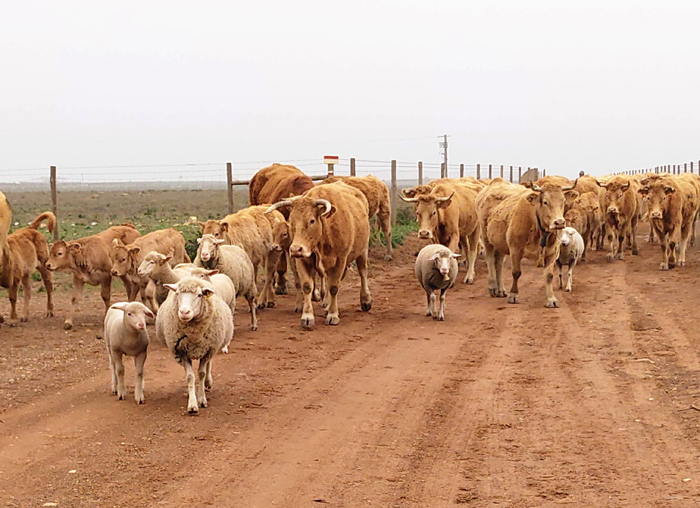

The last leg of the route was strange. The cliffs closer to the cape were rougher. The path was quite flat, but it was full of stones. It stormed. Visibility was bad. The lighthouse was barely visible. And the sky was yellow. Everything was yellow. Sahara sand!
Also later, at home, we saw the sand on the windows. From thousands of miles away…
It shows that everything is connected.

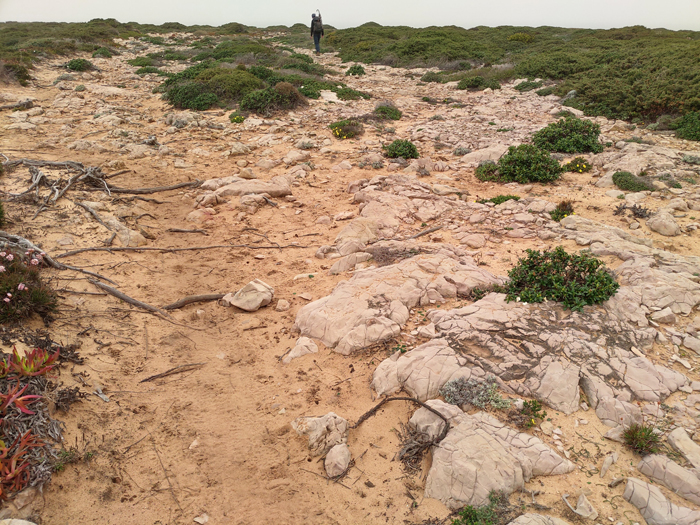
Odemira – Sao Teotonio – Rogil – Arrifana – Carrapateira
Vila do Bispo – via Cabo Sao Vicente naar Sagres
.
.
.
.
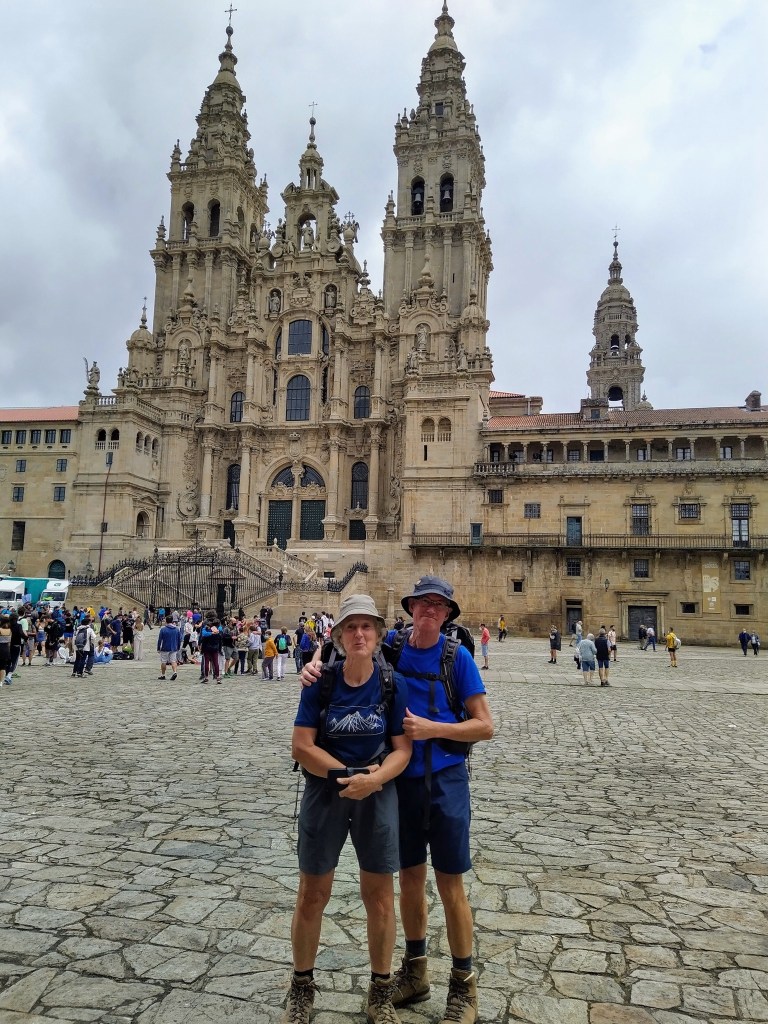
July 24. We are here; in Santiago de Compostela.
Today is a weird day. We can leave early, after a delicious breakfast. It is heavily clouded and after a few kilometers we have to retrieve a rain jacket from the backpack.
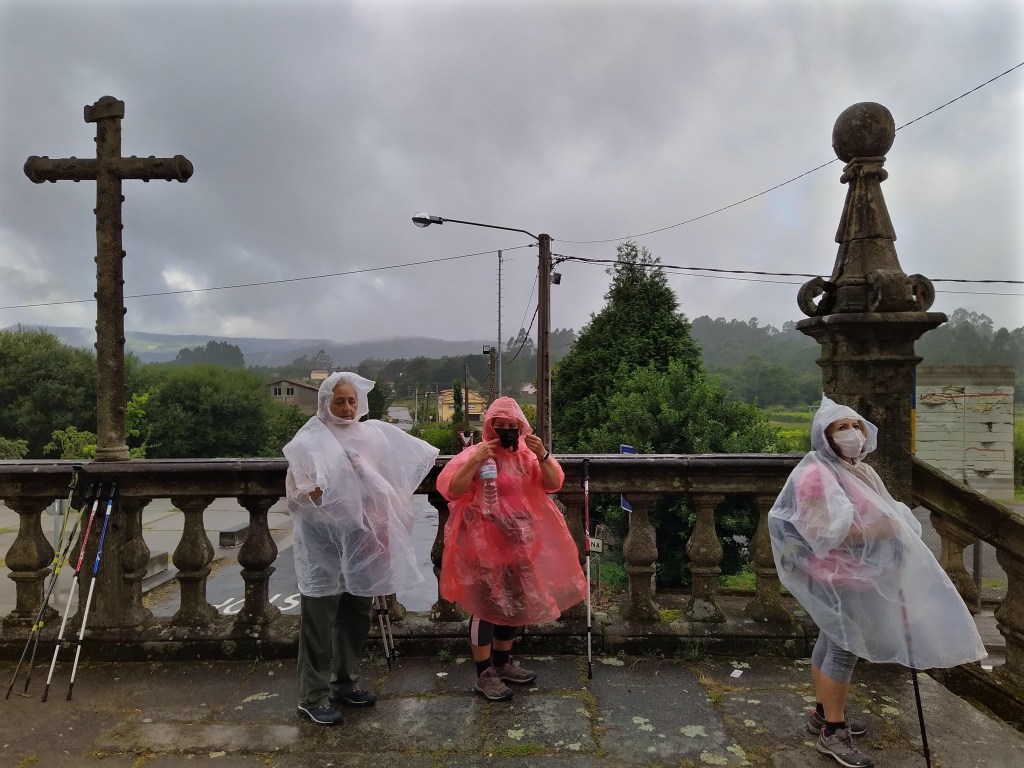
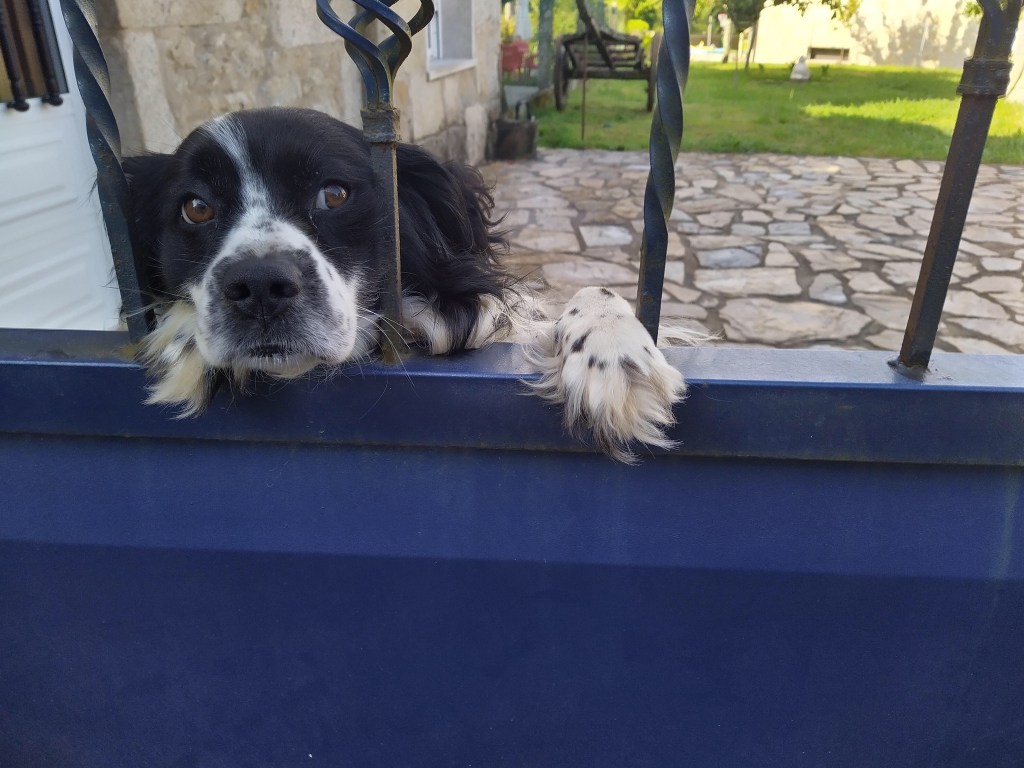
The route meanders through small towns, gardens and hilly forests. There are dogs that bark hoarsely at every passer-by, but this dog looks calm.
Today there are always people in front of and behind us. The last part of the route, when you walk along highways and suburbs, is tough. We also have to climb a bit. And then suddenly there is the old town. It is busy. We walk to the large square in front of the cathedral. We are here.
We hang around for a while until it starts to rain.
After bringing the backpack to the hotel, we walk back. The weather has gotten better. There are small performances. That a lot of official things will still happen is shown in the amount of armed police and the circling helicopter.
But everything remains calm: the atmosphere is festive. When we are in the hotel room at midnight, we hear the fireworks.
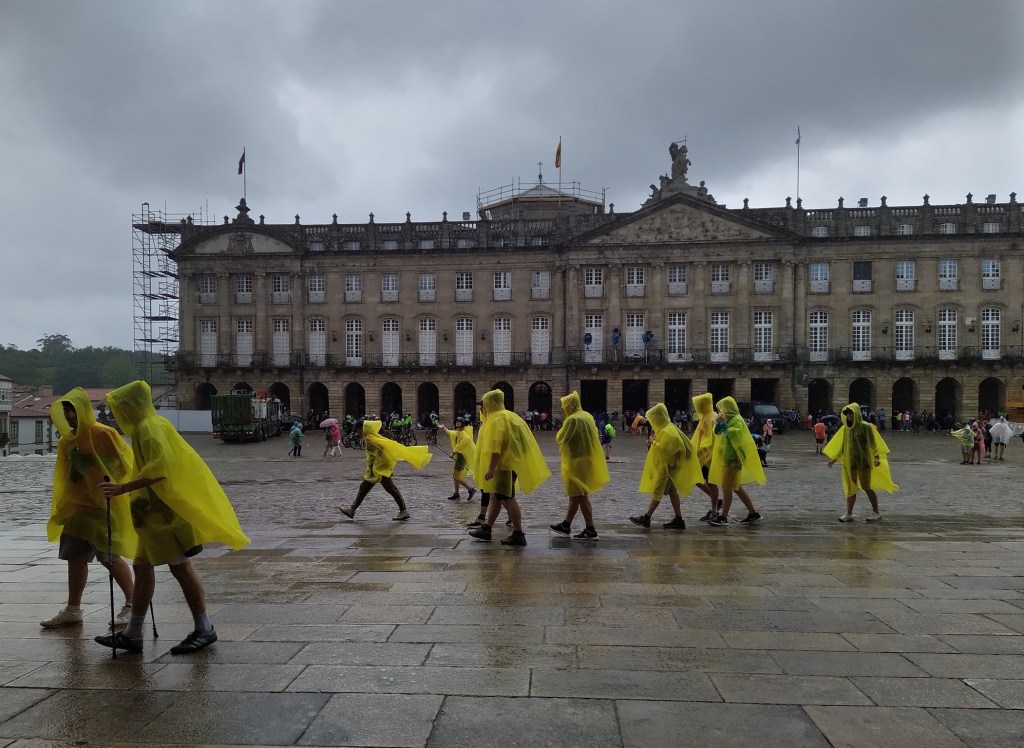
Os Lambrans – Santiago de Compostela 25 km. 21°C. Cloudy, with showers
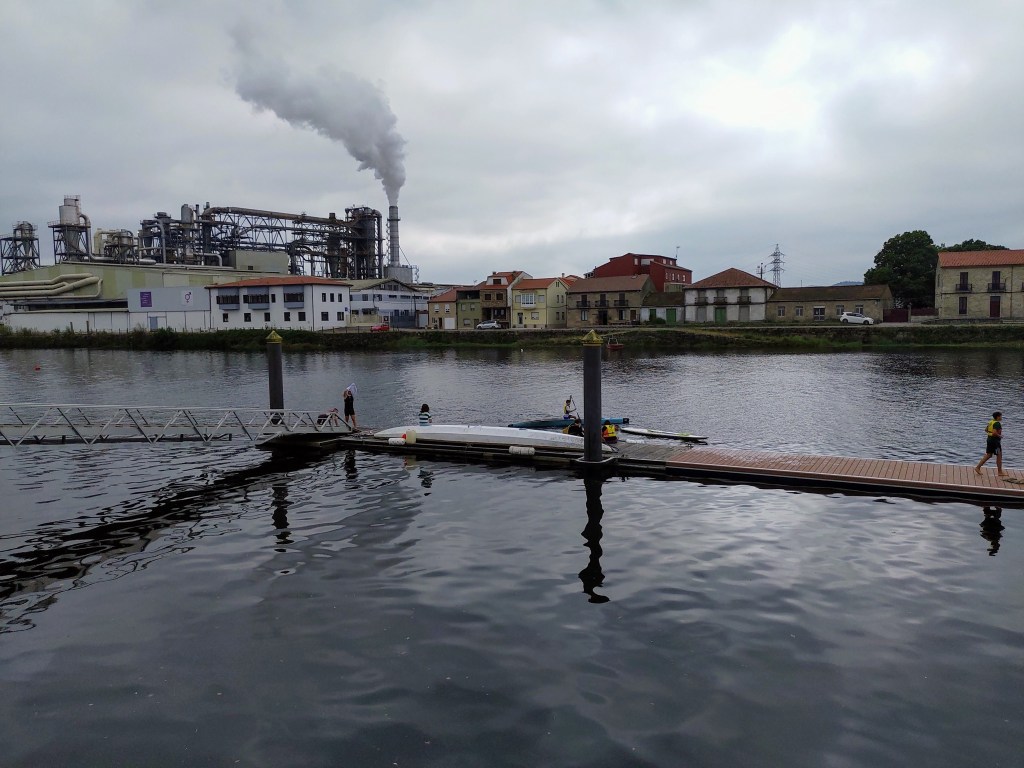
We have a nice room in a renovated old house just before the town of Padron. Looking out the window we see geraniums and a large spruce. When we walk outside after an hour, we see that the tree obscures our view of the factory on the river. There are children in and on the water having kayak lessons. Cheerful and unconcerned about the factory’s emissions. We also become aware of the constant humming noise of the factory.
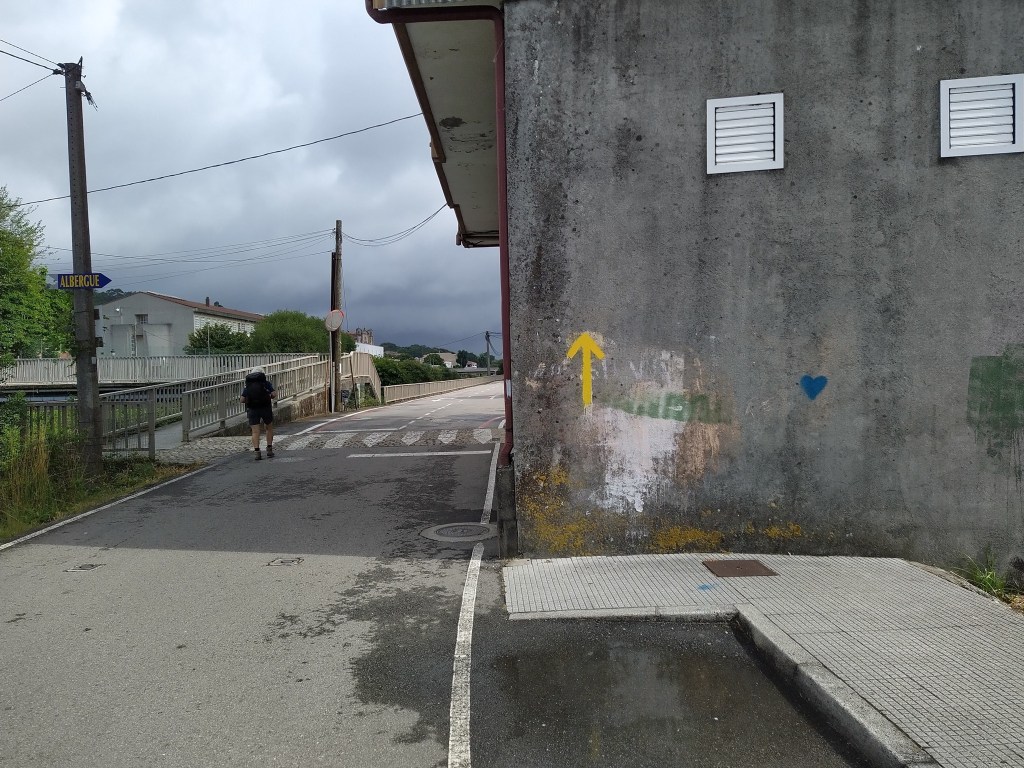
We walk to Padron through a desolate environment. The distance is disappointing. Fortunately, we decided to continue walking. The old town of Padron is nice. And in the end we can eat delicious: Pimientos de Padrón as an appetizer and a delicious Paella as a main course.
Today (Friday) we have a quiet day. Santiago is in sight. Many walkers are walking there today so that they can be at the cathedral early in the morning. We’re going there tomorrow.
Saturday 24 July is the big holiday. It is the birthday of San Tiago, of Saint James. And all the Spaniards who now walk the Camino are walking to attend that great day. It was a surprise for us when we noticed that our arrival day in Santiago coincides with this big holiday. We already discovered it at home, when we tried to book a hotel room. Everything seemed full. Fortunately, we were eventually able to find a place to stay.
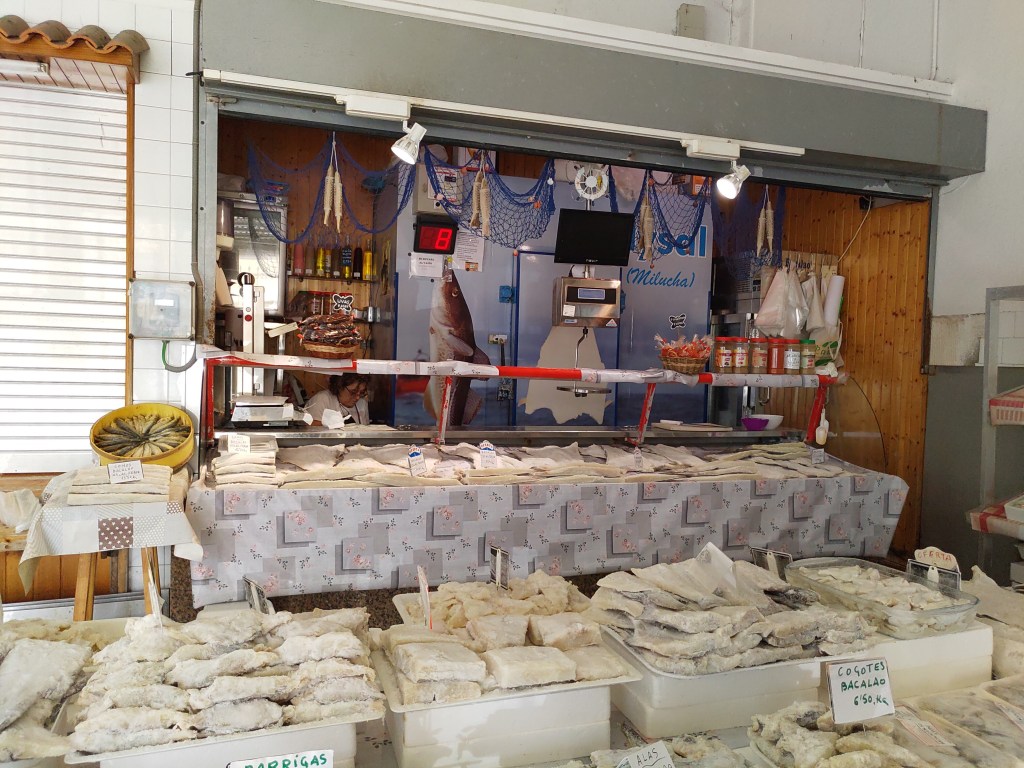
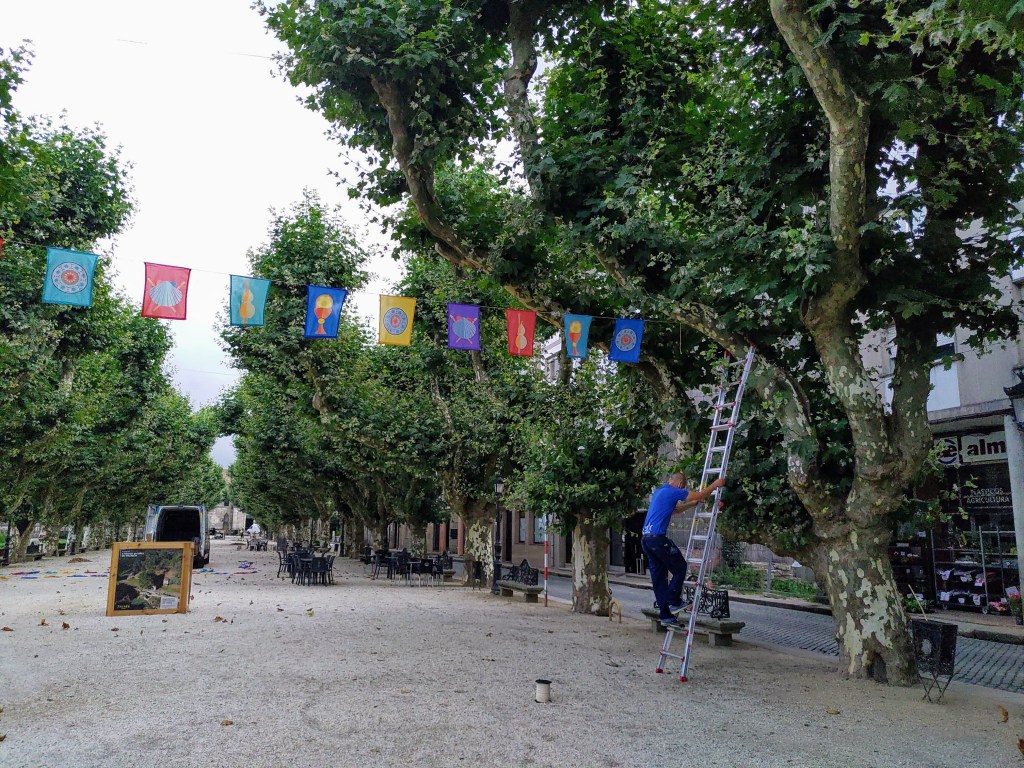
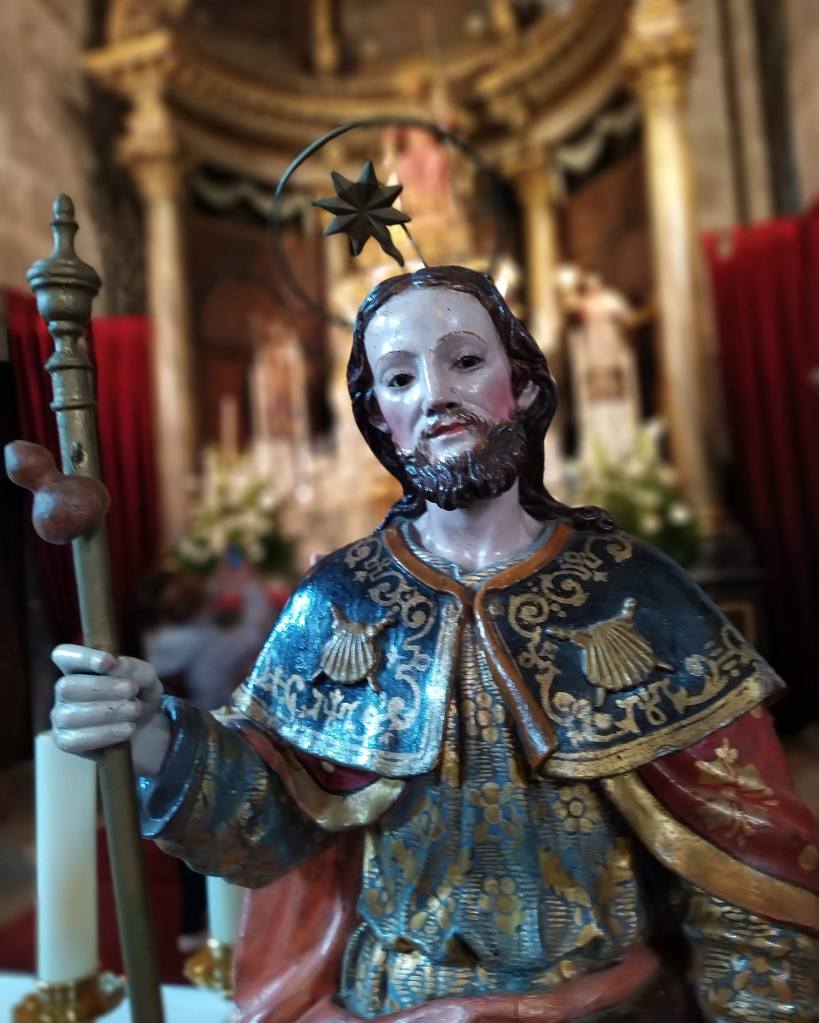
We stroll through Padron and have lunch there. Also in Padron people are preparing for the feast. We get a stamp at the church. Then we walk a few kilometers out of the city to a beautiful oasis in an ugly environment.
to, through and from Padron. 10km, 19°C. cloudy and showers
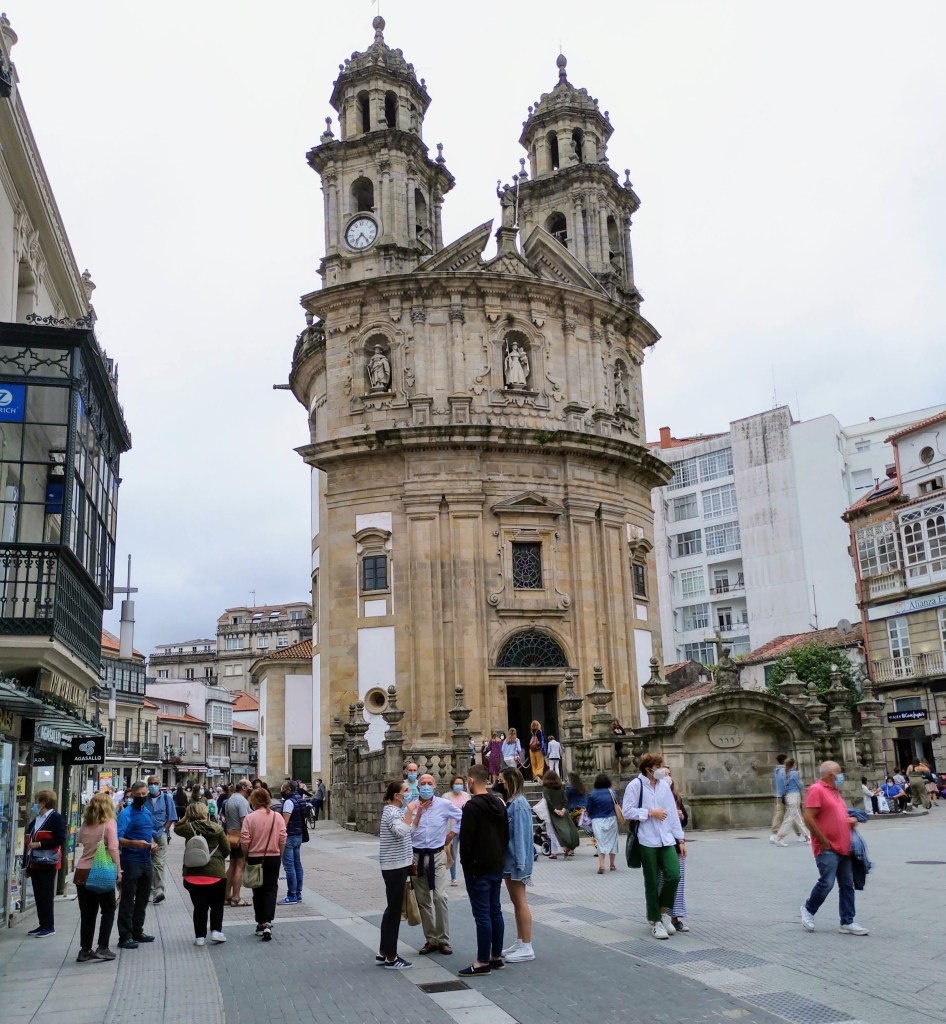
t is a bit of a search in the old center of Pontevedra, but in the end we can have a delicious breakfast with freshly squeezed juice and delicious coffee. It is busy with other walkers. At the first cafe on the route it is chaotic crowds. The Camino seems like a real family event; Grandma or Grandpa walk along, and sometimes young children. There are also friend groups. They talk enthusiastically and have fun.

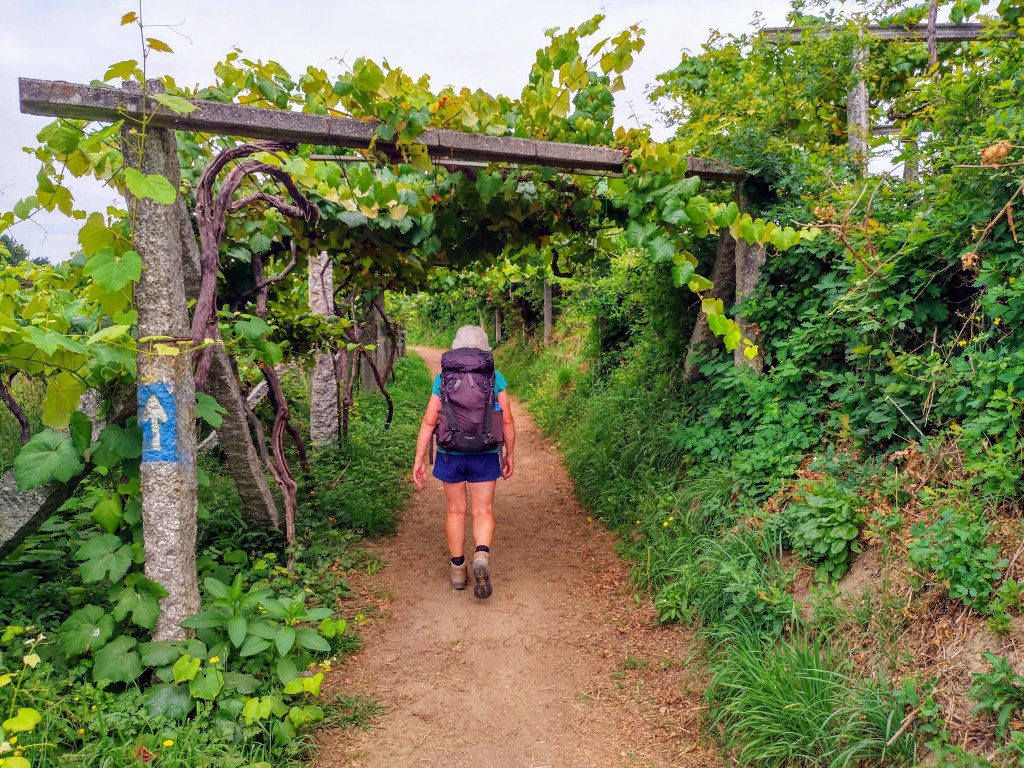
Still, it is possible to walk parts of the route quietly in pairs.
Walking on the edge of the forest we see some crowds in front of us. A horse jumps restlessly, a man is waving a stick … There appears to be a wild boar in the meadow.

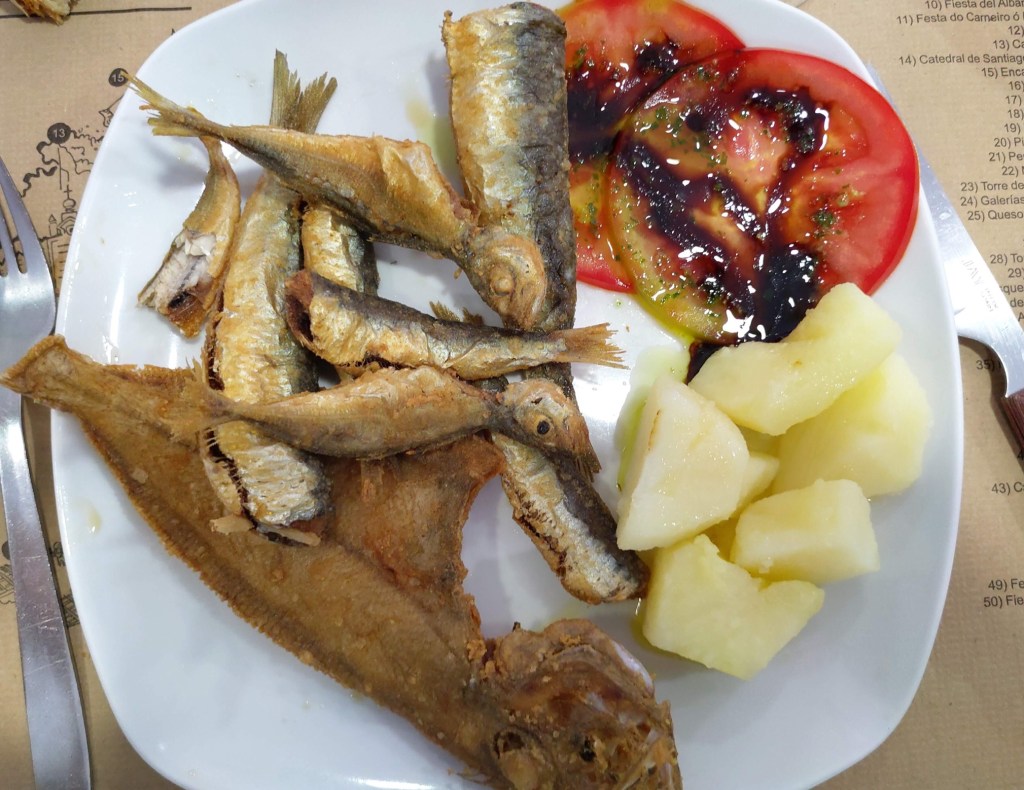
When we crossed the river in Caldas de Reis, we passed a nice terrace. We decide to eat the ‘menu del dia’ there as a late lunch and not to wait until eight o’clock in the evening. Real Spanish food. Fried pescado. It doesn’t look photogenic, but it’s really delicious. Add white wine ;-). Melon beforehand.
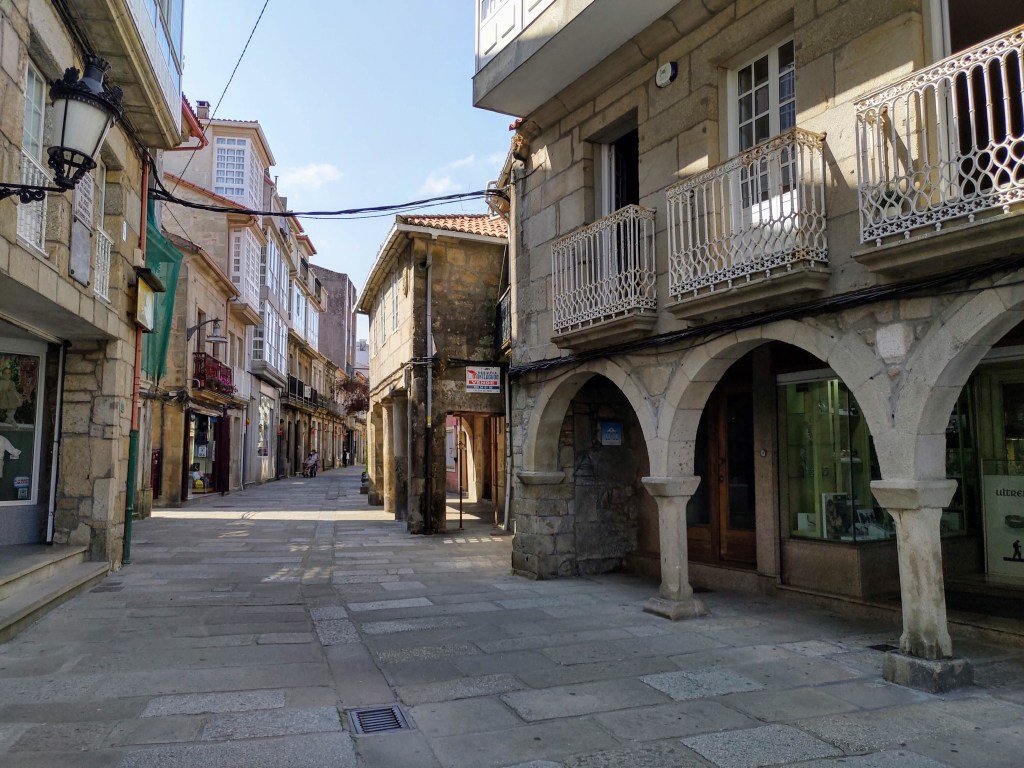
Caldas de Reis is a nice place. The sun comes out in the afternoon, which also makes a difference. We have a nice room, but the WiFi is way too slow to do anything with it.
In the evening we walk to a terrace where we drink a beer in the sun. When we think about whether to order something to eat, a sandwich is served. As a snack from the cafe. 🙂
Pontevedra – Caldas de Reis. 25km, 17 – 27°C , cloudy -sunny
 about walking and cycling, ...