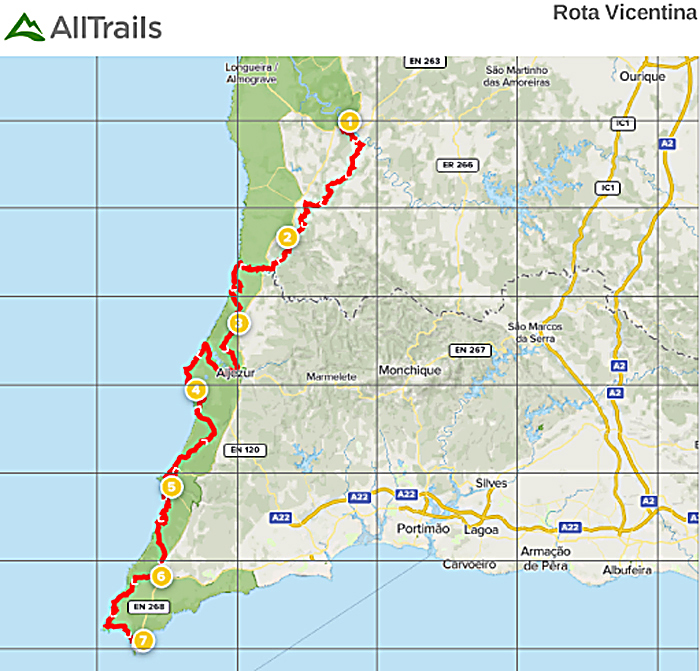
We walk on the Rota Vicentina along the coast of Alentejo in the south of Portugal, to Cabo Sao Vicente, where the lighthouse is; on the extreme southwestern tip of Europe.
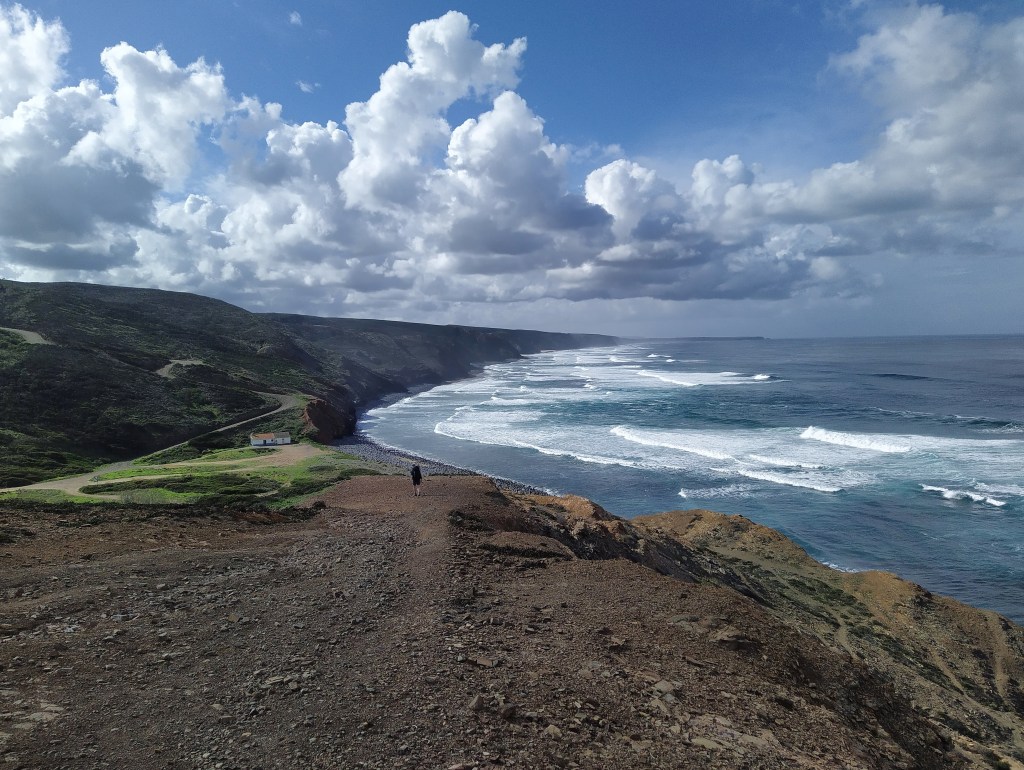
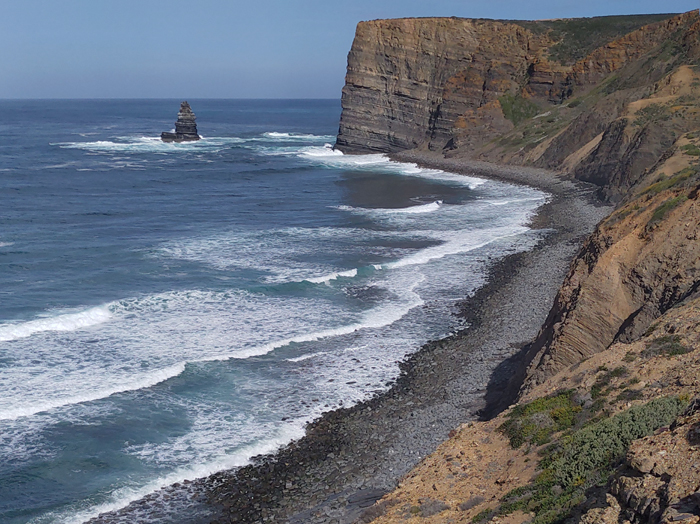
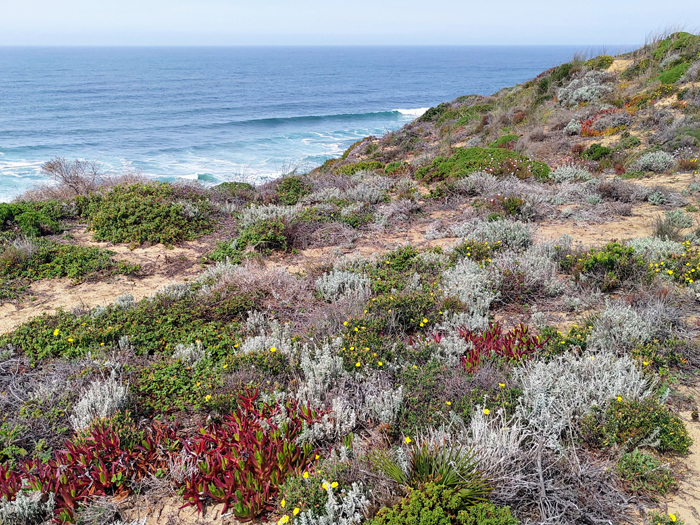

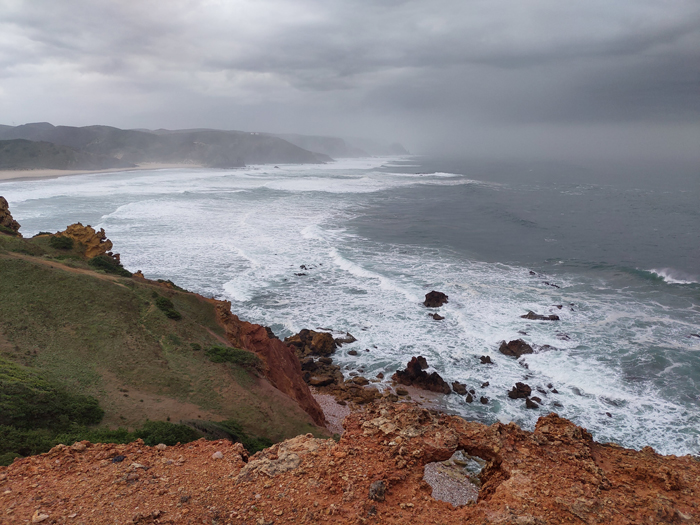
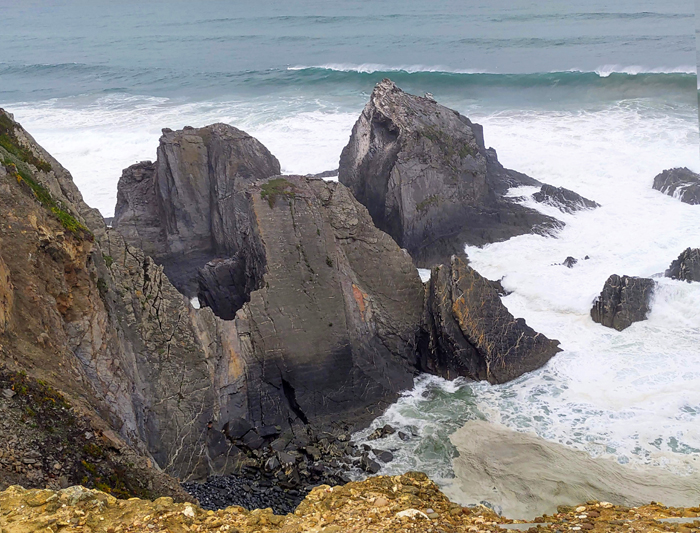
The Rota Vicentina is not an unambiguous path like the old pilgrimage routes. The trail runs over the rugged cliffs along the ocean, where the surf has washed away chunks. There are bays and rifts. The coastal region is a national park and there are hardly any buildings. (no coffee). For our overnight places we have to go inland to the small villages.
Rota Vicentina is a combination of the Fishermen’s Trail and the Historical Way.
Here and there we see campers where surfers stay. There aren’t many now. The ocean is too rough for surfing.
There are no harbors with fishing boats. Fishermen fish with rods, standing high on the edge of the cliff.
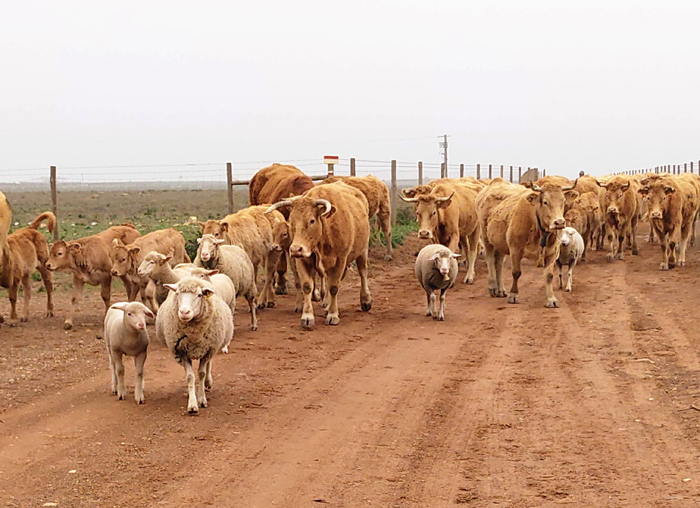
The paths over the cliffs are loose and sandy, sometimes descending steeply via a narrow stony path to the beach in the bay before climbing steeply again on the other side and continuing. Inland, to the villages, are dirt farm roads, past fields and cork oaks.
The Rota Vicentina is not a pilgrimage route. Churches are missing. On this route, it is nature, the vastness of the ocean that inspires awe.
We had already prepared this trip weeks ago; and we were looking forward to it.
Shoes on, backpack on and off we go. We walk into the unknown. A different place to sleep every day. Different food, at different times… Another language.
Disrupting habits and rituals of the daily pattern.

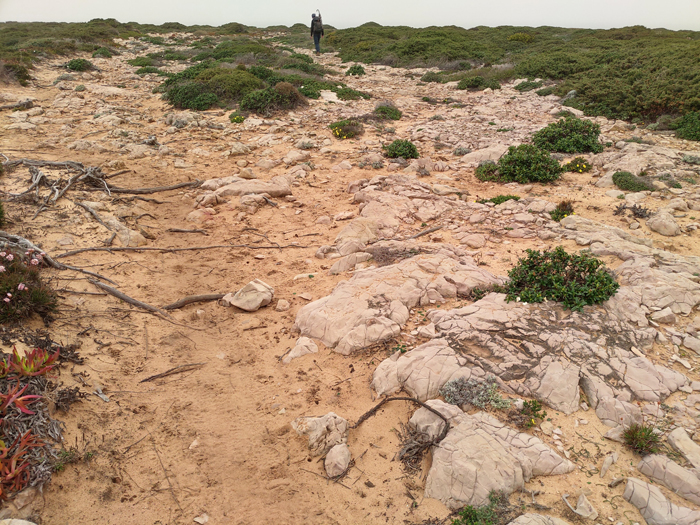
The last leg of the route was strange. The cliffs closer to the cape were rougher. The path was quite flat, but it was full of stones. It stormed. Visibility was bad. The lighthouse was barely visible. And the sky was yellow. Everything was yellow. Sahara sand!
Also later, at home, we saw the sand on the windows. From thousands of miles away…
It shows that everything is connected.

Odemira – Sao Teotonio – Rogil – Arrifana – Carrapateira
Vila do Bispo – via Cabo Sao Vicente naar Sagres
.
.
.
.
 about walking and cycling, ...