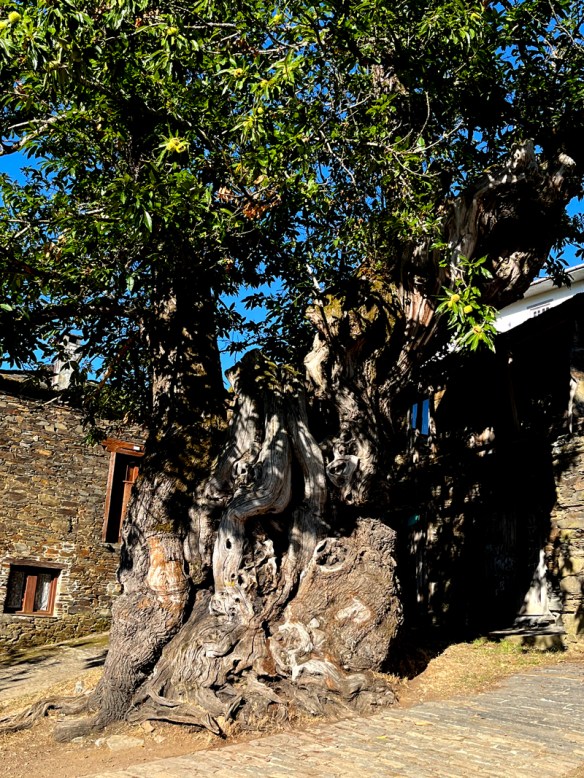
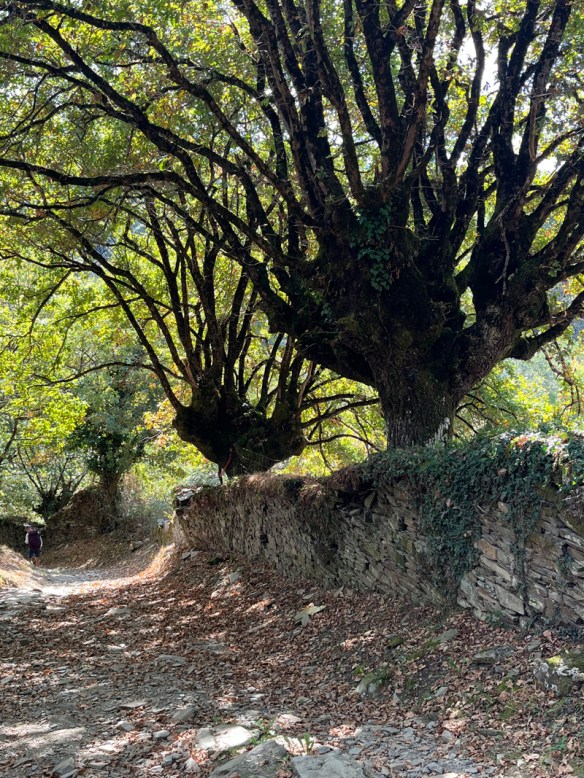
We walked through lanes lined with ancient sweet chestnut trees. In a small village square stands an old one. A sign tells us its age is more than 800 years. What a history that tree has been through.
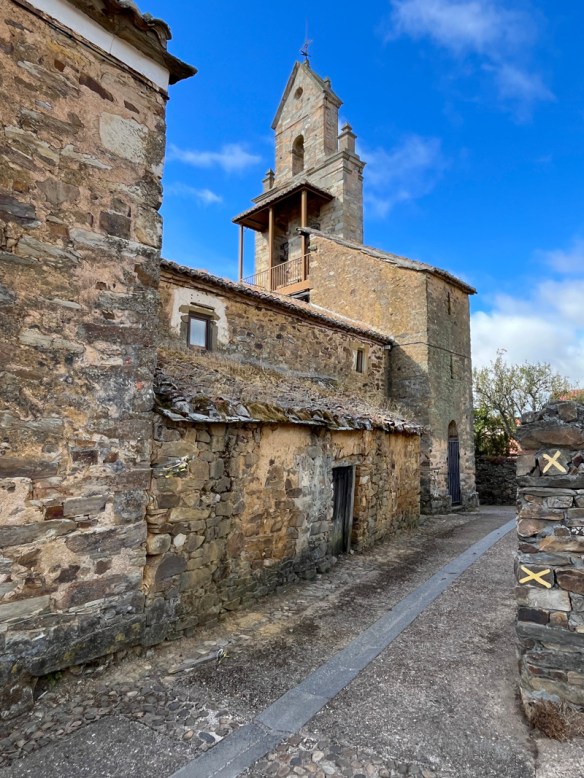
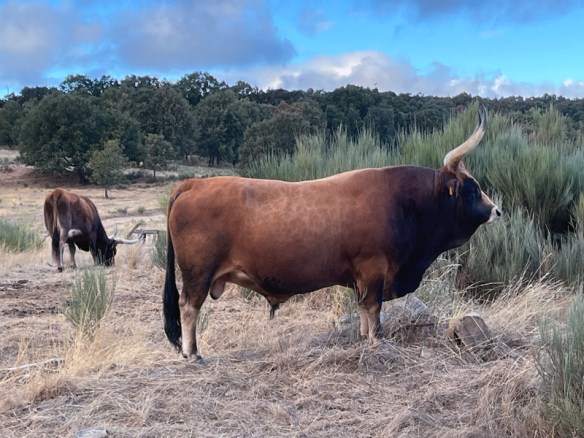
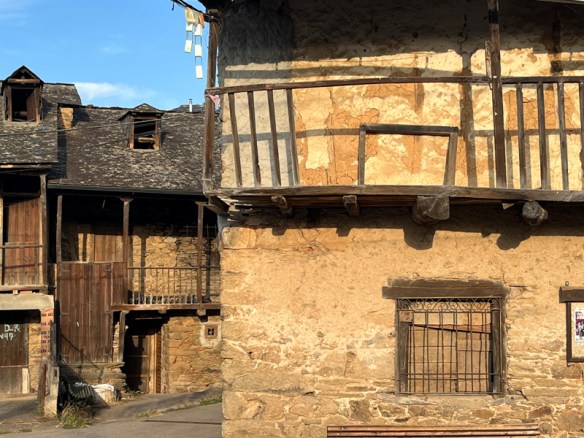
We passed through small villages with old houses and tiny churches. Farmland with cows with magnificent horns.
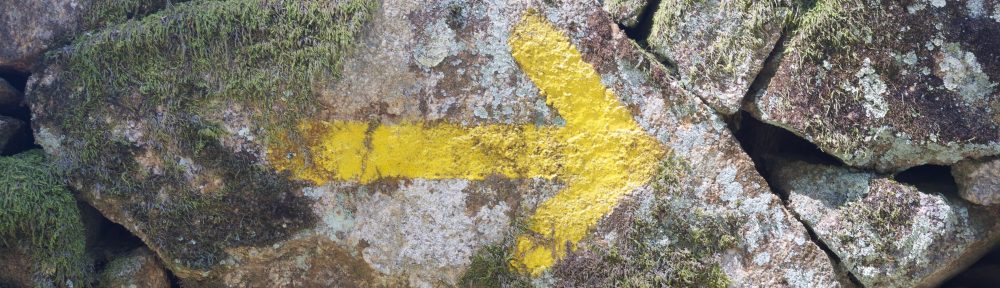
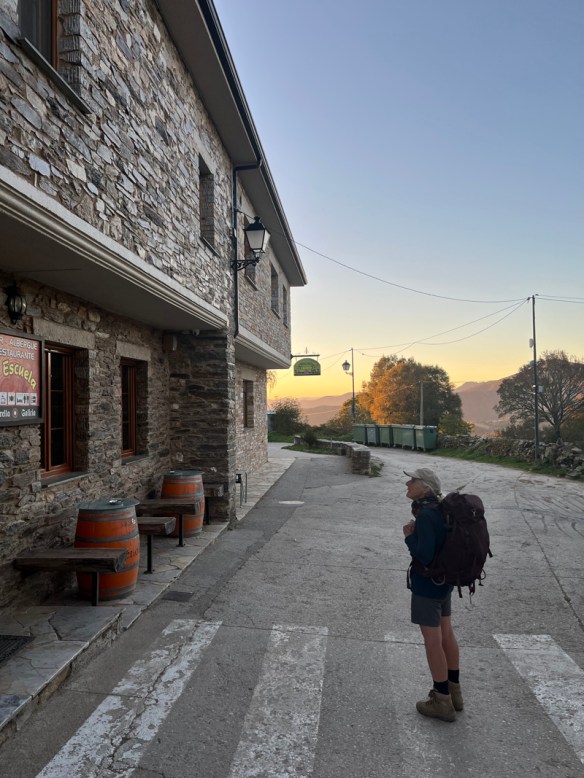
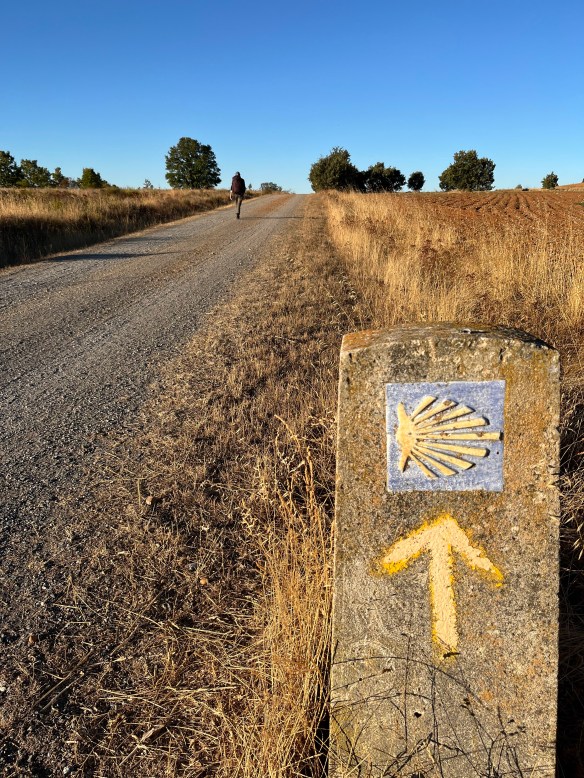
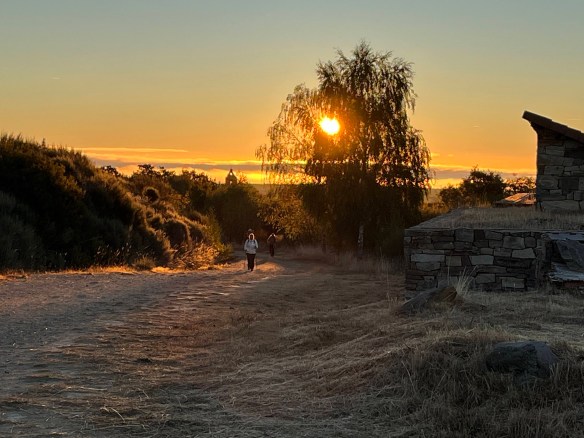
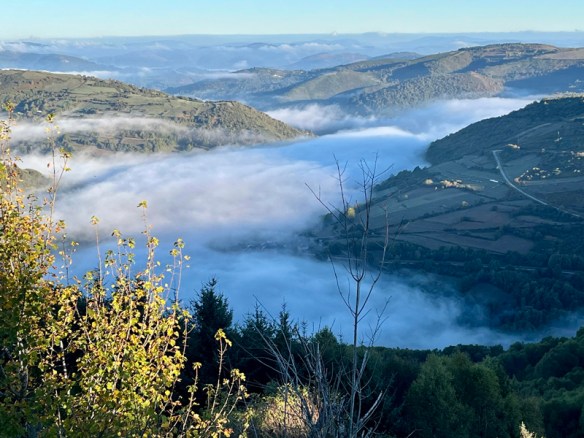
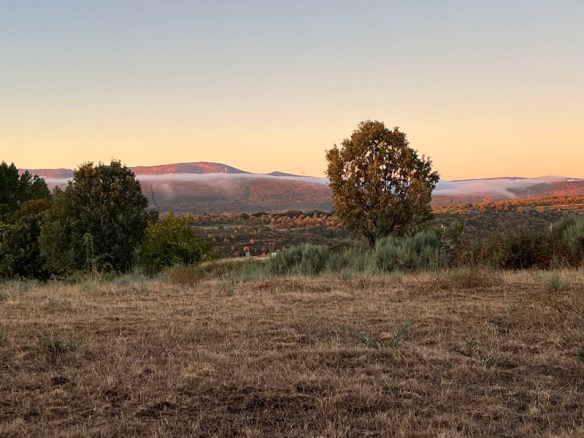
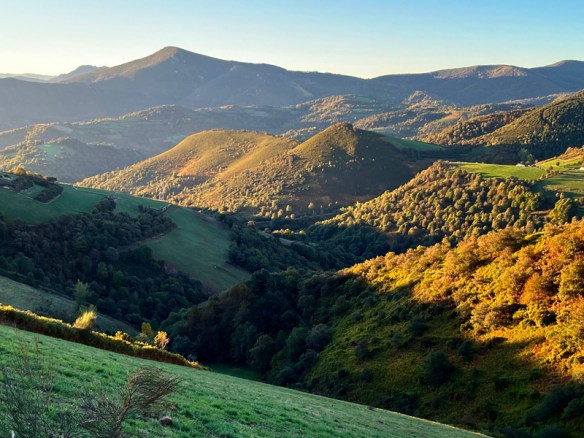
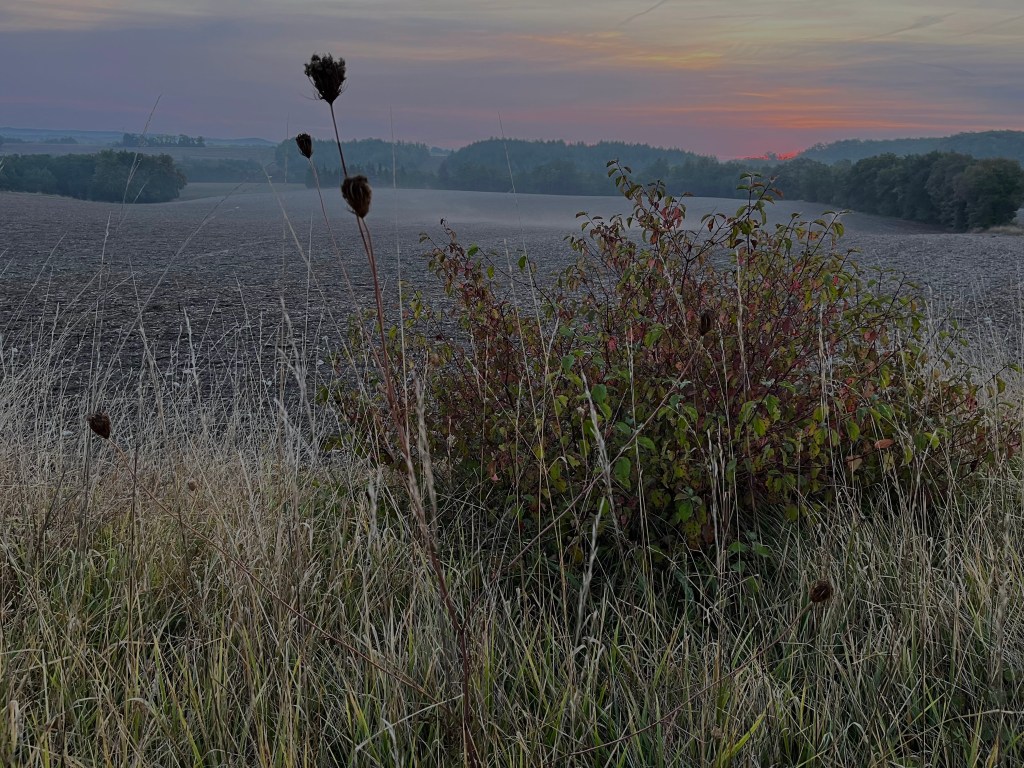
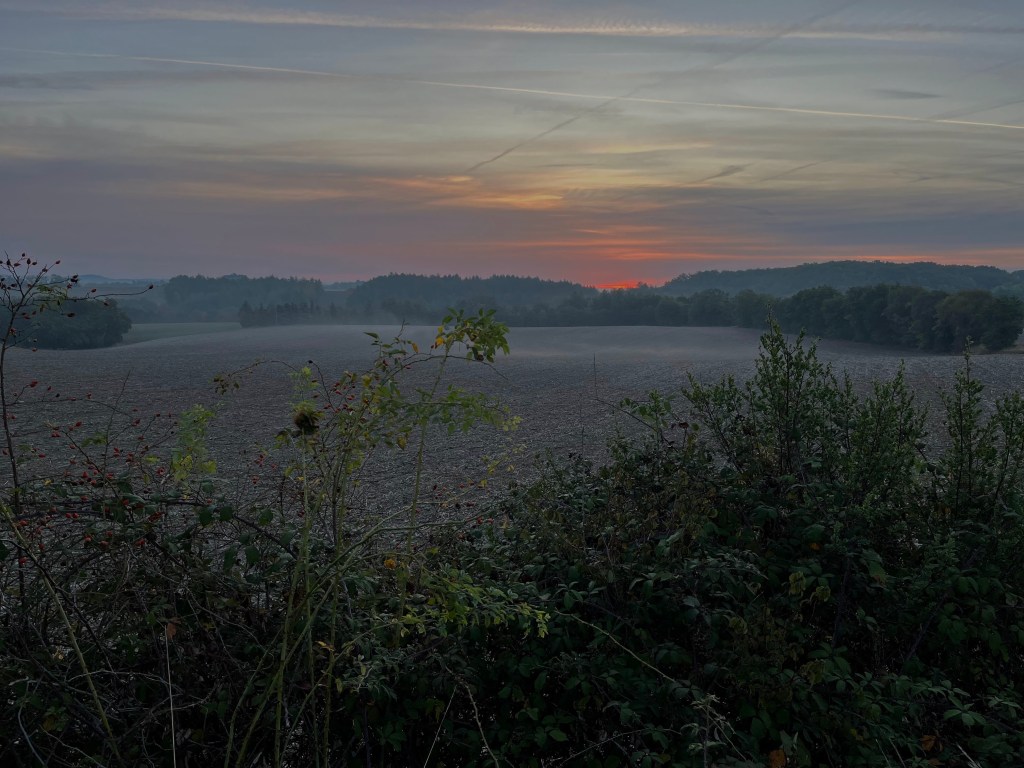
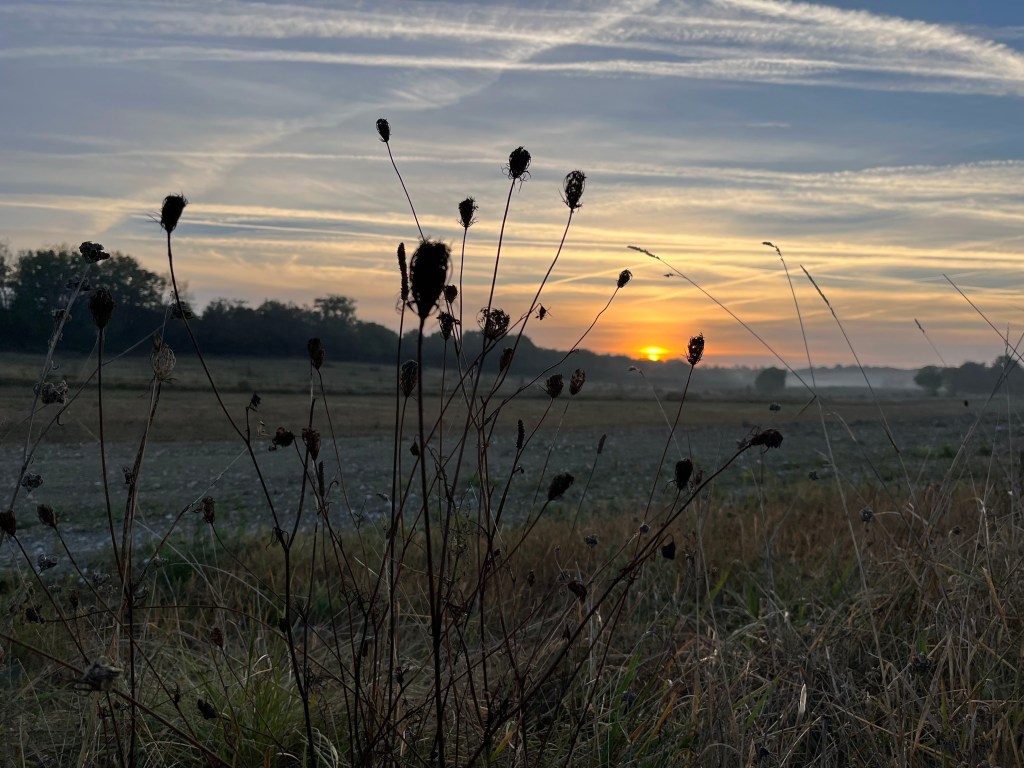
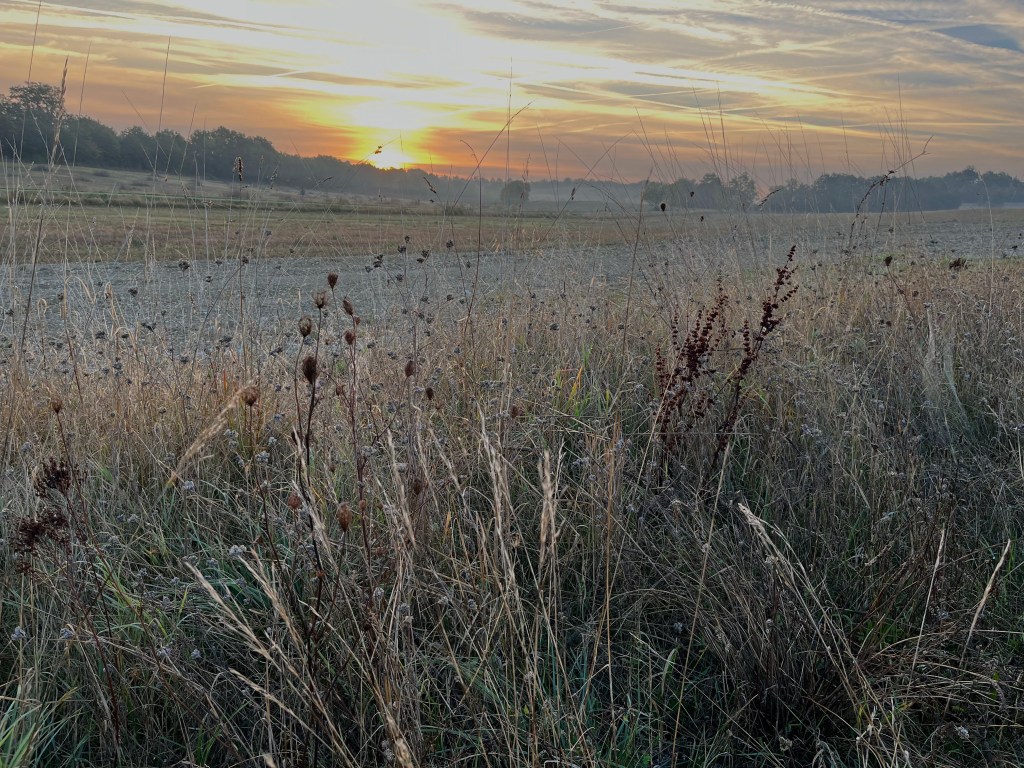
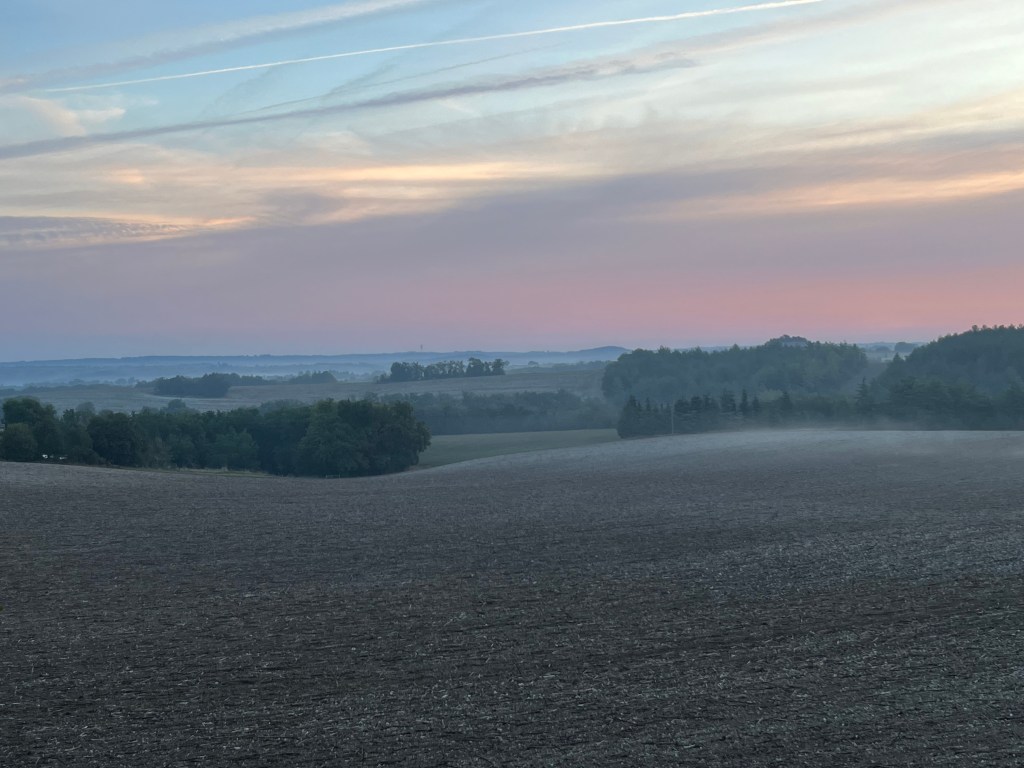
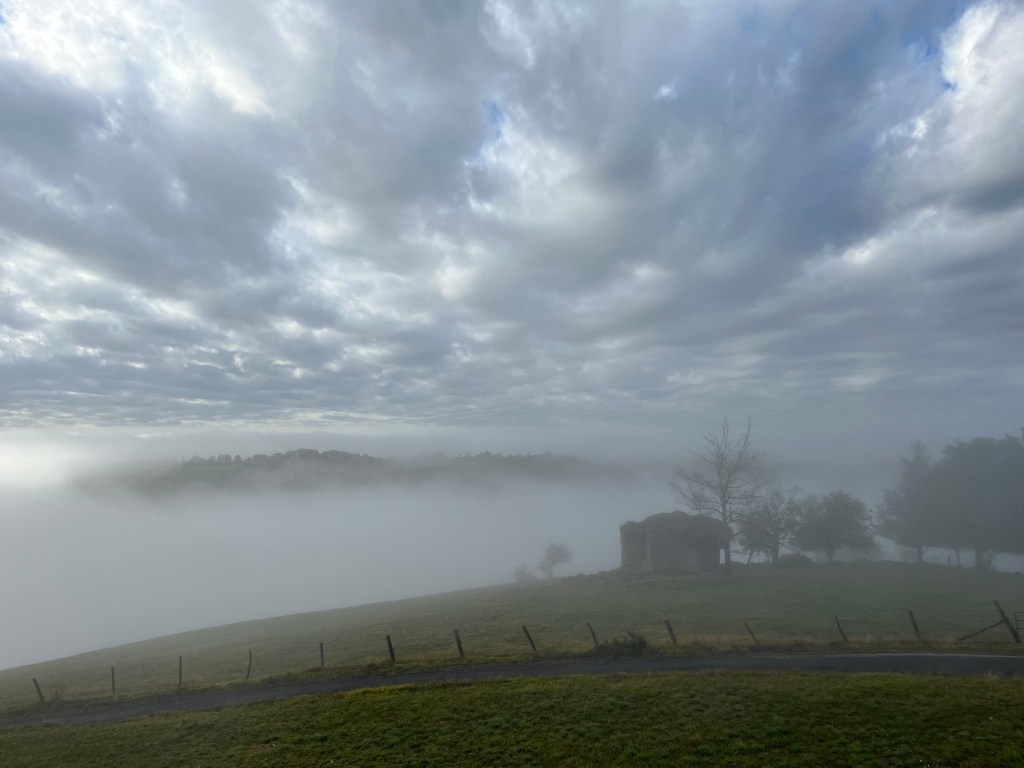
A quick breakfast early in the morning, desayuno. Sometimes a buffet, sometimes coffee and a large slice of cake. And then we’re off, following the yellow arrows. Still cold. The sun just above the horizon. A raking light. An orange glow. Fairytale-like. Low-hanging mist in the valley.
We met a lot of people from South Korea, Taiwan and Japan. Most of them are young. I am always amazed how well-known this Camino is worldwide.
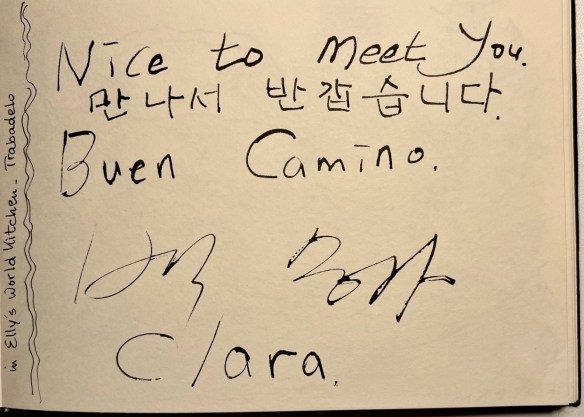
We met a South Korean woman and shared a meal at Elly’s World Kitchen. South Korean noodle soup. She wrote “Nice to meet you” in her language in my diary, Likewise for us. Buen Camino.
People suffer from blisters or worse. The Camino isn’t always easy. Along the way, there’s a huge statue of a pilgrim whose feet are covered with plasters. I hope he will be better soon.
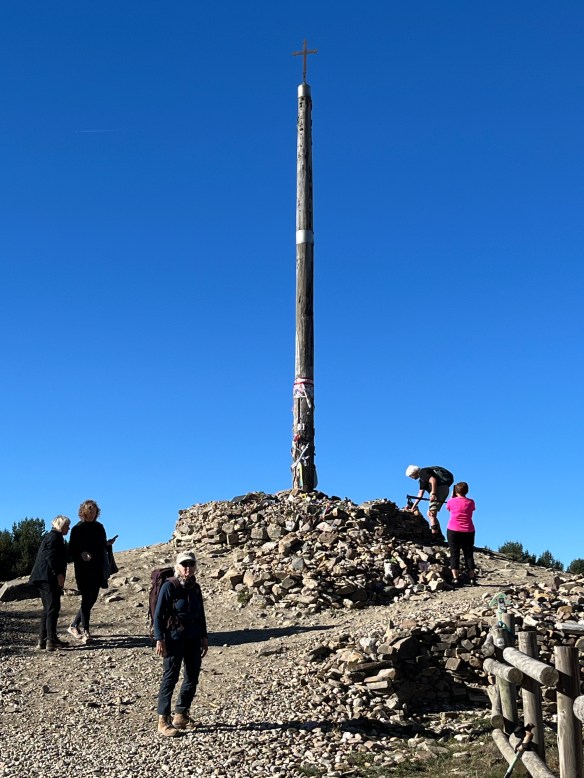
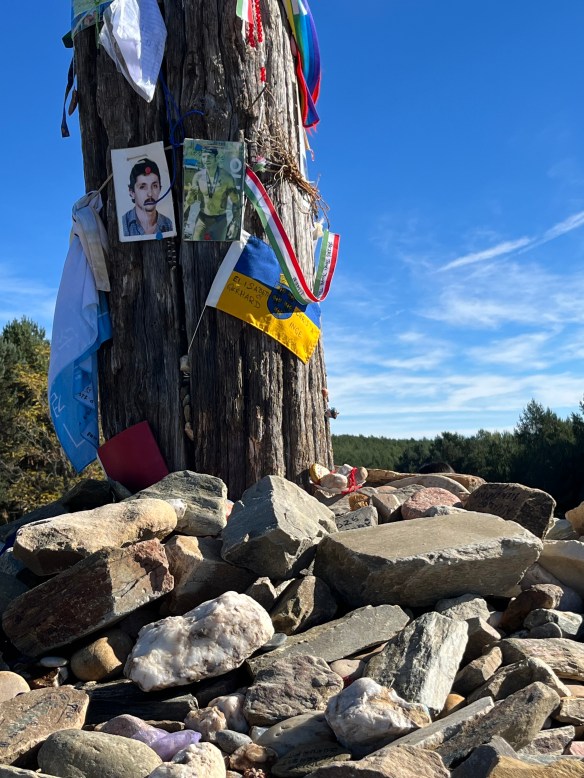
At the highest point of the route stands the iron cross – Cruz de Ferro. (1504m) It’s an icon. One of the reasons to walk the Camino is to honor a deceased loved one. It’s customary to bring a small stone from home and leave it at the cross as a farewell. Doing so, you leave a burden behind.
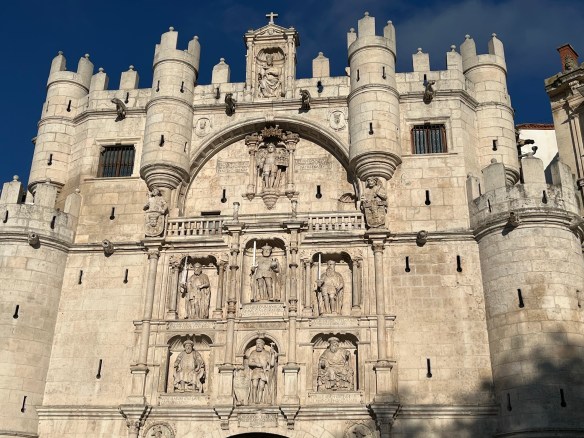
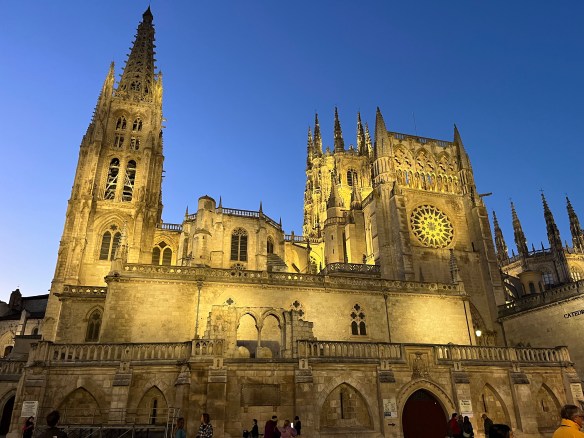
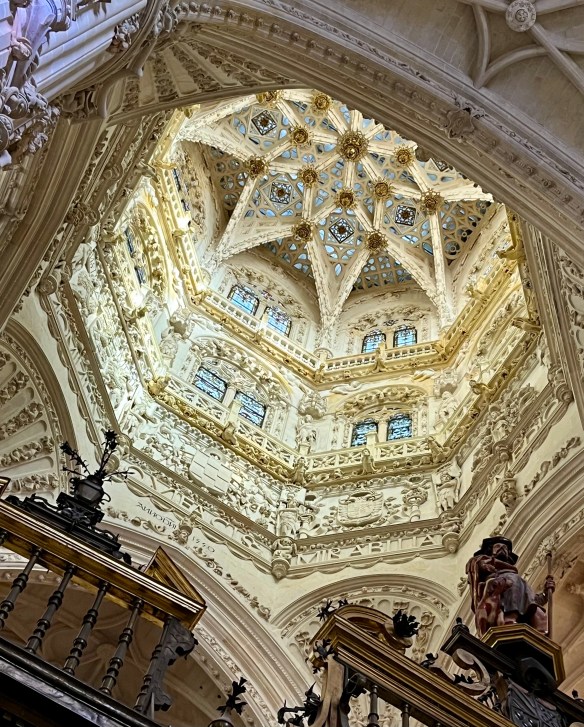
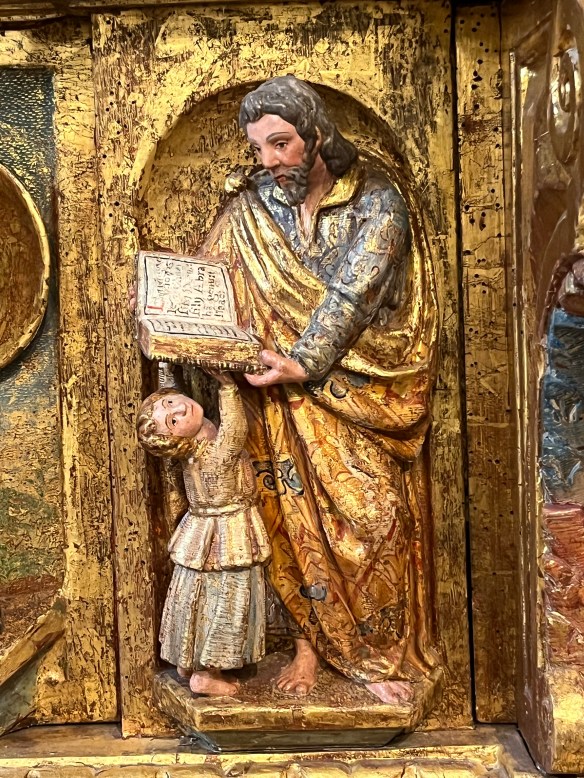
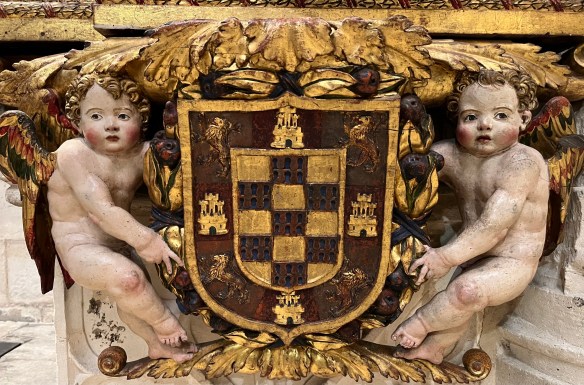
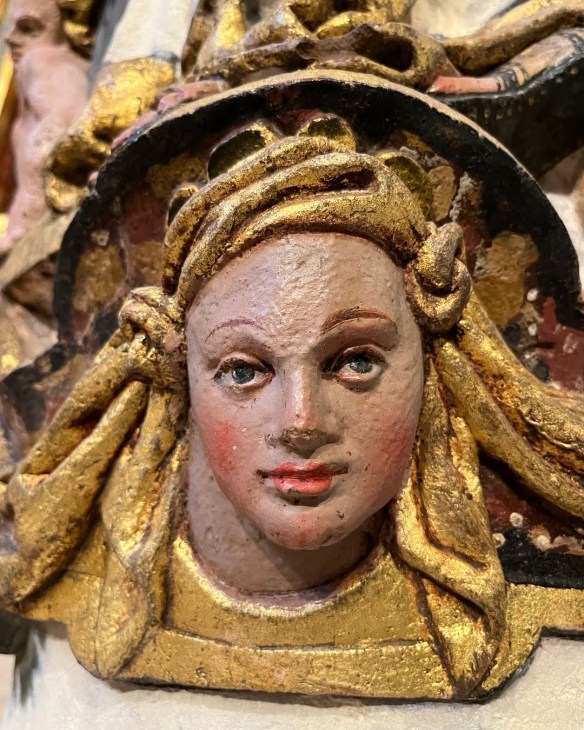
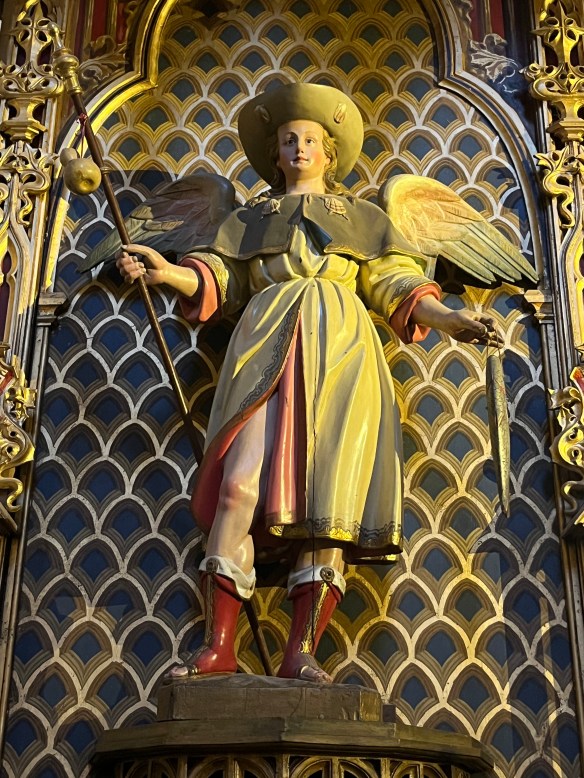
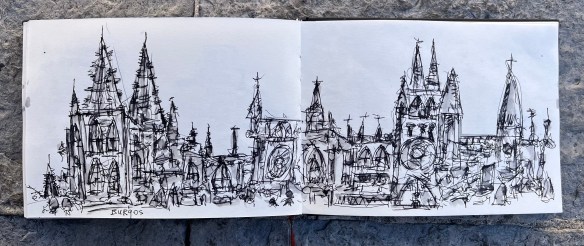
Back in Burgos, we walked through the imposing gate into the old town. And there was the cathedral. This time we also wanted to see the interior. It’s impressive. The cathedral’s foundation stone was laid in 1221 by the King of Castile. The cathedral is full of chapels, with beautiful details. Here are some impressions of it.
Burgos is a milestone for many pilgrims on the Camino. The statue of Santiago in the church demonstrates the centuries-old history of the Camino.
Feeling nostalgic, we ate again at the pizzeria where we’d said goodbye in 2022, with some people we’d met on our trip.
After our walk on the Chemin de Piemont to Lourdes, we traveled from there by train to the coast, to St. Jean de Luz. Via Hendaye we walked to Irun, to Spain. That is the start of the Camino del Norte. This is a well known Camino and there are more hikers. It was nice to see the ocean, although the route sometimes goes more inland. The Pyrenees are close by and this is noticeable in the height differences.
This is Basque Country and the names of the towns are difficult to remember; such as Etxebarria or Markina Xemein.
As in many parts of Europe, it was also very wet in the Midi-Pyrenees this year. We had many sunny days, but the recent heavy rain caused a lot of mud in the woods. That made the walks difficult.
What we didn’t really realize is that this region is so sparsely populated. It was not always easy to find a place to sleep or to eat. With the exception of a few hotels we slept mostly in Chambre d’Hôtes, were people also cooked for us. Remote places and we were always the only guests.
We slept in a Chambre d’Hôtes in a farm, run by Audry, the daughter of the family. We agreed to have breakfast at 8 o’clock in the morning. But when we got in the dining room the next morning, everything was still dark, there was no one to be seen. A car drove up and Audry got out with paper bags. She had driven to the bakery for us, about 18 km from there, the closest place to buy bread.
Further along the road we passed Capvern les Bains, an old place with thermal baths. The town consisted of hotels and a few cafes, but everything was empty and abandoned. Our hotel was located just outside the village and was fine. Fortunately, they wanted to cook for us in the evening, and again we were the only guests.
There were no catering facilities along the way and there was actually no way to find a place to rest. We passed through villages where even the Marie (the town hall) was only open for a few houres a week. There were houses, but the shutters and the gates were closed.
There were just a few towns where we slept and were we ate in a restaurant among other people in the evening. But no other hikers.
Still, it surprised us, because the surroundings are beautiful. It is mountainous, many flowers bloom and there are regular views of the snow-capped peaks of the Pyrenees. We saw many Red-Kites soaring through the air. And once we saw a flock of Vultures flying from the moutains to the meadows.
We traveled by train to the medieval town of Carcassonne in the Midi-Pyrenees and from there we went walking via the Chemin de Piemont, which largely coincides with the Gr78. It is a Camino to Santiago de Compostela, wich was used by Italians in ancient times. The route runs along the Pyrenees and via a few old towns, through Lourdes and then on to Saint Jean-Pied-de-Port.
Carcassonne, Cabieure, Ambroisie, Mirepoix, Pamier, Montegut, Mas d’Azil, Saint Girons, Juzet-d’Izaut, Saint Bertrand-de-Comminges, Montrejeau, laBastide, Bagneres-de-Bigorre, Lourdes
We walked to Lourdes and took the train to the coast, to St. Jean-de-Luz. From there we walked to Spain and walked a few sections of the Camino del Norte to Bilbao.
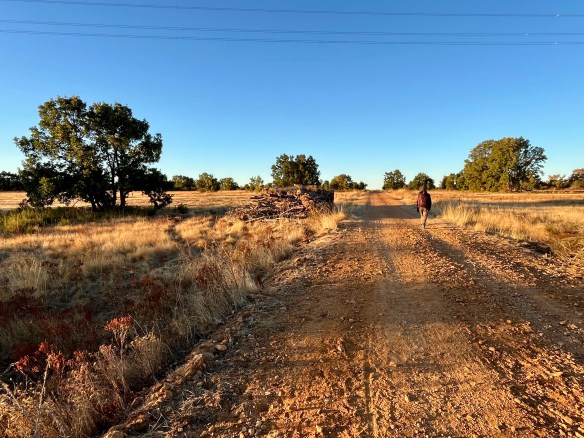
It’s the end of September, but it is still so warm in the afternoon. That’s why we decided to leave very early in the morning. A few times we left before 7 a.m.; still in the dark. Watching the stars and the moon and hearing the owls calling. So special to see it slowly become light.
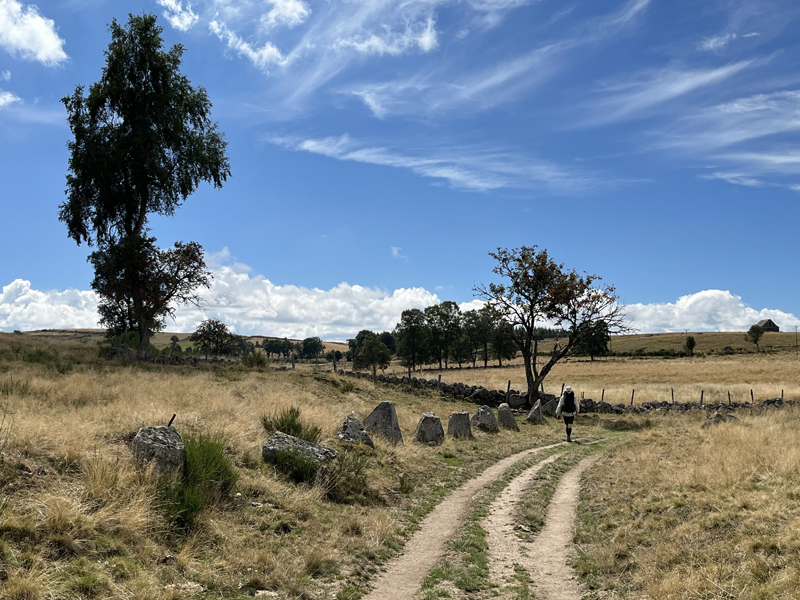
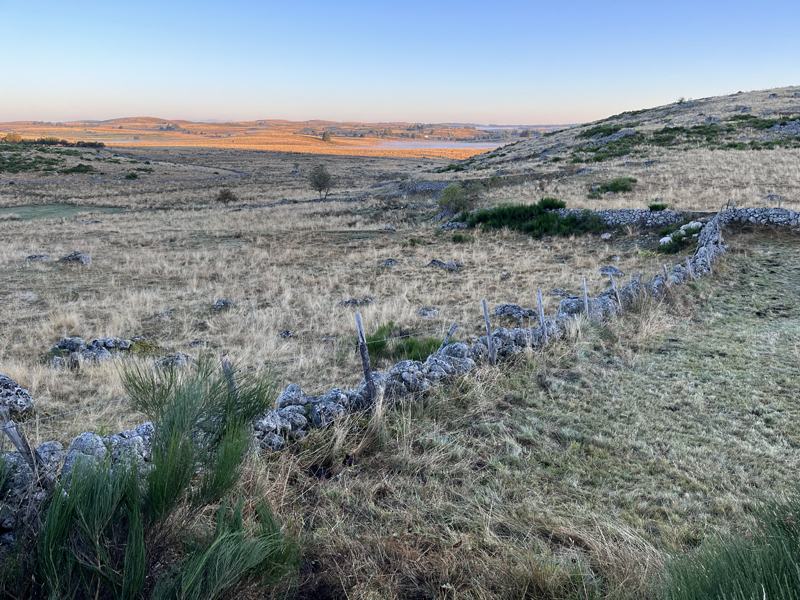
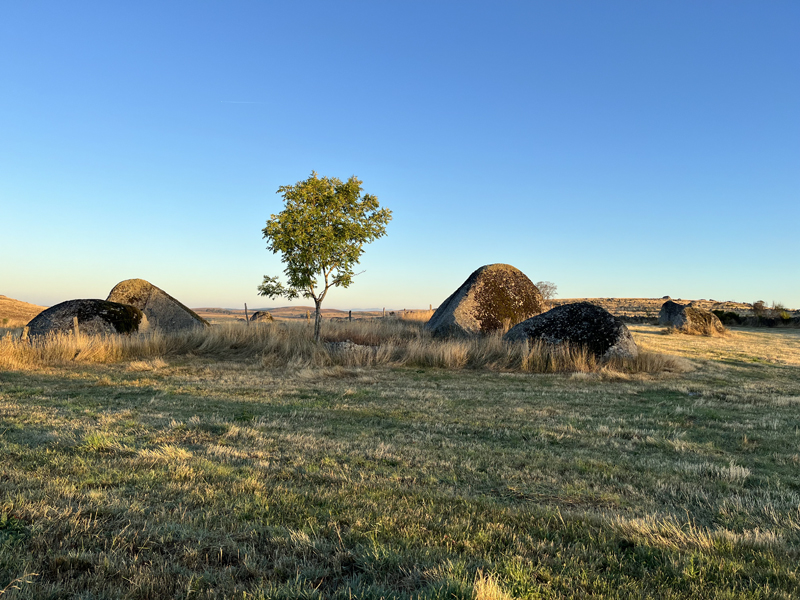
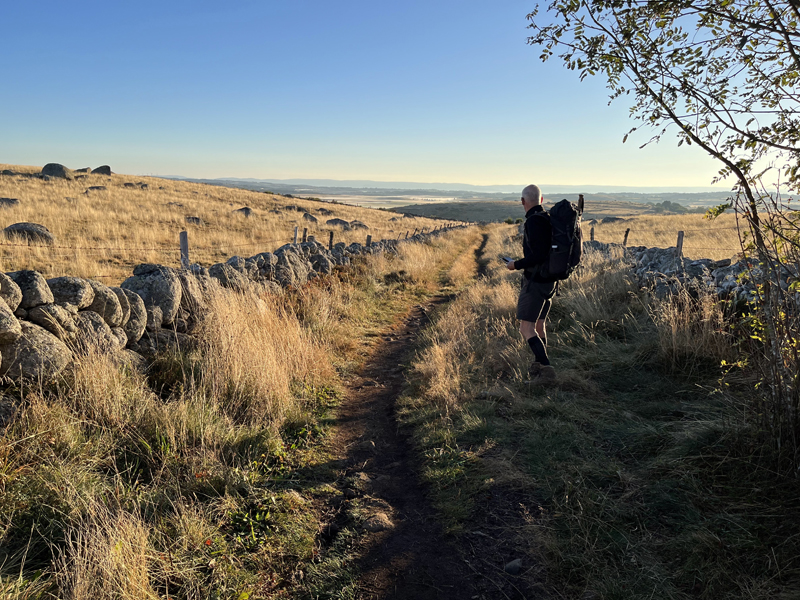
The fifth night of our trip on the Via Podiensis, the GR65, we slept in Gite la Rose de l’Aubrac, Caroline’s gite in the hamlet of Finieyrols. It was a very enjoyable place. In the morning after an early breakfast we left the house, and very soon we were walking on the plateau. What a surprise! The sun was still low and provided beautiful light over the vast plateau.
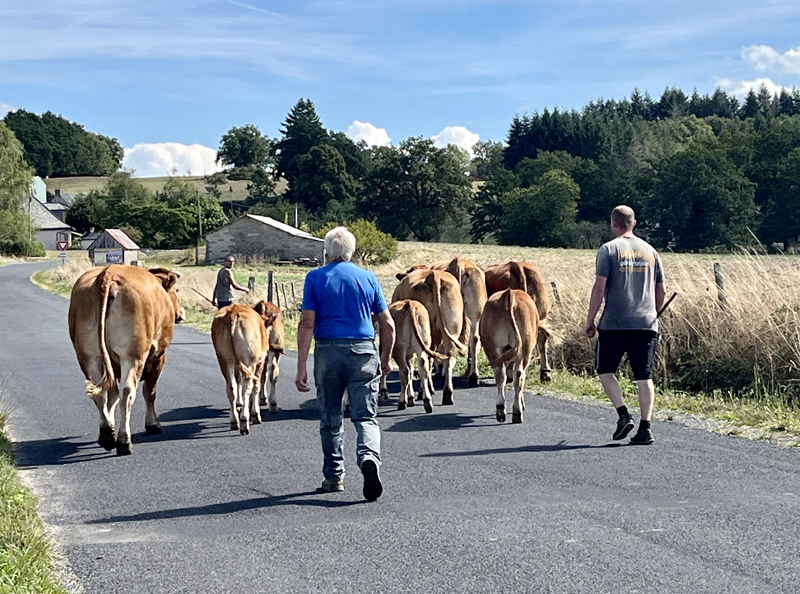
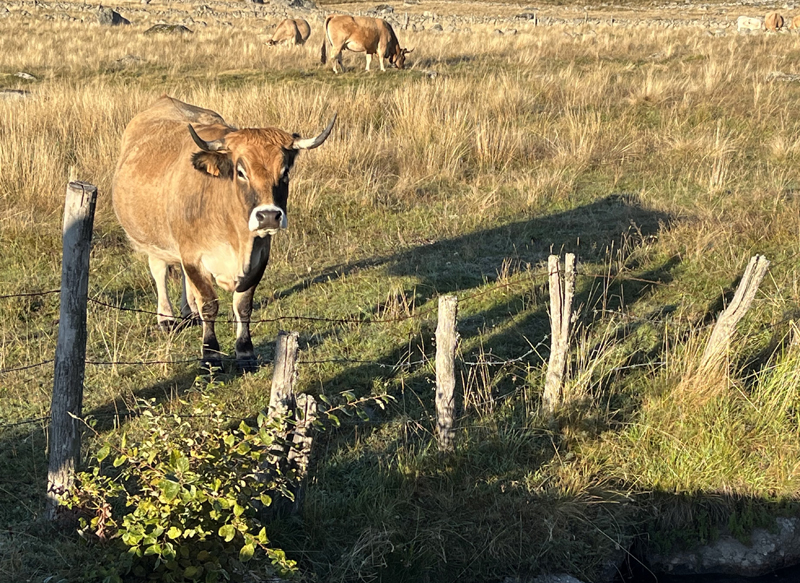
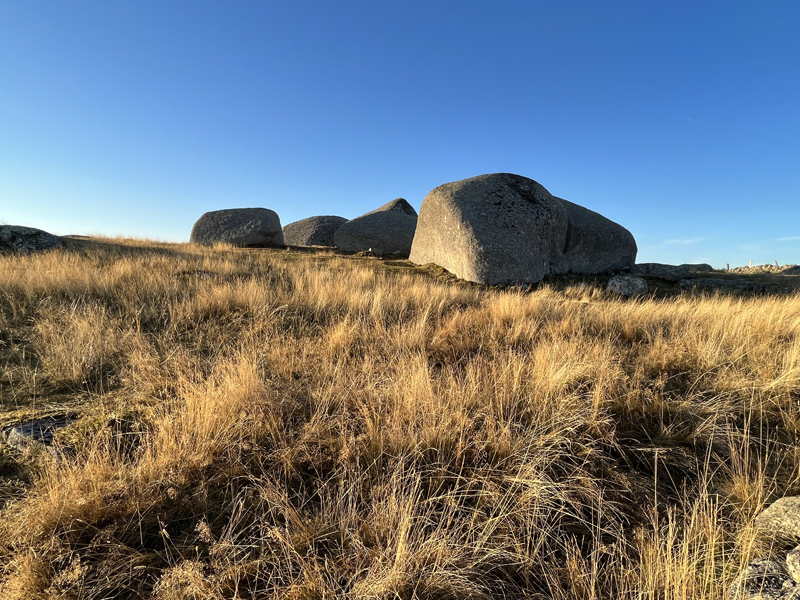
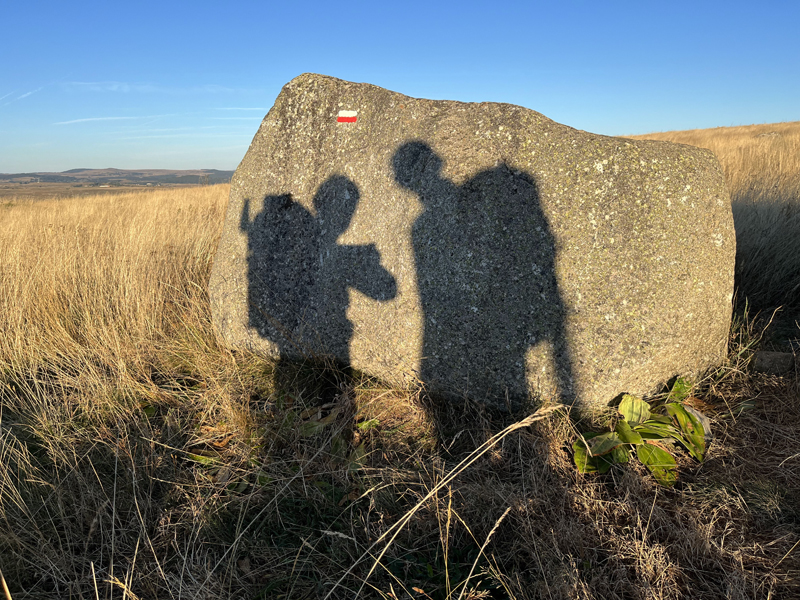
The fields were yellow and there were many cows in almost the same color. There were large boulders here and there, and there were stone walls along the path.
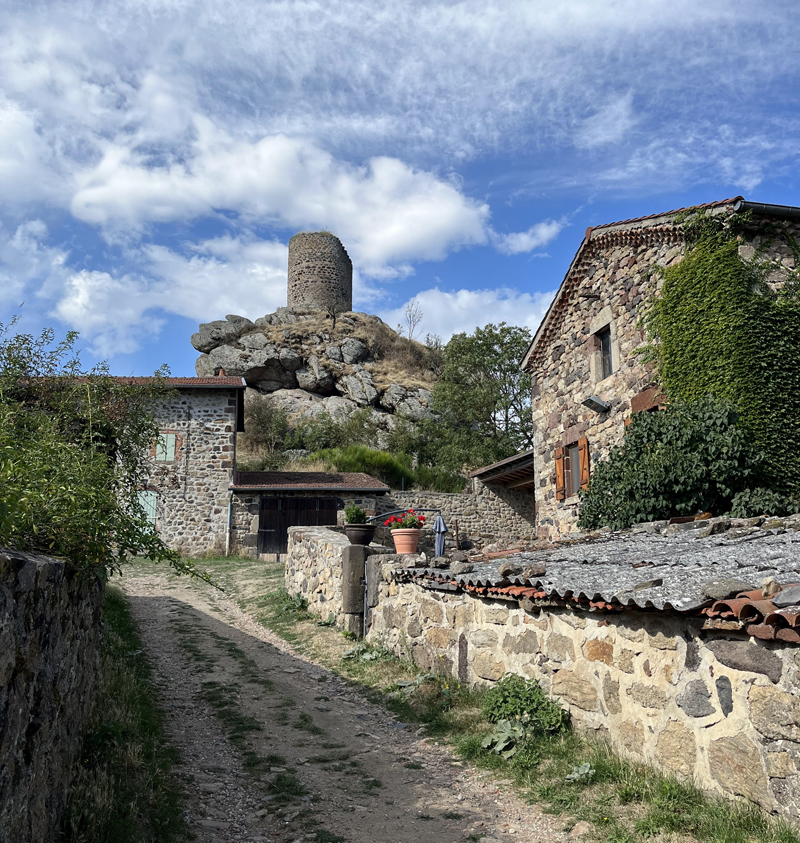
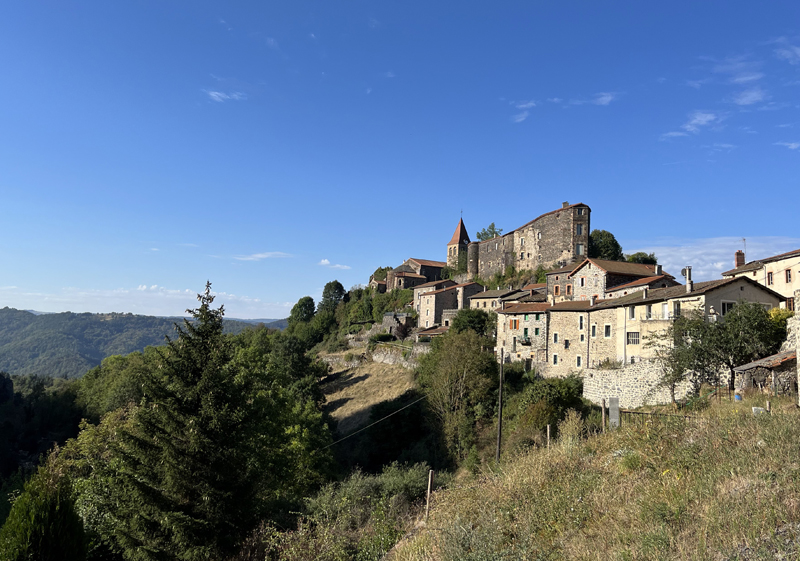
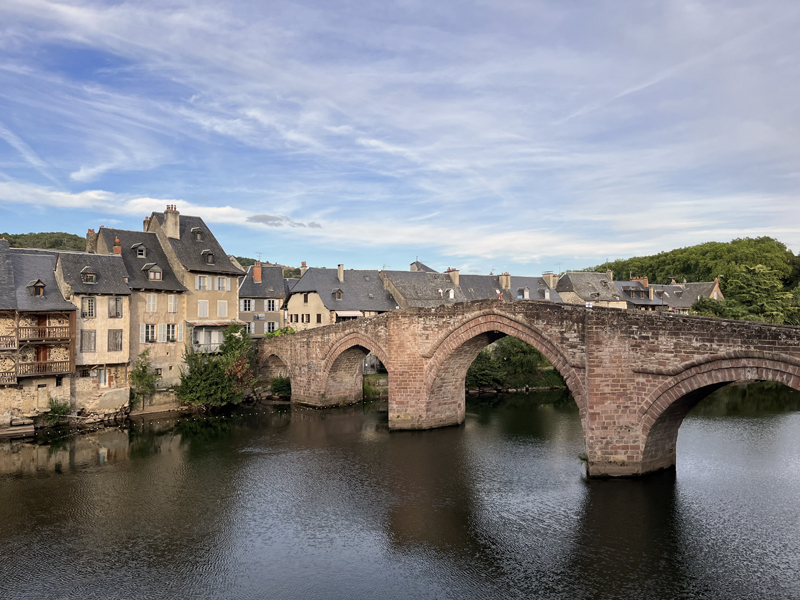
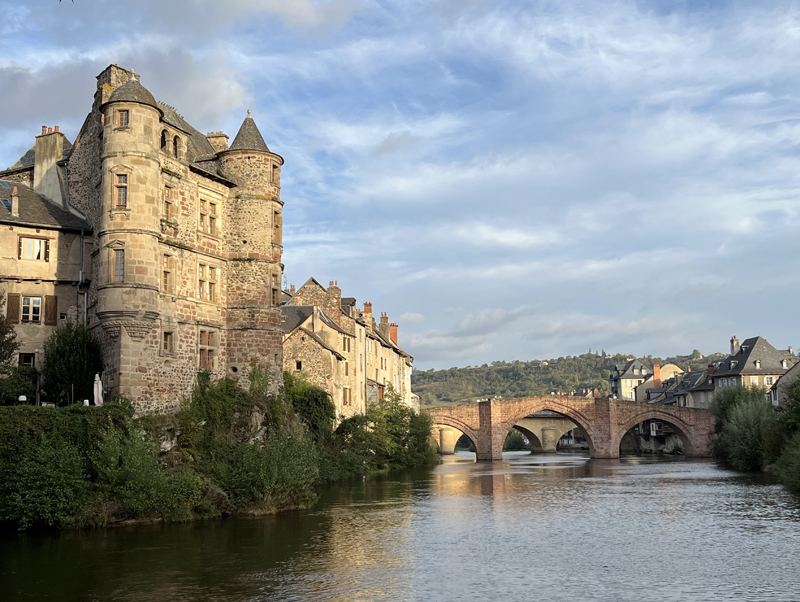
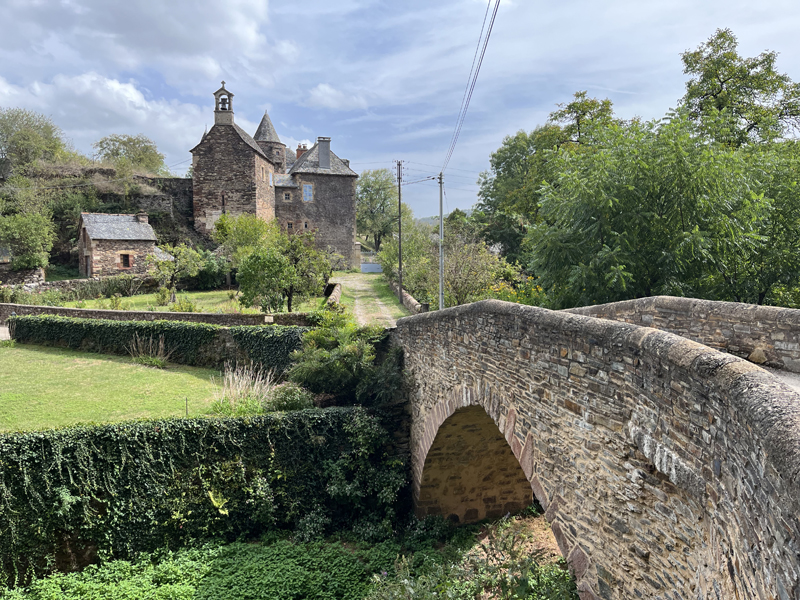
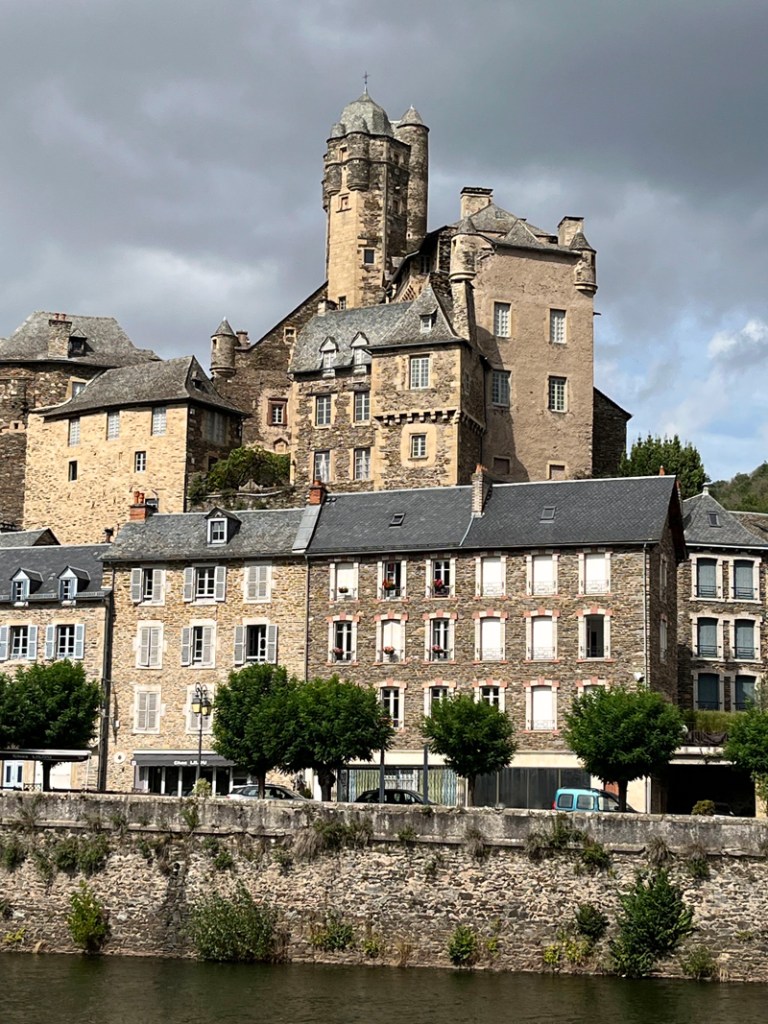
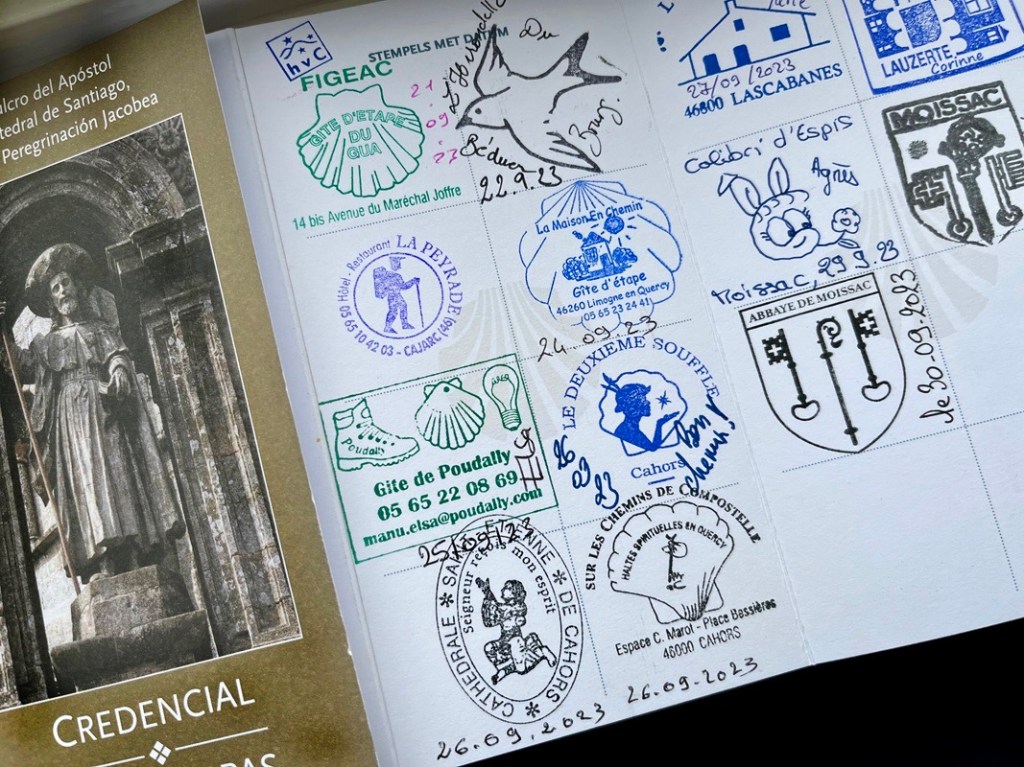
We walked a part of the GR65, the ‘Grande Randonnée 65’ also called the Via Podiensis. A walk in the Midi-Pyrénées. We walked from Le Puy-en-Velay to Conques and on to Moissac. We slept for the first time in ‘Gîtes d’Etapes’. An exciting prospect. It became a wonderful part of the journey. The Gîtes d’Etapes where we stayed overnight are ‘inns’ along the route, where you can sleep if you have a ‘credencial’; the stamp card, in which you can get a stamp in every gîte or cathedral. So this gîtes are really intended for hikers. In the morning around 9 o’clock you have to be on your way again on the next stage.
The route is known and loved by many French people. There are not many foreigners on the road. Yes, we met some people from Quebec, who are also French speaking. This means that French is the language. The months before we went to France we tried to brush up on our French with the help of Duo-Lingo. That helped, but the best French course is practice. Not always easy, but we found the people in the gîtes to be very nice and helpful. We felt completely accepted.
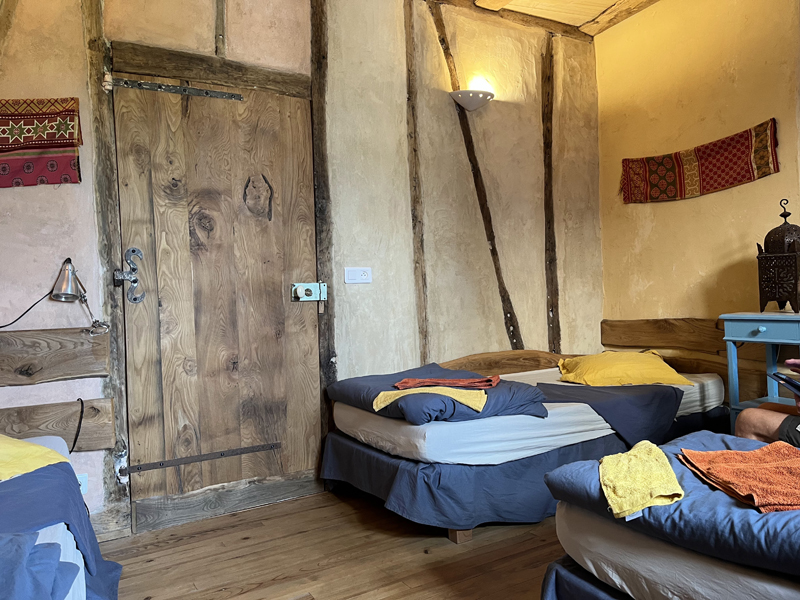
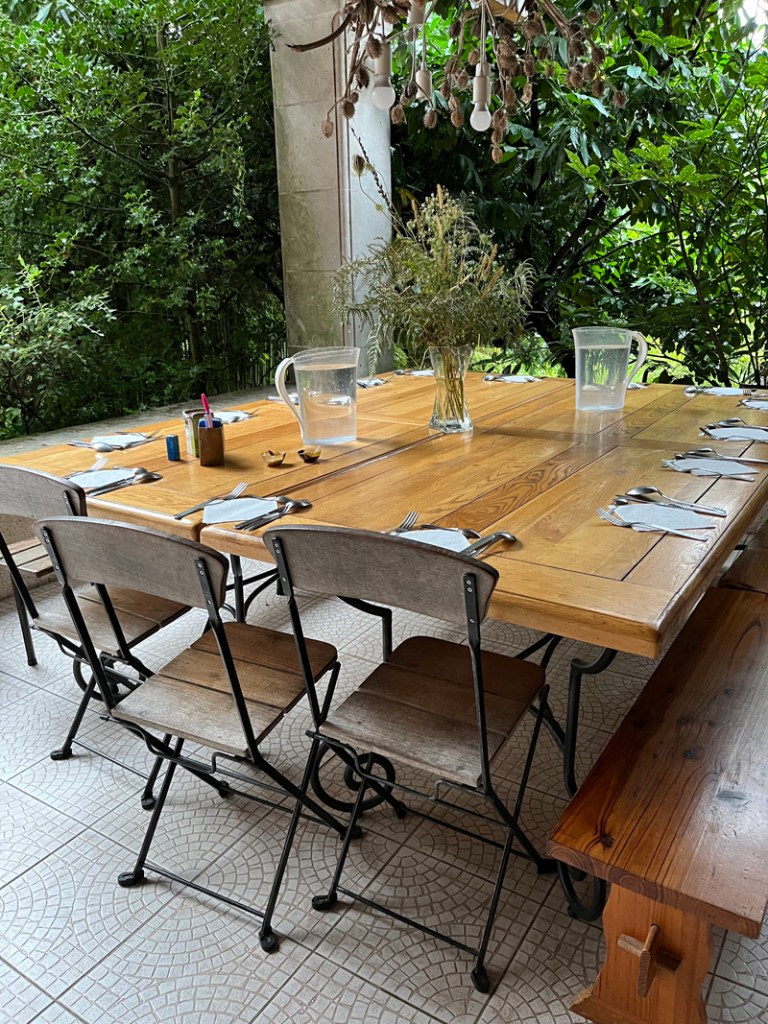
Most people sleep in a dormitory; a room with several beds. But most gites also have smaller rooms. The guests eat dinner together. The food is usually very good and more than enough.
We met some hikers again later, in other gites, or along the way. Everyone is doing the same thing; walking. People are very open to each other.
Twenty nights in different gites, each with its own atmosphere, but we have good memories of all of them.
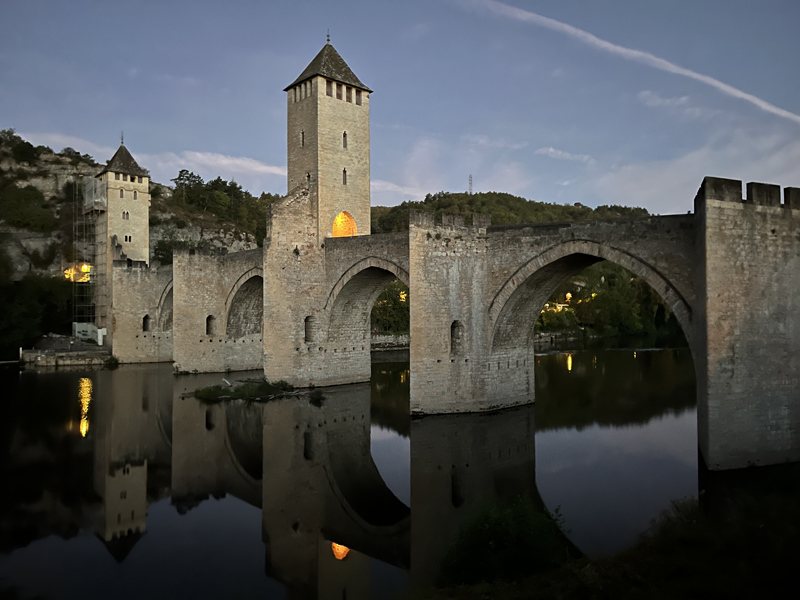
We walked from Le Puy-en-Velay to Saugues, les Faux, Aumont-Aubrac, Finieyrols, St.Chely, Espalion, Estaign, Sénerges, Conques, Livinhac, Figeac, Béduer, Cajarc, Limogne-en-Quercy, Mas de Vers, Cahors, Lascabanes, Lauzerte, Dufort la Capalette, Moissac.













 about walking and cycling, ...